Stock market news provides investors with timely information on price movements, economic trends, and corporate developments that affect their portfolios. For Canadians, this includes tracking the performance of the Toronto Stock Exchange (TSX), monitoring key sectors like energy and financials, and understanding how global events influence domestic markets. Following this news is essential for making informed decisions, as it highlights opportunities and risks in real time. It also helps investors contextualize short-term volatility within longer-term economic and earnings trends.
Key Sources for Canadian Stock Market News
Canadian investors have access to a variety of dedicated financial news platforms that provide real-time data and analysis. BNN Bloomberg offers focused coverage of Canadian business news, including TSX updates, oil price changes, and Bank of Canada announcements. Yahoo Finance Canada provides free stock quotes, portfolio tools, and international market data alongside news. TMX Money, operated by the exchange group, delivers the official Canadian stock market summary and activity from the Toronto Stock Exchange and TSX Venture Exchange. Other sources like The Motley Fool Canada offer stock analysis and investing advice, while Stockwatch aggregates real-time quotes from multiple North American exchanges. These platforms collectively give investors the facts needed to track market movements, from broad index performance to individual stock news.
Major Canadian stock market news sources each have a distinct focus. BNN Bloomberg provides Canadian business news, TSX updates, and Bank of Canada coverage. Yahoo Finance Canada offers free stock quotes, portfolio tools, and international market data. TMX Money delivers the official Canadian stock market summary and trading data from the Toronto Stock Exchange. Other sources like The Motley Fool Canada provide stock market analysis and investing advice, while Stockwatch supplies real-time quotes from multiple exchanges.
- Real-time and delayed stock quotes from the TSX, TSX Venture, CSE, and U.S. exchanges like Nasdaq and NYSE.
- Index levels and daily changes for benchmarks like the TSX and S&P 500.
- Breaking news alerts on corporate earnings, mergers, and economic reports.
- Sector performance analysis and year-to-date returns.
- Portfolio management tools and customizable watchlists.
- Expert commentary on market trends and investment strategies.
Using a combination of these sources allows investors to verify information and gain a comprehensive view of market conditions. An investor can check the official TMX Money summary for the TSX close and daily activity. They can then read BNN Bloomberg for expert analysis on why specific sectors, like energy or financials, moved. Finally, they can use Yahoo Finance Canada to monitor how the news affects their personal portfolio watchlist and access broader market data.

Tracking the Performance of Major Indexes
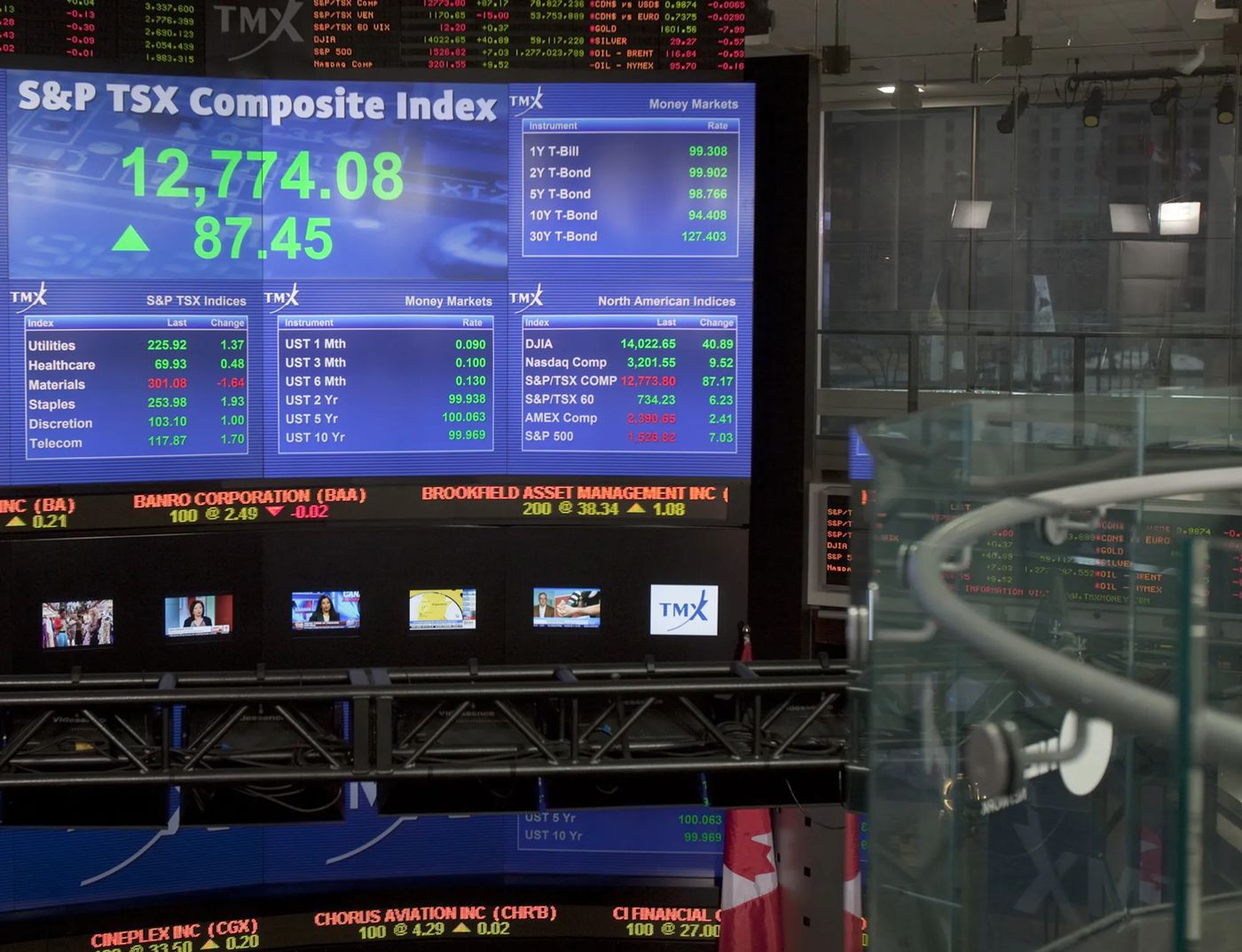
The primary benchmark for the Canadian equity market is the S&P/TSX Composite Index, which reflects the performance of large companies listed on the Toronto Stock Exchange. As of October 20, 2026, the TSX rose to 36,108 points, marking a daily gain of 0.50%. For the full year to date in 2026, the TSX is up about 14%, although it has traded largely sideways since August. In comparison, the American benchmark S&P 500 index is up about 12% year to date. Both indexes experienced a significant pullback of about 10% in March of 2026, triggered by geopolitical conflict, which is a typical occurrence within a given year. Monitoring these index levels and their trends provides a high-level view of overall market health and investor sentiment.
Historical context is important for interpreting current index levels. Stock markets typically experience predictable patterns of volatility within any given calendar year. On average, markets experience one to three pullbacks in the 5% to 15% range. For example, the S&P 500 experienced one 10% pullback in March 2026. Recognizing this pattern helps investors understand that volatility is a normal part of market cycles.
- On average, stock markets experience one to three pullbacks each year.
- These pullbacks typically range from 5% to 15% in magnitude.
- In 2026, the S&P 500 experienced one 10% pullback in March.
- The TSX also declined during that same March period.
- Despite these pullbacks, both indexes have posted solid year-to-date gains.
Understanding this historical pattern helps investors maintain perspective during periods of market decline. It allows them to recognize pullbacks as common events rather than catastrophic ones. This context is crucial when news headlines highlight a market drop. It enables investors to assess if the move is within the normal historical range or if it signals a more serious fundamental shift in the market.
How Sector Performance Reveals Market Sentiment
Beneath the headline index numbers, the performance of different industry sectors offers deeper insight into prevailing market trends and investor caution. For the full year in 2026, the leading sectors in the United States have been energy and technology, with both gaining more than 20%. However, the month of October 2026 has shown a notable rotation in leadership. During this period, energy has maintained its lead but has been followed by defensive sectors such as consumer staples, health care, and utilities. Technology has been the worst performer for the month, falling into negative territory. This shift suggests investors are gravitating toward more stable, value-oriented investments amid economic headwinds. The Canadian market, with its higher weighting in financials, materials, and energy, has benefited from this rotation, gaining almost 2.5% in October 2026.
The decline in technology stocks has been driven by several specific factors. There have been outsized sell-offs in certain artificial intelligence companies that carry higher debt levels with less free cash flow, including firms like CoreWeave and Oracle. Growing concerns that revenue growth may not meet lofty expectations, based on reports from AI giants like Anthropic and OpenAI, have also contributed. Furthermore, higher interest rates have weighed on the sector, particularly as debt financing becomes a larger source of capital expenditure funding. This sectoral analysis helps investors understand the underlying forces moving the market beyond simple index price changes.
The rotation into defensive sectors is a clear signal of changing risk appetite. Investors often move capital into these areas when they perceive increased economic uncertainty. In October 2026, the defensive sectors that led performance after energy were consumer staples, health care, and utilities. This shift reflected investor caution in the face of headwinds like high inflation and energy prices.
- Consumer staples, which includes companies that sell essential household goods.
- Health care, encompassing pharmaceutical companies and medical service providers.
- Utilities, which are regulated companies providing essential services like electricity.
This movement into sectors known for stable earnings and dividends contrasts sharply with the sell-off in the technology sector during the same period. In October 2026, technology was the worst performing sector, falling into negative territory. News analysis that breaks down these sector moves helps investors see where capital is flowing and why. This information can inform their decisions about portfolio balance and risk management during uncertain times.
The Fundamental Pillars Supporting Markets
Despite periodic volatility, several fundamental economic factors continue to support the equity market outlook. The first and most critical pillar is strong corporate earnings growth. Corporate earnings for S&P 500 companies are on pace to exceed 30% growth in 2026, while the Canadian TSX is expected to see about 29% growth. These are the highest growth rates since 2021. The early third-quarter earnings season for 2026 is also expected to show growth of about 29% in both the U.S. and Canada. In the U.S., ten of the eleven S&P 500 sectors are forecast to report positive earnings growth, led by technology, communication services, energy, and materials. In Canada, nine of the eleven sectors are expected to have positive growth. This widespread earnings strength provides a foundational support for stock prices over time.
The second pillar is the resilience of economic growth, particularly in the United States. Both the U.S. manufacturing and services sectors have been expanding, with Purchasing Managers' Index readings above 50 throughout 2026. In Canada, the manufacturing sector has been in expansion for six consecutive months, though momentum has faded more recently. The Canadian services sector, however, remains in contraction, partly due to tariff uncertainty and high energy and transportation costs. The third pillar is the typical nature of market volatility itself, with stock markets historically experiencing one to three pullbacks in the 5% to 15% range each year. Understanding these pillars allows investors to separate short-term noise from longer-term trends.
The strength of corporate earnings is not uniform across all industries. The third quarter of 2026 earnings season forecasts show which sectors are driving the overall growth. For the S&P 500, the leading sectors for earnings growth are technology, communication services, energy, and materials. These forecasts indicate strong profitability in specific areas of the market despite broader economic concerns.
- Technology
- Communication Services
- Energy
- Materials
It is noteworthy that ten of the eleven sectors in the S&P 500 are forecast to have positive earnings growth for the third quarter of 2026. This indicates broad-based corporate health. In Canada, nine of eleven sectors are forecast to be positive, showing a similarly strong but slightly less widespread trend. This earnings data is a key piece of news that provides a concrete measure of corporate profitability. It helps counter market narratives focused solely on anxiety and volatility.
Global and Domestic Events Influencing Markets
Stock market news frequently highlights how specific events and geopolitical developments directly impact prices and sectors. Conflicts in regions like the Middle East and Ukraine have pushed diesel and gasoline prices higher, straining Canadian households while simultaneously boosting the domestic economy through higher crude oil values. Political developments also make headlines, such as the potential impact of U.S. trade policies on Canadian companies like aerospace giant Bombardier. Domestic political events, like a provincial referendum in Alberta, can influence market sentiment toward regional economies and specific industries. Furthermore, central bank policies, particularly from the Bank of Canada, are closely watched for signals on interest rate changes that affect borrowing costs and corporate valuations. These events illustrate how interconnected and reactive financial markets are to news flow from around the world.
News coverage often connects specific events to their immediate market consequences. For example, the threat of trade action against Bombardier was linked to its significant operations in the U.S. state of Kansas. The outcome of the Alberta referendum was seen as settling a question about provincial separation, allowing markets to focus on other factors. The direct impact of these events can be seen in commodity prices, currency fluctuations, and the stock prices of affected companies. Investors who follow the news can better anticipate which sectors might benefit or suffer from ongoing developments, such as energy companies gaining from higher oil prices or transportation firms facing higher costs.
Common Themes in Canadian Market Analysis
Financial commentary aimed at Canadian investors often focuses on several recurring themes tied to the structure of the local market. Analysis frequently highlights the performance of Canada's Big Six banks, which are major components of the TSX and key to the financial sector. There is consistent coverage of energy and commodity stocks, given their significant weight in the index and sensitivity to global oil prices. Dividend investing is another predominant theme, with many reports analyzing the yields and payout reliability of large Canadian corporations like Royal Bank of Canada, Enbridge, CN Rail, and BCE. Commentary also often discusses strategies for retirement savings within Canadian registered accounts, noting factors like the dividend withholding tax on U.S. stocks and varying retirement savings targets. These themes reflect the specific interests and portfolio compositions of many Canadian investors.
Dividend-focused analysis is particularly prevalent because many Canadians hold income-generating stocks in registered accounts like TFSAs and RRSPs. Reports will detail dividend yields, the durability of payouts, and the benefits of dividend reinvestment plans. Another common topic is retirement planning, with analyses suggesting different savings targets based on desired lifestyle, such as the figure of $1.7 million cited by BMO. This type of content connects broad market news directly to personal financial goals, making it highly relevant for readers. It also often includes discussions on how to use tools like the TFSA to save for retirement while investing in the market.
Interpreting News for Personal Investment Decisions
For individual investors, the practical use of market news involves filtering information to support their own strategy without reacting impulsively. It is important to distinguish between factual reporting on index levels or earnings and promotional content that may highlight specific stocks. News about sector rotations can inform asset allocation decisions, while earnings reports provide data on corporate health. Understanding that volatility is normal, with markets typically facing several pullbacks each year, can provide perspective during downturns. Investors should also cross-reference news from multiple sources to get a balanced view and focus on long-term fundamentals like earnings growth rather than daily price fluctuations. This disciplined approach helps in using news as a tool for education and awareness rather than as a direct trigger for trades.
A key mistake is making investment decisions based solely on a single headline or a short-term market move. The news in October 2026 showed technology stocks lagging while defensives led, but that followed a period where technology was a top performer for the year. Similarly, while the TSX was up almost 2.5% for the month, it had been trading sideways since August. Context about time frames and underlying causes, such as high bond yields or inflation pressures, is essential for proper interpretation. Investors who develop a routine for reviewing news from reliable sources can build a more stable and informed investment process that aligns with their long-term financial objectives.
Frequently asked questions
What is the main Canadian stock market index?
The main Canadian stock market index is the TSX, or Canada's main stock market index. As of October 20, 2026, the TSX rose to 36108 points. This index tracks the performance of large companies on the Toronto Stock Exchange, which is Canada's premier equities exchange. The TMX group facilitates electronic trading on the TSX. Daily updates on its activity are available through sources like TMX Money and BNN Bloomberg.
How has the TSX performed in 2026?
For the year to date in 2026, the Canadian TSX is up about 14 percent. However, both the TSX and the S&P 500 have traded largely sideways since August. In October specifically, the TSX is higher by almost 2.5 percent. This recent performance has been supported by the Canadian equity market's higher weights to sectors like financials, materials, and energy, which have benefited from a market rotation toward more defensive investments.
Which sectors are leading the market in 2026?
For the full year in the United States, energy and technology sectors lead, with both up more than 20 percent. However, in October thus far, market leadership has shifted. Energy has maintained its lead but has been followed by defensive areas such as consumer staples, health care and utilities. Technology has been the worst performer for the month, falling into negative territory. This rotation suggests investors are seeking more cautious, defensive investments.
What are the current headwinds for the stock market?
Current market headwinds include raised inflation and energy prices, along with government bond yields near their highs for the year. Geopolitical conflicts in the Middle East and Ukraine have pushed fuel prices up, straining households. Furthermore, concerns over revenue growth not meeting lofty expectations, particularly in the technology sector, have contributed to uncertainty. These factors have led equity and bond markets to handle a period of spooky volatility in October.
How strong are corporate earnings in 2026?
Corporate earnings growth remains strong in 2026. S&P 500 company earnings are on pace to exceed 30 percent growth this year, while the Canadian TSX is expected to see about 29 percent earnings growth. These are the highest growth rates since 2021. The early third quarter earnings season is also expected to see earnings growth of about 29 percent in both the United States and Canada, with most sectors forecast to report positive growth.
Where can I find Canadian stock market news?
Canadian stock market news is available from several major sources. BNN Bloomberg provides Canadian business news, TSX updates, and Bank of Canada coverage. Yahoo Finance Canada offers free stock quotes, up to date news, and international market data. TMX Money provides the official Canadian Stock Market Summary from the Toronto Stock Exchange. Other sources include The Motley Fool Canada for investing advice and Stockwatch for real time quotes from multiple North American exchanges.
Sources and further reading
- BNN Bloomberg, Canada Business News, TSX Today, Oil ... bnnbloomberg.ca
- The Motley Fool Canada: Stock Market Analysis and Investing ... fool.ca
- Weekly stock market update edwardjones.ca
This article explains how things work and is not financial, tax or legal advice. Rules, limits and rates change, so check the current figures with the Canada Revenue Agency, your province or your financial institution before you act.