Property tax in Toronto is an annual levy based on the assessed value of your property, used to fund municipal services and provincial education. The total amount you pay is calculated by multiplying your property's phased-in assessed value by the combined municipal and education tax rates. Toronto's residential property tax rate is the lowest in Ontario, though the high property values in the city mean the total dollar amount can be significant. Understanding your bill, payment dates, and potential rebates is essential for all Toronto property owners.
How Toronto Property Tax is Calculated
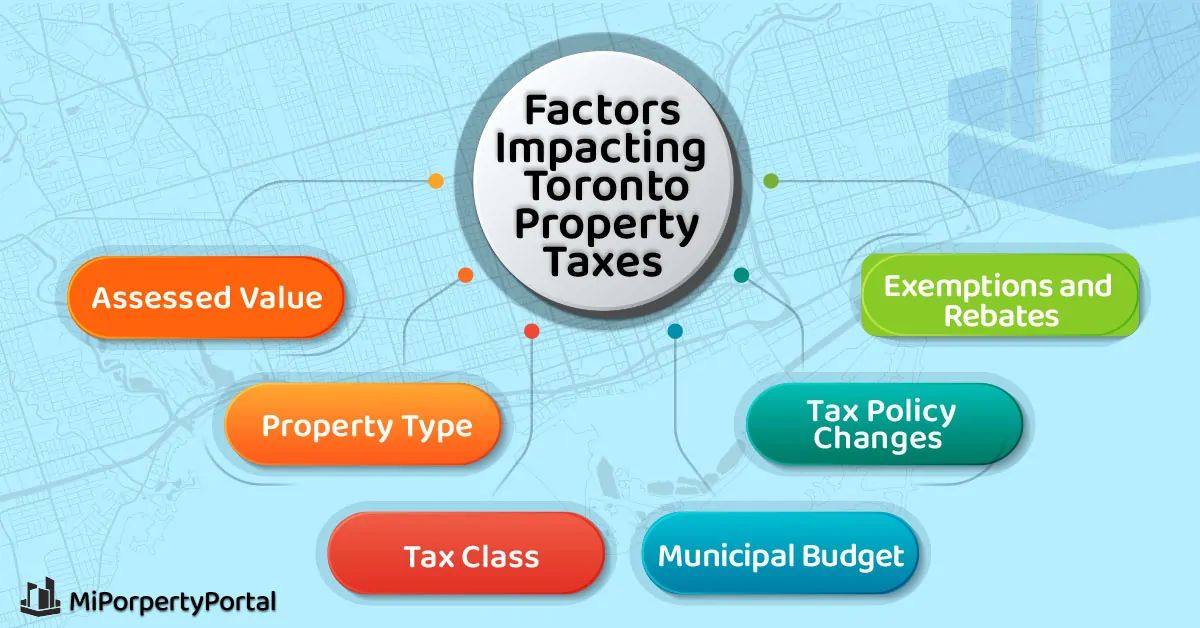
Your annual property tax bill in Toronto is not a simple percentage of your home's market price. The calculation begins with the assessed value of your property as determined by the Municipal Property Assessment Corporation (MPAC), which conducts province-wide assessments every four years. This assessed value often differs from the current market value and is phased in over time to prevent sudden large increases. The city applies the current year's tax rates to this phased-in value. The total tax rate has two main components: the municipal rate set by Toronto City Council and the education tax rate set by the Government of Ontario. For 2026, the residential municipal rate is 0.605295% and the education rate is a uniform 0.153000% across all property classes. An additional City Building Fund Levy, established to finance transit and housing projects, is also added to the municipal portion. The final formula is: Estimated Property Tax = Phased-in Assessed Value x (Municipal Tax Rate + City Building Levy + Education Tax Rate). For example, a home with a phased-in assessed value of $692,140 and a total tax rate of 0.767311% would result in an estimated annual property tax of approximately $5,311.

Property Tax Rates and Property Classes
Toronto sets different tax rates for various classes of property, which directly influences the total tax burden. The primary classes are Residential, Multi-Residential, Commercial, and Industrial. The city has introduced new subclasses to provide targeted tax relief. The Multi-Residential subclass, introduced in 2025, offers a 15 per cent reduction in the municipal property tax rate for qualifying new rental properties. MPAC identifies and advises property owners if their building qualifies for this subclass. Similarly, the Small Business tax subclass provides a 20 per cent reduction in the commercial tax rate for eligible properties, offering relief to small businesses. These subclass reductions apply only to the municipal portion of the tax bill, not the provincial education portion. Commercial and Industrial City Tax Rates include an additional rate to fund Charity Rebates within each class, which is factored into their overall municipal rate structure.
For the 2026 tax year, the residential property tax rate in Toronto is 0.605295 percent for the municipal portion. The multi-residential property tax rate for 2026 is 1.047960 percent. A new multi-residential subclass offers a reduced municipal property tax rate of 0.605295 percent for qualifying new rental properties. The education portion of the property tax rate, set by the Government of Ontario, is 0.153000 percent for these classes. Property tax is calculated by multiplying the phased-in assessed property value by the total tax rate. These rates are reviewed annually as part of the city's budget process.
| Property Class | Municipal Rate | Education Rate |
|---|---|---|
| Residential | 0.605295% | 0.153000% |
| Multi-Residential | 1.047960% | 0.153000% |
| New Multi-Residential | 0.605295% | 0.153000% |
| Commercial | Variable | 0.153000% |
It is important to note that the residential rate, while the lowest in Ontario, when applied to Toronto's high property values results in a substantial annual payment for homeowners. A report analyzing 35 Ontario cities found that Toronto's rate of 0.614770 per cent meant a homeowner with a property valued at $500,000 would pay approximately $3,074 in property taxes. In contrast, Windsor, with the highest provincial rate of 1.789394 per cent, would levy $8,947 on a home of the same value, illustrating the wide disparity driven by differing real estate market values across municipalities. The five cities with the lowest property tax rates in the province are all located within the Greater Toronto Area, where real estate prices have been historically high.
Important Dates and Payment Process
Property tax in Toronto is billed in instalments with strict due dates throughout the year. The city issues an interim bill early in the year, typically based on half of the previous year's taxes, and a final bill later that accounts for the full annual amount. Missing a payment deadline triggers immediate penalties. All past due taxes are charged a penalty of 1.25% on the first day they are overdue, and a subsequent 1.25% penalty is added on the first day of each following month. You can pay your taxes through several methods including online banking, pre-authorized payment plans, mail, or in person at financial institutions. The city encourages enrolment in pre-authorized payment plans to avoid missed deadlines. Special charges, such as unpaid fees under Toronto Municipal Code Chapter 441, can be added to your property tax account if they remain unpaid for more than 90 days. These charges are issued on a separate Transfer to Tax Statement with their own distinct payment due date and become subject to the same arrears collection process as property taxes. Notification of these added charges is sent separately, and they are subject to the same 1.25 per cent monthly penalty structure if not paid by their assigned due date.
Land Transfer Tax for Toronto Home Buyers
When purchasing a property in Toronto, buyers are subject to two separate land transfer taxes: the provincial Ontario Land Transfer Tax and the municipal Toronto Land Transfer Tax. This tax is a significant closing cost calculated as a percentage of the purchase price using a marginal rate structure. First-time home buyers in Ontario may be eligible for a refund of up to $4,000, which covers the full tax on homes purchased for up to $368,333. The municipal Toronto Land Transfer Tax mirrors these brackets but has different thresholds for higher-value homes. As of April 1, 2026, higher luxury MLTT rates apply to eligible residential properties containing one or two single-family residences with a purchase price exceeding $3 million. These new luxury tax brackets range from 4.4% to 8.6% on the portion of the purchase price within each applicable bracket, paid in addition to the provincial tax. An expanded MLTT threshold for homes valued at $3 million or more took effect on January 1, 2024, with rates starting at 3.5% and ranging up to 7.5% for homes valued at $20 million and above.
The steps to claim the first-time home buyer rebate are as follows. First, you can claim an immediate refund when registering the land transfer and paying the tax, using forms available for electronic or paper registration. Second, if the rebate is not claimed at registration, you must pay the full tax and then submit a refund claim to the Ministry of Finance within 18 months. The required application information includes proof of the purchase and that you meet the first-time buyer criteria. For the municipal Toronto rebate, first-time buyers can receive a maximum of $4,475, which covers the full Toronto land transfer tax on homes worth $400,000 or less. For a home purchase of $500,000 in Toronto, the buyer would need to calculate and pay both the provincial and municipal land transfer taxes, then apply the respective rebates if they are a first-time buyer.
Using the Toronto Property Tax Lookup Tool
The City of Toronto provides an online Property Tax Lookup tool, which is a secure portal for property owners to manage their tax accounts. This tool acts as a digital dashboard, offering immediate access to your current tax balance, payment history, upcoming instalments, and bills from the past two years. To access the tool, you need specific information from your latest property tax bill, including your Assessment Roll Number, last name or business name, postal code, and customer number. Once logged in, you can view your account status, download PDF copies of your bills, and manage account preferences. Key functions include enrolling in pre-authorized tax payments, signing up for eBilling to receive email notifications, and updating your mailing address. The tool is available 24 hours a day and is mobile-friendly, providing transparency and control over your property tax obligations. If you encounter issues logging in, you should verify you are using the exact information as it appears on your bill and ensure your postal code is correctly formatted. For persistent problems, you can contact customer service by calling 311 within Toronto from Monday to Friday, 8:30 a.m. to 4:30 p.m., or 416-392-2489 from outside the city. New property owners will receive a property tax statement once ownership information is updated, which will include the customer number needed to access the lookup tool for the first time.
Additional Taxes and Charges for Property Owners
Beyond the standard property tax, Toronto property owners may be liable for several other specific taxes and charges. The Vacant Home Tax is a levy on residential properties that are unoccupied for six months or more during a calendar year. Officially implemented on January 1, 2022, this tax became payable starting in 2023 and is declared annually by the property owner. The City Building Fund Levy is an additional charge added to the property tax bill, established to fund major public transit and housing projects. City Council adopted increases to this levy, adding one per cent in 2020 and 2021 to the existing 0.5 per cent increment, with an additional 1.5 per cent annually from 2022 through 2026. Furthermore, unpaid city fees or charges, such as those for water or bylaw violations, can be transferred to your property tax account if they remain unpaid for more than 90 days. These transferred charges are issued on a separate statement and become collectible as property tax arrears, subject to the same penalty structure. In accordance with the City of Toronto Act, 2006, the city may also fix a scale of costs to be charged as reasonable costs of proceedings instead of charging actual costs when determining a cancellation price for a tax sale. The fees for such proceedings are reviewed annually as part of the budget process and are effective as of January 1, 2026, but are subject to change.
The Role of MPAC and Property Assessment
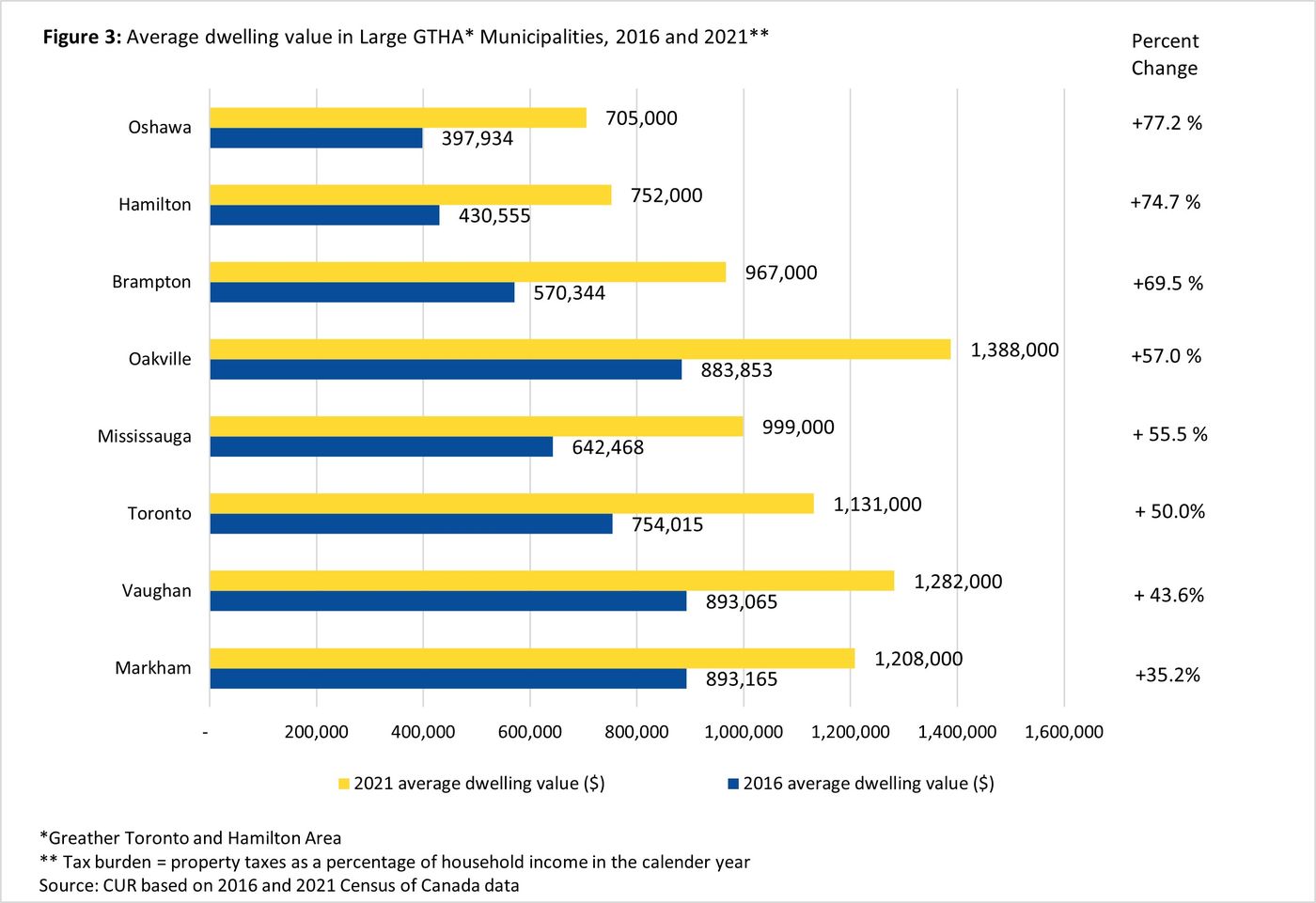
The Municipal Property Assessment Corporation is the independent, not-for-profit corporation mandated by the Ontario government to assess all properties in the province. MPAC conducts a comprehensive assessment update every four years, evaluating properties ranging from residential homes to farms and commercial buildings. For residential properties, MPAC uses several factors including recent sale prices of comparable homes, location, lot dimensions, living area, age of the property, and quality of construction to determine the assessed value. This assessed value is intended to reflect the property's market value as of a specific valuation date set by MPAC. The corporation releases overviews of its valuation guidelines, but the assessment of a specific property is not transparent, and homeowners cannot retrieve or compare the assessed values of other properties. The assessed value is then phased in over the four-year cycle to cushion the impact of any significant increase. If a property owner disagrees with MPAC's assessment, they have the right to file a Request for Reconsideration. It is crucial to understand that your property tax bill is based on this phased-in assessed value, not the current market price, which can differ significantly, especially in a dynamic market like Toronto's where the average home price increased by approximately 57% in the 10-year period from December 2015 to December 2025.
Common Mistakes and How to Avoid Them
Several common errors can lead to unnecessary penalties or confusion regarding Toronto property taxes. A frequent mistake is missing a payment deadline, which instantly incurs a 1.25 per cent penalty with additional penalties accruing monthly. Setting up a pre-authorized payment plan is the most effective way to avoid this. Another error is assuming your property's assessed value is the same as its market value. MPAC assessments are independent and often different, and they are phased in over time. Home buyers often overlook the full cost of land transfer taxes, forgetting they must pay both the provincial and municipal taxes, and may not budget for the higher luxury rates on properties over $3 million. Failing to declare occupancy status for the Vacant Home Tax can result in penalties, as all residential property owners must submit a declaration each year. Finally, not using the official Property Tax Lookup tool can leave you reliant on paper bills and miss important updates or the ability to verify payments. Regularly checking your account online provides the most current information and helps manage your obligations proactively. Real estate investors with multiple properties can use the lookup tool to manage several accounts from one place, which is crucial for avoiding overlooked payments and penalties across a portfolio. Lawyers and mortgage companies also often verify property tax status during transactions, making an accurate and up-to-date account essential.
Frequently asked questions
Why is Toronto's property tax rate the lowest in Ontario?
Toronto's residential property tax rate is the lowest in the province because cities with high-valued real estate and larger populations can collect sufficient revenue from individual homeowners at a lower rate. The higher assessed values of Toronto properties mean that even a low percentage yields a substantial dollar amount for municipal coffers. This allows the city to fund services while maintaining a competitive rate compared to municipalities with lower property values that require higher rates to generate needed revenue. A 2026 report showed the five cities with the lowest property tax rates in Ontario are all within the Greater Toronto Area, where real estate prices are highest.
How can I calculate my estimated property tax in Toronto?
You can estimate your property tax by multiplying your property's phased-in assessed value by the total applicable tax rate. For a residential property in 2026, you would use the formula: Assessed Value x (0.605295% + City Building Levy + 0.153000%). The City Building Levy is an additional percentage set by council. Your assessed value is determined by MPAC and is not necessarily your purchase price. Online calculators are available that allow you to input either an assessed value or a market price to generate an estimate, though actual bills may include additional local levies not reflected in standard calculators.
What is the penalty for late property tax payment in Toronto?
Toronto imposes a strict penalty on overdue property taxes. A penalty of 1.25 per cent is charged on the first day the payment is late. Subsequently, an additional penalty of 1.25 per cent is added on the first day of each following month that the taxes remain unpaid. This applies to all past due amounts, including any special charges that have been transferred to the tax account. To avoid these penalties, property owners should enroll in a pre-authorized payment plan or ensure they note and adhere to the instalment due dates provided on their bills.
What rebates are available for first-time home buyers in Toronto?
First-time home buyers in Toronto may be eligible for two land transfer tax rebates. For the Ontario Land Transfer Tax, there is a maximum refund of $4,000, which covers the full tax amount on homes purchased for up to $368,333. For the Toronto Municipal Land Transfer Tax, there is a maximum rebate of $4,475, covering the full tax on homes worth $400,000 or less. Buyers can claim these rebates immediately upon registering the land transfer using provided forms. If not claimed then, a refund application must be submitted to the Ministry of Finance within 18 months of the purchase, requiring proof of purchase and first-time buyer status.
What is the Vacant Home Tax in Toronto?
The Vacant Home Tax is an annual tax levied on residential properties in Toronto that are unoccupied for six months or more during the previous calendar year. The tax was officially implemented on January 1, 2022, and became payable starting in 2023. All residential property owners must submit a declaration of the occupancy status of their property each year, even if it is occupied. The tax is designed to encourage the productive use of housing and increase the supply of homes available for rent or purchase in the city. Failure to declare can result in the property being deemed vacant and the tax being applied.
How does the new Multi-Residential property subclass work?
Introduced in 2025, the Multi-Residential property subclass offers a 15 per cent reduction in the municipal property tax rate for qualifying new multi-residential rental properties. This incentive is designed to encourage the development of new rental housing. The Municipal Property Assessment Corporation identifies properties that meet the eligibility criteria and advises the owners directly. The reduction applies only to the municipal portion of the tax bill, not the provincial education portion. Property owners do not need to apply. MPAC's assessment automatically places eligible properties into this subclass, which for 2026 would apply a municipal rate of 0.605295% instead of the standard multi-residential rate of 1.047960%.
Sources and further reading
- Property Tax Rates & Fees toronto.ca
- Toronto land transfer tax calculator ratehub.ca
- Toronto Property Tax 2026 | Calculator & Rates wowa.ca
- Toronto Property Tax Lookup, A Complete Guide oneaccounting.cpa
- Toronto's property tax rate the lowest in Ontario: report ca.finance.yahoo.com
This article explains how things work and is not financial, tax or legal advice. Rules, limits and rates change, so check the current figures with the Canada Revenue Agency, your province or your financial institution before you act.