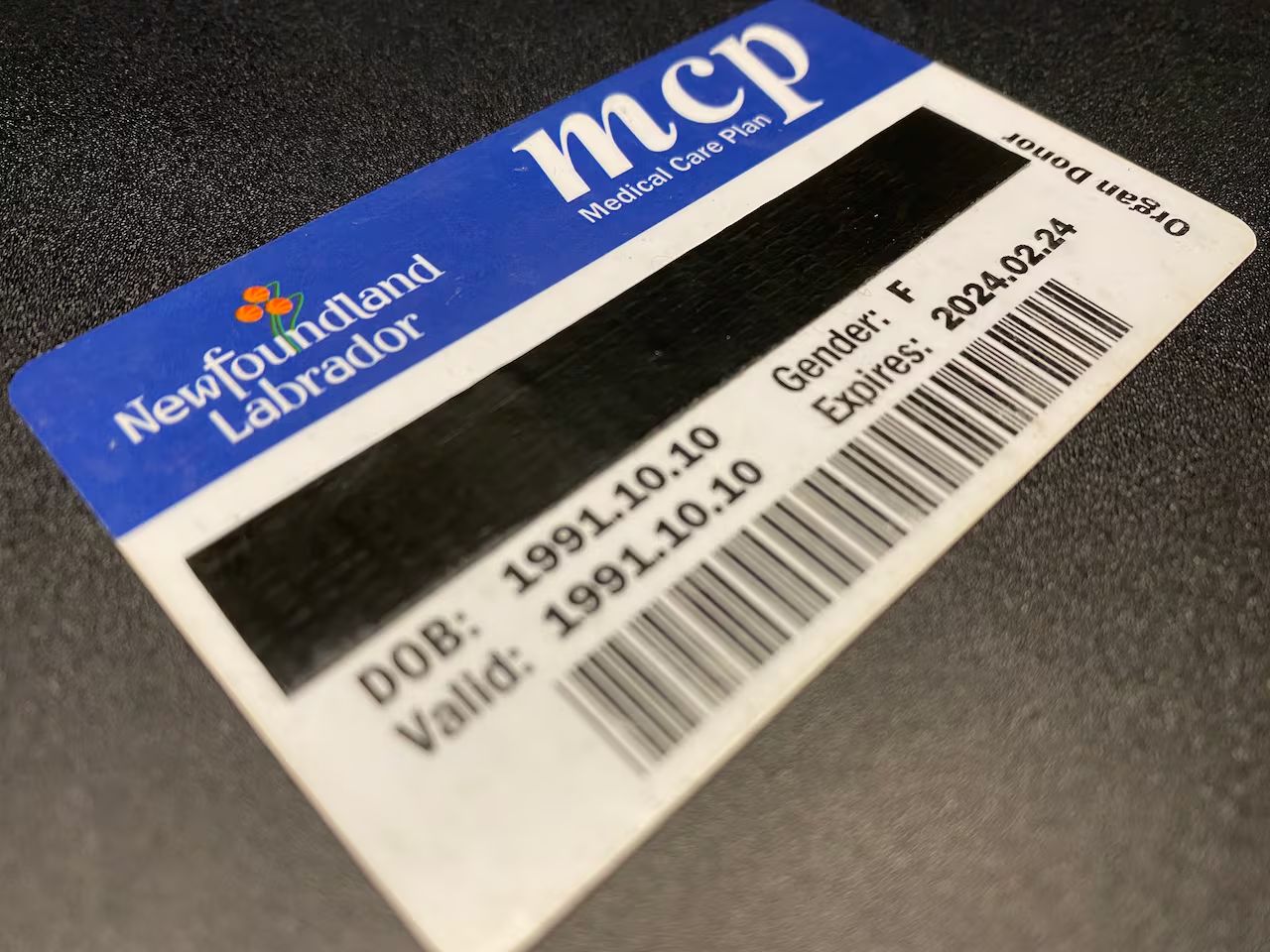
The Newfoundland and Labrador Medical Care Plan (MCP) is the province's publicly administered health insurance program for residents. Introduced on April 1, 1969, it covers the cost of insured physician services and hospital care under the Hospital Insurance Plan. Eligibility requires lawful status in Canada and establishing primary residency in the province. All residents must register to receive an MCP card, which is necessary to access covered medical services without direct billing.
What the Newfoundland and Labrador MCP Covers
The Newfoundland and Labrador Medical Care Plan is designed to cover the cost of insured physician services for registered beneficiaries. This includes visits to a doctor's office, medical clinics, and specialist consultations. When services are received in a hospital, coverage is provided under the Hospital Insurance Plan for insured in-patient services. These hospital services include accommodation and meals in a standard ward, necessary nursing services, laboratory and diagnostic procedures, drugs administered during the hospital stay, and operating room services. The plan operates in compliance with the Canada Health Act, ensuring coverage for medically necessary hospital and physician services. It is important to present a valid MCP card when receiving these services to prevent being billed directly by the provider.
While MCP covers core medical services, it does not extend to all health-related expenses. The plan explicitly does not cover routine dental care for adults, eye examinations for corrective lenses, glasses, contact lenses, or prescription drugs for use outside a hospital. Paramedical services such as those provided by chiropractors, optometrists, and physiotherapists in private clinics are also not covered. For hospital stays, additional charges for preferred private or semi-private rooms are not covered unless they are medically required or standard accommodation is unavailable. Understanding these limitations is crucial for residents to plan for additional health expenses.
The Hospital Insurance Plan component details specific insured and uninsured services. Insured in-patient services explicitly include the use of radiotherapy facilities and radioactive isotopes where available, as well as rehabilitative services like physiotherapy, occupational therapy, audiology, and speech-language pathology when provided in a hospital setting. Uninsured services that are not covered include services provided in private non-approved Canadian diagnostic imaging facilities such as those for MRI, CT scans, or X-rays. This distinction between hospital-based and privately delivered diagnostic services is a key point for beneficiaries to note.

Eligibility Requirements for MCP Coverage
To be eligible for registration with the Medical Care Plan, an individual must be a resident of Newfoundland and Labrador. The Medical Care and Hospital Insurance Act defines a resident as a person who is lawfully entitled to be or to remain in Canada, makes their home in the province, and is ordinarily present in the province. This definition explicitly excludes tourists, transients, and visitors. Eligibility is contingent on the intention to reside in the province full-time. Individuals who do not ordinarily reside in the province, even if staying for an extended period, are ineligible and must maintain coverage from their home province, territory, or country.
Applicants must provide documentation to prove both their lawful status in Canada and their residency in Newfoundland and Labrador. Proof of lawful status can include a Canadian birth certificate, citizenship certificate, permanent resident card, or valid work or study permit. Proof of residency requires documents that show a name and current provincial home address, such as a driver's licence, provincial photo identification card, utility bill, or a signed residential lease agreement. All documents submitted must be current and unexpired. MCP reserves the right to request original documents for verification even if clear copies are initially submitted.
The Medical Care Insurance Beneficiaries and Inquiries Regulations and supporting MCP policies specify the eligibility requirements. As the administrator, MCP has established criteria to ensure these regulations are applied consistently and fairly. The program may ask for copies of documents not explicitly listed as examples, and all items provided must be current and unexpired. It is important to note that MCP does not cover fees for Immigration Medical Exams that may be required by Immigration, Refugees and Citizenship Canada for those applying to enter Newfoundland and Labrador from outside the country.
- Lawful status documents: Canadian birth certificate, citizenship certificate, permanent resident card, valid work or study permit.
- Residency documents: Newfoundland and Labrador driver's licence, provincial photo ID, utility bill, residential lease agreement, Record of Employment.
- Persons ineligible: Tourists, transients, visitors, and those not ordinarily resident in the province.
- Document requirement: All items must be current and unexpired. Original documents may be requested for viewing.
- Specific exclusion: MCP does not cover fees for required Immigration Medical Exams.
How to Apply for an MCP Card
Applying for the Newfoundland and Labrador Medical Care Plan requires completing the official Application for Newfoundland and Labrador Health Care Coverage form. This form is available as a fillable PDF from the government website and must be completed in full. The application process itself involves no fees or charges. Once the form is completed, it must be submitted along with clear photocopies of the required identification and immigration status documents. Acceptable methods of submission include regular mail, fax, email, or dropping the application into a 24-hour mail slot at an MCP office.
Properly completed applications submitted with all necessary supporting documents typically have a response time of two weeks. Incomplete applications or those with unclear documentation will face delays or refusal. Upon approval, a wallet-size plastic MCP card is mailed to the applicant. This card displays the individual's personal health identity number and an expiration date. The card must be presented to health care providers whenever accessing insured services. Failure to present the card may result in direct billing by the medical provider or denial of service. It is the beneficiary's responsibility to carry this card when visiting any doctor, hospital, clinic, or medical facility.
The application form is used both for first-time registration and for certain updates. If you are only updating information and not applying for the first time, you must still complete the relevant sections of the form. The contact information for submitting forms is provided at the bottom of the application page. MCP emphasizes that failure to submit clear copies of required documents, or to accurately provide all required information and signature, will result in delay or refusal of your MCP registration. There is no in-person application requirement. The process is designed to be handled remotely.
- Step 1: Download and complete the official MCP application form as a fillable PDF or printed copy.
- Step 2: Gather required proof of lawful status and provincial residency documents.
- Step 3: Submit the form and clear document copies by mail, fax, email, or 24-hour drop-off.
- Step 4: Wait for processing, which typically takes two weeks for complete applications.
- Step 5: Receive your plastic MCP card by mail upon approval.
- Step 6: Present the MCP card to health care providers for all insured services.
- Step 7: Keep your card safe and report loss or changes immediately.

MCP Card Renewal and Rules for Absences
An MCP registration is valid for a period of up to five years, depending on the applicant group under which an individual is registered. The expiration date is printed on the MCP card. Prior to this date, beneficiaries will be contacted by regular mail or through a MyGovNL account to confirm renewal. There are no fees for renewing an MCP card. To maintain eligibility, a beneficiary must continue to meet the provincial residency requirements and possess valid, unexpired immigration documents if applicable. Coverage will not be renewed and may be terminated at any time if these criteria are not met, such as not conforming with in-province residency requirements.
Registered beneficiaries who have been covered for at least one year may leave the province for vacations. The standard allowance is for up to eight months in a calendar year. Furthermore, once every five years, a beneficiary may be absent for up to one full year. These rules are designed to ensure that MCP coverage is provided primarily to those who consider Newfoundland and Labrador their permanent home. When a new card is received after renewal, the old card should be destroyed and the updated card used immediately.
The rules surrounding absences have specific conditions to maintain continuous coverage. After an absence that exceeds eight months in a single year, subsequent absences must not exceed eight months in each of the next four years. This policy ensures that beneficiaries cannot repeatedly use the extended one-year absence provision. MCP monitors compliance with these residency rules, and coverage may be terminated if a beneficiary is no longer ordinarily present in the province. It is the responsibility of the beneficiary to understand these limits and plan travel accordingly to avoid a lapse in health insurance coverage.
Supplementary Health Programs and Detailed Coverage Gaps
While MCP covers physician and hospital services, the provincial government administers several supplementary programs for specific groups. The Children's Dental Health Program provides universal access to basic dental services for children aged 12 and under, including examinations at six-month intervals, cleanings at 12-month intervals, fluoride applications for children aged six to twelve, routine fillings and extractions, and sealants. Limited dental coverage is also available for youths aged 13 to 17 from families receiving Income Support, with services limited to a two-year cycle. For eligible adults under the Adult Dental Program, basic services are limited to a three-year cycle and standard dentures to an eight-year cycle. Coverage also exists for certain surgical-dental procedures that are medically necessary to be performed in a hospital.
Significant coverage gaps exist that require personal planning. Routine vision care, including eye exams for glasses, and the cost of glasses or contact lenses are not covered. Most paramedical services like chiropractic care, podiatry, naturopathy, osteopathy, or physiotherapy in non-hospital facilities are excluded. Furthermore, MCP coverage for medical services received outside Canada is limited. Claims are paid only at MCP rates, which are the rates paid to Newfoundland and Labrador physicians. When the amount billed exceeds this payable amount, the patient is responsible for the difference. The costs in countries like the United States are significantly higher, making private travel health insurance strongly recommended for any trip outside the province, even for a single day.
The Prescription Drug Program operates separately from MCP. It provides 100 percent coverage for recipients of income support benefits and for those aged 65 and over receiving both Old Age Security and the Guaranteed Income Supplement. Families with low incomes may receive coverage based on net income level. The Assurance Plan protects against extreme high drug costs by capping annual out-of-pocket drug expenses at 5, 7.5, or 10 percent of net family income. The Select Needs Plan offers 100 percent coverage for residents with Cystic Fibrosis and Growth Hormone Deficiency. These programs illustrate that while MCP does not cover outpatient drugs, provincial assistance is available through a separate, income-based system.
| Program/Service | Coverage Status under MCP | Supplementary Provincial Program Details |
|---|---|---|
| Routine Dental Care | Not covered for adults | Children's Dental Health Program (age 12 & under. Exams 6-mo, cleanings 12-mo). Adult Dental Program: basic services on 3-year cycle, dentures on 8-year cycle. |
| Prescription Drugs (outpatient) | Not covered | Newfoundland and Labrador Prescription Drug Program (NLPDP). Coverage based on age, income, and medical need via multiple plans. |
| Vision Care (glasses, exams) | Not covered | No provincial program for routine vision care or corrective lenses. |
| Travel Health Insurance | Pays only MCP rates abroad. Patient pays difference. | No provincial travel insurance. Private insurance is strongly recommended for any out-of-province travel. |
| Paramedical Services | Not covered (e.g., chiropractor, private physio) | Some therapy services (physio, OT, speech, audiology) covered only if performed in a hospital. |
| Hospital Accommodation | Standard ward covered. Private room not covered unless medically required. | Private and semi-private room charges covered only if medically required or if standard ward is unavailable. |
Common Application and Usage Mistakes
A frequent mistake is failing to apply for MCP coverage upon establishing residency in Newfoundland and Labrador. All new residents must register to become beneficiaries. Coverage is not automatic. Another common error is submitting an incomplete application or providing unclear copies of required documents, which leads to processing delays. Applicants must ensure every section of the form is filled out and that photocopies of identification and residency proofs are legible and current. MCP may request original documents for verification, so having them readily available is important. Specifically, a Record of Employment can be used as a residency document, and it must be provided by an employer within five days after employment ends.
Beneficiaries often misunderstand the portability of their coverage. While temporary absences are permitted, prolonged absences beyond the allowed eight months per year or misuse of the once-every-five-years full-year absence can jeopardize eligibility. It is the beneficiary's responsibility to understand these rules and ensure they do not exceed the absence limits. Furthermore, a critical mistake is not carrying or presenting the MCP card when seeking medical services. Health care providers require the card to bill MCP directly. Without it, patients may be billed personally or denied non-emergency service.
Many residents incorrectly assume MCP is a comprehensive health plan, leading to unexpected bills for excluded services. Common surprises include costs for prescription drugs filled at a pharmacy, dental check-ups and cleanings, eye exams and glasses, and treatments from practitioners like chiropractors. Another oversight is not purchasing additional travel insurance when leaving the province, relying solely on MCP's limited out-of-country coverage which pays only Newfoundland and Labrador rates. Finally, failing to update MCP with address changes or new immigration document details can interrupt communication and jeopardize renewal, as MCP sends renewal notices by regular mail or via MyGovNL.
Contact Information and Key Details
The Newfoundland and Labrador Medical Care Plan can be contacted for inquiries, application submissions, and updates. The primary telephone number is 709-758-1600, and a toll-free number is available at 1-866-449-4459. It is important to use these official channels for any communication regarding your coverage. The program's website provides access to application forms and the most current information.
MCP operates in accordance with the Medical Care and Hospital Insurance Act and related regulations. It also functions in compliance with the national Canada Health Act, which sets standards for provincial health insurance plans. This framework ensures that the plan covers medically necessary hospital and physician services. The plan is publicly administered, meaning it is run by the provincial government rather than private insurers. There are no premiums or registration fees for beneficiaries, aligning with the principle of universal access to care based on residency, not payment.
When contacting MCP, having your personal health identity number ready will expedite service. For mailing applications, ensure you use the correct address to avoid delays. Remember that MCP does not provide coverage for Immigration Medical Exams required by federal immigration authorities. For issues related to the separate Prescription Drug Program or dental programs, beneficiaries must contact those specific programs directly, as they have different administration and eligibility rules from the core Medical Care Plan.
Frequently asked questions
Who is eligible for the Newfoundland and Labrador Medical Care Plan?
Eligibility is limited to individuals who are lawfully entitled to be in Canada and who establish Newfoundland and Labrador as their primary place of residence. This means you must make your home in the province and be ordinarily present there. Tourists, visitors, and individuals residing in the province only temporarily are not eligible for MCP coverage. The legal definition of a resident excludes transients and requires an intention to remain.
How do I apply for an MCP card and how long does it take?
You must complete the Application for Newfoundland and Labrador Health Care Coverage form. Submit the completed form along with clear copies of documents proving your lawful status in Canada and your residency in the province, such as a permanent resident card and a utility bill. Submission can be done by mail, fax, email, or drop-off at an MCP office. There is no fee to apply. Processing typically takes about two weeks for complete applications, after which a plastic MCP card is mailed to you.
What does the MCP card cover and not cover?
The MCP card provides coverage for insured physician services and hospital services under the Hospital Insurance Plan. Hospital coverage includes standard ward rooms, nursing services, laboratory and diagnostic procedures, and drugs while in hospital. It does not cover prescription drugs for use outside the hospital, routine dental services for adults, or vision care such as eye examinations for corrective lenses, glasses, and contact lenses. It also does not cover most paramedical services like chiropractors or physiotherapists in non-hospital facilities. For medical care outside Canada, claims are paid only at MCP rates, leaving patients responsible for any higher costs.
How long is the MCP card valid and what are the absence rules?
An MCP card is valid for up to five years, depending on your registration category. Beneficiaries can leave the province for up to eight months each year for vacation. Once every five years, they may leave for up to one full year. If you exceed eight months in a year, you must not exceed eight months in each of the next four years. Coverage may be terminated if you do not meet these residency requirements.
Am I covered by MCP when I travel outside Newfoundland and Labrador or Canada?
MCP provides limited coverage for medically necessary services received in other parts of Canada through inter-provincial agreements. For services outside Canada, MCP will only pay up to the amount it would pay a Newfoundland and Labrador physician for the same service. Costs in countries like the United States are often much higher, leaving you responsible for the difference. Purchasing private travel health insurance before any trip outside the province, even for a day, is strongly recommended.
What supplementary health programs exist in Newfoundland and Labrador?
Several programs supplement MCP. The Children's Dental Health Program covers basic dental services for kids 12 and under. The Newfoundland and Labrador Prescription Drug Program provides drug coverage based on age, income, and medical condition. Limited adult dental coverage exists through the Adult Dental Program on a multi-year cycle. These are separate programs with their own eligibility rules and are not part of the standard MCP physician and hospital coverage.
Sources and further reading
- Medical Care Plan (MCP) - Health and Community Services gov.nl.ca
- Newfoundland & Labrador provincial health care plan (MCP) garrett.ca
- Medical Care Plan | Newfoundland and Labrador benefitswayfinder.org
- Newfoundland and Labrador Provincial Health Insurance ... extendedhealthcanada.ca
This article explains how things work and is not financial, tax or legal advice. Rules, limits and rates change, so check the current figures with the Canada Revenue Agency, your province or your financial institution before you act.