Filing a tax return in Canada is an annual process where individuals report their income and claim deductions and credits to calculate their tax liability or refund. Most residents must file a return, and doing so is necessary to receive important government benefits and credits. The process involves gathering documents, choosing a filing method, and submitting your return to the Canada Revenue Agency by the deadline. This guide explains the rules, steps, and common considerations for filing your Canadian taxes.
Who Needs to File a Tax Return in Canada
You are generally required to file a personal income tax return in Canada if you are a resident for tax purposes. This includes individuals who live and work in Canada, including newcomers who have established significant residential ties such as a home, spouse, or dependants in the country. You become a resident for tax purposes on the date you arrive in Canada. There is no minimum income threshold to file. You are advised to file even if you earned no income, as this is how you qualify for benefits like the Canada Child Benefit and the Canada Groceries and Essentials Benefit. Individuals who were in Canada for 183 days or more during the tax year are also considered residents and must file, which includes many international students attending Canadian colleges or universities.
You should also file a tax return if you are a factual resident of Canada, meaning you are considered a Canadian resident for income tax purposes even while living abroad, such as being on a temporary work assignment outside of Canada. If you are appointed the legal representative for someone who has passed away, you must file a final return on their behalf. Non-residents with specific types of Canadian-source income, such as rental income from Canadian properties, may also have filing obligations. In all cases, each individual is responsible for filing their own tax return.
Key Dates and Deadlines
The Canadian tax year runs from January 1 through December 31. The standard deadline to file your personal income tax return is April 30 of the following year. If you or your spouse or common-law partner are self-employed, the filing deadline is extended to June 15. It is crucial to understand that any balance of tax owing must be paid by April 30, regardless of your filing deadline. Missing the payment deadline can result in interest charges levied by the CRA. Filing your return on time is important to avoid late-filing penalties and to ensure timely access to benefits.
The CRA typically begins accepting electronically filed returns in late February. If you file electronically and are due a refund, you can generally expect it within two weeks if you have direct deposit set up with the CRA. Processing times are longer for paper returns or if you are receiving a refund by cheque. The CRA issues Notices of Assessment after processing your return, which confirms your tax calculation and is an important document to keep for future reference.
Gathering Your Documents and Information
Before you begin your tax return, you must gather all necessary documents. The core documents include all income slips, such as T4 slips from employment, T5 slips for investment income, and T4A slips for pension or self-employment income. You will also need receipts for any deductions or credits you plan to claim, such as those for medical expenses, charitable donations, or tuition fees. Your most recent Notice of Assessment is very helpful for filing your current year's taxes, as it contains carry-forward amounts and other relevant data, but you can still file without it.
You must have your Social Insurance Number (SIN). For newcomers filing their first Canadian return, you may need immigration documents showing your date of arrival. If you have dependants, you will need their information, including SINs and dates of birth, to claim eligible credits. You must report all foreign income earned, and if you have foreign assets worth $100,000 or more, you need to report them on Form T1135. While having a CRA My Account can simplify accessing some slips, you can file your taxes without one by providing all documents yourself.
- Income slips (T4, T5, T4A, T3)
- Receipts for deductions and credits (medical, donations, tuition)
- Social Insurance Number (SIN)
- Most recent Notice of Assessment (helpful but not required)
- Information for dependants (SINs, dates of birth)
- Details of foreign income and assets over $100,000 CAD
- For newcomers: immigration documents and date of arrival
Methods for Filing Your Return
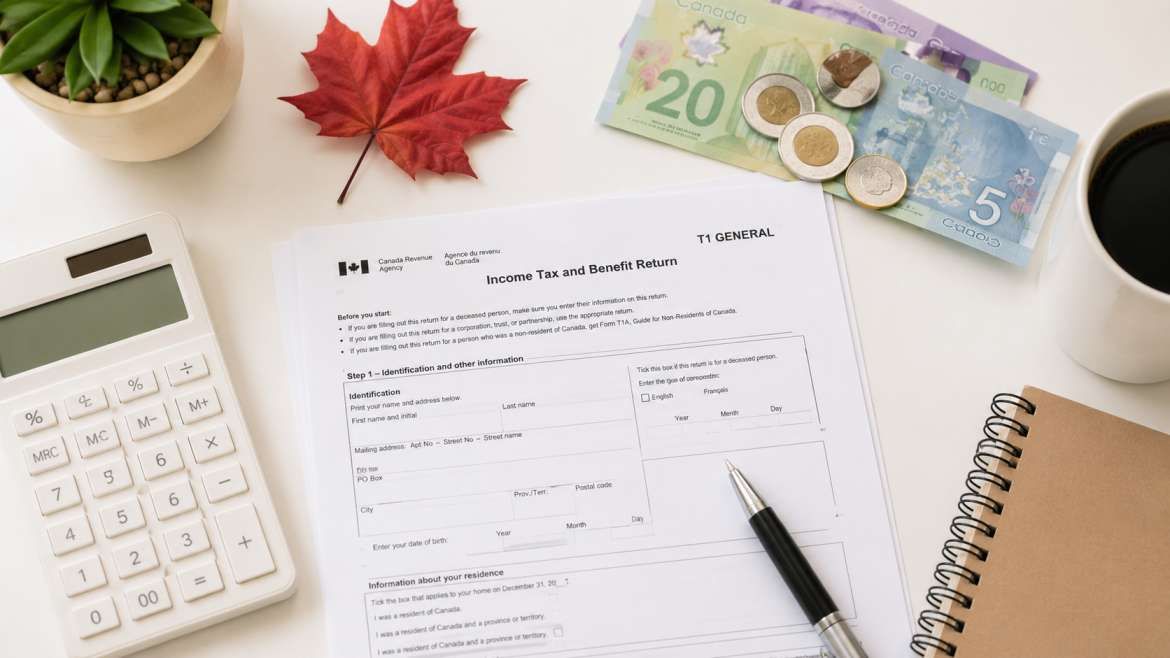
There are several ways to file your income tax return in Canada. You can choose the method that best suits your situation and comfort level. The most common method is using CRA NETFILE-certified tax software, which allows you to prepare and file your return electronically directly to the CRA. Many software options are available, including free versions for those with simple tax situations. You can also file a paper return by completing the income tax package and mailing it to your tax centre, though this method has the longest processing time.
Other options include using the CRA's SimpleFile service, if you are invited and have a lower income and simple tax situation. Free tax clinics through the Community Volunteer Income Tax Program are available for individuals with a modest income and simple tax situation, where a volunteer can prepare your return for free. Finally, you can hire a professional tax preparer, such as an accountant, who will typically file your return using the CRA's EFILE system for a fee. Residents of Quebec must file two separate returns, one federally to the CRA and one provincially to Revenu Québec, which can be done through most tax software or with a professional.
Understanding Income Tax Brackets and Calculation
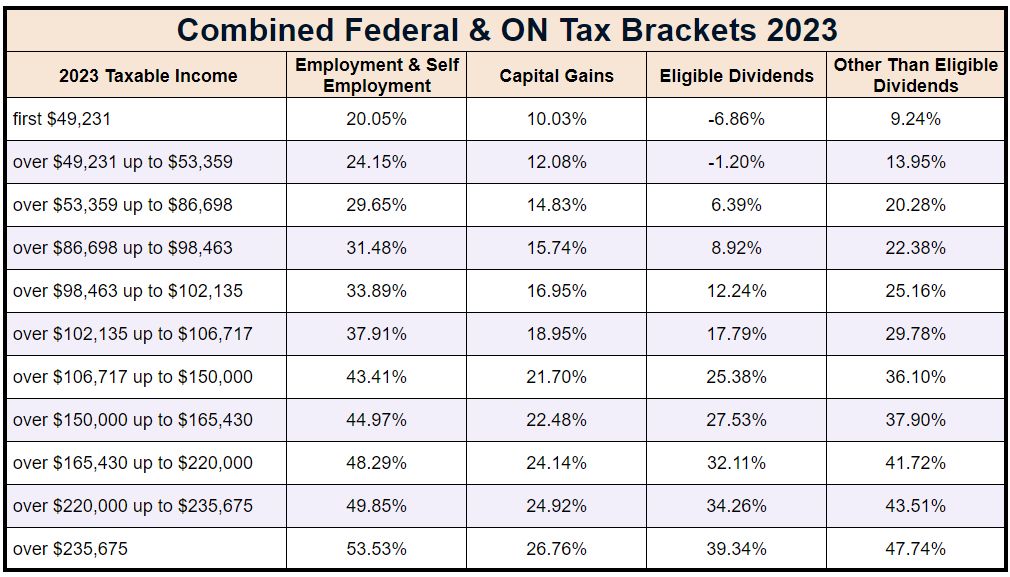
Canada uses a progressive income tax system, meaning you pay higher rates on portions of your income that fall into higher brackets. Tax is calculated at both the federal and provincial or territorial levels. For all provinces except Quebec, you file a single return with the CRA that calculates both federal and provincial tax. Quebec residents file a separate provincial return with Revenu Québec. Your total income is reported on Line 15000 of your return. From this, you subtract the Basic Personal Amount, which is a non-taxable amount. For 2025, the federal Basic Personal Amount is $16,129.
Federal tax rates are applied to your taxable income in brackets. For example, the first portion of your taxable income is taxed at 15%, the next portion at 20.5%, and so on. Provincial and territorial tax rates are applied similarly using their own bracket thresholds. The following table illustrates the federal tax brackets for the 2025 tax year. To find your provincial brackets, you can refer to the Government of Canada website.
| Federal Taxable Income Bracket | Tax Rate |
|---|---|
| On the first $57,357 | 15% |
| Over $57,357 up to $83,871 | 20.5% |
Your employer must deduct income tax, Canada Pension Plan or Québec Pension Plan contributions, and Employment Insurance premiums from your wages based on the information you provide on federal and provincial TD1 forms. These deductions are remitted to the Canada Revenue Agency throughout the year. When you file your personal income tax return, you report your total annual income and claim any eligible deductions and credits. This process reconciles the total amount deducted with your final calculated tax liability for the year, which results in either a refund or a balance owing.
Steps to File Your Tax Return
Filing your taxes involves a series of clear steps. First, determine if you need to file by reviewing the residency and income rules. Next, gather all your documents, including income slips, receipts, and personal information. Then, choose your filing method, whether it's using certified software, paper, a free clinic, or a professional. If using software, you will answer a series of questions about your income and expenses, and the software will calculate your refund or balance owing.
Before submitting, review your return carefully for accuracy. Ensure all income is reported and all eligible credits and deductions are claimed. If you are filing electronically via NETFILE, you will need to certify the return and submit it directly to the CRA. After filing, keep all your documents and a copy of your return for at least six years, as the CRA may ask to see them. Finally, wait for your Notice of Assessment, which confirms the CRA's processing of your return and states any changes they made.
- Determine your filing requirement based on residency and income.
- Gather all necessary documents and information.
- Select a filing method (software, paper, clinic, professional).
- Complete your return, reporting all income and claiming credits.
- Review your return for accuracy.
- Submit your return by the deadline (April 30 or June 15).
- Pay any amount owing by April 30.
- Keep your documents and wait for your Notice of Assessment.
Common Mistakes and Considerations
A common mistake is missing the payment deadline of April 30 for any taxes owed, which accrues interest even if your filing deadline is later. Another error is failing to report all sources of income, including foreign income and investment income from T5 slips. Forgetting to claim all eligible deductions and credits, such as tuition carry-forwards or medical expenses, can also result in paying more tax than necessary. It is important to ensure your personal information, especially your SIN and address, is correct and up to date with the CRA. If you are missing a tax slip, you should not file with incomplete information, as this can lead to delays or reassessments.
You can often obtain missing slips through your CRA My Account or by contacting the issuer. Newcomers should be careful to report their date of arrival correctly and report worldwide income from the date they became residents. Self-employed individuals and those with rental income must maintain good records of income and expenses throughout the year. Using the CRA's Auto-fill my return service through certified software can help populate some of your information automatically, reducing data entry errors.
Frequently asked questions
Do I need to file a tax return if I have no income?
Yes, you should file a tax return in Canada even if you had no income. Filing is worthwhile to receive benefits such as the Canada Child Benefit and the Canada Groceries and Essentials Benefit. The Canada Revenue Agency uses the information from your return to determine your eligibility for these payments. You should also file if you are a factual resident of Canada for income tax purposes.
What is NETFILE?
NETFILE is an electronic tax filing service implemented by the Canada Revenue Agency in 2001. It allows you to use CRA approved tax preparation software to submit your return directly to the CRA online. This method provides a quick alternative to mailing a paper return. Using NETFILE with direct deposit can result in receiving your refund within 8 to 10 days.
What is the deadline to file my taxes?
The standard Canada tax return filing deadline is April 30 of each year for the previous year's return. If you or your spouse are self-employed, the filing deadline is June 15. It is important to note that any amount owing to the Canada Revenue Agency must be paid by April 30, regardless of whether you are self-employed. This deadline applies to your personal income tax return which includes income earned from January 1 through December 31 of the previous year.
I live in Quebec. Do I file differently?
Yes, Quebec is the only province in Canada where residents must file two separate tax returns. You must file a federal return with the Canada Revenue Agency and a separate provincial return with Revenu Québec. This is because Quebec has its own tax collection system. You can file both returns using certified tax software, by paper, or by using a professional tax preparer. For example, TurboTax Do It Yourself products can be used to file both returns, but their Full Service option is not available in Quebec.
What documents do I need to file my taxes?
Most taxpayers should gather all income slips such as T4s, T5s, and T4As, receipts for deductions and credits, and their most recent Notice of Assessment if available. You will also need your Social Insurance Number. If you are filing your first Canadian tax return, you should also bring government issued photo ID, immigration documents showing your date of arrival, and information about any foreign income. Self employed individuals or those with rental property need additional records.
How long does it take to get my refund?
If you have direct deposit set up with the Canada Revenue Agency, you will receive your refund within 8 to 10 days of filing your return electronically. If you do not have direct deposit set up, it will take up to 6 weeks to receive a refund cheque by mail. This timeline applies when you file using the NETFILE service with certified software. Processing times are generally faster for electronic returns compared to paper returns sent by mail.
Sources and further reading
- TurboTax® Canada, Best Tax Filing Software 2025-26 turbotax.intuit.ca
- How to file taxes in Canada: basics and checklist guide wealthsimple.com
- File for FREE with UFileFREE ufile.ca
- Canadian Tax Checklist: Documents You Need to File Taxes hrblock.ca
- New to Canada? Here's how to file your first tax return | Posts scotiabank.com
This article explains how things work and is not financial, tax or legal advice. Rules, limits and rates change, so check the current figures with the Canada Revenue Agency, your province or your financial institution before you act.