Applying for the Disability Tax Credit (DTC) in Canada involves completing Form T2201, which must be certified by a medical practitioner and submitted to the Canada Revenue Agency (CRA). This non-refundable tax credit reduces the amount of income tax a person with a disability, or their supporting family member, might have to pay. Being approved for the DTC is also a gateway to other federal and provincial programs, such as the Canada Workers Benefit Disability Supplement and the Registered Disability Savings Plan. The application can be submitted online, by phone, or by mail, and approval can be retroactive for up to ten previous years.
Understanding the Disability Tax Credit
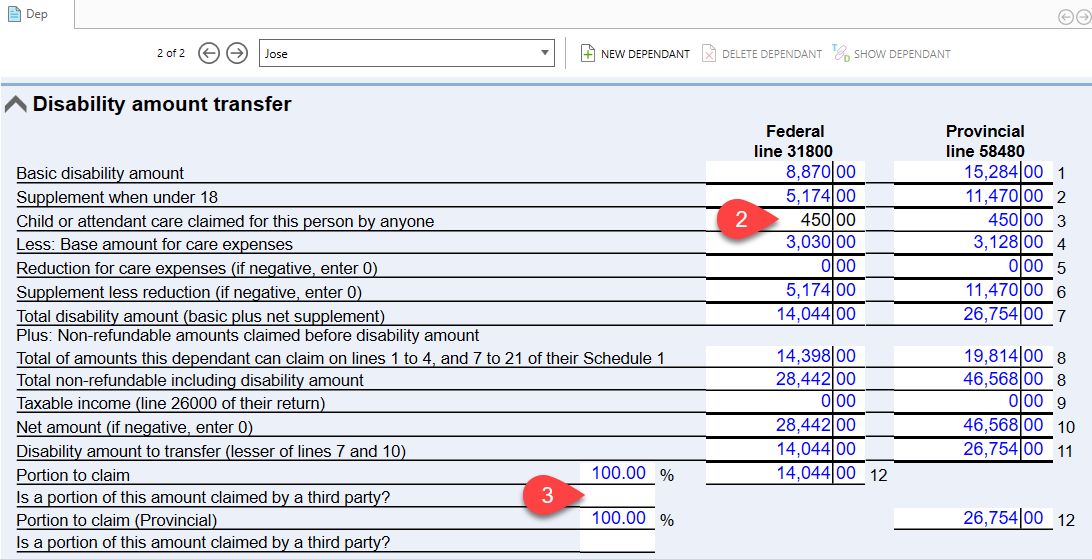
The Disability Tax Credit is a federal non-refundable tax credit designed to help Canadians with severe and prolonged impairments reduce their income tax payable. A non-refundable credit means it can lower or eliminate your tax bill, but you will not receive a refund if the credit amount exceeds your tax payable. For the 2026 tax year, the federal base amount for the DTC is $10,341. An additional supplement of up to $6,032 per year is available for individuals under the age of 18. The credit's value depends on whether the eligible person or a supporting family member had income tax payable during the approved years. DTC approval is not based on a medical diagnosis alone but on how the impairment affects daily functioning. Approval can also provide access to related programs like the Registered Disability Savings Plan and the Canada Workers Benefit Disability Supplement.
Eligibility Requirements for the DTC
To qualify for the Disability Tax Credit, you must live in Canada for tax purposes, have a valid Social Insurance Number, and have a severe and prolonged disability certified by a medical practitioner. Eligibility is determined by functional limitations, not by a specific medical condition. The Canada Revenue Agency assesses whether an impairment results in a marked restriction in one or more basic activities of daily living. These activities include walking, mental functions necessary for everyday life, dressing, feeding, eliminating, hearing, speaking, and vision. A marked restriction means you are unable to perform the activity or it takes you at least three times longer than someone of a similar age without a disability, and this limitation is present all or almost all the time. If you do not have a single marked restriction, you may still qualify through the cumulative effect of significant limitations in two or more of these activities. A third pathway to eligibility is if you require life-sustaining therapy, such as insulin therapy or dialysis, which must be needed at least twice a week for an average of 14 hours per week. The impairment must have lasted, or be expected to last, for a continuous period of at least 12 months.
Step-by-Step Application Process
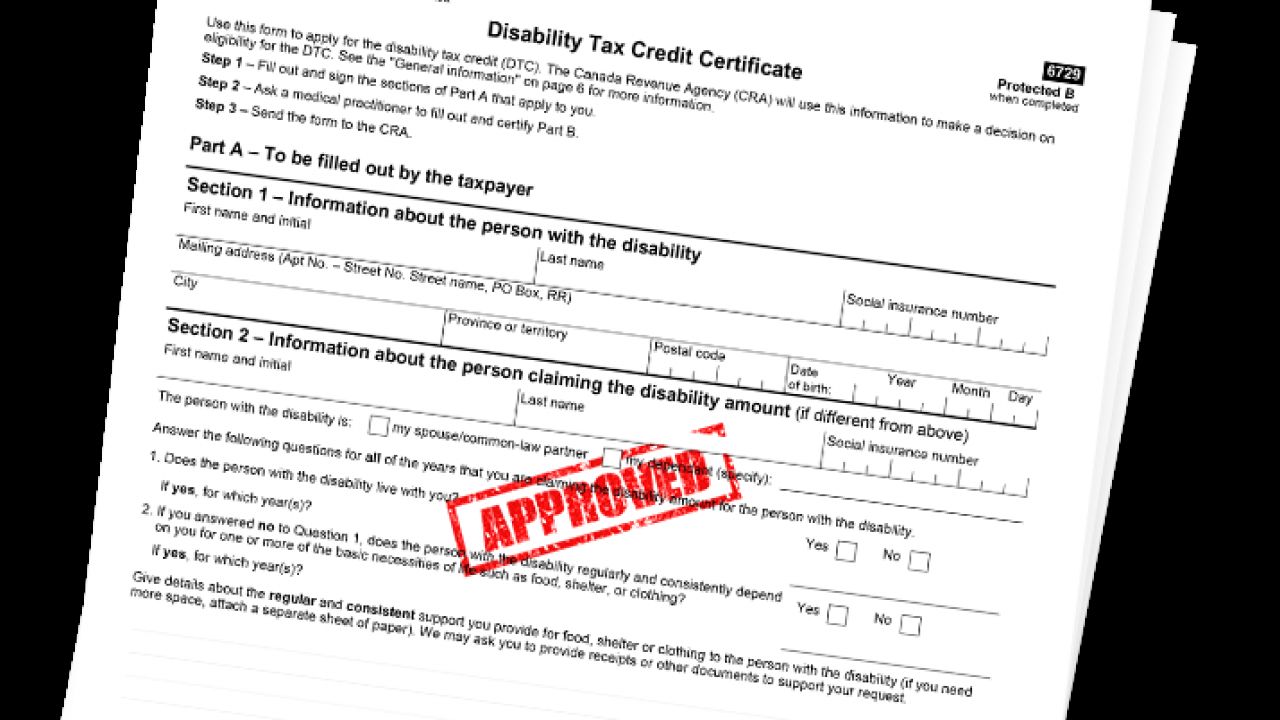
The application process for the Disability Tax Credit centres on Form T2201, the Disability Tax Credit Certificate. The form is divided into two parts that must be completed before submission. Part A is for the applicant or their legal representative to fill out, providing personal information and authorizing the CRA to process the application. Part B must be completed and certified by a qualified medical practitioner, such as a medical doctor, nurse practitioner, occupational therapist, optometrist, audiologist, psychologist, or speech-language pathologist, depending on the nature of the impairment. Once both parts are complete, you submit the entire form to the CRA. You have three main methods for submitting your application. You can apply online through your CRA My Account, where you complete Part A digitally and receive a reference number for your practitioner to use for Part B. You can apply by phone by calling 1-800-959-8281, where an agent will complete Part A for you and provide a reference number. Finally, you can apply by mail by printing the form, completing Part A, having your practitioner complete Part B on paper, and mailing it to the appropriate tax centre. As of July 14, 2026, you cannot submit additional documents with your application unless the CRA specifically requests them.
Key Details and Important Dates
Several important dates and procedural details are critical for a successful DTC application. The CRA typically takes about 8 weeks to process an application and issue a Notice of Determination. If your application is denied, you have 90 days from the date of the denial to file an official objection with the CRA. For paper applications, note that as of September 8, 2026, the CRA will no longer accept T2201 forms issued before 2023, so you must download the latest version from the government website. Once approved, you do not need to reapply every year you simply claim the credit on your annual tax return until the CRA asks you to reapply or your approval period expires. The DTC can be claimed retroactively for up to ten previous tax years, which can result in significant tax reassessments. Furthermore, being approved for the DTC is a prerequisite for applying for the new Canada Disability Benefit, for which you must be between 18 and 64 years old. Starting September 1, 2026, individuals approved for the Canada Disability Benefit will automatically receive a one-time $150 payment to help cover medical practitioner fees for completing Form T2201.
- Standard processing time: Approximately 8 weeks.
- Objection deadline: Within 90 days of a denial.
- Paper form cutoff: Forms issued before 2023 not accepted after September 8, 2026.
- Retroactive claim period: Up to 10 previous tax years.
- Canada Disability Benefit age requirement: 18 to 64 years old.
- Medical fee support: $150 automatic payment for CDB recipients starting September 1, 2026.
Finding and Working with a Medical Practitioner
A crucial step in the DTC application is having a qualified medical practitioner complete Part B of Form T2201. The appropriate practitioner depends on the area of your impairment for example, an optometrist or ophthalmologist for vision restrictions, or an audiologist for hearing restrictions. A medical doctor or nurse practitioner can certify for any category. If you do not have a primary care provider, you can search through your provincial or territorial centralized healthcare provider registry, ask for referrals from your network, contact local clinics directly, or explore virtual care options. Medical practitioners may charge a fee for completing the form, typically ranging from $100 to $250. This fee is considered an eligible medical expense that you can claim on your income tax return. Before your appointment, thoroughly review the form and prepare to discuss how your impairment affects your daily life to ensure your practitioner has complete information to provide an accurate certification.
Provincial and Territorial Components and Related Benefits
The Disability Tax Credit consists of both a federal amount and a provincial or territorial amount. The federal base amount for 2026 is $10,341. Each province and territory adds its own non-refundable credit on top of this federal amount, which further reduces your total provincial or territorial tax payable. The exact provincial amounts vary and are adjusted annually. DTC approval acts as a verified gateway to several other important disability supports. It is a mandatory requirement to open a Registered Disability Savings Plan, a long-term savings program with government grants and bonds. It also qualifies you for the Canada Workers Benefit Disability Supplement, a refundable tax credit for working individuals with disabilities. For families, a child approved for the DTC may be eligible for the Child Disability Benefit, which is a tax-free monthly payment. Most significantly, DTC approval is required to apply for the new Canada Disability Benefit, a monthly benefit for low-income working-age adults with disabilities.
Common Mistakes and Where to Get Help
Several common mistakes can delay or derail a DTC application. A frequent error is focusing only on the medical diagnosis rather than providing detailed information about how the impairment causes functional limitations in daily life. Incomplete forms, especially an unsigned authorization in Part A, will cause the CRA to return the application unprocessed. Using an outdated paper form after September 8, 2026, will also lead to rejection. Submitting unnecessary extra documents after July 14, 2026, when the CRA has not requested them, can slow down processing. If you need assistance, free help is available. You can call the CRA at 1-800-959-8281 for general inquiries. Non-profit organizations like Inclusion Canada's Barriers-Free Benefits program offer free, one-on-one help with disability benefits navigation. Other groups, such as the Mood Disorders Society of Canada's Pathway to Benefits project, provide similar support. Be cautious of private companies that charge fees, often taking a percentage of any retroactive refund, as free alternatives exist.
What Happens After You Apply
After you submit your completed Form T2201, the CRA will review your application. You will receive a letter in the mail called a Notice of Determination, which states whether you have been approved and for which tax years. If approved, you must then claim the credit on your income tax return. For the current year, you claim it on your return for that year. For previous years, you will need to request adjustments to your returns for those years, which the CRA will reassess. The DTC can be claimed by the person with the disability to reduce their own tax payable. If they do not have enough income tax to use the full credit, the unused portion can be transferred to a supporting spouse, common-law partner, or another supporting relative. If the application is denied, the letter will explain the reason. You have the right to object to the decision within 90 days by following the formal objection process outlined by the CRA. Keeping a copy of your entire application and the determination letter is essential for your records and for any future claims or objections.
Frequently asked questions
What is the Disability Tax Credit?
The Disability Tax Credit is a non-refundable federal tax credit for Canadians with severe and prolonged impairments. It reduces the amount of income tax you or a supporting family member may owe. The federal amount for 2026 is $10,341, with an additional supplement for those under 18. Approval is based on functional limitations certified by a medical practitioner, not on diagnosis alone.
How do I know if I am eligible for the DTC?
You are eligible for the Disability Tax Credit if you have a severe and prolonged impairment that results in a marked restriction in at least one basic activity of daily living. These activities include walking, dressing, feeding, eliminating, hearing, speaking, vision, and mental functions necessary for everyday life. The restriction must be present all or almost all the time, meaning at least 90 percent of the time, and must have lasted or be expected to last for a continuous period of at least 12 months. You may also qualify if you have significant limitations in two or more of these activities, or if you require life sustaining therapy, such as insulin or dialysis, for an average of 14 hours per week. The Canada Revenue Agency assesses eligibility based on functional impact, not on a specific medical diagnosis alone.
What form do I need to apply for the DTC?
You must complete Form T2201, the Disability Tax Credit Certificate, to apply for the DTC. This form has two parts. Part A must be filled out by the person with the disability or their legal representative. Part B must be completed and certified by a qualified medical practitioner, such as a doctor, nurse, or occupational therapist. You can submit the form online through your CRA My Account, by phone by calling 1 800 959 8281, or by mailing a paper copy to the Canada Revenue Agency. As of July 14, 2026, applications must be submitted using the digital form or by mail, and you may not send additional documents unless the CRA requests them.
Can I claim the DTC for past years?
Yes, the Disability Tax Credit can be claimed retroactively for previous tax years. If your application is approved, you can claim the credit for up to ten previous years. This means you can ask the Canada Revenue Agency to adjust your income tax returns for those years. Because the DTC is a non refundable tax credit, this adjustment may reduce the amount of income tax you owed in those past years, potentially resulting in a refund. It is important to note that approval for the credit itself does not guarantee a payment, as the value depends on your tax payable in those years.
Is there a fee to have a doctor complete the DTC form?
Medical practitioners may charge a fee to complete Part B of the Disability Tax Credit Certificate, Form T2201. This fee typically ranges from 100 to 250 dollars. The good news is that this fee is considered an eligible medical expense that you can claim on your income tax return. Furthermore, starting September 1, 2026, individuals who are approved for the new Canada Disability Benefit will automatically receive a one time payment of 150 dollars to help offset this cost. If you encounter difficulty finding a practitioner, you can consult provincial registries or local clinics for assistance.
What other benefits are linked to DTC approval?
Approval for the Disability Tax Credit is a key that unlocks access to several other important government programs. Primarily, you must be approved for the DTC to qualify for the Canada Disability Benefit, which requires applicants to be between 18 and 64 years old. DTC approval is also a prerequisite for opening a Registered Disability Savings Plan, which is a long term savings program. Additionally, it allows you to claim the Canada Workers Benefit Disability Supplement on your tax return. For families with children under 18, it can lead to eligibility for the Child Disability Benefit. Being approved for the DTC may also help you qualify for certain provincial or territorial programs.
Sources and further reading
- Disability Tax Credit (DTC) inclusioncanada.ca
- The Disability Tax Credit Application Guide disabilitycreditcanada.com
- A Guide to the Canada Disability Tax Credit disabilityawards.ca
- My DTC from DABC: Guide to the Canadian Disability Tax ... mydtc.dabc.ca
- Applying for the DTC, Canada Disability Benefit canadadisabilitybenefit.ca
This article explains how things work and is not financial, tax or legal advice. Rules, limits and rates change, so check the current figures with the Canada Revenue Agency, your province or your financial institution before you act.