Employment Insurance (EI) is a federal program that provides temporary income support to eligible workers in Alberta who have lost their job through no fault of their own. The system helps individuals while they search for new employment and also offers special benefits for situations like illness or caregiving. Eligibility depends on factors like your hours of insurable employment and the reason for your job separation. Understanding the specific rules and application process is crucial for Albertans to access these benefits in a timely manner.
Core Eligibility Requirements for EI Regular Benefits
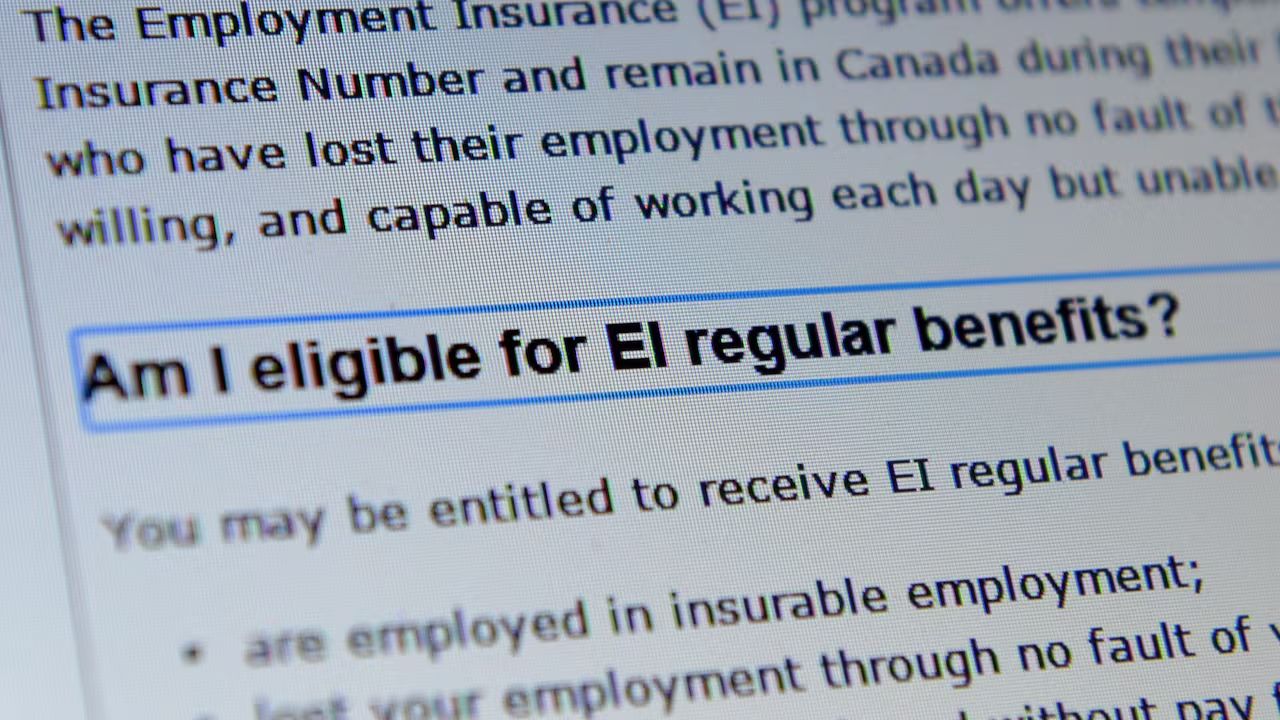
To qualify for Employment Insurance regular benefits in Alberta, you must meet several federal criteria established under the Employment Insurance Act. You must have been employed in insurable employment, which covers most jobs in Canada under a contract of service. You must have lost your job through no fault of your own, such as being terminated without cause, being permanently laid off as part of a corporate restructuring, or due to job loss created by events like flooding or wildfires. You need to have been without work and without pay for at least seven consecutive days within the last 52 weeks. Furthermore, you must be ready, willing, and capable of working each day and actively looking for work, which includes keeping a written record of employers you have contacted. Specific work situations for groups like farmers, fishermen, teachers, Canadian Forces members, self-employed people for EI special benefits only, and workers and residents outside of Canada may have distinct eligibility requirements that need separate consideration.
The foundational requirements to demonstrate to federal authorities are clear and must be proven with documentation. The loss of employment must be involuntary for regular benefits, excluding scenarios where the employee initiated the separation without a legally accepted justification. The seven-day waiting period is a mandatory qualification before benefits can begin, marking the start of the claim period. The active job search requirement is ongoing and must be verifiable upon request.

Calculating Your Insurable Hours and Qualifying Period
The number of hours of insurable employment you need to qualify for EI regular benefits is determined by the unemployment rate in your geographic area, known as an EI Economic Region. The required hours can range from a minimum of 420 to a maximum of 700 hours. The federal government provides an online tool to look up your EI Economic Region by postal code to find the local unemployment rate and the corresponding hours needed. Your qualifying period is the shorter of two timeframes: the 52-week period immediately before the start date of your claim, or the period from the start of a previous EI benefit period to the start of your new claim, if you applied for and were approved for benefits within the last 52 weeks. An exception allows the qualifying period to be extended to a maximum of 104 weeks if you were not employed in insurable employment or were not receiving EI benefits during that time. If you have received a notice of violation regarding prior EI benefit periods, the number of insurable hours required to qualify is increased.
The calculation of your qualifying period is critical and follows strict rules. It is designed to look at your most recent work history or your history since a prior claim. The exception for extending the period to 104 weeks applies only under specific conditions of non-employment or not receiving benefits. The notice of violation is a penalty that raises the bar for re-qualifying, adding an additional layer of complexity for some claimants.
The Application Process and Required Documentation
You should apply for Employment Insurance benefits as soon as you stop working to avoid missing out. If you apply more than four weeks after your last day of work, you may lose benefits. The primary application is completed and submitted online through Service Canada. A critical document for your application is the Record of Employment (ROE), which your employer must issue. Your employer should provide this ROE as soon as possible after your last day of work. For your application to be processed, your apprentice or you must provide an ROE issued within the past 52 weeks. After your application is submitted and if you are approved, you must complete bi-weekly reports by internet or telephone. Failure to submit these reports can result in a loss of benefits. These reports are how you prove your ongoing eligibility and are required to receive payments.
The steps to apply are sequential and time-sensitive. Delaying your application risks your entitlement, as the four-week deadline is a firm administrative rule. The online application system is the standard method, and you must select your language of choice at the outset. The role of the employer in providing the ROE promptly is a key part of the process, as delays on their part can delay your claim. Once benefits begin, your responsibility shifts to the regular reporting cycle.
- Apply online through Service Canada immediately after your last day of work.
- Ensure your employer issues your Record of Employment (ROE) without delay.
- Provide any required ROE issued within the last 52 weeks.
- Complete and submit bi-weekly reports by internet or telephone to continue receiving payments.
- Report any changes in your situation, such as finding work or being unable to work, to Service Canada.
- Keep a detailed written record of your job search activities, including employer names and contact dates.
Special Considerations for Apprentices and Teachers
Certain professions in Alberta have specific EI rules. Apprentices may be eligible for employment insurance while they are off work to attend mandatory classroom instruction. To be eligible, apprentices must continue working until the Friday before their classes start. During the EI application process, apprentices need a specific Reference Code. They must provide a Record of Employment from their employer issued in the past 52 weeks to receive benefits. For teachers, EI benefits generally depend on your contract status. Substitute teachers, part-time teachers, or teachers who work only a portion of the year are advised to keep a detailed record of their weekly hours in case it is needed for an EI claim. To determine if you qualify for combined benefits during special benefit periods that overlap with regular benefit periods, teachers should contact Service Canada directly. Specific information about employment insurance for teachers is available from the Government of Canada.
The rules for apprentices are designed to support their technical training periods. The requirement to work until the Friday before class is a precise condition for eligibility. The Reference Code is a unique identifier for their apprenticeship claim. For teachers, the variable nature of their employment contracts makes detailed record-keeping essential. The ATA News has published articles guiding teachers on this subject. The potential for combined benefits exists but requires direct inquiry with Service Canada for clarification based on individual circumstances.
- Apprentices must work until the Friday before their technical training classes begin.
- Apprentices require a specific Reference Code for their EI application.
- Teachers should maintain a precise log of their weekly working hours.
- Substitute and part-time teachers have distinct eligibility considerations.
- Teachers seeking combined benefits for special and regular periods must contact Service Canada at 1-800-206-7218.
- Information for teachers is also available through the ATA News and the Government of Canada.
Common Reasons for EI Benefit Denials and Legal Complexities
Several situations can lead to a denial of eligibility for Employment Insurance benefits. If you voluntarily leave your job without just cause, you will likely be ineligible. Being unemployed because you are directly participating in a labour dispute, such as a strike or lockout, also disqualifies you. You cannot claim benefits during a period of leave that compensates for a prior period in which you worked more hours than are normally worked in full-time employment under an agreement with your employer. The legal parameters for eligibility are complex, and the government may dissuade applications from individuals who quit or were fired for cause. It is particularly important for employees in these situations to seek information early, as the specifics are found in the federal Employment Insurance Act and its legal interpretation.
Given the potential for denial and the complexity of the rules, consulting with a knowledgeable professional is often advisable. Scenarios that warrant early consultation include considering quitting your job, being fired for alleged cause, or having a dispute over your reason for separation. There may also be other payments or legal considerations related to your job loss that you have not initially considered. Seeking clarification can help you understand your rights and the application process under the law. The Act itself governs all determinations, and its interpretation can be nuanced.
Maintaining Eligibility and Fulfilling Your Obligations
Once you start receiving EI benefits, you have ongoing responsibilities to maintain your eligibility. You must be ready, willing, and capable of working each day. You are required to actively search for work and must keep a written record of your job search efforts, including the names of employers you contacted and the dates of contact. You must complete your bi-weekly reports accurately and on time, as failure to do so will stop your benefit payments. You must also accept what is deemed suitable employment, though the definition of suitable can depend on your circumstances and the local job market. If your situation changes, such as if you find part-time work or become ill, you must report this to Service Canada, as it may affect your benefit amount or eligibility for different types of benefits.
The concept of a reasonable job search is central to continuing eligibility. The written log is not merely a suggestion but a potential requirement for verification. Suitable employment considerations evolve as your benefit period continues, and refusing a job deemed suitable can lead to a termination of benefits. The bi-weekly reports are the mechanism by which you confirm your ongoing unemployment and job search activities. Any income earned during a reporting period must be declared, as it will be deducted from your benefits.
Specific Scenarios and Additional Resources
Beyond the standard rules, several specific scenarios affect EI eligibility and access. For individuals impacted by natural disasters like flooding, job loss created by such events is recognized as a valid reason for a claim. The federal government's definition of insurable employment is broad but has exclusions. Workers in unique industries like fishing have separate fishing benefit calculations. Self-employed individuals who have opted into the program are only eligible for special benefits, not regular benefits. Canadians living abroad may also have specific eligibility pathways under certain conditions.
Accessing accurate information is crucial. Service Canada is the primary resource, available through its toll-free line. The online tools for determining EI economic regions and unemployment rates are essential for calculating required hours. For complex situations, particularly those involving a voluntary quit or dismissal for cause, early consultation is emphasized in the available guidance. Other resources include the full text of the Employment Insurance Act for the precise legal framework.
- Job loss due to natural disasters like flooding or wildfires is an eligible scenario.
- Self-employed people are only eligible for EI special benefits, not regular benefits.
- Workers directly involved in a strike or lockout are not eligible.
- Canadians living outside Canada may qualify under specific conditions.
- Use the federal online tool to find your EI Economic Region by postal code.
- For complex eligibility questions, contact Service Canada at 1-800-206-7218.
- Refer to the Employment Insurance Act (SC 1996, c. 23) for the governing legislation.
Frequently asked questions
What is a Record of Employment (ROE) and why is it important?
The Record of Employment is a form your employer issues that details your employment history and insurable earnings. It is the most important document for your EI application. Your employer should give it to you as soon as possible after your last day of work. You must provide an ROE from the past 52 weeks to Service Canada to process your claim.
How many hours do I need to work to qualify for EI in Alberta?
The required hours of insurable employment to qualify for EI regular benefits in Alberta depend on the unemployment rate in your specific EI Economic Region. The number of hours can range between 420 and 700 hours of insurable employment during the qualifying period. This qualifying period is the shorter of the 52 weeks immediately before your claim starts or the period since the start of your last EI claim. You can use the federal government's online tool to look up your EI Economic Region by postal code to find the local unemployment rate and your exact hours requirement. It is important to note that if you have received a notice of violation from a prior EI claim, the number of hours required to qualify will be increased.
Can I get EI if I quit my job?
Generally, you will not be eligible for EI regular benefits if you voluntarily leave your job without just cause. Just cause is a specific legal definition under the Employment Insurance Act. The rules regarding eligibility after quitting are complex and involve detailed legal interpretation. It is strongly recommended that employees considering quitting their job seek legal consultation in advance to understand their specific situation. Furthermore, there may be other payments due to you upon leaving a job that you have not considered, making early legal advice particularly important for those contemplating resignation.
How soon do I need to apply for EI after losing my job?
You should apply for Employment Insurance benefits as soon as you stop working. The official guidance warns that if you apply more than four weeks after your last day of work, you may lose benefits. Do not delay filing your claim, as a late application can result in missing out on benefits you are otherwise entitled to. The qualifying period for hours worked is based on the 52 weeks before your claim starts, so applying promptly helps ensure your recent work hours are counted correctly.
Can apprentices in Alberta get EI while in school?
Yes, apprentices in Alberta may be eligible for Employment Insurance benefits while they are off work to attend required classroom instruction. To qualify, the apprentice must continue working until the Friday before their classes start. The apprentice must provide a Record of Employment issued by their employer within the past 52 weeks as part of the application. During the EI application process, apprentices will also need a specific Reference Code. It is the employer's responsibility to provide the Record of Employment as soon as possible after the apprentice's last day of work.
What do I have to do while receiving EI payments?
While receiving EI payments, you must be ready, willing, and capable of working each day. You are also required to actively look for work and maintain a written record of employers you have contacted, including the dates of contact. Furthermore, you must complete bi weekly reports for Service Canada, either by internet or telephone, to continue receiving benefit payments. Failure to complete these reports can result in a loss of benefits. These requirements are standard conditions for receiving EI regular benefits.
Sources and further reading
- Employment Insurance, Tradesecrets, Government of Alberta tradesecrets.alberta.ca
- Employment insurance (EI) and teachers teachers.ab.ca
- Who is Eligible for Employment Insurance (EI) employeelawyer.ca
This article explains how things work and is not financial, tax or legal advice. Rules, limits and rates change, so check the current figures with the Canada Revenue Agency, your province or your financial institution before you act.