A Canadian dollar forecast predicts the future exchange rate of the currency against others, most commonly the US dollar. These forecasts are based on analysis of economic data, central bank policies, commodity prices, and geopolitical events. Understanding these forecasts matters to Canadians for planning travel, managing cross-border expenses, and making informed decisions about international investments. The value of the Canadian dollar directly impacts the cost of imported goods, the returns on exports, and the purchasing power of Canadians abroad.
Current Canadian Dollar Outlook and Bank Forecasts
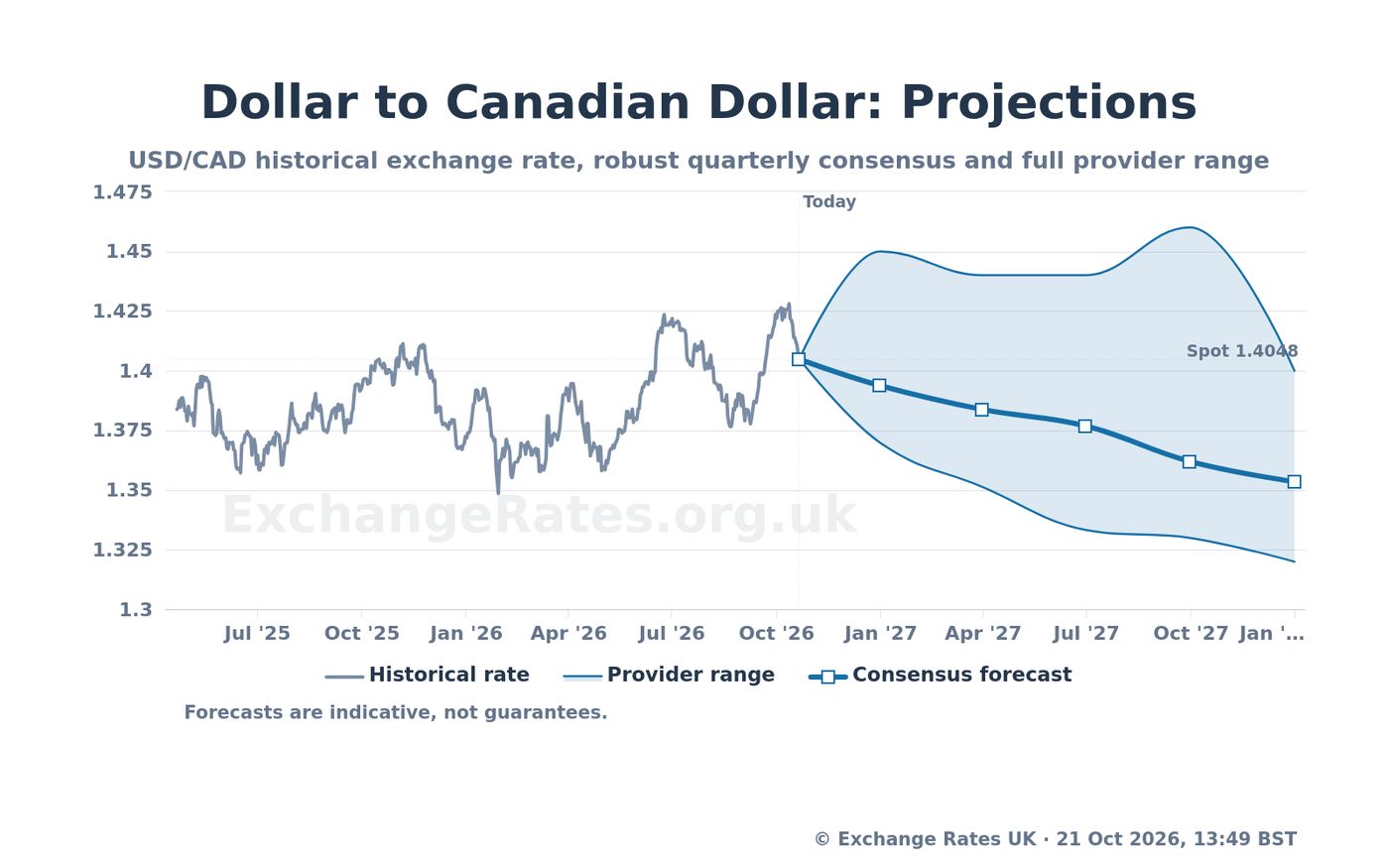
The Canadian dollar, often referred to as the loonie, has experienced mixed performance recently. Over the past four weeks, the US dollar gained 0.18 percent against the Canadian dollar, and over the last twelve months, it increased by 0.28 percent. As of October 2026, the Canadian dollar was trading near a one month high. Major financial institutions provide regular forecasts for the currency, which serve as a consensus view of market expectations. The five bank average forecast for USD/CAD at the end of 2026 is near 1.40, with expectations for a decline toward 1.39 in early 2027. There is, however, notable dispersion among individual bank forecasts. For instance, RBC expects USD/CAD to remain near 1.43 through the end of the year, while BMO anticipates a faster recovery for the Canadian dollar. The broader 6 to 12 month outlook suggests a drift lower in USD/CAD through 2027, with an end of 2027 forecast figure at 1.3500. These projections are not guarantees but are based on current economic models and prevailing market conditions.
Forecasts for other major currency pairs against the Canadian dollar are also closely monitored. The EUR/CAD pair is forecast to trade in the range of 1.59 to 1.63 during October 2026. The GBP/CAD pair is expected to trade within a similar forecast range. These cross rates are influenced by the policies of the European Central Bank and the Bank of England, as well as relative economic performance. The Canadian dollar's value against these currencies is crucial for trade and investment flows with Europe and the United Kingdom. Analysts have recently raised their Canadian dollar forecasts for the 12 month period, expecting the currency to strengthen by 1.8 percent to 1.36 per US dollar. This revision reflects evolving views on trade conditions, commodity prices, and interest rate differentials. All forecasts are subject to change based on new economic data and unforeseen global events.
Primary Drivers of the Canadian Dollar's Value
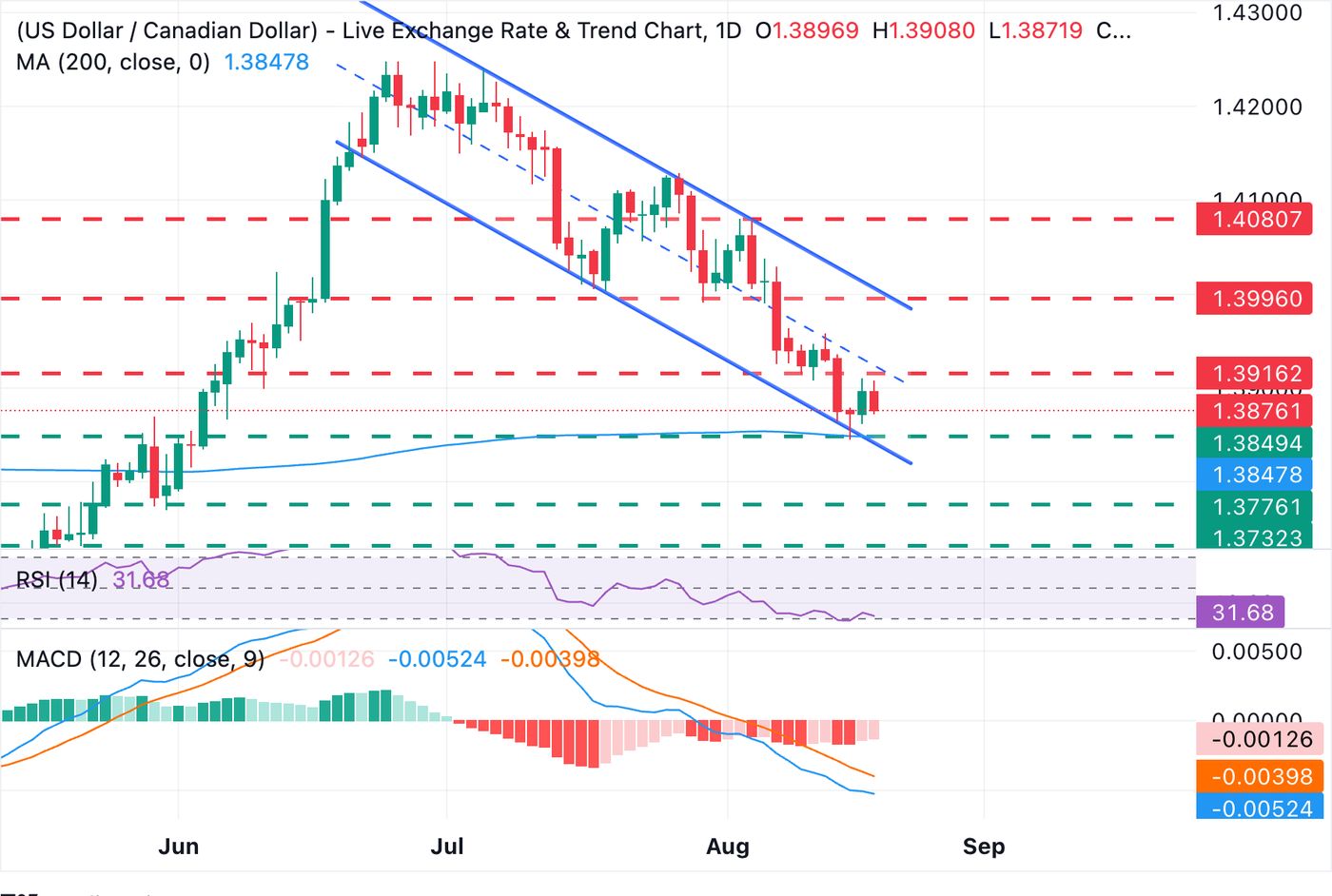
The value of the Canadian dollar is influenced by a complex interplay of domestic and international factors. As a trade dependent and commodity exporting nation, Canada's currency is especially sensitive to global demand and cross border developments. The most significant drivers include central bank policy, inflation, economic growth data, and commodity prices. Changes in any of these areas can cause rapid movements in the exchange rate. Understanding these drivers helps explain why forecasts can shift from month to month. The close economic relationship with the United States means that US data and Federal Reserve policy are particularly influential. Furthermore, the Canadian dollar is considered a risk sensitive currency, meaning it often strengthens when global investor confidence is high and weakens during periods of uncertainty or geopolitical tension.
Bank of Canada Monetary Policy plays a central role. When the Bank of Canada raises its policy interest rate, it often strengthens the Canadian dollar because higher yields attract foreign investment seeking better returns. Conversely, lower interest rates can weaken the currency by reducing its appeal. Markets react not only to actual rate decisions but also to forward guidance and expectations about future moves. As of September 2026, the Bank of Canada held its policy rate at 2.25 percent, emphasizing increased inflation risks. Its upcoming decision on October 28, alongside a new Monetary Policy Report, is a key event for the currency's near term direction.
Commodity Prices are a fundamental pillar. Canada exports significant amounts of crude oil, natural gas, gold, lumber, and base metals. When oil and commodity prices rise, Canada's export revenues typically increase, which can strengthen the Canadian dollar. Falling commodity prices often have the opposite effect. Movements in global crude oil markets, with Brent crude trading near US$100 as of October 2026, frequently influence USD/CAD exchange rates directly. Higher oil supports Canada's terms of trade, but the accompanying global inflation and risk aversion can also paradoxically strengthen the US dollar as a safe haven.
Key Economic Indicators and Data Releases to Watch
Currency traders and forecasters closely monitor a regular schedule of economic data releases from Canada and its major trading partners. These reports provide concrete evidence of economic health and can trigger immediate market reactions. The most impactful indicators include employment figures, inflation data, gross domestic product reports, and trade balance statistics. In Canada, monthly Consumer Price Index releases are critically important for gauging inflation and potential Bank of Canada action. Strong economic growth, shown by rising GDP and job creation, supports a stronger Canadian dollar by signalling a stable and expanding economy. Weak growth or rising unemployment may create downward pressure on the currency.
Recent data highlights the importance of these indicators. Canada's merchandise trade surplus widened to C$4.6 billion in August 2026, providing some support for the currency ahead of the October Bank of Canada decision. This surplus indicates that exports exceeded imports, meaning foreign buyers needed Canadian dollars to pay for Canadian goods, increasing demand. From the United States, a weak September employment report showed payrolls increased by only 29,000 jobs and the unemployment rate rose to 4.2 percent, with earlier figures revised lower. This reduced the urgency for another immediate Federal Reserve rate increase, affecting the USD side of the USD/CAD equation. The following list details the most critical data points and events that shape the Canadian dollar forecast.
- Bank of Canada Interest Rate Decisions and Monetary Policy Reports (Next: October 28, 2026).
- Federal Reserve Interest Rate Decisions and Policy Statements.
- Canadian Consumer Price Index (CPI) released monthly by Statistics Canada.
- Canadian Labour Force Survey (employment/unemployment data) released monthly.
- Canadian Gross Domestic Product (GDP) reports, released monthly and quarterly.
- International Merchandise Trade data, showing monthly surplus or deficit.
- US Non Farm Payrolls and unemployment data.
- Global commodity price reports, especially for crude oil (e.g., Brent, WTI).
Beyond these regular releases, specific geopolitical and political events can cause volatility. The existing US tariffs and Canadian counter tariffs continue to raise costs and weaken business confidence, representing a persistent downside risk. Political risk has also increased with the Parti Québécois winning Quebec's October 5 election, Alberta's October 19 referendum, and the upcoming November 3 US midterm elections. These events can amplify debates over trade, energy policy, and fiscal policy, influencing investor sentiment toward the Canadian dollar.
Interest Rate Differentials and Central Bank Policies
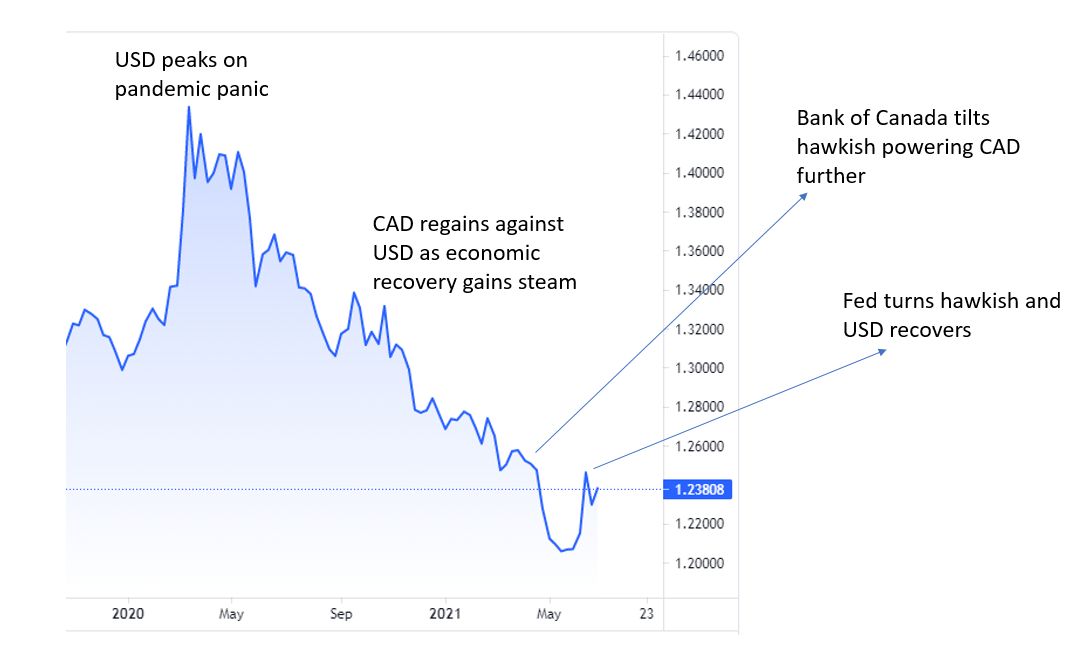
The difference between Canadian and US interest rates, known as the yield differential, is a powerful short term driver of the USD/CAD exchange rate. When US interest rates are higher than Canadian rates, it creates an incentive for investors to move funds into US dollar denominated assets to capture the higher yield. This increased demand for US dollars can push the USD/CAD rate higher, meaning the Canadian dollar weakens. As of September 2026, the Federal Reserve raised its target range by 25 basis points to 3.75 to 4.00 percent. The Bank of Canada, meanwhile, held its policy rate at 2.25 percent.
Central bank communication and forward guidance are equally important. The Bank of Canada's cautious stance in September, noting increased inflation risks but also slower manufacturing growth and tariff shocks, clouded the outlook. The Federal Reserve's path is central to the US dollar outlook, with the October CPI data and the October 28 Federal Reserve decision being critical inputs. The European Central Bank's September rate increase provides the euro with policy support against the Canadian dollar as well. The table below illustrates the current policy rate landscape and its impact on currency pairs involving the Canadian dollar.
| Central Bank | Policy Rate (Sept 2026) | Impact on CAD |
|---|---|---|
| Bank of Canada | 2.25% | Sets baseline for CAD yields. Cautious stance limits support. |
| US Federal Reserve | 3.75% - 4.00% | Wide rate advantage supports USD, pressuring USD/CAD higher. |
| European Central Bank | Increased in Sept | Provides support for EUR, contained within EUR/CAD forecast range. |
Future changes to these rates will directly influence forecasts. If the Bank of Canada were to raise rates in response to persistent inflation, it could narrow the differential and support the Canadian dollar. Conversely, if the Federal Reserve pauses or signals an end to its hiking cycle while Canadian inflation remains high, the differential could shrink, potentially aiding a Canadian dollar recovery. Market participants constantly adjust their expectations based on speeches, meeting minutes, and economic projections from these institutions.
Risks and Uncertainties Affecting the Forecast
All currency forecasts are subject to risks and uncertainties that can cause actual outcomes to differ materially from predictions. For the Canadian dollar, these risks are varied and stem from economic, geopolitical, and domestic political sources. Trade policy remains a persistent concern. The existing US tariffs and Canadian counter tariffs continue to raise costs and weaken business confidence in the manufacturing sector. Stalled negotiations leave the possibility of further escalation, which would likely hurt the Canadian economy and its currency. The tariff shock is a specific downside risk for Canadian investment, manufacturing, and employment figures that feed into the currency's value.
Geopolitical events impacting energy markets create two way risks. While higher oil prices, with Brent crude near US$100, benefit Canada's terms of trade and export revenues, the accompanying global inflation and risk aversion can also strengthen the US dollar as a safe haven asset. Conflicts such as those in the Middle East sustain a large supply risk premium in oil markets. Furthermore, domestic political events have introduced additional volatility. The election of a minority Parti Québécois government in Quebec on October 5 revived longer term sovereignty concerns. Alberta's referendum on October 19 presented another domestic headline risk. The November 3 US midterm elections could intensify debates over tariffs, energy prices, and fiscal policy, affecting cross border relations. These events remind us that forecasts are based on certain assumptions, and the actual outcome may be materially different.
Frequently asked questions
What is the forecast for the Canadian dollar against the US dollar?
As of October 2026, the near term forecast for USD/CAD is for trading mainly between 1.40 and 1.44. The five bank average forecast places USD/CAD near 1.40 by the end of 2026, declining toward 1.39 in early 2027. Looking further ahead, a 6 to 12 month outlook suggests a drift lower, with an end of 2027 forecast at 1.3500. It is important to note that individual bank forecasts vary, with some expecting rates to remain higher for longer.
How do Bank of Canada interest rates affect the Canadian dollar?
Bank of Canada interest rates are a primary driver. When the Bank raises its policy rate, it often strengthens the Canadian dollar because higher yields attract foreign investment. Lower rates typically have the opposite effect. As of September 2026, the Bank held its rate at 2.25 percent. Markets also react to the Bank's forward guidance and inflation outlook, with the next decision and Monetary Policy Report scheduled for October 28, 2026.
Why is the price of oil important for the Canadian dollar forecast?
Canada is a major exporter of crude oil, so the Canadian dollar is often considered a commodity currency. When oil prices rise, Canada's export revenues increase, which can strengthen the loonie. Conversely, falling oil prices often weaken it. As of October 2026, Brent crude oil was trading near US$100, providing support for Canada's terms of trade. However, high oil prices can also fuel global inflation, which may lead to stronger action from the US Federal Reserve, creating a complex dynamic.
What was Canada's latest trade surplus and why does it matter?
Canada's merchandise trade surplus widened to C$4.6 billion in August 2026. A trade surplus means the value of exports exceeds the value of imports. This matters for the currency because foreign buyers need to purchase Canadian dollars to pay for Canadian goods, increasing demand for the currency. A sustained surplus can provide underlying support for the Canadian dollar, while a deficit could create downward pressure.
What are the main risks to the Canadian dollar outlook?
Key risks include ongoing trade tensions and tariffs with the United States, which weaken business confidence. Geopolitical events affecting oil prices create volatility, as high prices help exports but can spur inflation and safe haven USD demand. Domestic political events, such as the election in Quebec and the referendum in Alberta, introduce uncertainty. Additionally, the paths of the Bank of Canada and US Federal Reserve interest rates remain a central source of forecast risk.
What is the interest rate difference between Canada and the US?
As of September 2026, the Bank of Canada's policy rate was 2.25 percent while the US Federal Reserve's target range was 3.75 to 4.00 percent. This differential widened after the Federal Reserve's September rate increase. The wide Canada US yield gap encourages investment flows into US dollar assets, which supports a higher USD/CAD exchange rate. However, weaker US employment data has reduced expectations for another immediate Federal Reserve increase, which could influence the differential going forward.
Sources and further reading
- U.S. Latest Forecast Tables, TD Economics economics.td.com
- 5-Bank Canadian Dollar Forecast, October 2026 mtfxgroup.com
- Canadian Dollar Forecast & Predictions interchangefinancial.com
This article explains how things work and is not financial, tax or legal advice. Rules, limits and rates change, so check the current figures with the Canada Revenue Agency, your province or your financial institution before you act.