Selecting an online stock broker is a key decision for Canadians managing their own investments. The best broker for an individual investor depends on factors like trading fees, platform features, access to markets, and educational resources. In 2026, the Canadian brokerage market is highly competitive, with firms like Questrade, Wealthsimple, and Interactive Brokers frequently highlighted for different strengths. Understanding the regulatory protections and the specific services each platform offers is essential for making an informed choice that aligns with your financial goals.
Understanding Online Brokerage Services and Regulation
Online brokerages, also known as discount or direct investing platforms, allow Canadians to buy and sell investments like stocks, bonds, exchange-traded funds (ETFs), and mutual funds through a digital interface. These platforms are designed for self-directed investors who wish to build and manage their own portfolios, often for long-term goals such as retirement or a home purchase. All online brokers operating in Canada are regulated by the Canadian Investment Regulatory Organization (CIRO), which sets standards for member firms. Investor assets held with CIRO member firms are protected by the Canadian Investor Protection Fund (CIPF) against broker insolvency. The CIPF provides coverage of up to $1 million for general accounts, which include cash, margin, Tax-Free Savings Account (TFSA), and First Home Savings Account (FHSA) holdings. Separate coverage of up to $1 million is also provided for registered retirement accounts and for Registered Education Savings Plans (RESPs). This regulatory framework provides a critical safety net for Canadian investors using these services.
Interactive Brokers Canada Inc. is one such member of CIRO and the CIPF, with its registered office located at 1800 McGill College Avenue, Suite 2106, Montreal, Quebec, H3A 3J6. It is important for investors to understand that these platforms are order execution-only dealers, meaning they do not provide investment advice or recommendations regarding the purchase or sale of any securities or derivatives. Trading securities and derivatives involves a high degree of risk, and investors can lose their entire investment or even more, especially when using borrowed money or margin. The responsibility to repay a margin loan remains even if the value of the purchased securities declines, and using borrowed money to finance purchases involves greater risk than using cash resources only.
Key Factors for Comparing Canadian Brokerages
When evaluating online brokers, investors should look beyond marketing claims and assess the complete experience based on several concrete factors. Trading commissions and fees are a primary consideration, though many platforms now offer commission-free trading on stocks and ETFs. It is important to review other potential costs, such as account maintenance fees, inactivity fees, or foreign exchange fees for trading in non-Canadian dollar assets. The quality and usability of the trading platform itself is another major factor, including the availability of advanced charts, real-time data, research tools, and mobile app functionality. Access to different markets is crucial for portfolio diversification. Some brokers offer access to dozens of international exchanges while others focus primarily on Canadian and U.S. markets. Finally, the level of investor education and customer support can be a significant differentiator, especially for those new to self-directed investing.
Independent evaluations, such as the annual review by MoneySense powered by Surviscor, analyze firms across key pillars of the investor experience. Their 2026 assessment evaluated providers across four key pillars based on nearly 8,000 data points per firm, testing over 75 real-world investor actions. This research focuses on platform quality, investor resources, customer service, and support for the investor learning journey rather than just promotional offers. The results in 2026 indicated an intensely competitive market where the top firms were separated by only a handful of points, showing that many leading brokerages have become closely matched in the overall experience they deliver. The Canadian brokerage landscape expanded in 2026 with the addition of moomoo Canada and Webull Canada to review universes, reflecting growing investor interest in globally owned online investing firms, while specialty firms like Interactive Brokers Canada and Canaccord Genuity Direct continue to serve specific investor segments.
Fee Structures and Commission Models
The pricing model of an online brokerage directly impacts an investor's net returns. A significant industry trend is the move toward commission-free trading, which means investors pay no fee to buy or sell certain securities like stocks and ETFs. For example, Wealthsimple charges no commissions on trades and has no account maintenance or inactivity fees. In 2025, Questrade removed its commissions on trades as well as its minimum investment amount, and it also charges no annual or inactivity fees. Qtrade Direct Investing offers free trading on a select list of 100 ETFs in Canada. It is vital to read the terms and conditions, as other costs may apply. These can include fees for trading on margin, for transferring assets out of the account, or for accessing premium data or platform features. Foreign exchange fees are a common additional cost when buying U.S. or international securities. Some brokers, like Interactive Brokers, are known for competitive currency conversion rates.
Traditional bank-owned brokerages in Canada often have distinct fee schedules. For example, some may charge a standard commission of $9.95 per trade. Discounts are frequently available for active traders who execute a high volume of trades within a quarter. Industry assessments provide comparisons of these commission structures and key fee-related features across major Canadian brokerages. These comparisons help investors understand the cost landscape.
| Brokerage | Stock/ETF Commission (CAD) | Notable Fee Features |
|---|---|---|
| Wealthsimple | $0 | No account maintenance or inactivity fees. |
| Questrade | $0 | No minimums, annual fees, or inactivity fees (as of 2025). Offers 50 commission-free trades per year on Canadian and US Stocks and ETFs, then $9.95 per trade. |
| Interactive Brokers | US$1.99/trade (US), CA$1.49/trade (CA) | Low margin interest rates, extensive global market access. US options trade for US$1/trade. |
| Qtrade Direct Investing | Varies. Free on 100 select ETFs | Commission-free mutual fund trading. |
| TD Direct Investing | $9.95 (under 150 trades/quarter) | Active trader pricing at $6.95 per trade for 150+ trades/quarter. Also offers unlimited commission-free trades on select ETFs. |
| RBC Direct Investing | $9.95 per online trade (under 150 trades/quarter) | Active trader program with reduced fees for high-volume traders. |
Investors should investigate other potential fees beyond trading commissions. These can include monthly charges triggered by failing to meet a minimum account balance. Fees for paper statements and for transferring or withdrawing funds from registered accounts are also common. Some platforms promote specific features to offset costs. For instance, Questrade offers 0 FX fees for instant CAD to USD conversion and free Level 2 US Market Data. Interactive Brokers advertises lower margin interest rates than any Canadian bank.
Platform Features and Market Access
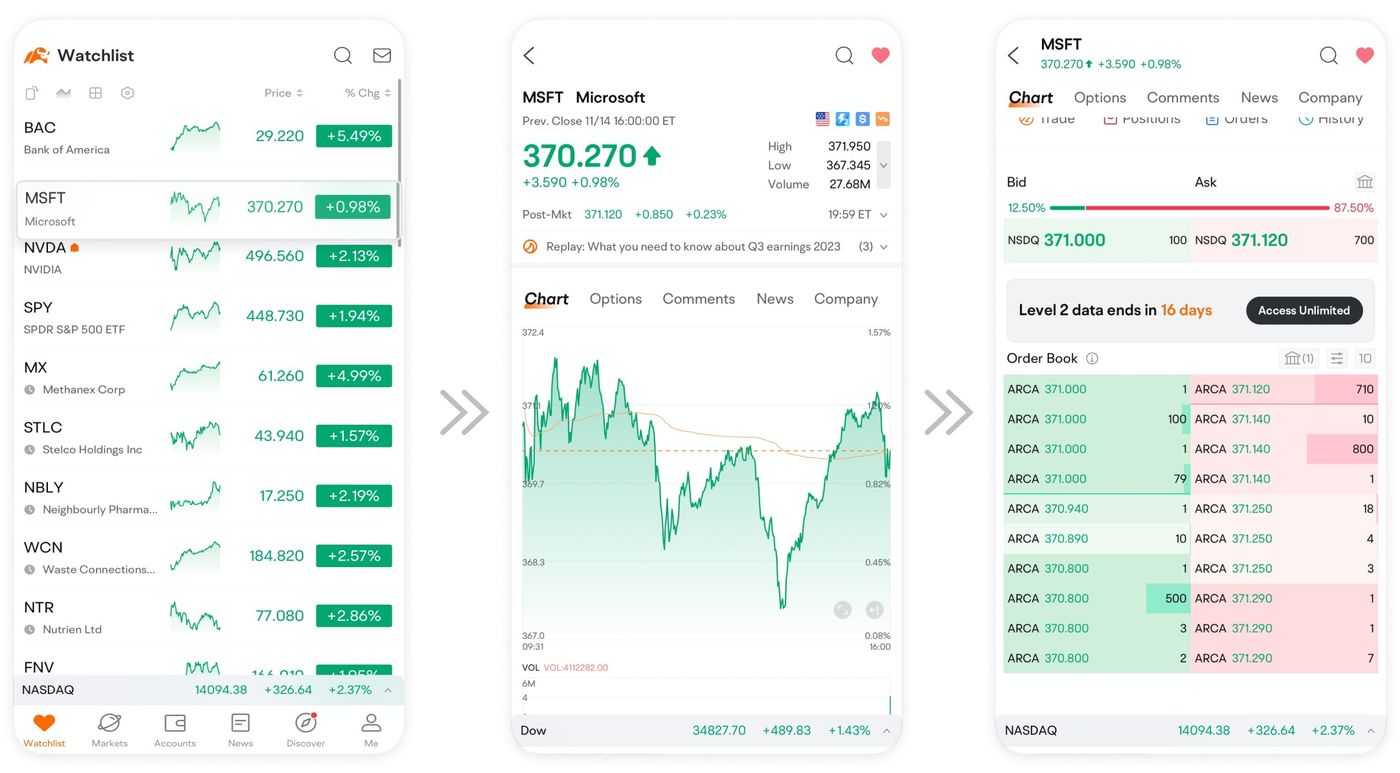
The trading platform is the primary tool for executing investment decisions, and its capabilities can vary widely. Some platforms cater to beginners with simple, intuitive interfaces, while others offer advanced professional-grade tools for active traders. Questrade, for example, offers a free advanced platform called Questrade Pro with customizable charts and tools to automate trading strategies and integrate with preferred AI models like Claude. TD Direct Investing provides the Active Trader platform, which is suited for active U.S. options traders and enables access to advanced tools. RBC Direct Investing's active trader program also allows access to enhanced tools and data. Access to different asset classes and global markets is another defining feature. Interactive Brokers Canada provides direct global access to stocks, options, futures, currencies, and bonds across 175 global markets, which is among the most extensive offerings available to Canadian investors. Questrade Global offers access to over 15 international exchanges. For investors focused on Canadian and U.S. markets, most major brokerages provide robust coverage, but those seeking exposure to Asian or European markets may need to choose a platform with specific international capabilities.
Additional platform features can include the ability to buy fractional shares of Canadian and US stocks and ETFs, set up automated investing plans, and integrate with third-party tools. Some brokers are beginning to incorporate artificial intelligence, with Interactive Brokers noting the ability to connect AI platforms like ChatGPT, Claude, Grok, and Perplexity directly to analyze portfolios and generate trade instructions. Real-time data offerings also differ. Some brokers provide free Level 1 data, while Level 2 market data may require a fee or be included for active traders. Trading hours can extend beyond standard market times, with Interactive Brokers offering 24/6 trading for U.S. stocks, except for a 10-minute break between 3:50 and 4:00 am ET, which are the longest trading hours in Canada for US securities. Platform usability extends to mobile apps, with Qtrade Direct Investing noted for having a great mobile app and desktop experience, and Questrade having a 4.7 App Store rating.
Account Types and Contribution Rules
Canadian online brokers allow investors to open both registered and non-registered accounts. Registered accounts include Tax-Free Savings Accounts (TFSAs), Registered Retirement Savings Plans (RRSPs), First Home Savings Accounts (FHSAs), and Registered Education Savings Plans (RESPs). Investments within these accounts grow tax-free, providing the same benefits as accounts opened elsewhere. It is the investor's responsibility to ensure that contributions across all their accounts of the same type do not exceed the annual limits set by the Canada Revenue Agency (CRA). For example, the total amount contributed to all TFSAs you own cannot exceed your personal TFSA contribution room. Exceeding this limit results in a penalty tax. Non-registered accounts, such as cash or margin accounts, have no contribution limits, but all investment gains within them are subject to taxation. When opening a new brokerage account, you will need to select the account type that aligns with your savings goals and tax planning strategy.
Many brokerages offer incentives for opening certain accounts. For example, some promotions offer cash bonuses for new deposits, such as getting $100 when you deposit $2,000 into a new account, though these offers have expiry dates like November 2. Other features tied to accounts include RRSP matching offers and the ability to earn interest on uninvested cash, with some platforms advertising rates like 2.75% or 4.60% for short-term promotions on savings products. It is crucial to distinguish between the brokerage's investment accounts and its separate high-interest savings account products when evaluating such promotions. Investors can also open a High Interest Savings Account through some brokerage interfaces to earn interest on cash, such as the advertised 4.60% interest for 5 months on eligible deposits up to $200,000.
Educational Resources and Customer Support
The availability and quality of educational materials and customer support are critical factors, especially for investors who are just getting started. These resources range from static learning tools like videos, articles, and webinars to interactive modules and live tutorials. TD Direct Investing is frequently highlighted for providing some of the best education resources for beginner investors, with dozens of detailed articles and videos. Other platforms also invest heavily in investor education as a key pillar of their service. Customer support channels vary significantly among brokers and can include online FAQs and help centres, email support, telephone support, and sometimes live chat. The depth of support can impact an investor's ability to resolve issues quickly, such as questions about transfers, account setup, or trading tools.
When evaluating this aspect, investors should consider their own comfort level and anticipated need for assistance. A new investor might prioritize a platform with extensive step-by-step guides and responsive customer service. More experienced traders might place higher value on advanced research tools and direct access to technical support for platform functionality. The independent research by Surviscor evaluates these elements as part of the overall investor experience, testing real-world actions and support interactions. The strength of a brokerage's educational and support framework can be a deciding factor in long-term investor satisfaction and success. Some brokers, like Questrade, also offer curated wellness and education subscriptions, such as free access to MasterClass courses or The Wall Street Journal, as part of their value proposition.
Common Considerations and Potential Mistakes
Choosing a brokerage based solely on one feature, such as the promise of commission-free trading, can lead to a poor overall fit. Investors should consider the full suite of services, including the quality of customer support, educational resources, and the platform's reliability. A common mistake is not verifying the broker's regulatory status. Investors should confirm that the firm is a member of CIRO and that accounts are protected by the CIPF. Another error involves mismanaging registered accounts, such as accidentally over-contributing to a TFSA by not accounting for holdings in accounts at other institutions. When trading in foreign currencies, investors may overlook the impact of foreign exchange fees, which can erode returns on international investments. Finally, new investors might choose a platform with an overly complex interface suited for active traders when a simpler, more educational-focused platform would better support their learning curve.
To avoid these pitfalls, investors should take a methodical approach to selection. First, clearly define your investment goals, frequency of trading, and need for access to specific markets or asset classes. Second, research and compare several brokers based on the key factors of fees, platform, tools, and support. Third, review independent evaluations and comparisons from sources that conduct rigorous testing, such as the MoneySense rankings which are powered by Surviscor's deep and unbiased research. Fourth, open a demo account if available, or start with a small funding amount to test the platform's usability firsthand. Fifth, ensure you understand all costs, not just trading commissions, by carefully reading the fee schedule and terms. Sixth, confirm the broker's regulatory standing with CIRO and review its CIRO AdvisorReport. Following these steps can help Canadian investors find a brokerage that effectively supports their financial journey.
Industry Rankings and Top Picks for 2026
Several publications and research firms release annual rankings of Canadian online brokerages, providing a synthesized view of the competitive landscape. The MoneySense Best Online Brokers review for 2026, in partnership with Surviscor, ranked firms based on detailed analysis across four key pillars of the investor experience. While the specific order of the top ten is detailed in their methodology, the notes highlight several firms that consistently receive recognition. Questrade is noted as Canada's largest discount broker and was the first in Canada to offer commission-free trades on CAD and US stocks, with $0 commission fees on all stocks, ETFs and option trades. It is frequently cited as a top overall pick and was rated the number one brokerage by The Globe and Mail. TD Direct Investing is recognized for its best trading and research tools and earned recognition in the New Investors category in 2026, finishing just behind Questrade for the Silver award. CIBC Investor's Edge made a best online brokerages list with a score of 3.7 out of 5.0 stars. Qtrade Direct Investing is described as offering a well-rounded experience for investors of all sizes with exceptional service levels.
It is important to understand that rankings serve as a starting point for comparison, not a definitive answer. The best brokerage for an individual depends on their specific needs. An active trader requiring sophisticated options tools and global market access might find Interactive Brokers Canada ideal. A beginner focused on simple, cost-effective investing in Canadian ETFs might prefer Wealthsimple or Questrade. The arrival of new competitors like moomoo Canada and Webull Canada in 2026 further expands the options available. Investors are advised to use these rankings to identify a shortlist of potential brokers that align with their profile, then conduct their own detailed investigation into the specific features and costs of each. The key takeaway from the 2026 reviews is that commission-free trading is no longer the primary differentiator, and investors must evaluate the complete experience offered by a platform.
Frequently asked questions
Are online brokers in Canada safe and regulated?
Yes, online brokers in Canada are regulated by the Canadian Investment Regulatory Organization. The Canadian Investor Protection Fund protects investors' assets against broker insolvency. This coverage is up to $1 million for general accounts like cash, margin, TFSA, and FHSA accounts. It also provides up to $1 million for registered retirement accounts and up to $1 million for RESPs.
What does commission-free trading actually mean?
Commission-free trading means you pay no commission fees to buy or sell stocks and sometimes other products like ETFs. However, there may be other costs such as account maintenance fees or foreign exchange fees. Some offers are limited, such as 50 commission-free trades per year. It is important to read the terms and conditions to understand all potential fees.
Which broker is best for beginners in Canada?
For beginner investors, both Questrade and Wealthsimple have close to zero fees. Wealthsimple charges no fees on trades and has no account maintenance or inactivity fees. Questrade removed its commissions on trades and its minimum investment amount in 2025. TD Direct Investing provides some of the best education resources for beginner investors with detailed articles and videos.
Can I trade U.S. and international stocks with a Canadian broker?
Most Canadian brokers offer access to U.S. markets, and many provide access to international exchanges. Interactive Brokers offers the most extensive global access, with the ability to trade in 33 international markets across 175 global markets. Questrade Global provides access to over 15 international exchanges. Trading foreign stocks typically involves currency conversion and may incur foreign exchange fees, though some brokers offer low or zero FX fees.
What is the difference between a brokerage account and a robo-advisor?
Online brokerages are used by Canadians to invest in stocks, bonds, mutual funds and ETFs to build their own portfolio. They are ideal for investors who want to select or build their own portfolio. A robo-advisor manages a portfolio for you based on your risk tolerance. Investors should use a robo-advisor if they want their portfolio managed for them.
Do I pay taxes on investments in a brokerage account?
Tax treatment depends on the account type. Investments within registered accounts like TFSAs, RRSPs, and FHSAs grow tax-free. Gains in non-registered cash or margin accounts are taxable. You must report capital gains, dividends, and interest earned in non-registered accounts on your annual income tax return. It is your responsibility to track contributions to registered accounts across all institutions to avoid CRA over-contribution penalties.
Sources and further reading
- The best online brokerages in Canada 2026 ratehub.ca
- Home | Interactive Brokers Canada Inc. interactivebrokers.ca
- Best online brokers in Canada for 2026 moneysense.ca
- Questrade questrade.com
- Best Online Trading Platform in Canada td.com
This article explains how things work and is not financial, tax or legal advice. Rules, limits and rates change, so check the current figures with the Canada Revenue Agency, your province or your financial institution before you act.