For Canadian traders, the best forex broker platforms are those regulated by the Canadian Investment Regulatory Organization (CIRO), which ensures a secure and transparent trading environment. These platforms provide access to global currency markets, including major pairs and Canadian dollar crosses like USD/CAD, through contracts for difference (CFDs). Choosing a CIRO-regulated broker is critical as it offers protections such as client fund segregation and potential coverage under the Canadian Investor Protection Fund. This guide explains the key features, regulations, and considerations for selecting a forex trading platform in Canada.
Regulatory Framework for Forex Trading in Canada
The Canadian forex trading landscape is defined by a stringent national regulatory framework designed to protect retail investors. The Canadian Investment Regulatory Organization (CIRO) is the primary national regulator overseeing all investment dealers and derivatives trading, including leveraged forex and CFD trading. CIRO launched in 2023 as a unified body, succeeding the former Investment Industry Regulatory Organization of Canada and the Mutual Fund Dealers Association of Canada. All legitimate forex brokers operating in Canada must be authorized by CIRO. This authorization involves adherence to strict capital requirements, client fund segregation rules, conduct standards, and transparent disclosure practices. In addition to CIRO oversight, brokers must comply with federal anti-money laundering controls enforced by the Financial Transactions and Reports Analysis Centre of Canada. Some brokers may also need to be registered with provincial securities regulators depending on their operational scope. The Canadian Investor Protection Fund provides protection for eligible client assets up to one million Canadian dollars in the event a CIRO member firm fails financially.
Key Features of Forex Broker Platforms
Forex broker platforms in Canada offer a suite of tools and services tailored for currency trading. The core function is providing access to the forex market through contracts for difference, allowing traders to speculate on currency pair price movements without owning the underlying assets. Platforms typically offer trading on major pairs like EUR/USD and GBP/USD, as well as crosses involving the Canadian dollar such as USD/CAD and EUR/CAD. Execution quality is a critical feature, with many brokers aggregating price feeds from multiple tier-one banks to offer tight spreads. Advanced order types, including stop-loss and limit orders, are standard for risk management. Most platforms integrate real-time charting packages with numerous technical indicators, drawing tools, and customizable timeframes. Automated trading features, such as Expert Advisors on MetaTrader platforms, are available for implementing algorithmic strategies. Research and educational resources are commonly provided, ranging from market analysis and economic calendars to interactive trading courses and webinars. Customer support is typically offered in English and French, with some brokers providing additional language support such as Chinese.
Common Trading Platforms and Their Characteristics
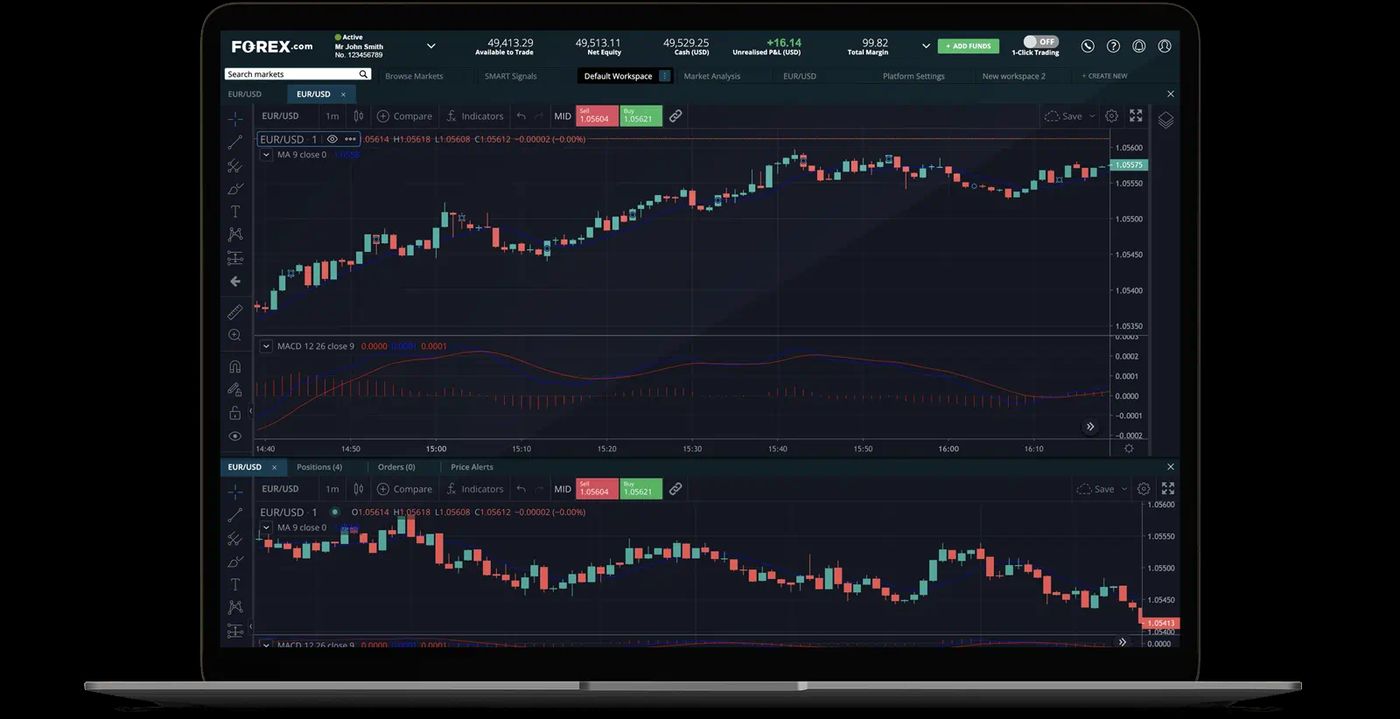
Canadian forex brokers provide access through several types of trading platforms, each with distinct characteristics. Proprietary platforms, developed by the brokers themselves, are designed to offer an integrated experience with their specific services and tools. Examples include the CMC platform from CMC Markets and the Trader Workstation from Interactive Brokers. These platforms often combine advanced charting, watchlists, order management, and account analytics in a single interface. The Trader Workstation desktop platform offers a variety of advanced trading tools and sophisticated order types that appeal to professionals and advanced forex traders. The widely used third-party platforms MetaTrader 4 and MetaTrader 5 are offered by many brokers, including OANDA and FP Markets. These platforms are favored for their extensive libraries of technical indicators, automated trading capabilities through Expert Advisors, and customizability. Some brokers also offer integration with the social charting and analysis platform TradingView. Web-based platforms allow trading directly from an internet browser without software installation, while dedicated desktop applications typically offer more robust features and stability. Mobile trading apps are universally available, enabling traders to monitor markets, manage positions, and execute trades from smartphones and tablets. The choice of platform often dictates the account type a trader must open with a broker.
Understanding Costs and Fee Structures
The cost of trading forex in Canada is primarily determined by spreads and commissions. The spread is the difference between the bid and ask price of a currency pair and represents a core cost of trading. Brokers often advertise spreads starting from 0.0 pips on major pairs for specific account types, though these are minimum spreads that can widen during volatile market conditions or for larger trade sizes. Some brokers charge a fixed commission per lot traded in addition to a raw market spread. It is important to review a broker's complete fee schedule, which may include inactivity fees for dormant accounts, withdrawal or deposit fees, and currency conversion fees for funding an account in a currency other than Canadian dollars. Many brokers offer commission-free forex trading on standard accounts, with costs embedded in wider spreads. More active traders might opt for accounts with tighter spreads but a per-trade commission. Brokers are required by CIRO to provide clear and transparent disclosure of all fees, charges, and commissions. The Canadian Investor Protection Fund coverage does not protect against trading losses incurred from these costs.
The following table outlines common fee types and their typical structures among Canadian forex brokers. These fees include spreads, commissions, and potential account maintenance or inactivity fees. Evaluating the total cost is crucial for traders, especially for high-volume trading. Brokers like CMC Markets offer specific account types with competitive pricing structures. Transparent and fair pricing is a key factor considered in broker evaluations.
| Fee Type | Typical Structure |
|---|---|
| Spreads | Variable or fixed, starting from 0.0 pips on majors |
| Commissions | Fixed fee per lot traded (e.g., $3 per 100k) |
| Inactivity Fee | Monthly charge after account dormancy (e.g., 12 months) |
| Withdrawal Fee | May apply for certain methods like wire transfers |
| Currency Conversion | Percentage fee on deposits/withdrawals in foreign currency |
Evaluating the total cost requires considering both the advertised spreads and any additional commissions. This is especially important for high-volume trading. Demo accounts are useful for understanding a platform's fee dynamics before committing real funds. For example, CMC Markets offers an FX Active account with spreads from 0.0 pips on six major FX pairs and a fixed low commission rate. This account also provides a 25 percent spread discount on over 300 other FX pairs.
Account Types and Leverage Considerations
Canadian forex brokers typically offer multiple account types to cater to different trader profiles. A standard account is common, often featuring commission-free trading with costs incorporated into the spread. For more active or professional traders, specialized accounts like the FX Active account from CMC Markets offer tighter spreads from 0.0 pips on selected major pairs but may charge a fixed commission per trade. Most brokers require a minimum initial deposit to open a live account, though some have no minimum. Practically all brokers provide a demo account with virtual funds, allowing traders to test platforms and strategies risk-free. Trading is conducted using leverage, which allows control of a large position with a relatively small margin deposit. For example, a 5 percent margin rate means a trader must deposit 5 percent of the full trade value. While leverage can amplify potential profits, it also magnifies losses, which are calculated on the full position size. CIRO-regulated brokers are required to disclose the high risks of leveraged trading prominently. Between 51 percent and 89 percent of retail investor accounts lose money when trading CFDs. Margin requirements can vary by instrument and may be increased by the broker during periods of high market volatility. If the market moves against a leveraged position, a trader may need to deposit additional funds to maintain it, known as a margin call.
Research, Education, and Customer Support Offerings
The quality of research, education, and customer support is a significant differentiator among Canadian forex broker platforms. Leading brokers invest heavily in educational content designed for traders of all experience levels. FOREX.com's Trading Academy, for example, offers interactive courses with progress tracking, quizzes, and detailed modules. Educational resources often include video walkthroughs, platform guides, coaching sessions, and tutorials on trading fundamentals and advanced strategies. Research support is another critical area, with many platforms providing access to third-party research from firms like Trading Central or Autochartist. Real-time news feeds from sources such as Reuters, expert market analyst insights, and economic calendars are standard tools to support strategic decision-making. Support is commonly offered in both official languages, English and French, to serve the Canadian market. Some brokers also provide personalized access to premium trading tools, exclusive client events, and dedicated account managers for higher-tier clients. Evaluating these non-trading features is essential as they contribute significantly to a trader's ability to learn, analyze markets, and resolve issues efficiently.
Steps to Choose and Verify a Forex Broker
Selecting a forex broker in Canada involves a methodical process focused on security and suitability. The first and most critical step is to verify the broker's regulatory status with the Canadian Investment Regulatory Organization. This can be done by checking the CIRO website's member database to confirm the firm's authorization and the provinces in which it is licensed to operate. The next step is to review the broker's investor protection measures, including membership in the Canadian Investor Protection Fund, which insures eligible client assets. Traders should then assess the broker's trading platforms, ensuring they offer the tools, charting, and order types required for their strategy. Comparing fee structures across multiple brokers is essential to understand the total cost of trading. Evaluating the quality and accessibility of customer support, educational resources, and market research tools can also inform the decision. Finally, opening a demo account allows for hands-on testing of the platform's functionality, execution speed, and overall user experience before funding a live account.
- Verify the broker's CIRO registration and provincial licensing.
- Confirm CIPF coverage for investor protection.
- Compare platform offerings, including proprietary software and MetaTrader access.
- Analyze the complete fee schedule for spreads, commissions, and hidden charges.
- Test customer support responsiveness and available channels.
- Review available educational content and research tools.
- Utilize a demo account to practice with the platform's features.
Choosing a broker that is not regulated by CIRO exposes a trader to significant risks. These risks include potential fraud and a lack of recourse in disputes. Brokers operating in Canada must be compliant with federal and provincial licensing requirements. A broker's regulatory status can be cross-referenced using regulatory databases to verify its valid license and authorized provinces of operation.
Common Mistakes to Avoid in Forex Trading
New traders in Canada often make several avoidable mistakes when starting forex trading. A primary error is trading with an unregulated or offshore broker that does not hold CIRO authorization, thereby forfeiting crucial investor protections. Another common mistake is underestimating the risks associated with leverage, leading to positions that are too large relative to account size and resulting in margin calls or losses exceeding the initial deposit. Failing to use stop-loss orders for risk management is a frequent oversight that can compound losses during adverse market moves. Many traders also neglect to develop and backtest a trading strategy, instead relying on intuition or emotion, which is a recipe for inconsistent results. Overlooking the total cost of trading, including spreads, commissions, and swap rates, can erode profits over time. Finally, not utilizing the educational resources and demo accounts provided by brokers means missing opportunities to learn without financial risk. Brokers like Interactive Brokers note that beginner traders might be intimidated by miscellaneous fees and platform complexity, highlighting the need for thorough research.
Technology and Platform Tools for Trading
The functionality and performance of modern forex broker platforms in Canada rely on advanced technology. Brokers utilize sophisticated systems to aggregate liquidity from multiple tier-one banks, providing traders with accurate bid and ask prices and aiming for execution with no partial fills on supported order types. Platform stability and speed are critical, especially during periods of high market volatility when price quotes and order execution must be reliable. Many proprietary platforms, such as the CMC platform, are designed for active traders who require access to charts, watchlists, order tickets, technical indicators, and risk management features in one consolidated view. Third-party platforms like MetaTrader 4 and MetaTrader 5 support over 100 popular technical indicators and allow analysis of price trends with chart intervals starting from as low as five seconds. Advanced tools such as automated trading algorithms, backtesting environments, and social trading integrations are increasingly common. Mobile app technology ensures that traders have full platform functionality on iOS and Android devices, including the ability to review open positions, place orders, and monitor account performance. The integration of platforms with external tools like TradingView further extends analytical capabilities, though such integrations may require a specific account type separate from the broker's main platform. The CMC Markets mobile app gives you access to forex markets from your phone or tablet, and the platform is available on desktop and can be used alongside the mobile app.
Frequently asked questions
What is the best forex broker in Canada?
There is no single best broker, as the ideal platform depends on individual trading needs. However, the most reliable brokers are those regulated by the Canadian Investment Regulatory Organization. Firms like Interactive Brokers, FOREX.com, CMC Markets, and OANDA are often highlighted for their CIRO regulation, range of platforms, and comprehensive offerings. The best choice is one that aligns with your trading style, cost requirements, and need for educational resources.
Is forex trading legal in Canada?
Yes, forex trading is legal and regulated in Canada. The Canadian Investment Regulatory Organization is the national body that oversees leveraged forex and CFD trading. Brokers must be authorized by CIRO and comply with its strict rules regarding client fund segregation, disclosure, and business conduct. Trading with a CIRO-regulated broker ensures you are operating within the legal framework and have access to investor protections.
What is CIRO regulation?
The Canadian Investment Regulatory Organization is the national self-regulatory organization for investment dealers in Canada. Launched in 2023, it consolidated the regulatory functions of the former Investment Industry Regulatory Organization of Canada and the Mutual Fund Dealers Association of Canada. CIRO regulates all aspects of leveraged forex and CFD trading, including firm licensing, capital requirements, client account protection, and trading practices. Verifying a broker's CIRO registration is the first step in choosing a safe platform.
Can I trade forex on MetaTrader in Canada?
Yes, many CIRO-regulated brokers in Canada offer access to the MetaTrader 4 and MetaTrader 5 platforms. These third-party platforms are popular for their advanced charting tools, technical indicators, and support for automated trading through Expert Advisors. Brokers like CMC Markets, OANDA, and FP Markets provide MT4 and MT5 access. It is important to note that using MetaTrader often requires opening a specific account type separate from a broker's proprietary platform accounts.
What are the risks of forex trading with leverage?
Leverage allows you to control a large position with a small deposit, but it significantly amplifies risk. Profits and losses are calculated on the full position size, not just the margin. This means losses can rapidly exceed your initial deposit. CIRO requires brokers to disclose that between 51 percent and 89 percent of retail investor accounts lose money when trading CFDs. Market volatility can trigger margin calls, requiring additional funds. Understanding leverage and employing strict risk management, like stop-loss orders, is essential.
How are my funds protected with a Canadian forex broker?
CIRO-regulated brokers are required to hold client funds in segregated accounts, separate from the firm's operating capital. Many brokers are also members of the Canadian Investor Protection Fund, which provides protection for eligible client assets up to one million Canadian dollars per account category if the member firm fails. This coverage does not protect against trading losses. Some brokers may also offer negative balance protection as an additional risk management feature, though it is not mandated by CIRO.
Sources and further reading
- 7 Best Forex Brokers in Canada for 2026 forexbrokers.com
- Forex Trading Canada: Trade 330+ FX Pairs cmcmarkets.com
- CFD Trading Online | OANDA | Canada oanda.com
- Best Forex Brokers in Canada for October 2026 fortunly.com
- Best Canada Trading Platforms & Brokers Regulated ... tradingpedia.com
This article explains how things work and is not financial, tax or legal advice. Rules, limits and rates change, so check the current figures with the Canada Revenue Agency, your province or your financial institution before you act.