For Canadian residents, the best forex brokerages are those regulated by the Canadian Investment Regulatory Organization (CIRO), which provides a national framework for investor protection. These platforms offer access to global currency pairs, including major pairs and Canadian dollar crosses like USD/CAD. Selecting a CIRO-regulated broker is crucial for ensuring fund safety, transparent pricing, and adherence to strict conduct rules. This guide outlines the key features, regulatory environment, and practical considerations for choosing a forex brokerage in Canada.
The Canadian Regulatory Framework for Forex Trading
Forex trading in Canada operates within a well-defined regulatory environment designed to protect retail investors. The primary oversight body is the Canadian Investment Regulatory Organization (CIRO), which launched in 2023 as the unified national self-regulatory organization succeeding the former IIROC and MFDA. CIRO authorizes firms, supervises trading conduct, and enforces standards for leveraged forex and CFD trading activities. Its rulebook governs capital requirements, client fund segregation, disclosure practices, and platform oversight. In addition to CIRO, the Financial Transactions and Reports Analysis Centre of Canada (FINTRAC) imposes strict anti-money laundering controls and record-keeping obligations on all financial service providers. Brokers operating in specific provinces must also comply with any additional regional securities regulations. This multi-layered framework creates a trading environment where investor protections and operational expectations are consistently applied across the country.

Core Features of Regulated Canadian Forex Brokers
Brokers regulated for the Canadian market share several common features that cater to both new and experienced traders. A primary offering is access to forex trading through Contracts for Difference (CFDs), which allow speculation on currency price movements without owning the underlying assets. These platforms typically provide trading on a wide range of currency pairs, including major global pairs like EUR/USD and GBP/USD, as well as Canadian dollar pairs such as USD/CAD, EUR/CAD, and CAD/JPY. Most brokers offer multiple account types, which can include standard commission-free accounts and active trader accounts with lower spreads from 0.0 pips on major pairs. Educational content is a significant focus, with many brokers providing interactive trading academies, video walkthroughs, platform guides, and quizzes with progress tracking. Customer support is commonly available in multiple languages, including English and French, through various channels.
Platform choice is a critical feature, with brokers offering either proprietary software, third-party platforms like MetaTrader 4 and MetaTrader 5, or a combination of both. Proprietary platforms are often designed for active traders, integrating charts, watchlists, order tickets, and risk management tools. Third-party platforms like MT4 and MT5 provide access to automated trading features, expert advisors, and a wide array of technical indicators. Many brokers also integrate with external charting and analysis tools like TradingView. The availability of demo accounts using virtual funds is standard, allowing potential clients to practice strategies and familiarize themselves with the platform before committing real capital. These demo accounts replicate live market conditions without financial risk.
Understanding Costs, Fees, and Leverage
The cost structure for forex trading in Canada primarily revolves around spreads and commissions. A spread is the difference between the bid and ask price of a currency pair, and it represents a core cost of trading. Brokers often advertise minimum spreads, which are the lowest spreads shown for a product, but these can widen during after-hours trading or periods of high market volatility. For larger trade sizes, the spread will typically widen beyond the advertised minimum. Some brokers offer accounts with spreads from 0.0 pips on six major FX pairs, coupled with a fixed, low commission rate per lot traded. Other potential fees include account maintenance fees, inactivity fees, and withdrawal fees, though many brokers promote transparent and fair pricing by avoiding these additional charges.
Forex CFDs are traded using leverage, which allows traders to control a large position with a relatively small deposit known as margin. For example, a forex pair with a 5% margin rate requires a deposit of 5% of the full position value to open the trade. While leverage makes trading more capital-efficient, it also significantly amplifies risk. Profits and losses are calculated on the full position size, not just the margin amount, meaning losses can accumulate rapidly and may exceed the initial deposit. Margin requirements vary by instrument and can change with market conditions. A key investor protection feature offered by some brokers, though not mandated by law, is negative balance protection, which ensures a client cannot lose more than the funds they have deposited, even during high volatility.
- Spreads can start from 0.0 pips on major pairs with certain active accounts.
- Spreads widen for larger trade sizes beyond average market trade sizes.
- After-hours trading typically leads to wider platform spreads.
- CFDs carry a high risk, with between 51% and 89% of retail investor accounts losing money.
- Leverage allows exposure to a larger position with only a margin deposit.
- Losses are calculated on the full position size, not just the margin.
- Negative balance protection is an optional feature offered by some brokers.
Steps to Verify and Choose a Broker
Selecting a suitable forex broker in Canada involves a due diligence process focused on regulatory compliance and service alignment. The first and most critical step is to verify the broker's regulatory status with the Canadian Investment Regulatory Organization. This can be done by checking the broker's website for its CIRO registration number and cross-referencing it on the CIRO's official website. Trading with an unregulated broker exposes you to risks including potential fraud, lack of investor protection, and limited recourse in disputes. The next step is to confirm whether the broker is a member of the Canadian Investor Protection Fund, which provides insurance coverage for eligible client assets up to CA$1 million in the event of broker insolvency.
After confirming regulatory standing, evaluate the broker's specific offerings against your trading needs. Assess the available trading platforms to ensure they match your preference for proprietary software, MetaTrader, or web-based platforms. Review the detailed fee schedule, focusing on spreads for the pairs you intend to trade, any commission structures, and potential hidden fees. Examine the range of available markets and instruments beyond forex, such as indices, commodities, or shares, if you plan to diversify. Finally, test the broker's customer service channels and educational resources, and consider opening a demo account to experience the platform's functionality and execution speed firsthand before funding a live account.
- Check the broker's CIRO registration number on its website and the CIRO database.
- Confirm CIPF membership for up to CA$1 million in investor protection.
- Compare platform options, including proprietary software, MT4, MT5, and mobile apps.
- Analyze the fee structure, including spreads, commissions, and any inactivity fees.
- Review the range of available forex pairs and other CFD instruments.
- Test customer support channels and the quality of educational materials.
- Open a demo account to practice trading with virtual funds.
Common Trading Platforms and Tools
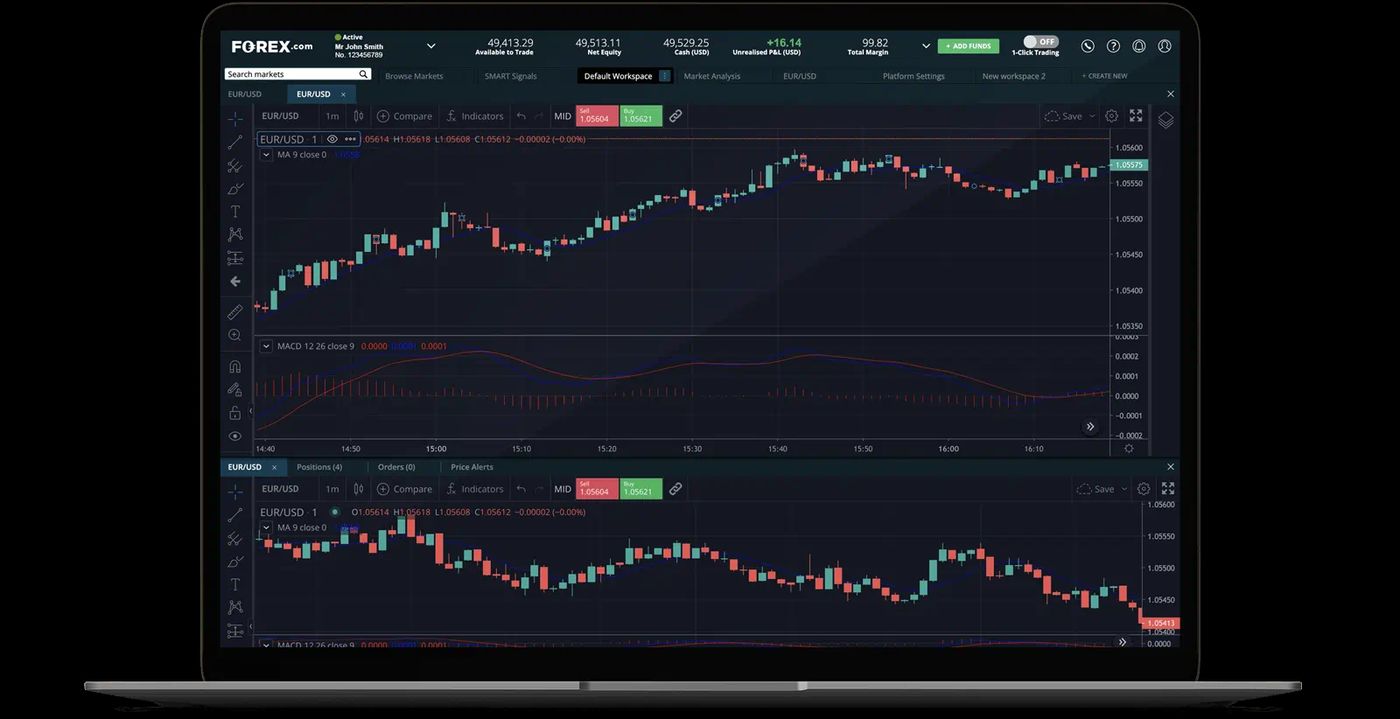
Canadian forex brokers typically provide access to a selection of trading platforms, each with distinct characteristics. The MetaTrader suite, including MetaTrader 4 and MetaTrader 5, is widely offered as a third-party platform option. These platforms are known for their extensive libraries of technical indicators, automated trading capabilities through Expert Advisors, and customizable charting tools. When using MT4 or MT5 with a broker, traders typically must open a specific account type that is separate from accounts used for the broker's proprietary platform. Proprietary platforms, like those developed by individual brokers, are often designed to integrate all trading functions, charts, watchlists, order management, and news, into a single, streamlined interface. These platforms are frequently available on both desktop and mobile devices, with mobile apps allowing for trading and account management on the go.
Many brokers enhance their platform offerings with additional tools and integrations. A common integration is with TradingView, allowing traders to use its advanced charting and social features directly through their brokerage account. Other analytical tools provided can include plug-ins like Autochartist or Trading Central for automated market analysis and pattern recognition. Research support is another key area, with brokers offering access to third-party research, real-time news feeds from sources like Reuters, and market analyst insights. For strategy development and testing, the availability of a robust demo account environment is a standard tool that allows for risk-free practice.
- MetaTrader 4 and 5 offer automated trading via Expert Advisors.
- Proprietary platforms often combine charts, watchlists, and order tickets.
- TradingView integration is available for advanced charting with some brokers.
- Tools like Autochartist and Trading Central provide automated market analysis.
- Real-time news feeds, such as from Reuters, are common platform features.
- Demo accounts replicate live markets for practice without financial risk.
Notable Brokerage Firms Operating in Canada
Several brokerage firms have established a presence in the Canadian market, each with different areas of focus. Interactive Brokers is a publicly traded company regulated in multiple jurisdictions and is noted for its extensive range of global investment products, including spot forex, futures, and micro futures. Its proprietary Trader Workstation platform is considered institutional-grade, offering advanced tools and sophisticated order types. FOREX.com, a brand under StoneX Group, is recognized for its comprehensive educational content through its Trading Academy, which features interactive courses with quizzes and progress tracking. CMC Markets Canada is a CIRO member that offers forex trading via CFDs on its proprietary platform and through MT4/MT5, with account options providing spreads from 0.0 pips on major pairs.
OANDA is a broker with over 25 years of experience, offering CFD trading on forex, indices, and commodities through its own platform and integrations with MT4 and TradingView. It provides premium tools and market analysis for clients. Fusion Markets, founded in 2019, emphasizes low fees and technology, offering over 250 products including forex and share CFDs through MetaTrader platforms. Admirals is another broker with decades of experience, focusing on tight spreads and a wide range of instruments tailored for accounts of various sizes. These firms represent a sample of the options available, all operating under the requirement of CIRO regulation.
Key Factors in Broker Evaluation and Selection
When comparing Canadian forex brokers, several specific factors should be evaluated to make an informed choice. Regulatory status and trustworthiness are paramount, which involves verifying the CIRO license and checking the broker's history across multiple tier-one jurisdictions. The range of investments is another critical factor, as some brokers offer access to thousands of instruments including forex, shares, indices, commodities, and bonds, while others may have a more focused offering. Pricing and costs must be scrutinized through real spread data on major pairs and an understanding of all commissions, as low headline spreads can be offset by high commissions on certain account types.
The quality of the trading platform and tools directly impacts the trading experience. Factors here include execution speed, platform stability, availability of advanced order types, and the depth of technical analysis tools. Educational and research support is vital for development, with top brokers providing structured learning academies, video tutorials, market analysis, and insights from third-party providers. Finally, customer service quality, assessed through support channel availability, responsiveness, and the overall user experience during onboarding and account management, rounds out the evaluation criteria. Brokers that score highly across these categories typically provide a more robust and secure trading environment.
Market Context and Considerations for Canadian Traders
The Canadian forex trading market, while smaller than some international counterparts, is a thriving activity supported by a population of over 38 million. The regulatory landscape is strict, with controls at both federal and provincial levels creating safe conditions but also imposing constraints, such as limits on margin requirements for various financial products. This means traders are restricted in how much they can borrow from their broker to trade CFDs. Unlike the United States, where CFD trading is prohibited, Canada permits it under CIRO oversight. This regulatory environment means the number of brokers catering specifically to the Canadian market is not as extensive as in countries like Australia or the United Kingdom.
Canadian traders should be aware of the tax implications of their trading activity, as profits from forex trading are generally considered taxable income. It is important to keep detailed records of all trades, including dates, amounts, and profit or loss calculations. Furthermore, while the market offers opportunities through leverage, the high risk associated with CFDs is underscored by industry data indicating that between 51% and 89% of retail investor accounts lose money when trading these products. Therefore, a thorough understanding of both the markets and the specific broker's terms, including margin calls and liquidation policies, is essential before engaging in live trading.
Frequently asked questions
Is forex trading legal in Canada?
Yes, forex trading is legal and regulated in Canada. The primary regulatory body is the Canadian Investment Regulatory Organization (CIRO), which oversees leveraged forex and CFD trading at a national level. Brokers must also comply with provincial regulations and federal anti-money laundering rules enforced by FINTRAC. Trading with a CIRO-regulated broker is essential for legal protection and access to investor safeguards.
What is the best forex broker in Canada?
There is no single best broker, as suitability depends on individual needs. However, the starting point for any selection should be a broker that is regulated by the Canadian Investment Regulatory Organization. Different brokers excel in various areas. Some are noted for low fees and tight spreads, others for advanced trading platforms, and others for extensive educational resources. It is crucial to compare features, costs, and platform options among CIRO-regulated firms.
Can I trade forex using CFDs in Canada?
Yes, trading forex through Contracts for Difference is a common and permitted method in Canada. Unlike the United States, Canada allows retail clients to trade CFDs on forex pairs. A CFD allows you to speculate on the price movement of a currency pair without owning the underlying currencies. It is important to understand that CFDs are leveraged products, which magnify both potential profits and losses.
What are the typical costs of forex trading in Canada?
The main costs are the spreads and, on some account types, commissions. The spread is the difference between the buy and sell price of a currency pair. Brokers may advertise minimum spreads, but these can widen based on market conditions and trade size. Some accounts charge a commission per lot traded in addition to tighter spreads. Other potential costs include inactivity fees or withdrawal fees, though many brokers avoid these.
Are my funds protected with a Canadian forex broker?
Funds are protected if you use a broker that is a member of the Canadian Investor Protection Fund. The CIPF provides insurance coverage for eligible client assets up to CA$1 million per account in the event the brokerage firm becomes insolvent. This protection is in addition to the safeguards mandated by the Canadian Investment Regulatory Organization (CIRO), which include rules on client fund segregation and capital requirements for member firms. It is crucial to verify a broker's CIRO license and CIPF membership before opening an account. Trading with an unregulated broker exposes you to risks like fraud and a lack of investor protection. Some brokers may also offer negative balance protection as an additional client safety feature.
Do Canadian forex brokers offer demo accounts?
Yes, offering a demo or practice account is a standard feature among Canadian forex brokers. These accounts are funded with virtual money and allow you to trade in real time market conditions without risking real capital. For example, CMC Markets Canada offers a demo account for practicing with virtual funds before live trading. Demo accounts are used to test trading strategies, familiarize yourself with the broker's platform, and understand how leverage and order types work. They provide a valuable tool for both new and experienced traders to evaluate a broker's services and platform functionality before committing real money to a live trading account.
Sources and further reading
- 7 Best Forex Brokers in Canada for 2026 forexbrokers.com
- Forex Trading Canada: Trade 330+ FX Pairs cmcmarkets.com
- CFD Trading Online | OANDA | Canada oanda.com
- Best Forex Brokers in Canada for October 2026 fortunly.com
- Best Canada Trading Platforms & Brokers Regulated ... tradingpedia.com
This article explains how things work and is not financial, tax or legal advice. Rules, limits and rates change, so check the current figures with the Canada Revenue Agency, your province or your financial institution before you act.