The exchange rate between the US dollar and Japanese yen is a key financial indicator watched by investors, travellers, and businesses. For Canadians, understanding this rate is important for international investments, travel planning to Japan, and when sending money overseas. The USD/JPY pair is one of the most traded in the world, with its value influenced by economic policies, interest rate differentials, and global market sentiment. Canadians converting money should be aware of how banks and transfer services apply margins and fees that differ from the mid-market rate seen online.
Understanding the US Dollar and Japanese Yen
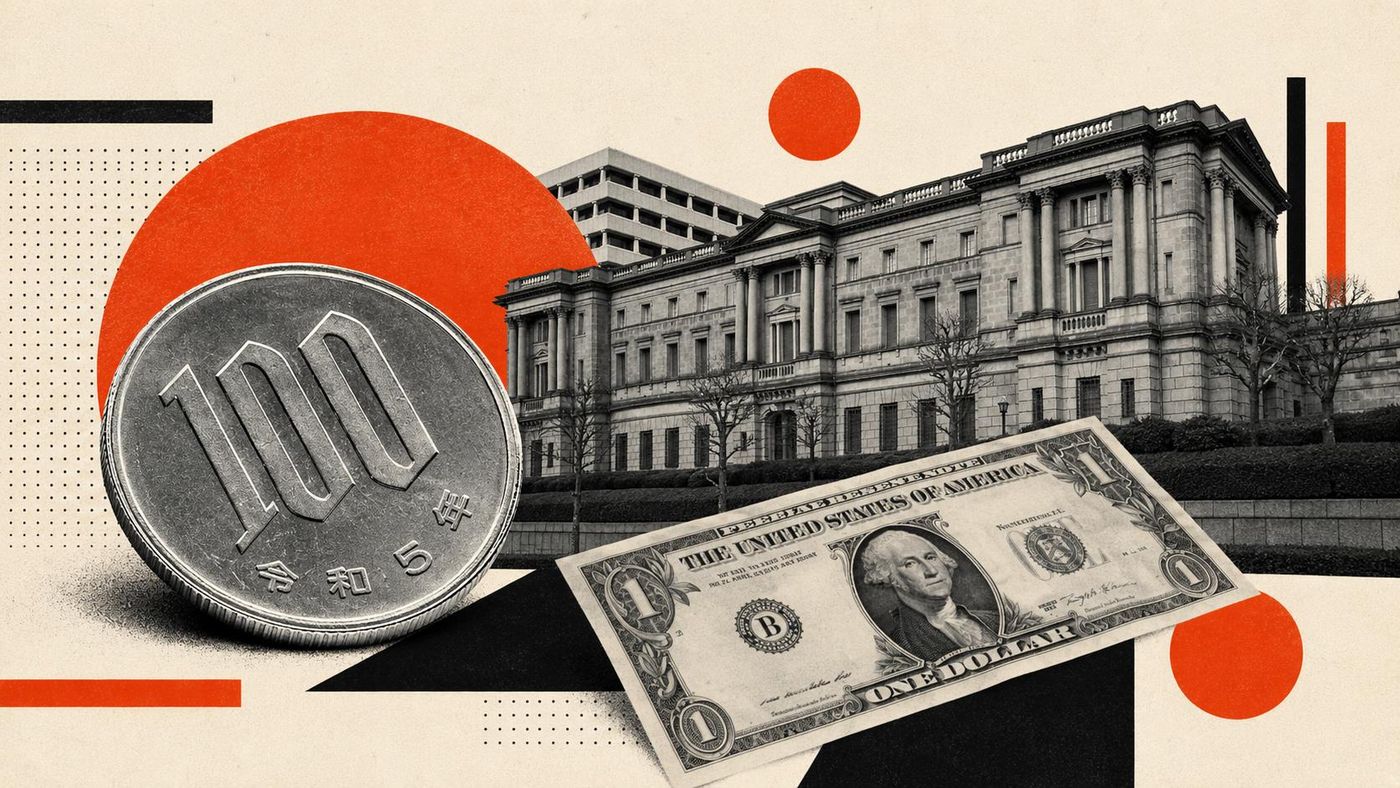
The US dollar, denoted by the code USD and symbol $, is the official currency of the United States and the world's primary reserve currency. Its value is influenced by Federal Reserve policy, US economic data, and global demand for dollar-denominated assets. The Japanese yen, with the code JPY and symbol ¥, is the official currency of Japan and is known as a major safe-haven currency during times of market stress. The Bank of Japan's monetary policy, which has historically involved low to negative interest rates and quantitative easing, plays a central role in the yen's valuation. The exchange rate between them, quoted as USD/JPY, indicates how many Japanese yen are needed to purchase one US dollar. A higher number means a stronger dollar relative to the yen, while a lower number indicates a stronger yen.
How the USD/JPY Exchange Rate Is Determined
The rate fluctuates based on the continuous buying and selling by banks, hedge funds, corporations, and governments. The most accurate reflection of this market activity is the mid-market rate, which is the midpoint between the global buy and sell prices. This is the rate you typically see on financial data feeds and currency converter tools online. However, when individuals or businesses convert currency through a bank or money service, they do not receive this pure mid-market rate. Providers add a margin or spread to the rate, which is how they make money on the transaction. This margin, combined with any fixed fees, constitutes the total cost of conversion.
Several key factors drive movements in the USD/JPY rate over time. The interest rate differential between the US Federal Reserve and the Bank of Japan is a primary driver, as investors seek higher yields. Relative economic strength, reflected in GDP growth, employment data, and inflation reports from both nations, also causes shifts. The yen often strengthens during global geopolitical uncertainty or financial market turmoil due to its safe-haven status. Interventions by the Japanese Ministry of Finance to weaken or strengthen the yen can cause sharp, short-term movements. Finally, broad US dollar strength or weakness against a basket of currencies, as measured by indices like the US Dollar Index, will also impact the USD/JPY pair.
Historical Context and Notable Rate Movements
The USD/JPY exchange rate has experienced significant volatility over the decades, shaped by major economic agreements and crises. More recently, the Bank of Japan's prolonged ultra-loose monetary policy, including negative interest rates and yield curve control, has generally exerted downward pressure on the yen's value relative to the dollar. These policies have created a wide interest rate gap with the United States, especially when the Federal Reserve was raising rates to combat inflation. The pair has seen extreme highs and lows reflecting these forces. These levels were closely watched by markets for potential Japanese government intervention to support the yen.
How Canadians Convert USD to JPY
Canadians looking to convert US dollars to Japanese yen have several common channels, each with different cost structures and conveniences. Traditional banks offer conversion services for account holders, both for cash at branches and for wire transfers. Credit and debit cards can be used for purchases or ATM withdrawals in Japan, with the conversion happening at the network's rate. Specialized foreign exchange brokers and online money transfer services focus solely on currency conversion and international payments. Many Canadians also use digital multi-currency accounts offered by fintech companies, which allow holding and converting currencies at relatively low margins.
The process typically involves comparing the offered exchange rate against the live mid-market rate to understand the margin being charged. For wire transfers, you provide the recipient's banking details in Japan, and the funds are sent via the SWIFT network. For cash, you can order Japanese yen for branch pickup or use an ATM upon arrival in Japan. It is crucial to review all fees upfront, including wire transfer fees, card foreign transaction fees, and any cash advance fees if using a credit card. Many providers allow you to lock in an exchange rate for a future transfer, which can be useful for budgeting.
Fees and Margins Charged by Financial Institutions
When converting currency, the total cost is a combination of the exchange rate margin and any fixed fees. The margin is the difference between the mid-market rate and the rate offered to you. Banks typically apply a margin of 2% to 4% on top of the mid-market rate for retail currency conversion. This markup is often not explicitly stated but is built into the less favourable rate you are quoted. In addition to the margin, institutions charge various fixed fees. Using a credit card for a cash advance in a foreign currency triggers cash advance fees and immediate interest charges. The table below outlines typical cost components across different provider types.
To ensure you are getting a fair deal, always ask for the total amount in Japanese yen that will be delivered after all costs. Comparing this final delivered amount across two or three providers using the same starting amount in US dollars will reveal the best value. Many online comparison tools allow you to input your transfer details to see real-time estimates from multiple services. Setting a rate alert can also help you time your conversion when the underlying market rate moves in your favour, though the provider's margin will still apply.
Practical Scenarios for Canadian Individuals and Businesses
Different needs call for different conversion strategies. For travel to Japan, obtaining cash yen before departure or using a no-foreign-transaction-fee debit card at Japanese ATMs are common approaches. Snowbirds or retirees with recurring transfers, such as pension payments to a Japanese account, benefit from finding a service with low recurring transfer fees and a consistent, transparent margin. Students paying tuition to Japanese institutions often make large, scheduled payments, where locking in a rate in advance can protect against adverse moves.
Canadian businesses engaged in trade with Japan face unique considerations. Importers paying Japanese suppliers in yen need to manage foreign exchange risk, as rate fluctuations can directly affect costs. Some businesses use forward contracts to lock in an exchange rate for a future date. Exporters receiving yen payments must convert them to Canadian dollars, and the rate they receive impacts profitability. Businesses paying international contractors or employees in Japan benefit from services designed for batch payments with lower per-transfer fees. In all cases, transparency in the exchange rate margin and total fees is critical for accurate financial planning and cost control.
Detailed Analysis of Service Provider Offerings
Service providers differentiate themselves through their fee structures, speed, and transparency. Banks provide convenience and security but often have the highest total cost due to wide margins and multiple fees. Their exchange rate is not the live mid-market rate but includes a markup. Online money transfer services like MTFX and Wise compete by offering rates much closer to the mid-market rate. MTFX advertises up to 4% better JPY exchange rates than banks, applying only a small, nominal margin to the mid-market rate. These services also provide full upfront pricing with no hidden fees, which appeals to cost-conscious consumers.
Specialized brokers often cater to larger transfers, offering personalized service and the ability to negotiate rates for high-volume transactions. Retail currency exchange kiosks, found in airports and tourist areas, offer immediate cash conversion but at the poorest rates, with margins often exceeding 5%. Digital multi-currency accounts allow users to hold a balance in Japanese yen and convert funds when the rate is favourable, acting as a hedge against volatility. These accounts typically use the real mid-market rate for conversions with a small transparent fee, making them suitable for frequent travellers or those receiving income in foreign currencies.
Tools and Strategies for Managing Currency Risk
Individuals and businesses can use several tools to manage the risk of an adverse move in the USD/JPY rate. Rate alerts are a basic tool offered by many financial websites and apps. You set a target exchange rate and receive a notification when the market rate hits it. Forward contracts are a more formal instrument where you agree with a bank or broker to exchange a specific amount of currency at a predetermined rate on a future date, which can be months ahead. This locks in your cost or revenue, eliminating uncertainty but also forfeiting potential gains if the market moves in your favour.
Limit orders are similar to forward contracts but are often available through online trading platforms, allowing you to automatically execute a conversion when the market reaches your desired rate. For businesses, natural hedging involves matching currency inflows with outflows, such as paying Japanese suppliers with yen earned from sales in Japan. Regular, smaller transfers through a service with low fees can be a cost-averaging strategy, reducing the impact of converting a large lump sum at an unfavourable time. The key is to align the strategy with the amount, frequency, and risk tolerance of your specific currency needs.
Regulatory and Security Considerations for Transfers
When sending money from Canada to Japan, regulatory rules require providers to verify your identity to prevent money laundering and terrorist financing. You will typically need to provide personal identification and, for larger transfers, documentation on the source of funds. Reputable providers use encryption and fraud prevention systems to protect transactions. Western Union notes it uses encryption and fraud prevention efforts to help protect your money transfers. It is important to only send money to people you know and trust and to keep your Money Transfer Control Number private.
Providers are required to disclose the exchange rate, all fees, and the total amount to be delivered to the recipient before you confirm the transaction. This transparency allows you to make an informed decision. If you are using a credit card to fund a transfer, be aware that card issuers may treat it as a cash advance, applying a cash advance fee and immediate interest charges. Using a debit card or bank account transfer often avoids these additional costs. Always review the provider's policies on transfer cancellation, refunds, and liability in case of errors or delays.
Frequently asked questions
How can I get the best USD to JPY exchange rate?
To secure a favourable rate, compare the final delivered amount in yen across multiple providers, including banks, online transfer services, and currency brokers. Look for services that advertise low margins relative to the mid-market rate and transparent, upfront fee structures. Using a provider that allows you to set a rate alert can help you convert when the underlying market rate is strong. Avoid converting currency at airport kiosks or hotels, which usually offer the worst rates.
What causes the USD/JPY exchange rate to change daily?
Daily fluctuations are driven by changes in market sentiment, economic data releases from the US or Japan, and shifts in monetary policy expectations. News about interest rate decisions from the Federal Reserve or the Bank of Japan has an immediate impact. Geopolitical events and global stock market performance can also cause rapid moves, as the yen is considered a safe-haven asset. Trading activity during the overlapping hours of the Asian and North American sessions often sees higher volatility.
Can I lock in an exchange rate for a future transfer?
Yes, many banks and currency exchange services offer a forward contract or rate lock feature. This allows you to secure a specific exchange rate today for a transfer that will occur at a future date, up to several months away. This is useful for budgeting for large payments like property purchases or tuition, as it protects you from potential adverse movements in the currency market. There may be a deposit or margin requirement to set up such a contract.
What is the difference between the mid-market rate and the rate I get?
The mid-market rate is the midpoint between buy and sell prices in global currency markets, such as 1 CAD equalling 112.54 JPY. This is a reference rate used for informational purposes. The rate you receive from a bank or transfer service includes a margin added to this mid-market rate, which is how the provider makes a profit. For example, MTFX notes that banks often add hidden spreads of 2 to 4 percent. Therefore, the actual rate you get for a personal transfer will be less favourable than the pure mid-market rate.
What is the current mid-market exchange rate for CAD to JPY?
The current mid-market exchange rate for CAD to JPY is approximately 112.47 yen per Canadian dollar. This rate is the midpoint between global buy and sell prices and serves as a key reference point. It is important to note that this is for informational purposes, and the actual rate you receive for a personal transfer will likely include a margin or service fee. For example, other data points show rates like 112.54 and 113 JPY for 1 CAD. You can check live mid-market rates using online converters or platforms like Xe or MTFX.
How much is 100 Japanese yen in Canadian dollars?
100 Japanese yen is approximately 0.88 Canadian dollars based on current conversion tables. This conversion helps Canadians understand the value of yen when spending or receiving money from Japan. For additional context, 250 JPY is about 2.21 CAD, 300 JPY is about 2.65 CAD, and 500 JPY is about 4.43 CAD. These figures illustrate the inverse relationship between the two currencies. Remember that these are indicative rates, and the actual amount you receive will depend on the provider's specific exchange rate and any applicable fees.
Sources and further reading
- Canadian dollars to Japanese yen Exchange Rate. ... wise.com
- 1 CAD to JPY, Convert Canadian Dollars to Japanese Yen xe.com
- CAD to JPY | Convert Canadian Dollar to Japanese Yen westernunion.com
- Compare CAD to JPY Rates | Best Exchange ... mtfxgroup.com
This article explains how things work and is not financial, tax or legal advice. Rules, limits and rates change, so check the current figures with the Canada Revenue Agency, your province or your financial institution before you act.