The exchange rate between the Russian ruble and the US dollar is a key financial metric for Canadians engaged in cross-border commerce, investment, or travel. The rate is determined by global foreign exchange markets, influenced by factors such as interest rates, economic stability, and geopolitical events. Canadians converting money between these currencies encounter different methods and costs depending on whether they use banks, credit cards, or specialized transfer services. Understanding how the rate is set and the associated fees helps Canadians manage their international finances more effectively.
How the RUB to USD Exchange Rate is Determined
The exchange rate between the Russian ruble and the US dollar is primarily set in the global foreign exchange market. This is a decentralized marketplace where currencies are traded around the clock by banks, financial institutions, and other large participants. The rates quoted in financial media are typically interbank exchange rates, which are used for wholesale transactions, often involving a minimum amount of US$5,000,000. These rates serve as the baseline for all other retail currency conversions. When individual clients or businesses need to convert smaller amounts, a retail rate is applied. This retail rate includes a spread added to the interbank rate to account for market movement risk and the costs of processing smaller transactions. The final rate a Canadian sees when converting rubles to dollars or vice versa is therefore a derivative of this wholesale market price. Banks and transfer services build their customer-facing rates on this foundation, adjusting for their own operational costs and profit margins.

Factors Influencing the Ruble-Dollar Rate
Several key factors drive movements in the RUB/USD exchange rate. Central bank monetary policy in both Russia and the United States, particularly changes to benchmark interest rates, has a direct impact on currency valuations. Economic indicators such as inflation rates, GDP growth, and employment data from both countries also cause traders to reassess the relative strength of each currency. Geopolitical events and international trade dynamics, including the price of key Russian exports like oil and natural gas, can lead to significant volatility. Furthermore, broader market sentiment and demand for safe-haven assets often benefit the US dollar during periods of global uncertainty. These factors combine to create the constant fluctuations observed in the exchange rate throughout each trading day. The performance of the related RUB/CAD pair, which saw a 90-day change of -4.98 percent recently, illustrates the potential for rapid shifts based on these underlying economic and political drivers.
Methods for Canadians to Convert Currency
Canadians have multiple avenues to convert Russian rubles to US dollars or US dollars to Russian rubles. Traditional banks offer foreign exchange services both for cash and for electronic transfers, though the rates and fees differ. Online banking platforms, such as those offered by RBC, allow clients to convert and transfer funds between linked Canadian and US accounts instantly. Specialized money transfer services like Western Union provide options to send money online or in person for cash pickup in over 200 countries, including Russia. Many Canadians also use multi-currency accounts offered by digital financial services, which allow them to hold and convert currencies at real-time mid-market rates. Choosing the right method depends on the amount, urgency, and total cost, which includes both the exchange rate margin and any transaction fees. For cash access specifically in the United States, Canadians can use a U.S. Visa Debit card to get cash back with purchases at larger retailers or obtain a cash advance at most U.S. financial institutions by showing photo ID.
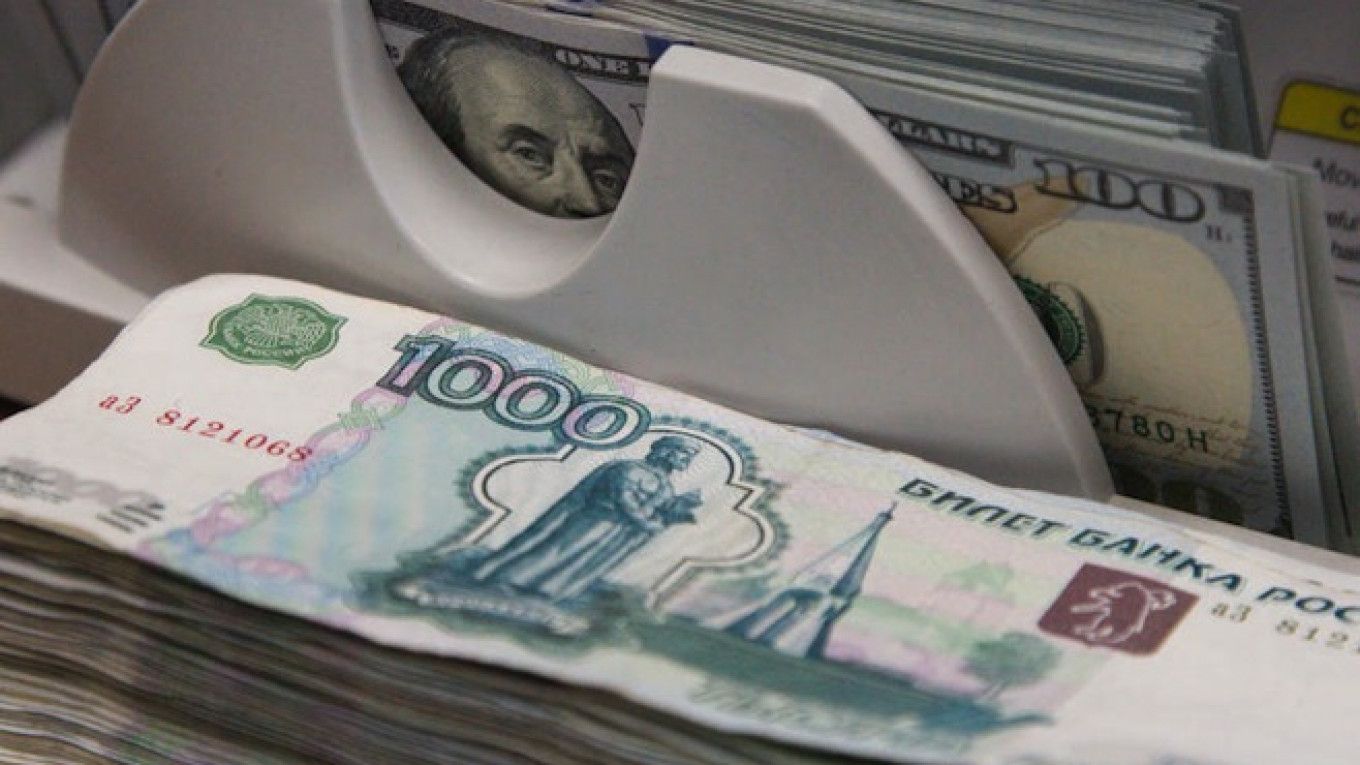
Fees and Rates from Banks and Transfer Services
Financial institutions apply different rates and fees for currency conversion. Banks typically distinguish between cash and non-cash transactions. Exchange rates for physical cash include additional costs for shipping, handling, and storage, making them less favourable than non-cash rates. Non-cash rates apply to instruments like cheques, drafts, wire payments, and other electronic transactions, which incur lower processing costs. For example, RBC notes that its Premium Checking account offers a preferred exchange rate. Money transfer services advertise using the real mid-market rate but may add a separate fee for the transfer. It is often more beneficial to convert currency before leaving Canada, as banks, exchange kiosks, and hotels abroad may charge commissions on top of less competitive rates. Western Union notes that its exchange rates and fees are estimates that vary by payment and payout methods and are subject to change.
Providers structure their costs in various ways. Exchange rates quoted in the media are interbank exchange rates, which are used by banks and other interbank participants to buy and sell currencies in the wholesale market. The interbank rate quoted in the media is typically for a minimum amount of US$5,000,000. Usually, when a client completes a transaction it is for an amount smaller than $5,000,000 and as a result, a retail rate is applied. This retail rate includes a spread added to the interbank rate to account for market movement. Client transactions require additional processing and are usually for much smaller amounts, and as a result, are priced using a retail rate.
| Provider/Service | Fee/Rate Characteristic | Notable Limit |
|---|---|---|
| RBC Bank Cross-Border Transfer | Free for online transfers between linked RBC accounts | $25,000 CAD or USD per transaction online |
| RBC Bank Large Transfer | Phone-assisted service | Up to $100,000 per single transfer |
| RBC U.S. Debit Card Cash Advance | Varies by financial institution | Up to $5,000 maximum |
| Western Union Money Transfer | Separate fee estimate. Rate varies by payment method | Fees subject to change based on payout method |
| Credit Card Payments (via services) | Possible cash advance fee and interest from card issuer | Using a debit card avoids these fees |
| Bank Foreign Exchange Cash Transaction | Rates include shipping/handling charges | Available to bank clients only |
Understanding these details helps Canadians anticipate the total cost of their currency conversion beyond the quoted exchange rate. The spread added to the interbank rate for retail transactions is a key component of this cost, varying by provider and transaction size. Exchange rates applied to cash transactions include shipping and handling charges, making the exchange rate for cash less favorable than the non-cash rate. Non-cash rates are applied to paper instruments such as cheques and drafts and to incoming and outgoing wire payments and other electronic transactions. These instruments do not require physical storage or movement, and incur less time and cost for processing than cash transactions, therefore a more favorable rate is applied.
Cross-Border Banking with RBC
RBC offers specific services tailored for Canadians managing US dollars and cross-border finances. Clients can open a US-based RBC Bank account without being a US resident, requiring only that they are 18 or older and live in Canada or the US. Linking Canadian RBC Royal Bank and US RBC Bank accounts enables instant and free online transfers between them, allowing clients to convert currency when rates are favourable. There is no limit to the number of transfers that can be made between these linked checking and savings accounts. For cash access in the US, clients can use their debit card at over 50,000 no-fee ATMs within the Allpoint and PNC networks or get cash back with debit card purchases at participating retailers. This integrated banking approach provides a convenient framework for handling both currencies. To open an account, Canadians need their Canadian Social Insurance Number, a valid government-issued photo ID, and an email address, and the process takes just a few minutes online.
The benefits of this cross-border setup include the ability to hold U.S. currency in a U.S. checking or savings account until exchange rates are favourable for conversion. RBC's online banking and mobile app allow clients to exchange and move CAD to USD and USD to CAD instantly and for free between their linked accounts 24 hours a day, seven days a week. New cross-border clients may also be eligible for promotional offers, such as one year of no annual fee banking, providing extra savings on initial transfers. This system is designed for flexibility, letting Canadians transfer money cross-border as many times as they want without incurring transfer fees, which is a significant advantage for active traders or frequent travellers.

Historical Context and Market Performance
The RUB/USD exchange rate has experienced considerable volatility over the years due to economic sanctions, commodity price swings, and domestic policy shifts. For instance, in a recent 90-day period, the RUB/CAD rate saw a high of 0.0182 and a low of 0.0159, with an overall change of -4.98 percent. This demonstrates the degree of fluctuation possible in a relatively short time frame. Such volatility underscores the importance for Canadians to monitor market conditions, especially if they are timing conversions for large transactions like property purchases or investment transfers. In a separate 30-day period, the RUB/CAD pair saw a high of 0.0171 and a low of 0.0166, with a positive change of 2.00 percent, highlighting that shorter-term trends can also be significant. These movements are tracked by online tools that allow users to view historical data and set alerts for when rates reach desired levels.
Practical Steps for Converting Money
When planning a currency conversion, Canadians should follow a series of practical steps to ensure efficiency and cost-effectiveness. First, compare the total cost, which is the combination of the exchange rate margin and any fixed fees, across different providers like banks, digital services, and transfer companies. Second, consider the timing of the conversion, as holding currency in a multi-currency account allows one to wait for a more favourable rate. RBC clients can transfer money cross-border when conversion rates are favourable, converting CAD to USD when the CAD is high or USD to CAD when the USD is high. Third, be aware of transaction limits, such as the $25,000 per transfer limit for online cross-border banking with RBC, and plan larger transactions accordingly by using phone services for amounts up to $100,000. Fourth, understand the difference in cost between converting cash versus making an electronic transfer, as non-cash rates are consistently better due to lower processing costs.
- Compare the total cost (rate margin + fees) across banks and transfer services.
- Use multi-currency accounts to hold funds and convert when rates are favourable.
- Note transaction limits, like the $25,000 online transfer limit with RBC.
- Opt for electronic transfers over cash for better exchange rates.
- Choose regulated transfer services with tracking for security.
- Be aware that credit card payments via transfer services may incur cash advance fees.
- For cash in the U.S., use no-fee ATMs or cash-back options with debit purchases.
- Check if your bank account type, like RBC Premium Checking, offers preferred exchange rates.
Finally, for those receiving funds in rubles, investigate the most efficient and secure methods to send that money to a Canadian or US account, using regulated services that provide tracking and fraud prevention efforts. Western Union, for example, allows payments online using a bank account, credit card, or Visa debit card, and transfers can be tracked using a Money Transfer Control Number (MTCN). Ensuring the service has robust encryption and fraud prevention is crucial for protecting your transfer. Many services also offer the ability to send money quickly or start a transfer online and pay in-store for added convenience.
Understanding Retail vs. Interbank Rates
The disparity between the exchange rate advertised in the news and the rate offered to individual customers is a fundamental aspect of currency conversion. Media-quoted rates are interbank exchange rates used by banks and other large participants to buy and sell currencies in the wholesale market for minimum amounts like US$5,000,000. When a client completes a transaction, it is typically for a much smaller amount, and as a result, a retail rate is applied. This retail rate includes a spread added to the interbank rate to account for market movement between the time the client's transaction is completed and when the bank can accumulate enough small client amounts to trade on the interbank market. This spread compensates the financial institution for the risk and administrative cost of handling retail-sized transactions. Therefore, the rate a Canadian receives when converting rubles to dollars at a bank branch or online will always be less favourable than the headline interbank rate. This pricing structure is standard across the industry and applies whether converting Russian rubles, US dollars, or any other foreign currency.
Using Online Tools and Calculators
Canadians have access to a variety of online tools to help plan their currency conversions and understand current rates. The Bank of Canada provides a lookup tool to search and download exchange rate data, which serves as a reliable benchmark. Many banks, like RBC, offer foreign exchange currency converters on their websites that allow quick conversion over 30 foreign currencies, though these tools are typically available to clients only. Third-party services provide live mid-market rate converters updated every minute, along with historical charts to track performance over time. These tools often allow users to set rate alerts to be notified when a target exchange rate is reached. Using these resources helps Canadians make informed decisions by comparing the mid-market rate to the retail rates offered by their bank or transfer service, clearly revealing the cost of the spread applied to their transaction.
Frequently asked questions
What is the best way to convert Russian rubles to US dollars from Canada?
The best method depends on your needs. For larger amounts or regular transactions, using a bank's online platform to transfer between linked multi-currency accounts can be cost-effective and instant. For sending money to individuals, specialized transfer services offer convenience and multiple payout options. Always compare the total cost, including the exchange rate margin and any fees, between providers. Using a service that offers the mid-market rate without hidden fees can be advantageous for transparent pricing.
Are there limits on how much currency I can convert or transfer?
Yes, financial institutions often set limits. For example, RBC allows online cross-border transfers of up to $25,000 CAD or USD per transaction between linked accounts. For larger amounts up to $100,000, you must complete the transfer by phone. Other services and banks will have their own limits, which should be checked before initiating a large conversion. There is no limit to the number of transfers you can make between linked RBC checking and savings accounts.
Why is the exchange rate I get different from the one in the news?
The rates quoted in the media are interbank wholesale rates for very large transactions, often a minimum of US$5 million. The rate offered to retail clients includes a spread added to cover the bank's costs and market risk for handling smaller amounts. This results in a slightly less favourable retail exchange rate for individual conversions. The spread accounts for the time and cost of accumulating smaller client transactions into a tradable lot on the interbank market.
Is it cheaper to convert currency in Canada or abroad?
It is often more beneficial to convert your Canadian dollars to the local currency before you leave Canada. Banks, exchange kiosks, and hotels in other countries frequently charge commissions or offer less competitive rates on top of the exchange margin. Converting in Canada typically provides access to better rates and more transparent fees. For US dollars, holding them in a U.S. account until you need them allows you to avoid repeated conversions.
Can I open a US bank account as a Canadian resident?
Yes, some banks like RBC allow Canadian residents to open a US-based account. You do not need a US address or Social Security Number. You simply need to be 18 years or older and reside in Canada or the US. This can simplify managing and converting US dollars for travel, online shopping, or investments. The sign-up process is done online and requires your Canadian SIN, a valid photo ID, and an email address.
What fees should I watch out for when using a credit card to transfer money?
If you use a credit card to pay for a money transfer through a service, your card issuer may treat it as a cash advance. This can trigger a cash advance fee and associated interest charges, which begin accruing immediately. To avoid these, use a debit card or a direct bank account payment for the transfer whenever possible. Western Union specifically notes that a card-issuer cash advance fee and interest may apply if you use a credit card.
Sources and further reading
- Russian rubles to Canadian dollars today wise.com
- USD ⇔ CAD Currency Converter, RBC Bank rbcbank.com
- Foreign Exchange Currency Converter, RBC Royal Bank apps.royalbank.com
- CAD to RUB | Convert Canadian Dollar to Russian Rouble westernunion.com
This article explains how things work and is not financial, tax or legal advice. Rules, limits and rates change, so check the current figures with the Canada Revenue Agency, your province or your financial institution before you act.