The exchange rate between the New Zealand dollar (NZD) and the Canadian dollar (CAD) is a key metric for Canadians engaged in travel, trade, or sending money to New Zealand. This rate fluctuates based on global market forces, including the economic policies and commodity prices of both nations. Canadians converting currency should be aware that the rate offered by banks and transfer services typically includes a margin above the mid-market rate, which can significantly affect the final amount received. Understanding how this rate is set and the costs involved helps individuals and businesses make more informed financial decisions.
Understanding the New Zealand and Canadian Dollars
The New Zealand dollar is the official currency of New Zealand, and its currency code is NZD. The Canadian dollar is the official currency of Canada, and its currency code is CAD. Both currencies use the dollar sign ($) as their symbol, which can sometimes lead to confusion, so the three-letter codes are essential for clarity in financial transactions. The New Zealand dollar is a freely floating currency, meaning its value is determined by foreign exchange markets through supply and demand. Similarly, the Canadian dollar is a major world currency, heavily influenced by global commodity prices, particularly oil, as well as domestic economic indicators and the monetary policy of the Bank of Canada.
The value of one currency relative to the other is expressed as an exchange rate, such as NZD/CAD or CAD/NZD. The NZD/CAD rate tells you how many Canadian dollars one New Zealand dollar can buy. For example, a common conversion shows that 1 NZD might be equivalent to approximately 0.80 CAD. Conversely, the CAD/NZD rate indicates how many New Zealand dollars one Canadian dollar can purchase, with 1 CAD often equating to roughly 1.25 NZD. These rates are in constant motion, changing throughout the trading day as new economic data is released and market sentiment shifts. The mid-market rate is the benchmark rate you see on financial data services, representing the midpoint between the global buy and sell prices.
According to currency rankings, the most popular New Zealand dollar exchange rate is the NZD to USD rate, reflecting its trade with the United States. For the Canadian dollar, the most popular exchange rate is the CAD to USD rate. This highlights that both currencies are often measured against the US dollar, but their direct cross-rate is vital for bilateral trade and travel between Canada and New Zealand. The performance of the NZD to CAD pair can be tracked over various timeframes using interactive charts provided by services like Wise, which allow viewing of historical data for up to the last five years.
How the NZD to CAD Exchange Rate is Determined
The exchange rate between the New Zealand dollar and the Canadian dollar is not fixed by either government but is instead set by the global foreign exchange market. This is a decentralised marketplace where currencies are traded 24 hours a day across major financial centres. The rate is primarily driven by the relative economic strength and monetary policy of each country. Key factors include interest rate decisions by the Reserve Bank of New Zealand and the Bank of Canada, as higher interest rates in one country can attract foreign capital and strengthen its currency. Economic data releases, such as GDP growth, employment figures, and inflation reports, also cause immediate fluctuations in the NZD/CAD pair.
Commodity prices play a significant role for both currencies, as New Zealand's economy is heavily export-oriented, with dairy and agricultural products being major contributors. The Canadian economy is similarly tied to resource exports, especially oil and natural gas. Therefore, shifts in global demand for these commodities can push the NZD and CAD in opposite directions. Market sentiment and risk appetite are other crucial drivers. The daily benchmark for many conversions in Canada is the set of exchange rates published by the Bank of Canada each business day by 16:30 Eastern Time. These published rates are used as a foundation, but the live mid-market rate used by transfer services updates continuously based on real-time trading.
The mid-market rate is the starting point for all retail exchange rates. When you convert currencies through a bank or transfer service, they do not give you this pure market rate. Instead, they add a margin or spread to create their buy and sell prices. This margin is how these institutions make money on currency conversion. The size of this margin varies greatly between providers, which is why comparing rates is so important.
Recent Performance and Rate Volatility
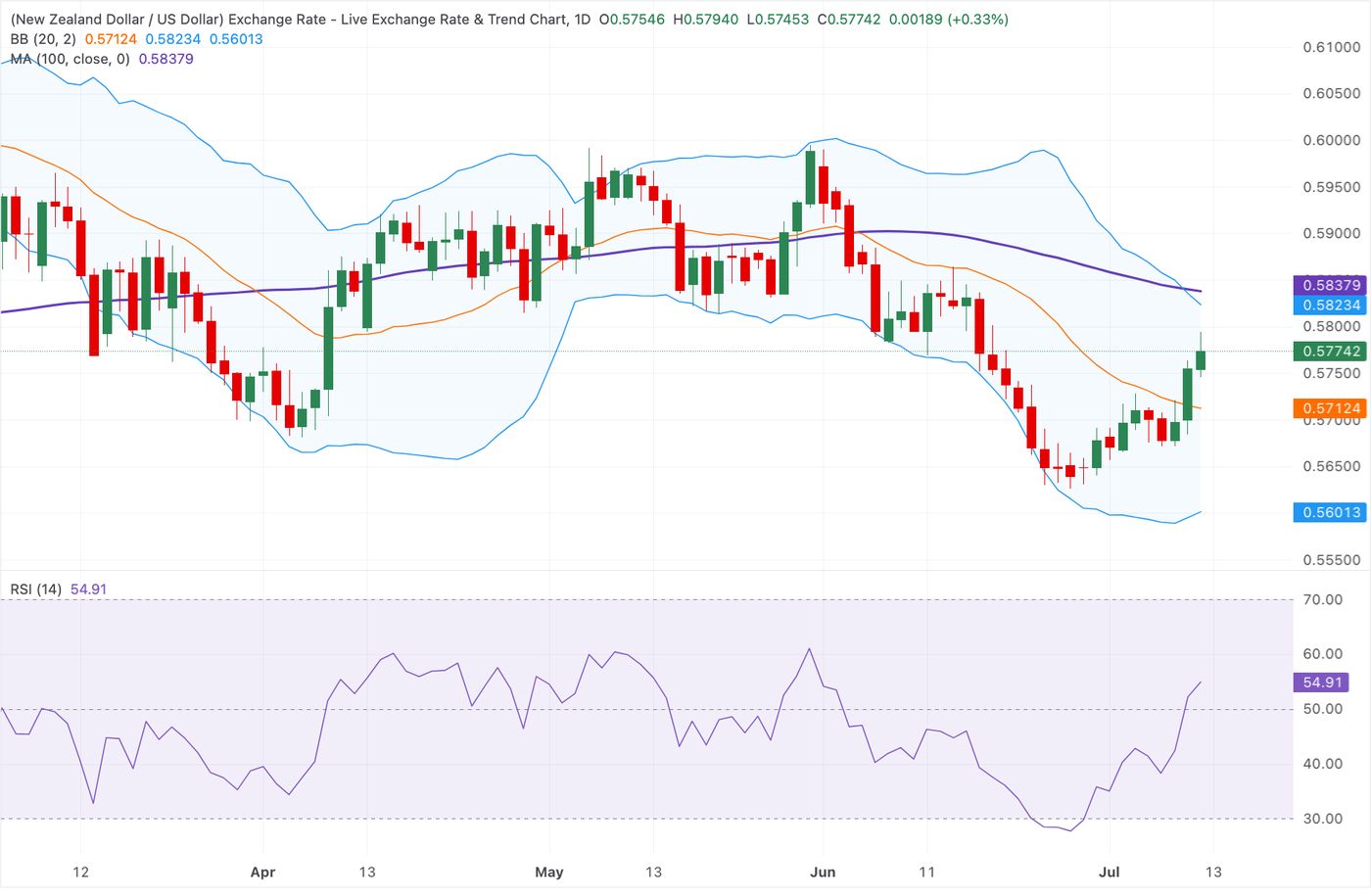
The NZD/CAD exchange rate experiences constant fluctuation. Over a 30-day period, the rate exhibited a high of 0.8051 and a low of 0.7965, with an average of 0.7998. This represents a relatively tight trading range, with a net change of -0.26 percent over that month. Such short-term movements are common and underscore the importance of timing for larger currency conversions. Looking at a broader 90-day window, the range of movement was wider, with a high of 0.8268 and a low of 0.7965, averaging 0.8106. The net change over this quarter was -1.71 percent. These figures illustrate the inherent volatility in the forex market.
For the inverse CAD/NZD pair, data shows it moved between 1.2503 and 1.2543 over seven days, with an average of 1.2523 and a volatility of 0.11 percent. Over 30 days, the range was 1.2420 to 1.2554, with an average of 1.2502 and 0.26 percent volatility. The 90-day period saw movement between 1.2094 and 1.2554, averaging 1.2333 with 0.29 percent volatility. This volatility highlights how even small percentage changes can translate into meaningful sums when converting large amounts for purposes like overseas tuition, property purchases, or business payments. Monitoring these trends can be aided by tools like rate alerts offered by many currency services.
Service providers like Xe and MTFX offer platforms where you can view live mid-market rates and set alerts for when a target rate is reached. This functionality is particularly useful for individuals and businesses that are not in a hurry to transfer and want to wait for a more favourable rate. The ability to track performance over 12 months of real-time rates, as offered by some charts, helps users understand seasonal trends or longer-term economic impacts on the currency pair. This data-driven approach allows for more strategic planning of international money movements.
Methods and Providers for Converting Currency
Canadians have several options when they need to convert New Zealand dollars to Canadian dollars or send money in either direction. Traditional banks offer currency exchange services, both for cash at branches and for electronic transfers. However, banks typically apply a markup, or spread, to the mid-market rate, which can be 2 to 4 percent or more, effectively giving customers a less favourable rate. They also often charge additional fees for wire transfers. Specialist international money transfer services, such as OFX, Wise, Western Union, and MTFX, have emerged as popular alternatives. These services frequently offer exchange rates closer to the mid-market rate and have more transparent, often lower, fee structures.
Many of these specialist providers operate primarily online or through apps, offering features like live rate tracking, the ability to set rate alerts, and real-time transfer tracking. For example, Xe and MTFX provide tools to compare their rates against bank offerings, and Wise promises to use the real mid-market rate with no hidden markups. Western Union also provides the option to send money online or in person at agent locations for cash pickup. The process generally involves registering an account, entering the transfer details including the amount and recipient, reviewing the applicable exchange rate and all fees upfront, and then confirming the transaction.
- Traditional banks apply a markup of 2-4% or more on the exchange rate plus wire fees.
- Specialist services like Wise use the mid-market rate with a transparent fee.
- OFX allows you to exchange Canadian dollars to New Zealand dollars at a great exchange rate.
- Western Union enables you to send NZD and have the receiver get CAD in minutes.
- MTFX provides access to the best CAD exchange rate for moving money across borders.
- Providers such as Xe allow you to send to 190+ countries in 130+ currencies.
- Most digital services offer account features to hold multiple currencies and convert them in seconds.
Opening an account with a provider like MTFX can be done in just minutes with no setup fees. The process typically involves adding your recipient’s bank details for accurate delivery, reviewing the transaction details, and then confirming. Once an account is set up, repeat transfers to friends and family can be executed quickly. These services emphasize that they help protect your transfers with encryption and fraud prevention efforts, which is a key consideration when moving money internationally.
A Detailed Comparison of Costs and Fees
The true cost of converting NZD to CAD extends beyond the quoted exchange rate and includes various fees and margins. Financial institutions and money transfer services generate revenue primarily through the spread they apply to the mid-market rate. This spread is the difference between the rate they pay in the wholesale market and the rate they offer to you. Banks are noted for having wide spreads, which can result in a customer receiving up to 4 percent less Canadian dollars for their New Zealand dollars compared to the mid-market rate. In addition to this hidden cost, banks typically charge wire transfer fees, which can be a fixed amount per transaction.
Specialist transfer services often promote more competitive pricing. MTFX states it offers up to 4 percent better CAD exchange rates than banks, applying only a small, nominal margin to the mid-market rate. Wise explicitly states it uses the mid-market rate with no sneaky markups, charging a transparent, upfront fee instead. Western Union and OFX display their exchange rates and fees during the quoting process, allowing customers to see the total cost before committing. Providers like Xe also emphasize showing all pricing upfront with reliable delivery estimates. For businesses or individuals making large or frequent transfers, such as for paying overseas tuition, buying property abroad, or managing international supplier payments, even a small difference in the exchange rate margin can translate into thousands of dollars saved or lost.
| Provider Type | Typical Exchange Rate Margin | Additional Fees | Key Claim |
|---|---|---|---|
| Traditional Banks | 2–4% markup on mid-market rate | Wire transfer fees | Convenient, but often has hidden costs. |
| MTFX | Small nominal margin | Lower or no wire fees | Offers up to 4% better rates than banks. |
| Wise | Uses the mid-market rate | Transparent upfront fee | Free from hidden fees, uses real mid-market rate. |
| Western Union | Varies, displayed in quote | Displayed during transaction | Send money in minutes for fast cash pickup. |
| OFX | Competitive margin | Displayed during transaction | Great exchange rate for converting CAD to NZD. |
| Xe | Bank-beating rates | All fees shown upfront | Bank-beating rates and no hidden fees. |
The comparison savings advertised by some providers are based on specific examples. For instance, one comparison was based on a single transfer of a large amount on a specific future date. These results may not be indicative of actual savings for all transfers, as different currency amounts, types, dates, and times will result in different comparison savings. Therefore, these comparisons should be used only as a guide. The fundamental principle remains that banks often include markups that are not obvious, while specialist services strive for transparency, showing you the live mid-market rate and their applied margin clearly.
Specific Use Cases and Financial Planning
Several common situations lead Canadians to convert between New Zealand and Canadian dollars. Personal reasons include travel, supporting family members living in New Zealand, or receiving an inheritance or gift from New Zealand. For these personal transfers, speed, cost, and convenience are key considerations. Snowbirds or retirees who spend time in New Zealand may set up recurring transfers to fund their living expenses, where securing a favourable and consistent rate is important. In these cases, using a service with rate alert tools can help individuals transfer money when the rate moves in their favour, potentially saving a significant amount over time.
Business and investment needs also drive substantial currency conversion volumes. Canadian companies paying suppliers or contractors in New Zealand must manage foreign exchange risk to protect their profit margins. Similarly, businesses receiving payments from New Zealand clients want to avoid weak conversion rates that shrink their revenues. Large one-time transactions, such as paying for overseas education tuition or purchasing real estate abroad, are particularly sensitive to exchange rate fluctuations. For these high-value transfers, even a fraction of a percentage point difference in the rate can have a major financial impact, making thorough rate comparison and the use of forward contracts or rate-lock features offered by some providers a prudent financial strategy.
Paying overseas tuition can become expensive when banks take a large slice through inflated exchange rates and fees. With a service like MTFX, you can compare directly against bank rates and secure a better return on your New Zealand Dollars. Buying property abroad requires large international transfers, where even a small rate difference adds up to thousands. Businesses paying international employees or contractors face frequent transfers where hidden charges quickly add up. MTFX and similar services provide live mid-market rates with only a small margin, no wire fees, and faster delivery times for these scenarios. When receiving payments from overseas clients, weak conversion rates at banks can shrink your revenues, so using a transparent service helps protect your margins.
Security, Transparency, and Market Tools
When selecting a service for currency conversion or international transfer, security and transparency are paramount. Reputable providers invest in encryption and fraud prevention technologies to protect transactions. Western Union, for example, highlights its encryption and fraud prevention efforts as a key part of its service. Transparency in pricing is equally critical. Many providers now emphasize that they show all fees upfront, unlike traditional banks where markups can be hidden within the exchange rate. The MTFX exchange rate is built on full transparency, letting you view actual mid-market rates in real time through its live tools.
This transparent approach gives you a clear picture of the true value of your money before making a transfer. Knowing you’re getting a fair rate starts with comparison. By comparing the rate directly with what banks and other providers offer, you’ll notice the difference. Banks often add hidden spreads of 2–4% on top of their stated rate, while services like MTFX keep margins nominal and visible. These specialist services also fetch data from credible, independent market sources to ensure accuracy. Their live exchange rate tools let you track multiple currencies side by side, so you can validate the rate aligns with global market conditions.
Useful tools provided by these platforms include live currency charts, rate alerts, and calculators. These free resources help you monitor the market and transfer at the right time to maximize value. For instance, you can set an alert on the Xe platform or within its app to get a notification when your desired NZD/CAD rate is reached. This allows you to stay on top of currency shifts without constantly watching the market. The ability to download data and view historical trends for free, without annoying ads, as mentioned by some services, empowers users to make data-driven decisions for their international financial activities.
Frequently asked questions
What is the mid-market exchange rate?
The mid-market rate is the benchmark exchange rate you see on financial data services, calculated as the midpoint between the global buy and sell prices for a currency pair. It is the rate used in the interbank market and serves as a reference point. Money transfer services like Wise use this rate as their baseline, while banks and other providers typically add a margin on top of it. The Bank of Canada also publishes a set of daily exchange rates that are used as a standard for many conversions in the country.
How can I get the best NZD to CAD exchange rate?
To secure a favourable rate, you should compare offers from multiple providers, including banks and specialist transfer services like OFX, MTFX, and Wise. Specialist services often offer rates closer to the mid-market rate and have lower fees than traditional banks. Using online comparison tools and setting up rate alerts can help you monitor the market and execute your transfer when the rate is advantageous. Always review the total cost, which includes both the exchange rate margin and any fixed fees, before completing a transaction.
Are there fees for sending money from Canada to New Zealand?
Yes, there are almost always fees involved. Traditional banks typically charge a wire transfer fee in addition to applying a markup on the exchange rate. Specialist money transfer services may have lower or no wire fees but often apply a small margin to the exchange rate or charge a transparent, upfront percentage fee. Providers like Western Union and Xe show all applicable fees during the quoting process, so you see the total cost before you send your money.
Can I lock in an exchange rate for a future transfer?
Yes, many international money transfer services offer a rate lock or forward contract feature. This allows you to secure a specific exchange rate for a future transfer, which can be useful for budgeting and protecting against adverse market movements. Services like MTFX mention the ability to lock a favourable currency exchange rate for your transfer. This is particularly valuable for large, planned transactions like paying overseas tuition or buying property.
How long does an international transfer from NZD to CAD take?
Transfer times can vary depending on the provider, the payment method, and banking cut-off times. Some electronic transfers through specialist services can be completed within minutes or the same day, while others may take one to three business days. Western Union offers options for fast cash pickup in minutes. Providers like Xe give reliable delivery estimates during the quoting process, and most services offer real-time tracking so you can monitor your transfer's progress.
Where can I check the official CAD exchange rates?
The Bank of Canada publishes official exchange rates for a wide range of currencies each business day by 16:30 Eastern Time. These rates are widely used as a reference in Canada. Many currency converter tools and financial websites use these rates as a base. For live, mid-market rates that update constantly, you can use the currency converter tools on the websites of major transfer services or financial data platforms.
Sources and further reading
- New Zealand dollars to Canadian dollars Exchange Rate. ... wise.com
- 1 CAD to NZD, Convert Canadian Dollars to New Zealand ... xe.com
- NZD to CAD | Convert New Zealand Dollar to Canadian ... westernunion.com
- Compare NZD to CAD Rates | Best Exchange ... mtfxgroup.com
This article explains how things work and is not financial, tax or legal advice. Rules, limits and rates change, so check the current figures with the Canada Revenue Agency, your province or your financial institution before you act.