Converting Mexican pesos (MXN) to Canadian dollars (CAD) is a common need for Canadians travelling to Mexico, sending remittances, or engaging in cross-border commerce. The exchange rate between these two North American currencies fluctuates constantly based on global financial markets, central bank policies, and economic indicators. Canadians have several options for conversion, including banks, credit cards, and specialized transfer services, each with different fees and exchange rate margins. Understanding how the rate is set and the costs involved helps ensure you get the best value when moving money between these currencies.
Understanding the Mexican Peso and Canadian Dollar
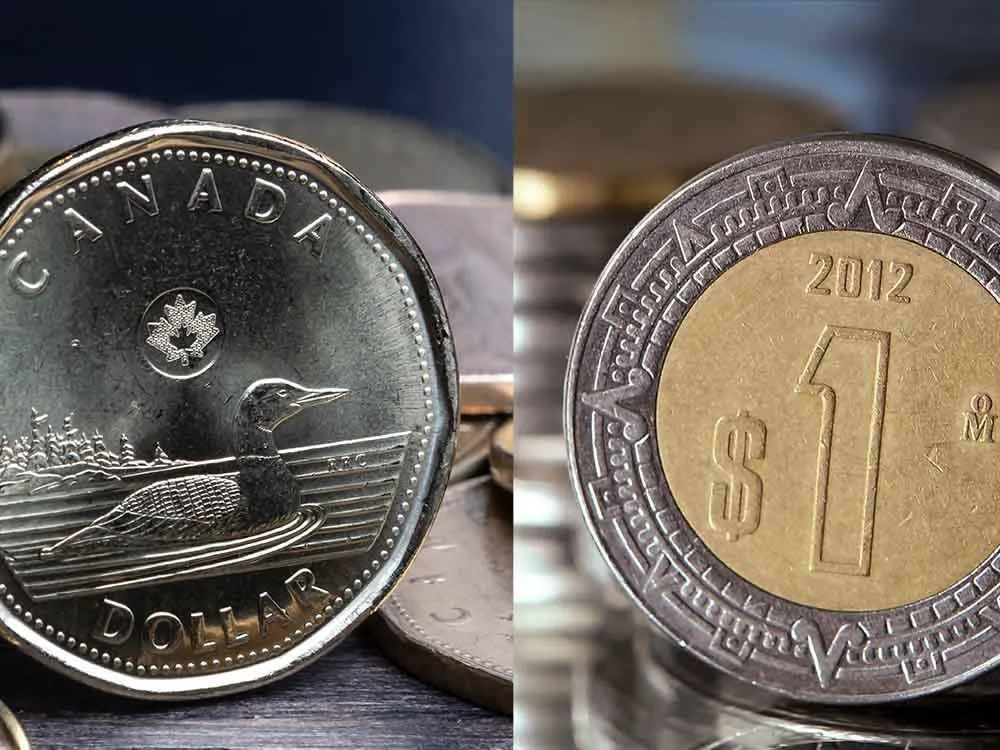
The Mexican peso is the official currency of Mexico, with the currency code MXN. Its symbol is the dollar sign ($), which it shares with several other currencies including the Canadian dollar. The Canadian dollar, coded CAD, is the official currency of Canada and is also symbolized by $. Both currencies are freely traded on the global foreign exchange market, making them liquid and accessible for conversion. The Canadian dollar is considered a major world currency and a commodity currency, often influenced by the price of natural resources. The Mexican peso is the most traded currency in Latin America and is significantly influenced by the economic relationship between Mexico and the United States.
How the MXN to CAD Exchange Rate is Determined
The fundamental exchange rate between the Mexican peso and the Canadian dollar is set by the global foreign exchange market. This is a decentralised marketplace where banks, financial institutions, corporations, and governments trade currencies. The price is determined by the forces of supply and demand for each currency at any given moment. The most accurate reflection of this market value is known as the mid-market rate. The mid-market rate is the midpoint between the buy and sell prices offered in the wholesale currency markets. It serves as a benchmark, but consumers and businesses rarely receive this exact rate when converting money through retail channels like banks or transfer services.
Financial service providers typically add a margin or spread to the mid-market rate, which is how they generate revenue from currency conversion. This means the rate you are offered to buy Canadian dollars with pesos, or vice versa, will be less favourable than the live mid-market rate. The size of this margin can vary significantly depending on the provider, the amount being converted, and the method of transfer. For example, a bank may apply a larger margin on a credit card transaction abroad compared to a specialist foreign exchange broker handling a large wire transfer. It is important for Canadians to understand that the rate they see in a live currency converter online is usually the reference mid-market rate, not the rate they will actually pay.
Factors That Influence the Exchange Rate
Several key economic and financial factors cause the MXN to CAD rate to move throughout the day and over longer periods. Interest rate decisions by the Bank of Canada and the Bank of Mexico are primary drivers, as higher interest rates in a country can attract foreign capital, increasing demand for its currency. The relative strength of the Canadian and Mexican economies, reflected in data like GDP growth, employment figures, and inflation reports, also impacts investor sentiment and currency flows. Since Canada is a major exporter of commodities like oil and natural gas, the CAD often strengthens when global commodity prices rise.
Political stability and trade relations, particularly Mexico's deep economic ties with the United States, heavily influence the peso's value. Geopolitical events, global risk appetite, and broad US dollar trends can cause volatility in both currencies. For instance, during periods of global economic uncertainty, the Canadian dollar may weaken as investors seek safer assets, while the peso might also face pressure. These interconnected factors mean the MXN/CAD pair can experience notable swings, with volatility over a 30-day period historically around 0.63 percent. Tracking these influences can help explain why the rate changes from one day to the next.
Historical Context and Notable Rate Movements
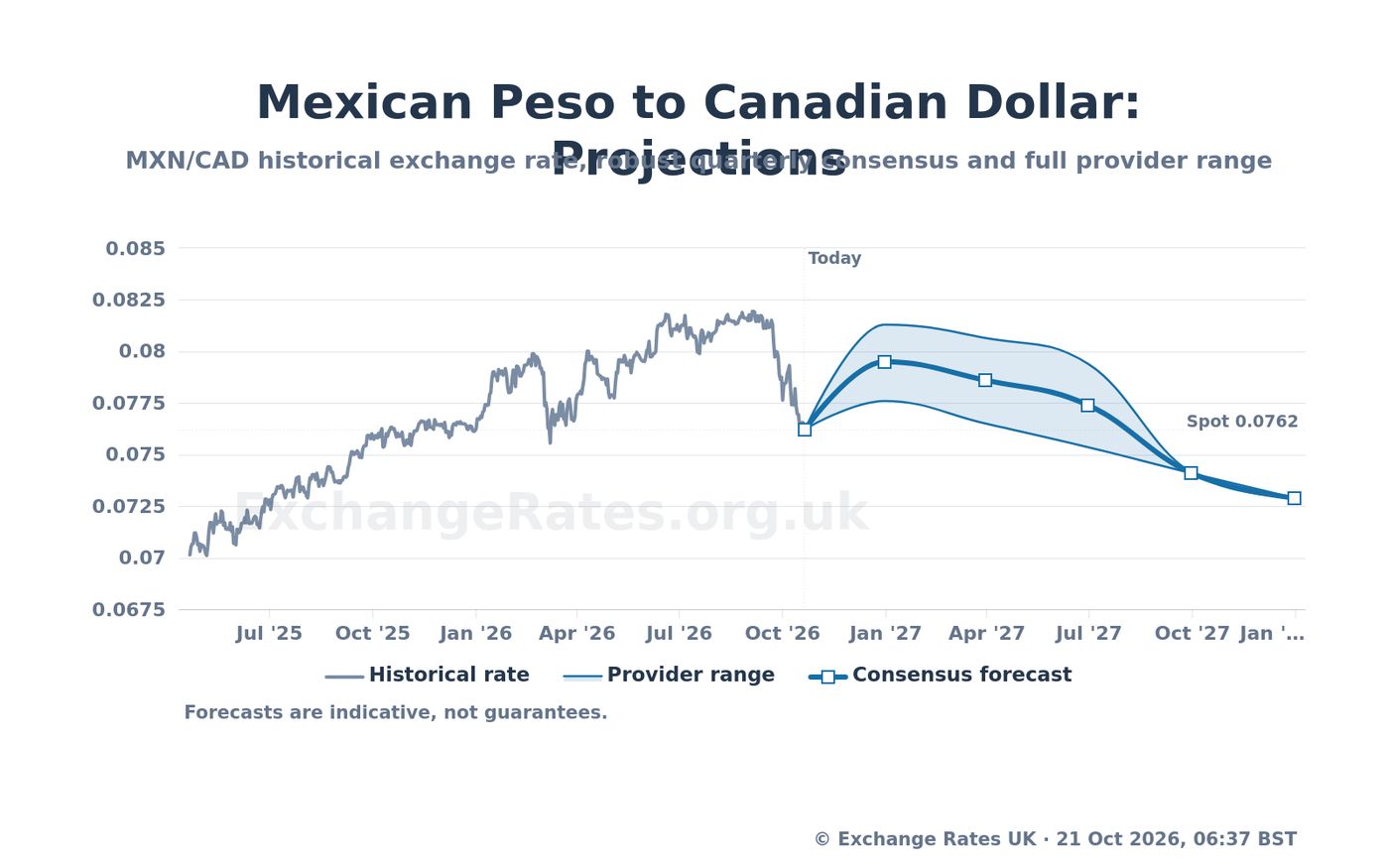
The exchange rate between the Mexican peso and the Canadian dollar has seen considerable variation over time, reflecting the economic cycles of both nations. Historical data shows that the rate is dynamic, with periods of both strength and weakness for each currency relative to the other. Over recent 30-day periods, the rate has moved between highs around 0.0815 and lows near 0.0763, representing a meaningful range for those converting larger sums. In a 90-day window, the range has been even wider, from a low of 0.0763 to a high of 0.0819. The average rate over such a period might settle around 0.0804. These fluctuations underscore the importance of timing for currency conversion, whether for travel, business, or personal transfers. A difference of a few centavos per peso can add up to a significant amount when converting thousands of dollars. Monitoring historical trends and setting rate alerts can be useful strategies for individuals looking to convert currency when the rate is more favourable.
Methods for Converting Pesos to Canadian Dollars
Canadians have multiple avenues to convert Mexican pesos to Canadian dollars, each with distinct cost structures and conveniences. Traditional banks offer currency exchange services at their branches, for online transfers, and through associated credit and debit cards. Using an ATM in Mexico with a Canadian debit card is another option, but it usually incurs a withdrawal fee and a less competitive exchange rate set by the ATM network. Specialist currency exchange brokers and online money transfer services frequently offer more competitive rates and lower fees compared to traditional banks, especially for larger amounts. These providers, such as Wise or Western Union, often advertise using the real mid-market rate and charging a transparent, upfront fee. Many of these services operate entirely online or through apps, allowing for quick conversions and international transfers. Some providers also offer features like rate alerts, which notify you when the MXN to CAD rate reaches a target level, and the ability to hold a balance in multiple currencies within a single account, providing flexibility for future transactions.
Fees and Costs to Consider
When converting currency, the total cost is a combination of the exchange rate margin and any additional fees. The exchange rate margin is the difference between the mid-market rate and the rate actually offered to you. This hidden cost can be the most significant part of the expense. On top of this, providers may charge fixed or percentage-based transaction fees, wire transfer fees, or service charges. For credit card purchases in a foreign currency, card issuers often add a foreign transaction fee, and using a credit card for a cash advance at an ATM can trigger additional cash advance fees and immediate interest charges.
It is crucial to review the full cost breakdown before completing a transaction. Reputable providers should show you the exact exchange rate that will be applied, all associated fees, and the final amount that will be delivered in the target currency before you confirm. For money transfers, the speed of delivery can also affect the cost, with faster options sometimes being more expensive. Comparing a few different providers for the same transfer amount will reveal substantial differences in the total Canadian dollars received, highlighting the value of shopping around to secure the best deal.
Comparison of Provider Types
The cost of converting Mexican pesos to Canadian dollars varies depending on the financial service provider. Digital transfer services and specialized brokers generally offer rates closer to the mid-market benchmark. Banks tend to have higher overall costs due to wider margins on the exchange rate. The exact fees and margins are subject to change for each transaction.
| Provider Type | Typical Exchange Rate | Common Fees | Best For |
|---|---|---|---|
| Major Canadian Banks | Mid-market rate plus a significant margin (2-4%) | Wire transfer fees, possible branch service fees | Convenience, in-person service, existing customers |
| Online FX Brokers (e.g., TorFX) | Competitive rate, closer to mid-market | Often no fee for transfers over a certain amount | Large transfers (e.g., over $2000), regular business |
| Digital Transfer Services (e.g., Wise, Western Union) | Mid-market rate or close to it | Transparent percentage or fixed fee | Online transfers, speed, tracking, smaller amounts |
Digital transfer services and specialized brokers provide better value by using the real mid-market rate with no hidden fees. Banks are convenient and secure but often apply wider exchange rate margins. Providers use security measures like encryption and fraud prevention for international money transfers. They also provide tracking numbers like an MTCN so you can monitor the transaction.
Practical Steps for Converting Currency
To convert Mexican pesos to Canadian dollars effectively, follow a process that ensures you understand the costs and get a fair deal. First, check the current mid-market rate using a reliable online currency converter to establish a baseline. Next, determine the total amount you need to convert and how quickly you need the funds. Then, obtain quotes from a few different providers, including your bank, a digital service, and possibly a currency broker. When reviewing each quote, look at the final amount in Canadian dollars you will receive after all fees and margins are applied, not just the advertised exchange rate.
Once you select a provider, you will typically need to set up the transaction, which may involve logging into an online platform or visiting a physical location. You will specify the amount in MXN or CAD, provide recipient details if it's a transfer, and choose a payment method. Common payment methods include bank debit, wire transfer, or card payment. Before you confirm, the provider should show you a final summary with the exchange rate, all fees, the total cost, and the estimated delivery time. After the transaction is complete, keep the receipt and any tracking information. For future conversions, consider using tools like rate alerts to monitor the market and convert when the rate is advantageous.
Frequently asked questions
What is the current Mexican peso to Canadian dollar exchange rate?
The exchange rate between the Mexican peso (MXN) and the Canadian dollar (CAD) fluctuates constantly throughout the day. The most accurate benchmark is the live mid-market rate, which is the midpoint between global buy and sell prices. You can check this rate using online currency converters or financial websites. Remember that the rate you are offered by a bank or transfer service will include a margin, so the actual rate you get will be different.
What is the best way to convert MXN to CAD?
The best method depends on the amount, urgency, and your preference for convenience versus cost. For large transfers, online foreign exchange brokers often offer the best rates with low fees. For everyday spending in Mexico, using a credit card with no foreign transaction fee can be convenient, though the exchange rate is set by the card network. Digital money transfer services like Wise are popular for their transparency, offering the mid-market rate with a clear upfront fee for online conversions and transfers.
Do banks charge fees to convert pesos to Canadian dollars?
Yes, banks charge fees to convert currency, but they are often built into the exchange rate margin rather than listed as a separate line item. A bank will buy pesos from you at a lower rate than the mid-market rate or sell them to you at a higher rate. Additionally, banks may charge service fees for wire transfers or for cashing in foreign currency notes at a branch. Always ask for the total amount in CAD you will receive after all costs to understand the full charge.
Why is the rate I get different from the rate on Google?
Google typically displays the mid-market exchange rate, which is a pure benchmark from the interbank market. The rate you receive from a bank, credit card, or transfer service includes a margin or spread, which is how the provider makes money on the transaction. This margin, along with any additional service fees, means the actual rate applied to your conversion is less favourable than the Google rate. Always check the final rate and fees with your provider before committing.
How much is 1000 Mexican pesos in Canadian dollars?
The mid-market rate is the midpoint between buy and sell prices in global currency markets. However, exchange rates fluctuate frequently. Over the last 30 days, the MXN to CAD rate has moved between a high of 0.0815 and a low of 0.0763. To get the exact value for a transfer, you must check a live currency converter and note that the final rate you receive will include any applicable margins or fees from your service provider.
Can I set an alert for a specific MXN to CAD exchange rate?
Yes, you can set up a MXN to CAD rate alert on currency converter platforms. This feature allows you to receive a notification when the live mid-market exchange rate reaches your desired target. This tool helps you monitor currency shifts over time, as the rate in the last 90 days has moved between 0.0763 and 0.0819. Setting an alert is recommended for planning transfers to take advantage of more favourable rates.
Sources and further reading
- Mexican pesos to Canadian dollars Exchange Rate. ... wise.com
- 1 MXN to CAD, Mexican Pesos to Canadian Dollars ... xe.com
- CAD to MXN | Convert Canadian Dollar to Mexican Peso westernunion.com
- Convert Mexican Pesos to Canadian Dollars, MXN to CAD ... foreignexchange.org.uk
- Convert Mexican Pesos to Canadian Dollars | MXN to CAD currency.me.uk
This article explains how things work and is not financial, tax or legal advice. Rules, limits and rates change, so check the current figures with the Canada Revenue Agency, your province or your financial institution before you act.