Converting Canadian dollars to South African rand is a common transaction for Canadians travelling to South Africa, sending money to family, or investing. The exchange rate between the two currencies fluctuates constantly based on global market forces. Understanding how this rate is set, its historical trends, and the costs involved in conversion helps Canadians get the best value for their money. This article explains the CAD to ZAR exchange rate and the practical steps for converting currency.
The Canadian Dollar and South African Rand
The Canadian dollar, symbolized by $ and coded CAD, is the official currency of Canada and is managed by the Bank of Canada. It is one of the world's major reserve currencies and its value is closely tied to global commodity prices, particularly oil. The South African rand, symbolized by R and coded ZAR, is the currency of South Africa and is issued by the South African Reserve Bank. The rand is a freely floating currency and is considered one of the most traded emerging market currencies globally. Both currencies are traded on the foreign exchange market around the clock, with their relative value determined by supply and demand. The most common exchange rate for the Canadian dollar is against the US dollar, while for the South African rand, its most popular pairing is also against the US dollar.
How the CAD to ZAR Exchange Rate is Determined
The exchange rate between the Canadian dollar and the South African rand is not fixed by any government but is instead set by the global foreign exchange market. This market involves banks, financial institutions, corporations, and traders buying and selling currencies. The mid-market rate is the midpoint between the buy and sell prices quoted in these global markets. It is the pure exchange rate without any added fees or margins and serves as a benchmark. Retail consumers and businesses do not typically transact at the mid-market rate, as banks and currency services add a markup to create their buy and sell rates. The rate you see on financial websites is usually this live mid-market rate, which updates constantly as trading occurs. The actual rate you receive when converting money will be different, as it includes the service provider's profit margin.
Factors That Influence the CAD/ZAR Rate
Several economic and market factors cause the CAD to ZAR exchange rate to move. Changes in commodity prices significantly affect both currencies, as Canada is a major exporter of resources like oil and minerals, and South Africa's economy is heavily reliant on gold, platinum, and other commodities. Interest rate decisions by the Bank of Canada and the South African Reserve Bank influence investor flows, as higher rates can attract foreign capital and strengthen a currency. Political stability and economic performance indicators, such as GDP growth, inflation, and trade balances in both countries, also drive currency valuations. Global market sentiment and risk appetite impact the rand more sharply, as it is considered a risk-sensitive emerging market currency. During times of global economic uncertainty, investors often move funds to perceived safe havens, which can weaken the rand relative to the Canadian dollar.
Historical Performance and Recent Volatility
The CAD/ZAR exchange rate has experienced considerable volatility, reflecting the economic cycles of both nations. Recent performance data illustrates the typical range of fluctuations encountered by those converting currency. Over a recent 90-day period, the mid-market rate moved between a high of 11.9449 and a low of 11.4927 rand per Canadian dollar. The average rate over those 90 days was 11.6520, and the net change was a decrease of 2.20 percent. In a 30-day period, the range was between 11.7454 and 11.5011, with an average of 11.6181. The most recent seven-day data shows a range from 11.5883 to 11.6700, with an average of 11.6382 and a volatility measure of 0.28 percent. These figures demonstrate that while the average rate can be stable over months, the daily highs and lows can differ by several percentage points.
Methods for Converting CAD to ZAR
Canadians have several options when they need to convert dollars to rands, each with different costs and conveniences. The most common methods include using banks, credit cards, specialized currency exchange kiosks, and online international money transfer services. Banks typically offer currency conversion for account holders, either at a branch, through online banking, or via debit and credit cards used abroad. Credit card companies automatically convert foreign purchases made in rand to Canadian dollars on your statement, applying their own exchange rate. Online transfer services like Wise, OFX, WorldRemit, and Xe specialize in moving money across borders and often provide more competitive rates than traditional banks. These services allow you to lock in a rate and send money directly to a South African bank account, which is useful for larger transfers or regular payments.

Fees and Costs to Consider
Understanding the full cost of converting currency is crucial, as the advertised exchange rate is only part of the story. Providers typically earn money by adding a margin to the mid-market rate or by charging explicit fees. Banks often apply a significant markup to the exchange rate, sometimes around 2-3 percent or more, in addition to possible fixed transaction fees for international transfers. Online transfer services frequently promote bank-beating rates by using the mid-market rate and charging a lower, transparent percentage fee. Some services offer fee-free transfers above a certain amount. It is essential to compare the total amount of rand you will receive after all costs, not just the quoted rate.
Savings from using specialized services can be substantial for larger amounts. A comparison example from October 2026 calculated potential savings on a transfer of 20,000 British pounds to US dollars by using a service like Xe instead of a leading bank. This illustrates the principle that different providers have vastly different cost structures. The actual savings depend on the amount, currencies, timing, and specific provider fees.
| Cost Component | Typical Provider | Common Charge |
|---|---|---|
| Exchange Rate Margin | Banks & Credit Cards | 2-3% markup |
| Service Fee | Online Transfer Services | Low, transparent percentage |
Using Online Tools and Managing Transfers
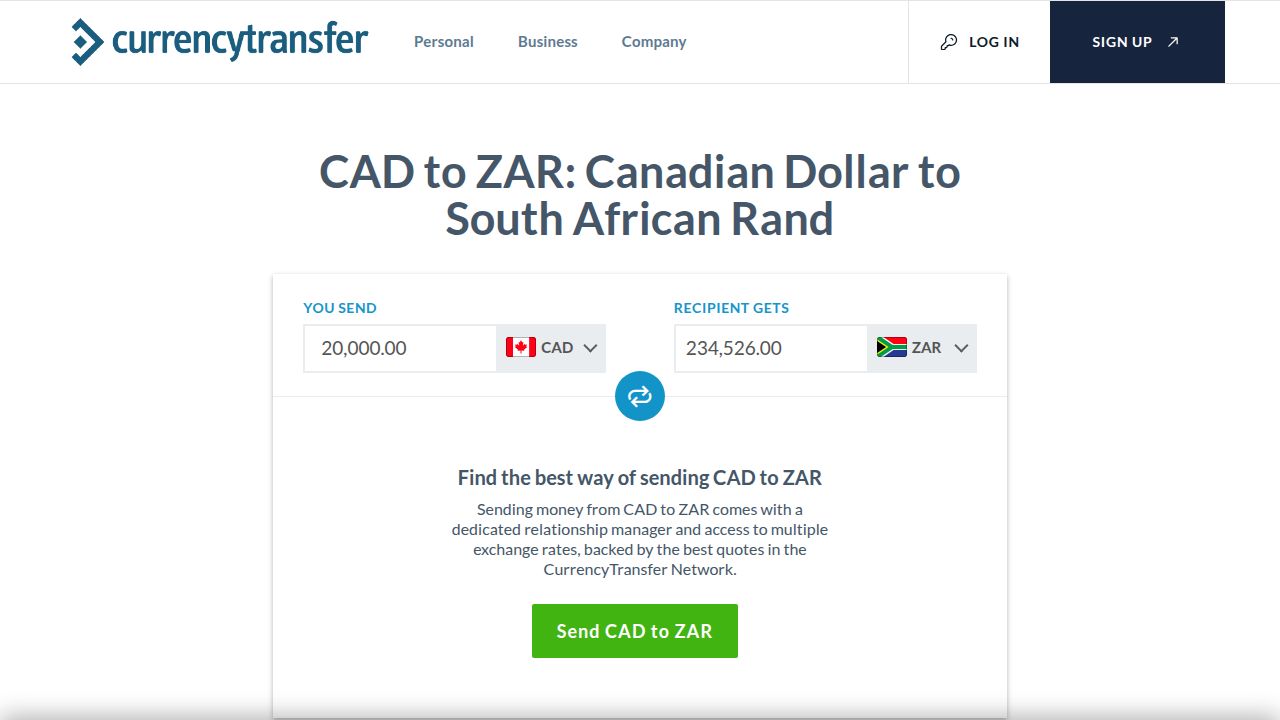
Online currency converters and financial apps provide powerful tools for tracking rates and executing conversions. Live currency converters allow you to enter an amount in Canadian dollars and see the equivalent in South African rand using the current mid-market rate. Many services offer historical charts, enabling you to view how the rate has changed over the past days, months, or years. A useful feature is the ability to set up rate alerts, where you receive a notification by email or app when the CAD to ZAR rate reaches a specific level you desire. This helps you time your transfer or conversion to get a more favourable rate. When preparing an international money transfer, reputable services will show you the exact exchange rate you will get, all applicable fees, and the estimated delivery time upfront before you commit. This transparency allows for accurate planning and comparison.
- Use live converters to check the mid-market rate.
- Review historical charts to understand rate trends.
- Set up rate alerts to be notified of favourable movements.
- Get a full quote showing all fees and the final ZAR amount before transferring.
- Track your transfer in real time once it is sent.
Features of Modern Currency Conversion Services
Modern online currency services have evolved to offer features that go beyond simple conversion, providing greater control and insight for users. These platforms allow customers to hold multiple currencies in one integrated account, converting between them instantly when needed. A key selling point is the promise of using the real mid-market rate with no hidden markups, though a separate service fee is usually applied. Users can save their favourite currency pairs to monitor how the exchange rate changes over time, with some services offering data for up to the previous five years. Interactive charts use real-time mid-market rates and allow for detailed historical analysis. For proactive management, users can set custom rate alerts that notify them via the app or email when the market rate hits a predetermined target, helping them act on favourable movements.
- Hold and manage over 40 currencies in a single account.
- Convert currencies in seconds using live mid-market rates.
- Access interactive charts with up to five years of historical data.
- Set personalized rate alerts for specific currency pairs.
- Receive daily summaries of market news and rate changes.
- Schedule international transfers to over 190 countries in 130 currencies.
Practical Steps for a Typical Money Transfer
When a Canadian needs to send money to South Africa, following a clear process ensures efficiency and cost-effectiveness. The first step is to research and compare several providers, including your bank and online specialists, to understand the total cost in rand you will deliver. Next, use a live currency converter to check the current mid-market rate and set a rate alert if you are waiting for a better value. When ready, initiate the transfer through your chosen provider, entering the recipient's South African bank details accurately. The provider will present a final quote showing the exact exchange rate being applied, all fees, the total Canadian dollar cost, and the estimated delivery date. After confirming and paying, you will receive a tracking reference to monitor the transfer's progress in real time until the funds arrive in the recipient's account.
Frequently asked questions
What is the mid-market exchange rate?
The mid-market rate is the midpoint between the global buy and sell prices for a currency pair. It is the real benchmark rate used in financial markets. When you see a live CAD to ZAR rate online, it is typically this mid-market rate. However, when you actually convert money through a bank or service, you will not receive this exact rate, as providers add a margin for their service.
How can I get the best exchange rate from CAD to ZAR?
To get the best rate, compare the total cost from different providers, including banks, credit cards, and online transfer services. Online specialists often offer rates closer to the mid-market rate with lower fees. For larger amounts, these services can provide significant savings. Always check the final amount in rand you will receive after all margins and fees, not just the initial quoted rate.
Are there fees for using my credit card in South Africa?
Additionally, the credit card network applies its own exchange rate, which usually includes a margin above the mid-market rate. It is important to check your cardholder agreement for the specific fees that apply. The mid-market rate is the midpoint between buy and sell prices in global currency markets and is used as a benchmark. When you spend abroad with a standard credit card, you will not receive this mid-market rate and will incur additional costs through the network's margin and the foreign transaction fee.
Can I lock in an exchange rate for a future transfer?
Many online international money transfer services offer a feature called a rate alert or a forward contract. A rate alert notifies you when the live rate hits your target. For a future transfer of a set amount, some providers allow you to lock in a specific exchange rate for a period of time, which can protect you from adverse market movements before the transfer is completed. You can set up a CAD to ZAR rate alert on a provider's rate alerts page or within their app. This feature helps you stay on top of currency shifts and act when your desired exchange rate is reached for a planned transfer.
How long does an international transfer to South Africa take?
Transfer times can vary by provider. Transfers through major Canadian banks can take several business days. Specialized online transfer services often quote one to two business days for delivery to a South African bank account, depending on the time of day the transfer is initiated and the specific processing methods used. These services provide estimated delivery times upfront when you get a live quote. The actual speed can depend on factors such as the currencies involved, the amount being sent, and the recipient's banking institution in South Africa.
Is it safe to use online currency transfer services?
Reputable online currency transfer services are regulated financial institutions in the countries where they operate. They use secure encryption for transactions and are required to comply with anti-money laundering regulations. It is important to use well-known, established providers and to ensure you are on their official website or app before entering any personal or financial information. These providers are transparent, showing all pricing upfront and allowing you to track every transfer in real time. They operate with proper licensing and security protocols to protect customer funds and data.
Sources and further reading
- Canadian dollars to South African rand today wise.com
- 1 CAD to ZAR, Canadian Dollars to South African Rand ... xe.com
- Convert Canadian Dollars to South African Rands currency.me.uk
This article explains how things work and is not financial, tax or legal advice. Rules, limits and rates change, so check the current figures with the Canada Revenue Agency, your province or your financial institution before you act.