Converting Canadian dollars to British pounds is a common need for Canadians travelling, studying, or doing business in the United Kingdom. The exchange rate between these two currencies fluctuates constantly based on global market forces. Understanding how the rate is set, its historical movements, and the costs involved in conversion helps Canadians get the best value when moving money internationally. This guide covers the essential facts about the CAD to GBP currency pair.
Understanding the Canadian Dollar and British Pound
The Canadian dollar, coded CAD and symbolized by $, is the official currency of Canada. It is a freely floating currency whose value is influenced heavily by Canada's status as a major commodity exporter. The British pound sterling, coded GBP and symbolized by £, is the official currency of the United Kingdom and one of the world's oldest currencies still in use. When converting CAD to GBP, you are exchanging the currency of a resource-based economy for that of a major global financial centre. The exchange rate tells you how many pounds one Canadian dollar can buy at any given moment. This rate is vital for Canadians sending remittances to family in the UK, paying for tuition or property, or simply planning a vacation. The Canadian dollar's value is strongly correlated with commodity prices, especially oil, given Canada's significant energy exports. Its exchange rate tends to move in tandem with global crude oil prices, particularly West Texas Intermediate crude. Additionally, the CAD is influenced by broader commodity markets, including metals like gold and copper, which are key components of Canada's export economy.

How the CAD to GBP Exchange Rate is Set
The exchange rate between the Canadian dollar and British pound is determined by the global foreign exchange market. The most frequently quoted rate is the mid-market rate, which is the precise midpoint between the current buy and sell prices for the currency pair on these wholesale markets. This rate serves as a benchmark. However, individual consumers and businesses do not typically access this pure mid-market rate when they convert money. Instead, they receive a customer rate from their bank or money transfer service. This customer rate includes a markup, often called a spread or margin, which is how these providers earn revenue on the transaction. The difference between these buy and sell prices and the mid-market rate represents the service fee. The size of this spread can vary significantly between different types of providers, which is why comparing options is crucial. Factors that move the underlying mid-market rate include changes in interest rates set by the Bank of Canada and the Bank of England, relative economic performance, geopolitical events, and shifts in global investment flows. The rate is highly dynamic and can change frequently throughout the day as currency values shift with global financial markets.
Historical Context and Notable Rate Movements
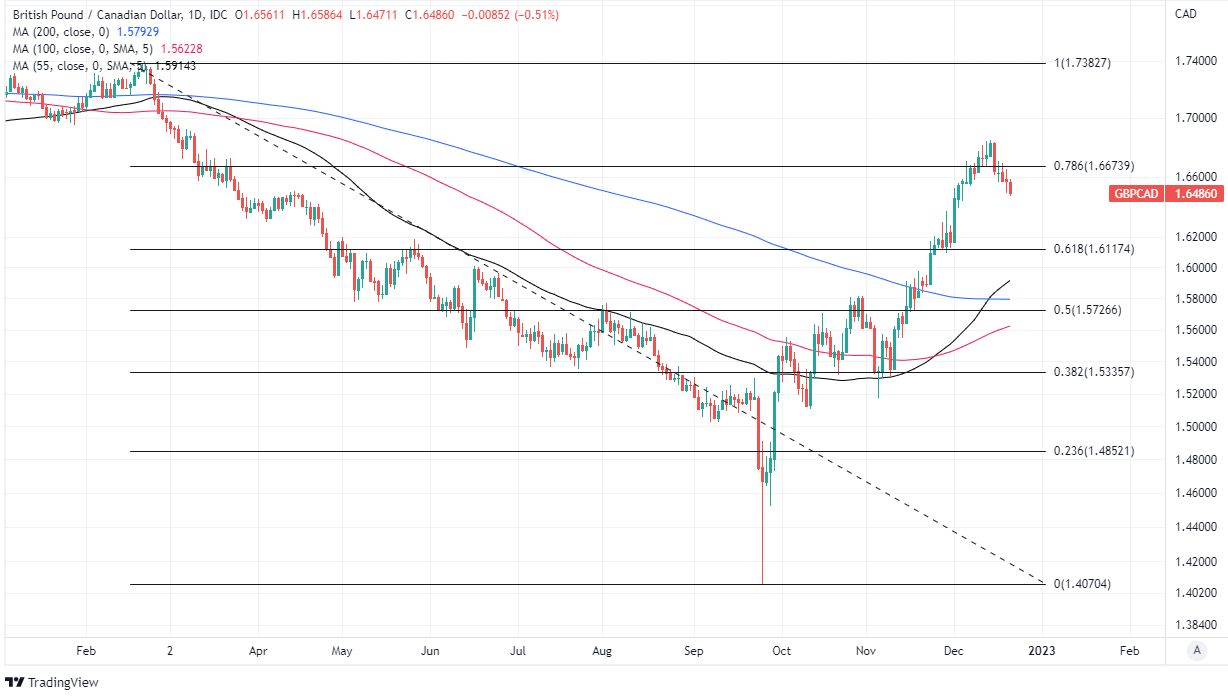
The CAD/GBP exchange rate has experienced considerable volatility over the decades, reflecting the differing economic cycles and monetary policies of Canada and the United Kingdom. Exchange rate data is often analyzed over rolling periods such as 7, 30, or 90 days to gauge trends and volatility. Over a recent 90-day period, the CAD/GBP rate moved between a high of 0.5360 and a low of 0.5286, with an average of 0.5321. The change for CAD to GBP over this period was -0.32 percent. The volatility during this period was measured at 0.20 percent. Over a 30-day window, the range was from 0.5295 to 0.5356, with an average of 0.5316 and a change of -0.26 percent. The average volatility over 30 days was 0.24 percent. Over the last 7 days, CAD to GBP moved between 0.5300 and 0.5326, with an average of 0.5309 and volatility of 0.16 percent. These figures illustrate that even in relatively stable periods, the rate is in constant flux. Tracking these movements helps individuals and businesses decide on the timing of a currency conversion. Many financial platforms offer historical rate charts, allowing users to view data for up to the past five years to identify longer-term patterns and inform their decisions. Some platforms provide interactive charts that use real-time mid-market exchange rates and allow viewing of historical data.
Methods for Converting CAD to GBP
Canadians have several options when they need to convert dollars into pounds, each with different cost structures and conveniences. Traditional banks and credit unions offer currency exchange services both at branches and online. They typically sell foreign currency directly to customers, applying their own exchange rate margin on top of the market rate. Many banks also allow international wire transfers, where they convert the funds and send them to a UK bank account, often charging both a wire fee and a markup on the exchange rate. Using a personal credit or debit card abroad is another common method. When a Canadian cardholder makes a purchase in pounds in the UK, the card network performs a real-time currency conversion. It is important to note that using a credit card for a cash advance to obtain foreign currency can trigger additional cash advance fees and immediate interest charges. To avoid these fees or for reduced fees, using a debit card or checking other payment methods is recommended. Specialized online money transfer services and fintech platforms have become popular alternatives. These digital services often advertise using the real mid-market exchange rate and charging a single, transparent transfer fee. They allow users to send money online or via a mobile app for pickup in cash at an agent location overseas or directly into a bank account. These providers move money to over 200 countries and territories, including the United Kingdom. You can send money to the United Kingdom the way that’s convenient for you: online, with an app, or in person at an agent location.
- Banks and Credit Unions: Offer branch and online exchanges with institutional rate markups and wire fees.
- Credit/Debit Cards: Convenient for spending abroad but incur foreign transaction fees. Credit card cash advances add extra costs.
- Online Money Transfer Services: Digital platforms often promoting mid-market rates and lower, upfront fees for transfers.
- In-Person Currency Bureaus: Found at airports or tourist centres, usually with higher margins for immediate cash.
Fees, Rates, and Comparing Total Cost
The total cost of converting currency is rarely just the advertised exchange rate. It is a combination of the rate margin and any additional transaction fees. As noted, the rate offered to consumers is almost always different from the mid-market rate. This margin is a hidden fee built into the less favourable exchange rate. On top of this, many providers charge a separate transfer fee, which can be a flat rate or a percentage of the amount sent. When comparing services, it is essential to calculate how many pounds will actually be delivered from a specific amount of Canadian dollars after all costs. Some online providers show this total cost upfront in a live quote before the transaction is confirmed. Fees can vary depending on the transfer amount, payment method such as bank debit or credit card, the chosen payout option like bank deposit or cash pickup, and the destination country. It is worth checking if a credit card payment will be treated as a purchase or a cash advance, as the latter incurs higher costs. Transparency is key, and providers that clearly display both their exchange rate margin and any separate fees allow for easier comparison. The goal is to minimize the combined cost of the rate margin and the transfer fee to maximize the amount received in pounds. Western Union fees, for example, can vary depending on the amount you send, your payment method, destination country, payout option, and the CAD to GBP exchange rate at the time of transfer. Before you confirm, you can review the transfer fee, exchange rate, and estimated amount in GBP, helping you understand the total cost before sending money from Canada.
Security and Tracking for International Transfers
Security is a paramount concern when transferring money internationally. Reputable providers use encryption and fraud prevention technologies designed to help protect transactions, whether you send money online, through an app, or at an agent location. It is important to use strong passwords and enable two-factor authentication if available. You should only send money to people you know and trust, and always check receiver details carefully. After sending a transfer, you will typically receive a Money Transfer Control Number (MTCN) or a similar tracking reference. You must keep this number private and use it to track your transfer's progress online or with the provider's app. Staying alert for scam or fraud warning signs is also crucial. Many services allow you to easily track your transfer online and with their app using the MTCN. Providers often have measures in place to help protect international money transfers. For added safety, it is advised to send money only to people you know and trust, check receiver details carefully, keep your MTCN private, and stay alert for scam or fraud warning signs. These steps help ensure that your funds reach the intended recipient securely.
Market Influences and Rate Volatility
The CAD/GBP exchange rate is influenced by a complex array of economic and geopolitical factors. A primary driver for the Canadian dollar is the global price of commodities, particularly crude oil. As a major oil exporter, Canada's currency often strengthens when oil prices rise and weakens when they fall. Other exported resources like gold, copper, and lumber also play a role. For the British pound, key influences include the monetary policy decisions of the Bank of England, UK economic data such as inflation and employment figures, and political developments such as trade negotiations. The relative difference between Canadian and UK interest rates can drive investment flows, as investors seek higher returns. Periods of global economic uncertainty or market stress can cause volatility, with investors moving funds into currencies perceived as safe havens. This dynamic interplay means the rate is highly dynamic and can change frequently throughout the trading day. The volatility observed in recent 30 and 90-day periods, though relatively low in percentage terms, demonstrates this constant movement. For individuals, this means the amount of pounds received for a fixed sum of Canadian dollars can differ from morning to afternoon. Many currency services offer rate alert tools, where users can set a target exchange rate and receive a notification when the market reaches that level, allowing them to act when the rate is favourable. You can set up a CAD to GBP rate alert on a provider's rate alerts page or within their app to get a notification when your desired rate is reached.
Using Online Tools and Getting Live Quotes
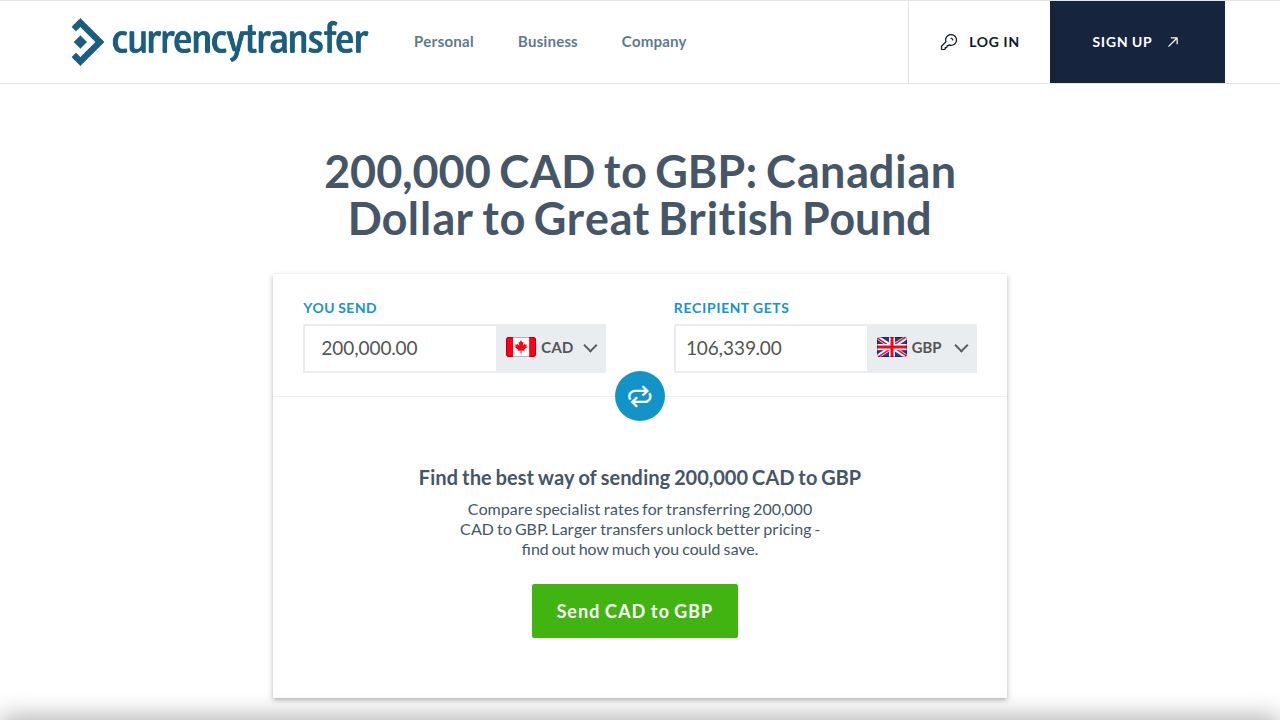
Modern online tools make comparing and executing currency conversions more transparent. Many providers feature a live currency converter on their website or app where you can select your preferred currency pair, enter your amount, and view the live mid-market rate. This is for informational purposes only, as you won't receive this exact rate when sending money. To see the actual cost, you must use a live quoter on a send money page. Entering your details into a live quoter provides real-time exchange rates, estimated delivery times, and all fees shown upfront before you start your transfer. This allows you to see exactly how much a transfer would cost and what your receiver will get in GBP. Some platforms offer interactive charts that track 12 months of real-time, mid-market rates and show exactly how much your money was worth at any point in time. These tools can help you visualize historical trends. You can also save your favourite currencies to check how the exchange rate changes over time. The comparison savings between providers are based on specific transfer examples and may not include all costs and charges. Different currency exchange amounts, currency types, dates, times, and other individual factors will result in different comparison savings, so results may not be indicative of actual savings and should be used for guidance only.
Frequently asked questions
What is the mid-market exchange rate?
The mid-market rate is the midpoint between the current global buy and sell prices for a currency pair, like CAD/GBP. It is the benchmark rate used in wholesale markets between large financial institutions. When you see an exchange rate quoted on financial data websites or as a reference, it is typically this mid-market rate. However, consumers generally do not receive this exact rate when converting money through banks or transfer services, as a margin is added to create the customer rate.
Why is the rate I get different from the one online?
The rate you see online on search engines or financial portals is usually the mid-market reference rate. The rate you are offered by a bank, credit card company, or money transfer service includes a markup. This margin covers the provider's costs, risk, and profit. The difference can be significant, effectively acting as a hidden fee. Different providers apply different margins, so the consumer rate can vary widely from one service to another, which is why shopping around is important.
What are the typical fees for converting CAD to GBP?
Fees typically come in two forms: an exchange rate margin and a separate transaction fee. The margin is the difference between the mid-market rate and the rate you actually get. The transaction fee can be a flat charge or a percentage of the transfer amount. For example, a bank might charge a wire fee plus offer a poor exchange rate. Online money transfer services may promote no transfer fee but build their cost into the exchange rate margin, or they may charge a low, transparent fee and use a better rate.
How can I send money to the UK from Canada?
You can send money through several channels. Banks and credit unions can execute international wire transfers to a UK bank account. Online money transfer specialists allow you to send funds digitally for either bank deposit or cash pickup at thousands of agent locations in the UK. You can also use a credit or debit card for purchases or ATM withdrawals while in the UK, though fees apply. Most services are available online, via mobile apps, or in person at agent locations. You will need the recipient's details, such as their full name and, for bank transfers, their account information.
Is it safe to transfer money internationally online?
Transferring money online with regulated and reputable providers is generally safe. Established banks and licensed money transfer services use encryption and fraud prevention technologies to protect transactions. It is important to use strong passwords, enable two-factor authentication if available, and only send money to people you know and trust. After sending, you will receive a tracking number (MTCN) to monitor the transfer. Always verify the recipient's details carefully and be cautious of any unsolicited requests for money transfers.
What moves the CAD to GBP exchange rate?
The exchange rate is moved by factors affecting both economies. For Canada, key influences are commodity prices, especially oil, as well as interest rates set by the Bank of Canada and overall economic health. For the UK, factors include Bank of England policy, inflation, economic growth data, and political events. The relative strength of each economy compared to the other drives investment flows. Global risk sentiment also plays a role, as investors may move capital into or out of these currencies based on world events, causing the rate to fluctuate continuously.
Sources and further reading
- Canadian dollars to British pounds sterling today wise.com
- 1 CAD to GBP, Canadian Dollars to British Pounds ... xe.com
- CAD to GBP | Convert Canadian Dollar to British Pound westernunion.com
- Convert Canadian Dollars to Pounds | CAD to GBP currency.me.uk
- 1 CAD to GBP, Convert Canadian Dollar to British Pound dukascopy.com
This article explains how things work and is not financial, tax or legal advice. Rules, limits and rates change, so check the current figures with the Canada Revenue Agency, your province or your financial institution before you act.