Converting Canadian dollars to Chinese yuan renminbi is a common financial activity for Canadians engaging in trade, travel, or sending money to China. The exchange rate between the CAD and CNY fluctuates constantly based on global market forces, impacting the value Canadians receive for their money. Understanding how this rate is set, its historical trends, and the costs involved in conversion helps individuals and businesses make informed decisions. This article explains the currencies, the factors driving their exchange rate, and the practical methods available for conversion in Canada.
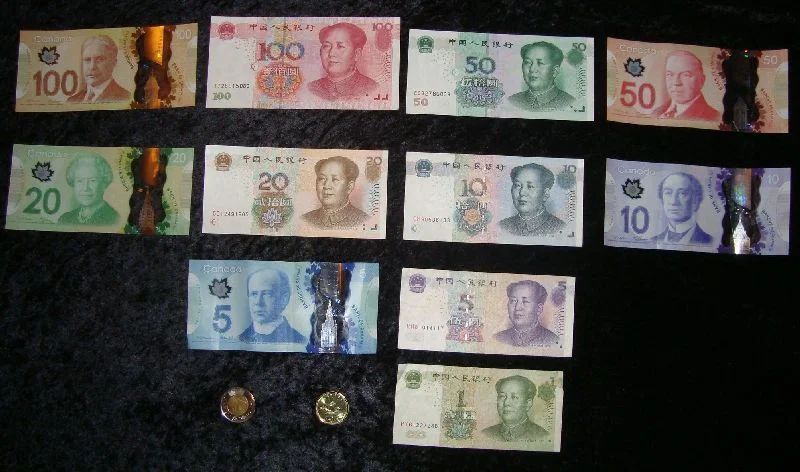
The Canadian Dollar and Chinese Yuan Renminbi
The Canadian dollar, coded CAD and symbolized by $, is the official currency of Canada. It is a freely floating currency whose value is determined by foreign exchange markets. The Chinese yuan renminbi, coded CNY and symbolized by ¥, is the official currency of the People's Republic of China. The yuan's exchange rate is managed within a band set by the People's Bank of China, though it has become more market-oriented over time. These two currencies are among the most traded in the world, with the CAD to USD and CNY to USD pairs being particularly popular. The direct exchange rate between the Canadian dollar and the Chinese yuan renminbi reflects the relative value of the two economies and their trade relationship.
The mid-market rate is the crucial benchmark for understanding the CAD to CNY exchange rate. This rate represents the midpoint between the global buy and sell prices for the currency pair in the wholesale interbank market. It is the purest reflection of the currency's value at any given moment, free of any margin or fee. Financial news services and many online tools display this live mid-market rate. However, when individuals or businesses actually convert money through a bank or transfer service, the rate offered will include a margin, which is how these institutions make a profit on the transaction. The difference between the mid-market rate and the rate offered to customers is a key component of the total cost of conversion.
How the CAD to CNY Exchange Rate is Determined
The exchange rate between the Canadian dollar and the Chinese yuan renminbi is set by the global foreign exchange market, where currencies are traded around the clock. This market is influenced by the fundamental forces of supply and demand. When demand for Canadian dollars from parties wanting to buy Chinese yuan increases, the value of the CAD rises relative to the CNY, meaning one Canadian dollar buys more yuan. Conversely, when demand for yuan increases, its value strengthens and the CAD/CNY rate falls. These daily fluctuations are normal and reflect continuous reassessments of currency value by millions of market participants worldwide.
Several key economic factors drive these changes in supply and demand. Interest rate differentials between the Bank of Canada and the People's Bank of China are a primary driver, as higher relative interest rates in Canada can attract investment flows into CAD, strengthening it. Economic data releases, such as GDP growth, employment figures, and inflation reports from both countries, cause market reactions. The trade relationship is also central. As China is a major trading partner for Canada, changes in the volume and value of exports and imports directly impact currency demand. Broader global market sentiment and the relative strength of the US dollar, to which both currencies are often compared, also play significant roles in the CAD/CNY cross rate.
Historical Performance and Notable Trends
The CAD to CNY exchange rate has experienced periods of significant volatility and longer-term trends shaped by economic events. Historical data shows that the rate can move within a wide range over multi-year periods. Recent volatility patterns offer insight into typical market behaviour. Over a 90-day period, the rate has moved between a low of 4.6871 and a high of 4.8837, with an average of 4.7992.
Shorter-term movements can be equally pronounced. In a recent 30-day window, the rate fluctuated between 4.6871 and 4.7902, with an average of 4.7265. The change over that period was 0.43. These figures illustrate that the rate is dynamic and can shift by several percentage points over a month. Tracking these averages and ranges helps Canadians understand whether the rate has been moving in a favourable direction for their planned conversion. Many individuals and businesses use monthly average rates to plan ahead and time their transfers more strategically, aiming to lock in a better rate when the market moves in their favour.
Methods for Converting CAD to CNY in Canada
Canadians have several options for converting their dollars to Chinese yuan, each with different cost structures and convenience levels. Traditional banks offer currency exchange services both at branches and online. They typically provide security and convenience but often apply wider exchange rate margins and additional transaction fees, which can reduce the final amount received in yuan. Many banks also issue credit and debit cards that can be used for purchases or ATM withdrawals in China, though these usually involve a foreign transaction fee and a marked-up exchange rate applied on the transaction date.
Specialist international money transfer services, such as Western Union, Wise, OFX, and MTFX, provide a dedicated alternative. These services frequently advertise savings compared to banks, with some claiming to save customers up to 4% on their conversion. They operate primarily online or through agent networks and emphasize transparent pricing, showing the exchange rate and all fees upfront before a transfer is confirmed. These providers use the real-time mid-market rate as a baseline but add their own service margin. The total cost is a combination of this margin and any fixed transfer fee, which can vary based on the amount sent, the payment method, and the chosen payout option in China.
- Traditional bank branch or online banking services
- Bank-issued credit or debit cards for spending abroad
- Online specialist transfer services (e.g., Wise, OFX)
- Global money transfer networks with agent locations (e.g., Western Union)
- Multi-currency account providers that allow currency holding and conversion
- Forex brokers for larger business or investment conversions
The choice of method often depends on the transfer's purpose, size, and urgency. For sending money to family or for business payments, online specialists can offer better rates and clear tracking. For immediate travel cash, a bank or airport kiosk might be used despite higher costs. It is important for Canadians to compare the total cost, the final amount of yuan received after all fees and margins, rather than just the advertised exchange rate.
Understanding Fees and Getting the Best Value
The total cost of converting Canadian dollars to Chinese yuan is rarely just the posted exchange rate. Providers build profit into the transaction through a combination of an exchange rate margin and fixed fees. The margin is the difference between the mid-market rate and the rate actually applied to the customer's funds. A wider margin means fewer yuan for each Canadian dollar. Fixed fees are separate charges for processing the transfer, which may be a flat amount or a percentage of the transaction. Some services advertise having 'no fees' but compensate with a larger margin on the exchange rate.
To understand the true cost, Canadians should look for providers that show all pricing upfront before committing to a transfer. This includes the specific exchange rate being offered, any transfer fee, and an estimated total amount the recipient will receive in CNY. Payment method can affect fees. Using a credit card may trigger cash advance fees and interest, while a bank debit or wire transfer might be cheaper. Payout options, such as direct bank deposit in China versus cash pickup at an agent location, can also influence the final cost and speed. Transfers are typically processed within 24 to 48 hours, though times can vary based on banking cut-offs and verification procedures.
| Provider Type | Typical Cost Components | Key Considerations |
|---|---|---|
| Major Banks | Wide exchange rate margin, possible flat wire fee, foreign transaction fees on cards. | Convenient for existing customers. Often higher total cost. |
| Online Specialists (e.g., Wise, MTFX) | Tighter margin, possible small percentage fee, often no receiving fee. | Upfront pricing, competitive rates for larger transfers. |
| Transfer Networks (e.g., Western Union) | Variable margin and fee based on amount, payment & payout method. | Fast cash pickup option. Fees can vary widely. |
| Multi-currency Accounts | Margin on conversion, possible monthly account fee. | Allows holding CNY to convert when rates are favourable. |
Canadians can monitor live CAD to CNY exchange rates and set rate alerts to be notified when the market reaches a desired level. Converting larger amounts may qualify for better rates from specialist currency exchange services. The most reliable way to identify the best value is to compare the final Chinese yuan amount that several providers will deliver for the same Canadian dollar amount. This comparison should include the exchange rate and any applicable transfer fees.
Security and Regulation in International Transfers
Converting and sending money internationally involves moving funds across borders, which is a highly regulated activity for security and anti-fraud purposes. Reputable providers in Canada operate within strict regulatory frameworks set by bodies like the Financial Transactions and Reports Analysis Centre of Canada (FINTRAC). These regulations require providers to verify customer identity, monitor transactions, and report suspicious activity. This framework helps protect the Canadian dollar and Chinese yuan transfers, ensuring they are secure and properly managed at every stage. Providers implement several security measures to safeguard transactions, including encryption for online platforms and apps, fraud prevention systems, and secure tracking using money transfer control numbers (MTCNs).
Customers play a role in security by sending money only to people they know and trust. They should carefully check receiver details and keep their Money Transfer Control Number (MTCN) private. Customers should also stay alert to common scam tactics and fraud warning signs. When choosing a service, Canadians should confirm the provider is licensed and has clear policies for protecting customer funds and data.
Frequently asked questions
What is the difference between the mid-market rate and the rate I get?
The mid-market rate is the pure benchmark rate used in global currency markets, representing the midpoint between buy and sell prices. When you convert money through a bank or transfer service, the rate you receive is the mid-market rate plus a margin, which is how the provider makes a profit. This means you will always receive slightly fewer yuan than the mid-market rate would suggest. Providers should show you the exact rate you will get and all fees upfront before you confirm a transfer.
How can I save money when converting CAD to CNY?
To save money, compare the final amount of yuan you will receive from multiple providers for the same CAD amount, as this includes all margins and fees. Specialist transfer services often offer more competitive rates than traditional banks. Consider timing your transfer by monitoring the rate and setting alerts, as converting when the CAD is stronger nets more yuan. Using a debit card or bank transfer as a payment method can avoid extra fees sometimes associated with credit card payments.
How long does an international transfer to China take?
Most international money transfers from Canada to China are processed quickly. Transfers through specialist services often reach the recipient within 24 to 48 hours, depending on the payout method and banking cut-off times. Transfers for cash pickup at an agent location can sometimes be available within minutes. The provider should give you an estimated delivery time when you initiate the transfer.
Is it safe to send money to China online?
Yes, it is safe when using a licensed and regulated money transfer provider. Reputable companies use encryption for online and app transactions and have robust fraud prevention measures. They operate within strict regulatory frameworks in Canada. For added safety, always send money only to people you know, keep your transfer tracking number private, and be vigilant about potential scams.
Why does the exchange rate I see on Google differ from what a bank offers?
Google often displays the mid-market rate, which is a reference rate representing the midpoint between global buy and sell prices. The rate offered by a bank or money transfer provider differs because they apply an exchange rate margin to this mid-market rate. This margin is a common way for financial institutions to generate revenue on currency conversions. Furthermore, the final rate you receive can vary based on specific factors such as the transfer amount, your chosen payment method, and the selected payout option. Therefore, it is important to review the exact exchange rate and any associated fees directly with your provider before confirming a transaction, as the mid-market rate is typically for informational purposes only.
Can I lock in an exchange rate for a future transfer?
Yes, you can set up a rate alert to be notified when a desired CAD to CNY exchange rate is reached. Many currency exchange services, including Xe and Western Union, offer this feature on their platforms or within their mobile applications. This allows you to monitor the market and act when favourable conditions occur. For larger transfers, some specialist providers may offer more formal tools like forward contracts to lock in a specific rate for a future transaction. The ability to set alerts helps individuals and businesses manage currency risk and make more strategic timing decisions without needing to watch the markets constantly.
Sources and further reading
- Canadian Dollars to Chinese Yuan Renminbi Exchange Rate xe.com
- Chinese yuan rmb to Canadian dollars today wise.com
- CAD, Canadian Dollar to Chinese Yuan Renminbi westernunion.com
- Convert CAD to CNY, Canadian Dollar to Chinese Yuan mtfxgroup.com
This article explains how things work and is not financial, tax or legal advice. Rules, limits and rates change, so check the current figures with the Canada Revenue Agency, your province or your financial institution before you act.