The exchange rate between the UAE dirham and the Canadian dollar is a key financial metric for Canadians traveling to or doing business with the United Arab Emirates. Understanding how this rate is set and what influences its movements can lead to significant savings when converting money. Canadians have several options for converting AED to CAD, each with different costs and convenience levels. This guide covers the currencies, the market forces behind the rate, its historical performance, and the practicalities of conversion.
The Currencies: UAE Dirham and Canadian Dollar
The United Arab Emirates dirham is the official currency of the UAE, with the currency code AED and the symbol د.إ. The dirham is pegged to the US dollar at a fixed rate, which provides it with considerable stability against major world currencies. The Canadian dollar, coded CAD and symbolized by $, is the official currency of Canada and is issued by the Bank of Canada. Unlike the dirham, the Canadian dollar is a floating currency, meaning its value is determined by foreign exchange market forces. This fundamental difference in monetary policy regimes is a primary driver of the exchange rate relationship between the two currencies. The most popular exchange rate for the Emirati dirham is the AED to USD pair, while for the Canadian dollar it is the CAD to USD rate.
How the AED to CAD Exchange Rate is Determined
The exchange rate between the UAE dirham and the Canadian dollar is a foreign exchange market price. It is primarily set by the global forex market where currencies are traded 24 hours a day. The most commonly referenced rate is the mid-market rate, which is the midpoint between the global buy and sell prices for the currency pair. This rate is purely informational and serves as a benchmark. Individual consumers and businesses do not receive this rate when conducting transactions through banks or money transfer services. Instead, providers add a margin or markup to this rate, which is how they generate revenue from currency conversion. The rate fluctuates constantly due to changes in supply and demand for each currency on the international market.
Several key factors influence the movements of the AED to CAD rate. Since the UAE dirham is pegged to the US dollar, its value relative to other currencies largely mirrors the movements of the US dollar. Therefore, the AED to CAD rate is heavily influenced by the USD to CAD exchange rate. When the US dollar strengthens against the Canadian dollar, the dirham will also generally strengthen against the loonie. Economic conditions in Canada, such as interest rate decisions by the Bank of Canada, inflation data, and commodity prices, particularly oil, directly impact the value of the Canadian dollar. Political stability, economic performance in the UAE, and broader global risk sentiment also play roles in driving daily and long-term fluctuations in the exchange rate.
Historical Performance and Notable Trends
The AED to CAD exchange rate has experienced various periods of volatility and stability over the years, reflecting the economic ties and differing monetary policies of the two nations. Historical charts tracking the mid-market rate over the last five years show the pair moving within a range. For example, recent 90-day periods have seen the rate move between a low of 0.3747 and a high of 0.3888. These movements illustrate the typical range-bound behaviour influenced by the dirham's peg and the loonie's sensitivity to commodity cycles. Tracking the monthly average exchange rate provides a clearer snapshot of performance over a longer period, smoothing out daily market noise.
Analysing specific timeframes reveals patterns in volatility. Over a recent 30-day period, the rate moved between 0.3809 and 0.3888, with an average of 0.3860 and a volatility measure of 0.20 percent. In a 90-day window, the range was wider, from 0.3747 to 0.3888, with an average of 0.3815 and volatility of 0.22 percent. These metrics show that while the pair can experience swings, the dirham's peg to the US dollar generally constrains extreme movements compared to purely floating currency pairs. Canadians monitoring the rate for transfer purposes often look at these averages and ranges to identify favourable trends or to set target rates for their conversions.
Methods for Converting Dirhams to Canadian Dollars
Canadians looking to convert UAE dirhams to Canadian dollars have several primary channels, each with distinct cost structures and speeds. Traditional banks offer currency exchange services both for cash and wire transfers. Credit and debit cards can be used for purchases or ATM withdrawals while in the UAE, with conversion happening at the point of sale. Specialised online money transfer services and fintech platforms provide digital-first options for sending larger amounts. The choice of method significantly impacts the final amount of Canadian dollars received due to differences in exchange rate markups and fees. The actual rate a consumer receives is almost always less favourable than the live mid-market rate shown on financial websites.
Providers apply a spread, which is the difference between the rate they buy currency at and the rate they sell it for. This spread, along with any fixed transaction fees, constitutes the total cost of conversion. Some digital services advertise using the mid-market rate but then charge a separate percentage-based fee. It is crucial for Canadians to compare the total cost, which includes both the offered rate and all applicable fees, to understand the true value of their conversion. Many individuals and businesses use monthly average rates to plan ahead and time their transfers more strategically.
Fees and Charges by Provider Type
The cost of converting AED to CAD varies dramatically depending on the service provider. Generally, traditional banks have the highest costs, followed by credit card networks, with specialised transfer services often offering more competitive pricing. Banks typically charge a wide spread on the exchange rate and may add a flat wire transfer fee, which can be substantial for smaller amounts. Some premium travel cards may waive this fee, but the issuer's exchange rate margin still applies.
Online money transfer specialists and multi-currency account providers frequently promote lower costs. They often claim to use the mid-market rate and charge a transparent, lower percentage fee, or they might embed their cost in a narrower spread. Some advertise savings of up to 4 percent compared to bank rates for transfers. The actual savings depend on the amount being sent and the specific provider's pricing model. It is important to note that all providers must operate within strict regulatory frameworks for cross-border transfers, ensuring security and proper handling of both UAE dirham and Canadian dollar funds.
| Provider Type | Typical Cost Components | Notes |
|---|---|---|
| Traditional Banks | Wide exchange rate spread, flat wire fees | Often highest cost. Convenient for account holders. |
| Online Transfer Specialists | Lower margin on rate, transparent percentage fee | Can save vs. banks. Rates and fees vary. |
| Multi-currency Accounts | Margin on rate, possible monthly fees | Good for holding and converting multiple currencies. |
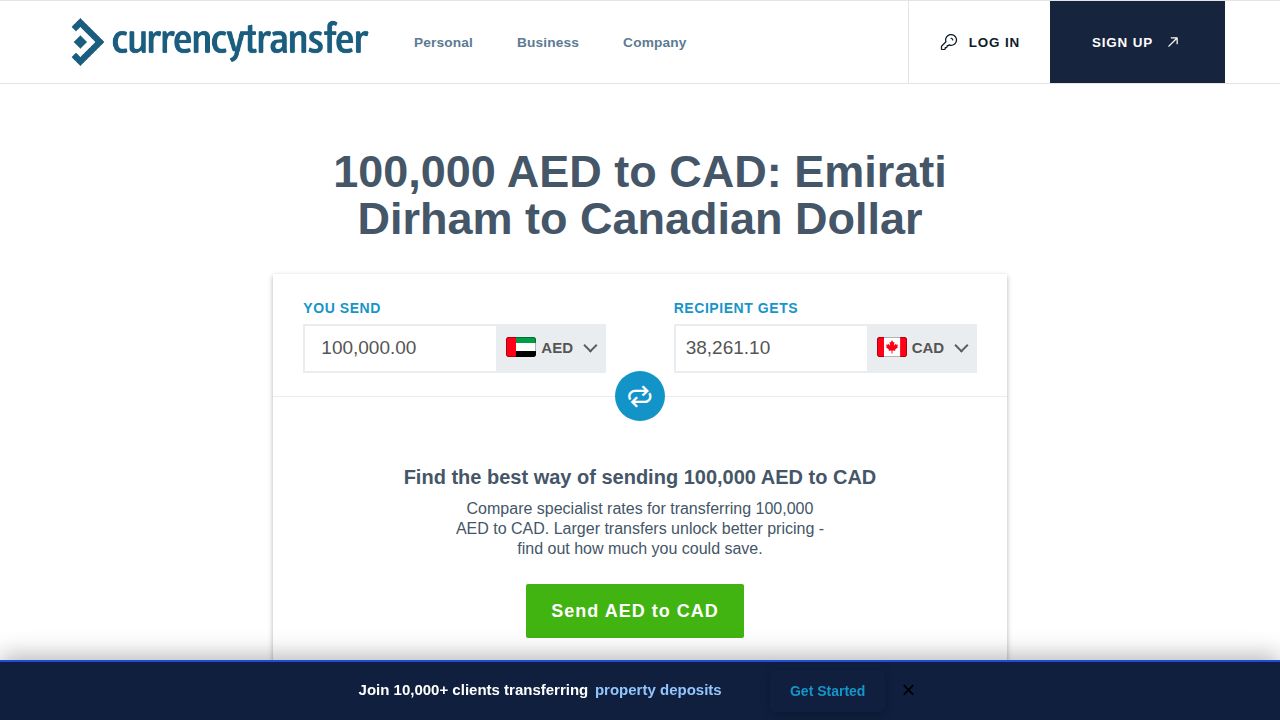
When planning a transfer, individuals should use online calculators provided by these services to see the exact exchange rate and all fees upfront before committing. Many platforms allow users to monitor live AED to CAD rates and set custom rate alerts to execute transfers when the market reaches a desired level. Transfer speeds also differ, with bank wires often taking 1-3 business days. Some specialised services can complete transfers within 24 to 48 hours, depending on banking cut-offs and routes.
Practical Steps for Conversion and Transfer
Converting UAE dirhams to Canadian dollars efficiently involves a few key steps, regardless of the chosen provider. The first step is to determine the amount to be converted and to research the current mid-market rate as a benchmark. Next, compare the total cost from several providers, which includes both the offered exchange rate and any fixed or percentage-based fees. Many services offer online quoters or calculators that display the final amount in Canadian dollars that the recipient will get, providing full transparency before you initiate the transaction.
Once a provider is selected, the user typically needs to register and verify their identity, a standard anti-fraud and regulatory requirement. The process then involves specifying the transfer details, including the source currency (AED), the target currency (CAD), the recipient's information in Canada, and the payment method for funding the transfer. Funding can often be done via bank account, debit card, or credit card, though fees may vary. After the transfer is submitted and paid for, most providers offer tracking functionality through an app or website, with notifications upon completion. For recurring transfers, such as supporting family, some platforms allow quick repetition of previous transactions.
- Research the mid-market rate as a benchmark for comparison.
- Use provider calculators to see the final CAD amount and all fees.
- Register and verify your identity with the chosen service.
- Enter transfer details: amount, currencies, recipient information.
- Choose a payment method (bank account, card) and send funds.
- Track the transfer status online or via a mobile app.
Frequently asked questions
What is the best way to convert UAE dirhams to Canadian dollars?
There is no single best way, as it depends on the amount, urgency, and cost tolerance. Traditional banks offer convenience but often have higher costs through wide exchange rate spreads and fees. Specialised online money transfer services typically provide more competitive exchange rates and lower, transparent fees, which can result in significant savings, especially for larger amounts. It is advisable to compare the total cost from multiple providers using their online calculators before deciding.
How can I get a good AED to CAD exchange rate?
To secure a favourable rate, monitor the live mid-market rate as a reference point. Use services that offer rate alerts to notify you when the market reaches your target level. Compare the final offered rate and total fees from several providers, as some advertise using the mid-market rate but charge a separate fee. Timing can also play a role, as the rate fluctuates daily, so transferring during periods of Canadian dollar strength relative to the US dollar may yield more CAD for your dirhams.
Are there hidden fees when converting currency?
Fees can be hidden within a poor exchange rate spread rather than listed separately. A provider may advertise 'no fees' but offer an exchange rate significantly worse than the mid-market rate, which is their profit. Always look for services that show you the exchange rate being applied and list any additional transaction fees upfront before you confirm the transfer. Reputable providers will display the total amount the recipient will receive in Canadian dollars, ensuring full cost transparency.
How long does an international transfer from UAE to Canada take?
Transfer times vary by provider and payment method. Bank wire transfers can take between 1 to 3 business days. Many specialised online money transfer services can process conversions faster, often within 24 to 48 hours, depending on the time of submission and banking cut-off times in both countries. Some services also offer expedited options for an additional fee. The transfer tracking feature provided by most companies will give you an estimated delivery time when you initiate the transaction.
Can I use my Canadian credit card in the UAE?
Yes, you can use your Canadian credit or debit card for purchases and ATM withdrawals in the UAE. However, your card issuer will convert the amount from dirhams to Canadian dollars using their own exchange rate, which includes a margin. It is important to check with your bank about these fees before traveling. Using a card with no foreign transaction fee can reduce costs, though the issuer's exchange rate margin will still apply.
Why does the AED to CAD rate change?
The exchange rate changes due to supply and demand dynamics in the global foreign exchange market. Key drivers include the value of the US dollar, to which the UAE dirham is pegged, and the value of the Canadian dollar, which floats freely. Factors affecting the Canadian dollar include Bank of Canada interest rate decisions, oil and commodity prices, and overall economic data from Canada. Global economic sentiment and events in the UAE also influence investor behaviour, causing daily fluctuations in the rate.
Sources and further reading
- United Arab Emirates dirhams to Canadian dollars today wise.com
- 1 AED to CAD, Convert Emirati Dirhams to Canadian Dollars xe.com
- Convert United Arab Emirates Dirham to Canadian Dollar westernunion.com
- 1 AED to CAD | United Arab Emirates Dirhams To ... luluexchange.com
- Convert AED to CAD, UAE Dirham to Canadian Dollar mtfxgroup.com
This article explains how things work and is not financial, tax or legal advice. Rules, limits and rates change, so check the current figures with the Canada Revenue Agency, your province or your financial institution before you act.