Historical USD to CAD exchange rates show how many Canadian dollars one US dollar was worth on a specific past date. This calculation is essential for Canadians reconciling cross-border transactions, calculating capital gains on US investments, or understanding economic trends. The rate fluctuates daily based on global foreign exchange markets, influenced by trade, commodity prices, and interest rates. Historical data is published by official sources like the Bank of Canada and financial data providers, offering daily, monthly, and annual averages for analysis.
Understanding the USD to CAD Exchange Rate
The USD to CAD exchange rate expresses the value of one United States dollar in Canadian dollars. When looking at historical data, the rate is typically quoted as the amount of Canadian currency required to purchase one US dollar. These rates are determined by the global foreign exchange market, where currencies are traded around the clock. The Bank of Canada very rarely intervenes to support the Canadian dollar's value, allowing market forces to set the price. Historical rates provide a record of this market valuation over time, useful for financial analysis and personal record-keeping.
Sources for Historical Exchange Rate Data
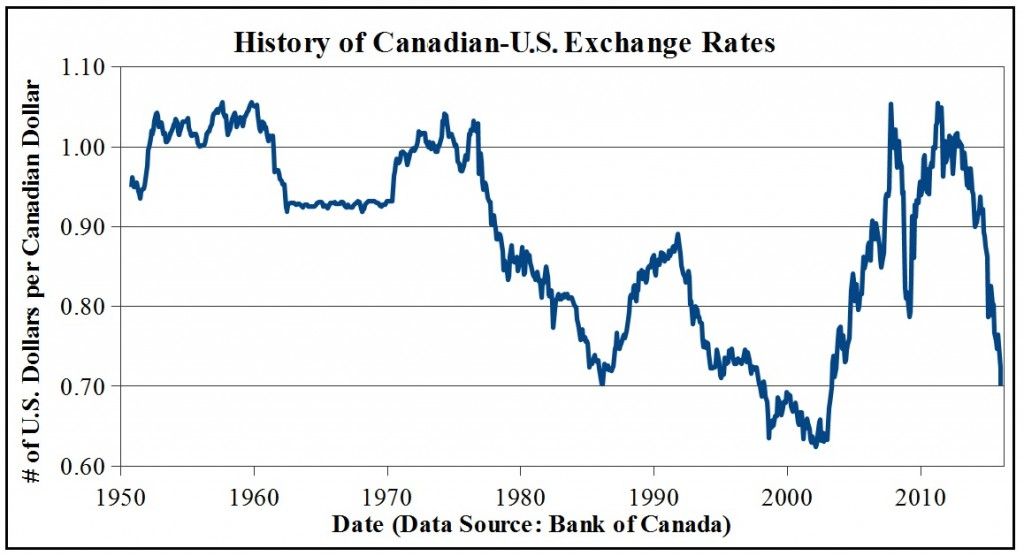
Several authoritative sources provide historical USD to CAD exchange rates for Canadian users. The Bank of Canada publishes official daily average exchange rates each business day by 16:30 Eastern Time. They also publish monthly average rates typically on the last business day of the month and annual averages on the last business day of the year. For data prior to 2017, the Bank offers legacy noon and closing rates, which were last updated using an old methodology in April 2017. Financial data services and portals offer extensive historical charts, often providing 20 years or more of daily, weekly, and monthly data. These services allow users to view exchange rate history for up to 10 years on a single chart. The Canadian Effective Exchange Rate index, which replaced the older CERI index in January 2018, provides a weighted average against major trading partners' currencies but is not updated for historical USD/CAD pairs.
How to Calculate Historical Currency Conversions
To calculate how much a historical amount in US dollars was worth in Canadian dollars, you multiply the US dollar amount by the exchange rate valid on the specific date. The key input is the exact historical exchange rate for that day, which can be found using lookup tools from the Bank of Canada or financial data providers. The result changes directly with the rate used. A higher historical rate means each US dollar was worth more Canadian dollars at that time. Using a monthly or annual average rate will yield a different, often less precise, result than using the exact daily rate. For capital gains calculations on US securities held by Canadians, the official daily rate from the transaction date is typically required by the Canada Revenue Agency. It is crucial to use the rate in the correct quote convention, which is almost always Canadian dollars per one US dollar.
Key Dates and Changes in Rate Reporting
The methodology and availability of historical Canadian dollar exchange rate data have evolved. Users should be aware of several key dates when sourcing information. The Bank of Canada last updated its legacy noon and closing rates using its old calculation methodology in April 2017. The Canadian-Dollar Effective Exchange Rate index (CERI) was replaced by the Canadian Effective Exchange Rate index (CEER) as of January 2018. Daily average exchange rates are published each business day by 16:30 ET, while monthly average rates are typically published on the last business day of the month. Annual average exchange rates are published on the last business day of the year by 12:30 ET. Data prior to 2017 is available through historical datasets, but the calculation methods differ from current publications.
- April 2017: Last update of legacy noon and closing rates.
- January 2018: CERI index replaced by CEER index.
- Ongoing: Daily rates published each business day.
- Month-end: Monthly averages published.
- Year-end: Annual averages published.
The value of the Canadian dollar is determined by the foreign exchange market. The Bank of Canada very rarely intervenes in this market to support the currency's value. The Bank publishes daily average exchange rates each business day. These published rates are used for conversions based on daily exchange rates.
Using Historical Rates for Financial and Tax Purposes
Canadians often need historical USD to CAD rates for accurate financial reporting and tax compliance. When reporting income from US sources, such as dividends or business revenue, the income must be converted to Canadian dollars using the exchange rate on the date it was received. For capital gains or losses on US securities, the cost base and proceeds must be converted using the rate on the date of purchase and the date of sale. Using an annual average rate is generally not acceptable for these precise transactions unless specifically allowed. The Canada Revenue Agency expects taxpayers to use a reasonable and consistent method, with daily rates from authoritative sources being the standard. Keeping records of the rates used for conversions is as important as keeping records of the transactions themselves. This ensures accuracy in reporting and provides documentation in case of a review.
Recent Historical Exchange Rate Context
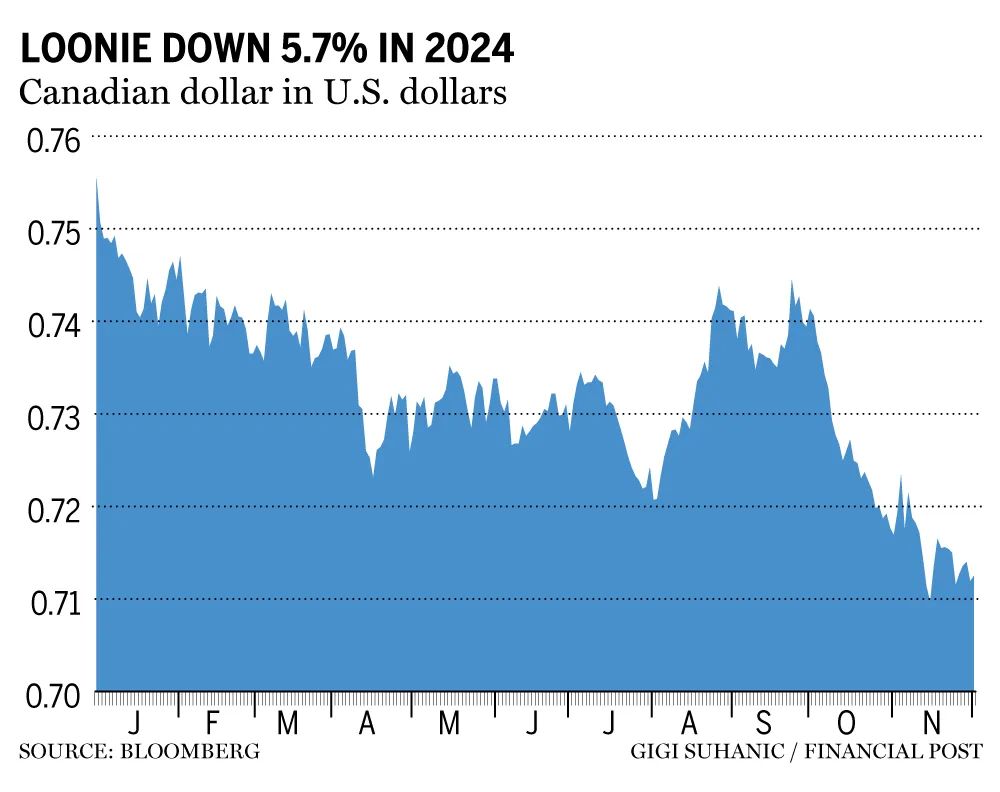
Examining recent data helps illustrate the typical volatility and range of the USD/CAD pair. For example, on October 21, 2026, the USD/CAD exchange rate was reported at 1.4065, representing a slight increase from the previous trading session. Over the month leading to that date, the Canadian dollar had weakened against the US dollar. These fluctuations highlight why using the correct historical date is critical.
| Date | Exchange Rate (CAD per 1 USD) |
|---|---|
| 3-JAN-00 | 1.4465 |
| 4-JAN-00 | 1.4518 |
| 5-JAN-00 | 1.4518 |
| 6-JAN-00 | Data continues in source |
Precision is crucial when selecting an exchange rate for a conversion calculation. Even small differences in the rate can significantly affect the final converted amount. The foreign exchange market determines the value of the Canadian dollar. The Bank of Canada almost never intervenes to influence this value. For accurate conversions, one must use the appropriate rate from an authoritative source for the specific date required.
A Worked Example of a Historical Conversion
To report this in Canadian dollars for tax purposes, they must convert the amount using the daily exchange rate for that specific date. According to the data, the USD to CAD rate on October 21, 2026, was 1.4065. If they had used a different day's rate or an average, the result would be different, potentially affecting their reported capital gain or loss. This example shows the direct application of a historical rate to a common financial scenario for Canadians engaged in cross-border investing. The rate used is the mid-market rate for informational purposes, which may differ from the rate offered by financial institutions when actually sending money.
Frequently asked questions
Where can I find the official historical USD to CAD exchange rate for a specific date?
The Bank of Canada provides daily average exchange rates on its website, published each business day. For historical dates, you can use their lookup tool or download datasets containing daily rates. For data prior to 2017, they offer legacy noon and closing rates. Many financial data portals also offer extensive historical charts and data downloads covering 20 years or more.
How often do historical exchange rates get updated?
The Bank of Canada updates its daily average exchange rate each business day. Historical datasets for periods like the legacy noon rates or the CERI index are not updated. The noon rates were last updated in April 2017 and the CERI data was last updated in January 2018. Current daily, monthly, and annual averages are published on a regular schedule throughout the year.
What rate should I use for converting US income on my Canadian tax return?
For Canadian tax purposes, you should convert US dollar amounts using the exchange rate in effect on the specific date the income was received. The Canada Revenue Agency expects a reasonable and consistent method, with daily rates from an authoritative source like the Bank of Canada being the standard. The Bank of Canada publishes daily average exchange rates each business day by 16:30 ET. You can view and download this daily exchange rate data from their website. Annual average rates, published yearly, are typically not acceptable for converting specific transaction amounts. The foreign exchange market determines the Canadian dollar's value, and the Bank very rarely intervenes.
What is the difference between the daily average rate and the noon rate?
The daily average rate is a calculated average of market rates throughout the trading day, published each business day by the Bank of Canada. The noon rate was a specific snapshot of the exchange rate at 12:00 PM Eastern Time, calculated using the Bank's old methodology. The Bank of Canada discontinued updating its legacy noon and closing rates in April 2017. These historical noon rates are no longer updated and remain available only for data prior to 2017. The Bank has shifted its focus to the daily average rate for its ongoing exchange rate publications.
Can I get historical exchange rates in a chart format?
Yes, you can get historical exchange rates in a chart format. Financial data services and currency converter websites offer historical currency charts for pairs like USD to CAD. For example, XE provides a currency chart that allows you to pair exchange rate history for up to 10 years. These charts are reliable and use live mid market rates for their historical views. You can also view historical prices on platforms like Yahoo Finance for USD CAD stock data. These tools let you see daily, weekly, or monthly format data for analysis.
What does a USD/CAD exchange rate of 1.4065 mean?
A USD/CAD exchange rate of 1.4065 means one United States dollar is equivalent to 1.4065 Canadian dollars. This quote convention shows how many Canadian dollars one US dollar can buy. For instance, a rate of 1.4065 on October 21, 2026, meant the Canadian dollar had weakened slightly from the previous session. This standard market quote is used in financial data and news. The rate reflects the value of the Canadian dollar against the US dollar at that moment, as determined by the foreign exchange market.
Sources and further reading
- Exchange rates bankofcanada.ca
- US Dollar to Canadian Dollar Exchange Rate Chart xe.com
This article explains how things work and is not financial, tax or legal advice. Rules, limits and rates change, so check the current figures with the Canada Revenue Agency, your province or your financial institution before you act.