Understanding Canada's income tax chart is essential for any taxpayer. The country uses a progressive tax system where your income is divided into brackets, each taxed at a specific rate. You pay two layers of tax: a federal rate that is consistent across Canada and a provincial or territorial rate based on where you live on December 31 of the tax year. This guide explains the 2026 tax brackets, how marginal rates work, and provides a clear example to calculate your total tax.
How Canada's Progressive Tax Brackets Work
Canada's income tax system is progressive, meaning your taxable income is divided into segments, or brackets, with each portion taxed at an increasing rate. This structure ensures that those with higher incomes contribute a larger share. Your marginal tax rate is the rate applied to your last dollar of income, which is the rate of your highest bracket. It is crucial to understand that moving into a higher bracket does not mean all your income is taxed at that higher rate. Only the income that falls within the higher bracket is subject to the increased rate. This principle guarantees that a raise or additional income never results in a lower take-home pay, as earning more always leaves you with more money after taxes. Your average or effective tax rate, which is your total tax paid divided by your total income, will always be lower than your marginal rate because it blends the different rates applied to the various portions of your income. The system is designed so that your tax rate varies by how much income you declare at the end of the year on your T1 General Income Tax Return and where you live in Canada.
Federal Income Tax Rates and Brackets for 2026
The federal government sets tax rates that apply uniformly across all provinces and territories. For the 2026 tax year, the federal tax brackets and rates are structured as follows. The first $58,523 of taxable income is taxed at a rate of 14 percent. Income above $58,523 up to $117,045 is taxed at 20.5 percent. Any taxable income exceeding $258,482 is subject to the top federal rate of 33 percent. These brackets are indexed annually based on the Consumer Price Index report for September published by Statistics Canada, which typically results in small adjustments to the threshold amounts. The federal tax you owe is calculated by applying each rate to the corresponding portion of your income. All individuals resident in Canada are subject to federal tax on their worldwide income for the entire period they are resident. Non-resident individuals are subject to Canadian income tax on income from employment in Canada, income from carrying on a business in Canada and capital gains from the disposition of taxable Canadian property.
Provincial and Territorial Tax Systems and Surtaxes
In addition to federal tax, you must pay income tax to the province or territory where you reside. Your provincial or territorial tax liability is determined by your place of residence on December 31 of the tax year. All provinces and territories except Quebec use a tax-on-income system, meaning they set their own rates and brackets but use the federal definition of taxable income. Provincial and territorial taxes are calculated on the federal return and collected by the federal government, except in Quebec which administers its own system. The rates vary significantly across jurisdictions, and some provinces impose surtaxes that increase the provincial tax payable. A surtax is an additional tax calculated as a percentage of the basic provincial tax owed after applying the standard brackets. Two provinces impose surtaxes that may increase the provincial income taxes payable. Provincial and territorial taxes are not deductible when computing federal, provincial, or territorial taxable income. The combined federal/provincial effective top marginal tax rates for 2026 include all provincial surtaxes and apply to taxable incomes above $258,482 in most jurisdictions.
2026 Provincial and Territorial Tax Rate Tables
Provincial and territorial tax rates and brackets are published each year following their respective budgets. The top provincial and territorial tax rates and the taxable income levels at which they apply for 2026 are available. These rates incorporate any applicable provincial or territorial surtaxes. These provincial or territorial tax rates are in addition to the federal tax rates. They apply progressively to income within each specific jurisdiction.
| Province/Territory | Tax Rates and Brackets (2026) | Notes |
|---|---|---|
| Ontario | 5.05% on first $52,886, 9.15% to $105,775, 11.16% to $150,000, 12.16% over $220,000 | Rates for 2025. 2026 brackets are indexed. |
| British Columbia | 5.6% on first $50,363, 7.7% on income over $50,363 | As used in the worked example for a $60,000 income. |
To find the exact combined marginal tax rates for each bracket, you must consult specific provincial or territorial tables. These tables list the integrated federal and provincial or territorial rates. The combined top marginal tax rate, including surtaxes, can reach up to 55% in some jurisdictions. This high rate factors in the federal 33% rate. This rate is directly relevant for the kiddie tax and income sprinkling rules. These rules apply the highest combined marginal rate to certain types of split or passive income.
Determining Taxable Income and Applying Tax Credits
Your tax bracket is determined by your taxable income, not your gross income. Taxable income is your total income from all sources minus any eligible tax deductions you claim. Common deductions include contributions to a Registered Retirement Savings Plan (RRSP), moving expenses, and child care costs. Once you arrive at your taxable income, you apply the relevant federal and provincial rates to calculate your gross tax payable. From this amount, you subtract various non-refundable tax credits to determine your final tax liability. Personal tax credits, miscellaneous tax credits, and the dividend tax credit are subtracted from tax to determine the federal tax liability. The basic personal amount is a significant non-refundable credit that every taxpayer can claim. For 2025, the federal basic personal amount is $16,129 and the Ontario amount is $12,747. These amounts reduce the tax you owe at the lowest tax rate but do not create a refund if your income is below them. The dividend tax credit is designed to account for corporate taxes already paid on dividend income, reducing the personal tax on dividends from Canadian corporations. It is crucial to understand that credits are applied after the tax is calculated using the brackets, directly reducing the amount you owe.
The Alternative Minimum Tax and Kiddie Tax Rules
Beyond the regular tax calculation, specific rules can significantly alter your tax bill. The Alternative Minimum Tax (AMT) is a parallel tax calculation designed to ensure that individuals who benefit from certain tax preferences still pay a minimum amount of tax. To compute the AMT, you calculate an adjusted taxable income that adds back certain deductions and exemptions. If this adjusted taxable income exceeds the minimum tax exemption, a combined federal and provincial tax rate is applied to the excess. You then pay the greater of your regular tax or the AMT. Taxpayers required to pay the AMT are entitled to a credit for the AMT paid, which can be applied in any of the following seven years to reduce their regular tax liability. The kiddie tax is another critical rule that applies to certain passive income received by a minor child under an income splitting arrangement. This income is subject to tax at the highest combined federal/provincial marginal rate, which can be up to 55%. Personal tax credits, other than the dividend, disability, and foreign tax credits, cannot be claimed to reduce the kiddie tax. Similar income sprinkling rules extend to adult family members in certain situations involving private corporations, where split income is also taxed at the top marginal rate without the benefit of most personal credits.
Calculating Your Total Tax: A Detailed Worked Example
To illustrate how federal and provincial taxes combine, consider an individual named Naveen who is a resident of British Columbia for the entire 2026 tax year. After claiming all his RRSP contributions and other deductions, Naveen has a taxable income of $60,000. The first step is to calculate his federal tax. The first $58,523 of his income is taxed at 14%, which equals $8,193.22. The remaining $1,477 of his income ($60,000 - $58,523) falls into the next bracket and is taxed at 20.5%, resulting in $302.79. His total federal tax is therefore $8,193.22 + $302.79 = $8,496.01. Next, he calculates his British Columbia provincial tax. Using the 2026 BC rates, the first $50,363 is taxed at 5.6%, which equals $2,820.33. From this amount, he would then subtract any applicable tax credits, such as the basic personal amount credit, to determine his final tax payable. This example demonstrates the mechanics of the progressive bracket system and the layered nature of Canadian income tax.
Important Dates, Indexation, and Tax Planning
Several key dates and processes govern the Canadian tax system. The tax year ends on December 31, and your provincial/territorial tax rate is locked in based on your residence on that date. Tax brackets and credit amounts are indexed annually to inflation using the Statistics Canada Consumer Price Index report for September. The indexed amounts are officially confirmed by the Canada Revenue Agency in mid-November. Understanding this indexation helps in long-term financial planning, as bracket thresholds gradually increase each year. Effective tax planning involves more than just filing a return. It includes actions taken throughout the year, such as making RRSP contributions to lower your taxable income. Calculating your marginal tax rate helps you understand the real value of an RRSP contribution, as the tax savings occur at your highest rate. Knowing your combined federal and provincial rates also allows you to assess the impact of a potential move or a change in income. Tools like detailed tax calculators allow you to compare scenarios, such as the tax payable on employment income versus investment income, or the amount of Canadian dividends that can be earned without paying regular tax. Staying informed about annual budget changes from the federal and provincial governments is also crucial, as these can introduce new credits or adjust rates.
Using and Interpreting Tax Calculators
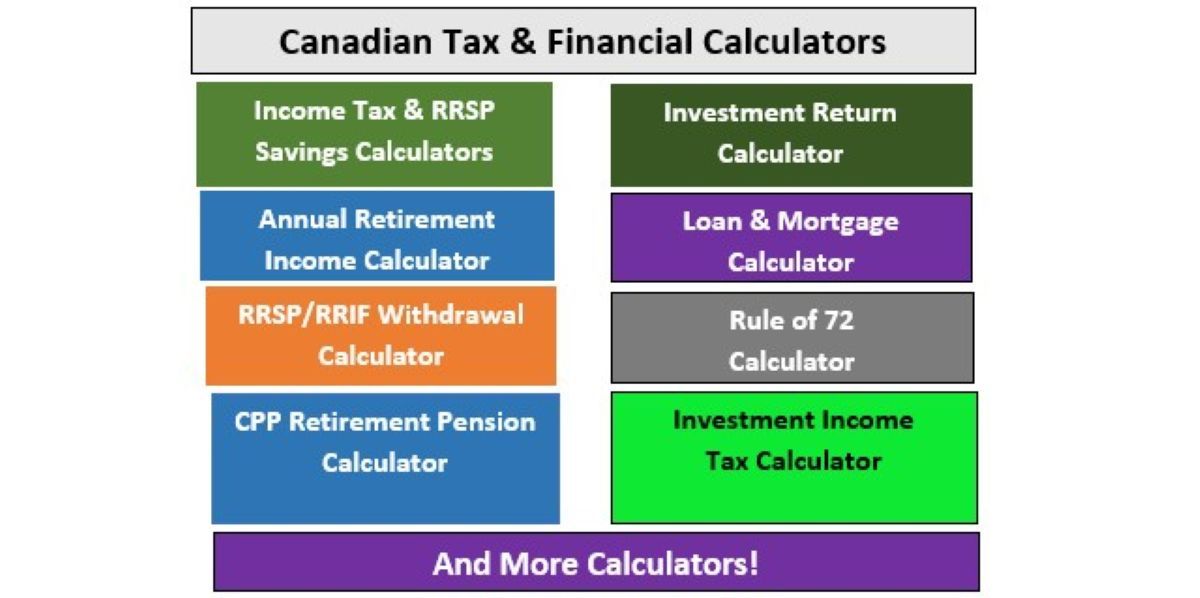
Online tax calculators are valuable tools for estimating your tax liability and planning your finances. These calculators typically require inputs such as your province of residence, your total income from all sources, and any significant deductions like RRSP contributions. The calculator then applies the current year's indexed federal and provincial tax brackets to your taxable income. A key output is your marginal tax rate, which helps you understand the impact of earning additional income or making a deductible expense. Calculators also show your average tax rate, which is useful for broader financial planning and comparing the tax efficiency of different income streams. Using these tools allows you to model different scenarios, such as the effect of an RRSP contribution on your tax refund or how a move to another province might affect your take-home pay. They help you avoid surprises at tax time by estimating whether you may owe money or receive a refund based on your current income and deductions. It is important to use calculators that are updated with the latest indexed bracket amounts and provincial rates, verified against CRA publications. Remember that these tools provide estimates, and your final tax return may differ based on your complete financial situation, all eligible credits, and the application of rules like the AMT.
Frequently asked questions
What are the federal tax brackets for 2026 in Canada?
For the 2026 tax year, the federal tax brackets are as follows. The first $58,523 of taxable income is taxed at 14%. Income over $58,523 up to $117,045 is taxed at 20.5%. Income over $258,482 is taxed at 33%. These brackets are indexed annually based on the Consumer Price Index. The dollar thresholds may adjust slightly based on inflation.
How is my provincial tax rate determined?
Your provincial or territorial tax rate is determined by the province or territory you live in on December 31 of the tax year. Each jurisdiction sets its own tax brackets and rates, which are applied to your taxable income in addition to federal tax. If you move provinces during the year, your tax liability for the entire year is based on your residence at year-end. All provinces except Quebec use the federal definition of taxable income.
What is the difference between marginal and average tax rate?
Your marginal tax rate is the rate you pay on your next dollar of income, which corresponds to the rate of your highest tax bracket. Your average or effective tax rate is the total tax you pay divided by your total income. Because of the progressive system, your average rate is always lower than your marginal rate, as it blends the lower rates applied to the first portions of your income. The marginal rate is key for financial decisions like evaluating an RRSP contribution.
What is the Alternative Minimum Tax (AMT)?
The Alternative Minimum Tax is a parallel tax calculation designed to ensure that individuals who claim certain tax deductions and credits still pay a minimum amount of tax. You calculate an adjusted taxable income, add back certain preferences, and apply a special tax rate. You pay the higher of your regular tax or the AMT. Any AMT paid can be used as a credit to reduce your regular tax in any of the following seven years.
What are the 'kiddie tax' and income sprinkling rules?
The kiddie tax applies to certain passive income received by a minor child from an income splitting arrangement. It taxes this income at the highest combined federal and provincial or territorial marginal rate, which can be up to 55%. Similar rules restrict income sprinkling to adult family members through private corporations. In these cases, the split income is taxed at the top combined marginal rate. Most personal tax credits, other than specific ones, cannot be used to reduce this tax liability.
How does indexation affect tax brackets?
Tax brackets and personal tax credit amounts are indexed to inflation each year. This indexing uses the Statistics Canada Consumer Price Index report for September. The process increases the dollar thresholds of the brackets and the value of certain credits. This prevents bracket creep where inflation pushes taxpayers into a higher tax bracket without a real increase in purchasing power. The indexed amounts are confirmed by the Canada Revenue Agency in November.
Sources and further reading
- Canada tax brackets 2026: Federal and provincial rates wealthsimple.com
- Canada, Individual, Taxes on personal income taxsummaries.pwc.com
- 2025 & 2026 Personal Income Tax Rates in Canada taxtips.ca
- Tax Calculators & Rates ey.com
- 2025-26 Ontario Income Tax Calculator, TurboTax® Canada turbotax.intuit.ca
This article explains how things work and is not financial, tax or legal advice. Rules, limits and rates change, so check the current figures with the Canada Revenue Agency, your province or your financial institution before you act.