A Tax-Free Savings Account (TFSA) is a registered investment account available to Canadian residents aged 18 and older. It allows savings and investments to grow completely tax-free, with no taxes on investment income, capital gains, or withdrawals. Introduced in the 2009 federal budget, the TFSA is a flexible tool for saving for any financial goal, from short-term purchases to long-term retirement planning. Unlike an RRSP, contributions are made with after-tax dollars and do not provide an upfront tax deduction.
How a TFSA Works
A Tax-Free Savings Account is a registered plan that shelters investment income from Canadian taxes. Money contributed to a TFSA has already been taxed as income, meaning contributions are made with after-tax dollars. Once inside the account, any income generated, including interest, dividends, and capital gains, accumulates without being subject to tax. Account holders can withdraw funds at any time for any reason, and these withdrawals are also completely tax-free. This structure makes the TFSA a powerful and flexible vehicle for saving towards diverse goals such as an emergency fund, a vehicle purchase, a home down payment, or retirement income supplementation. The account's flexibility extends to the types of financial institutions where it can be opened, including banks, credit unions, and investment firms, and it can be used to save for any big-ticket item or goal.
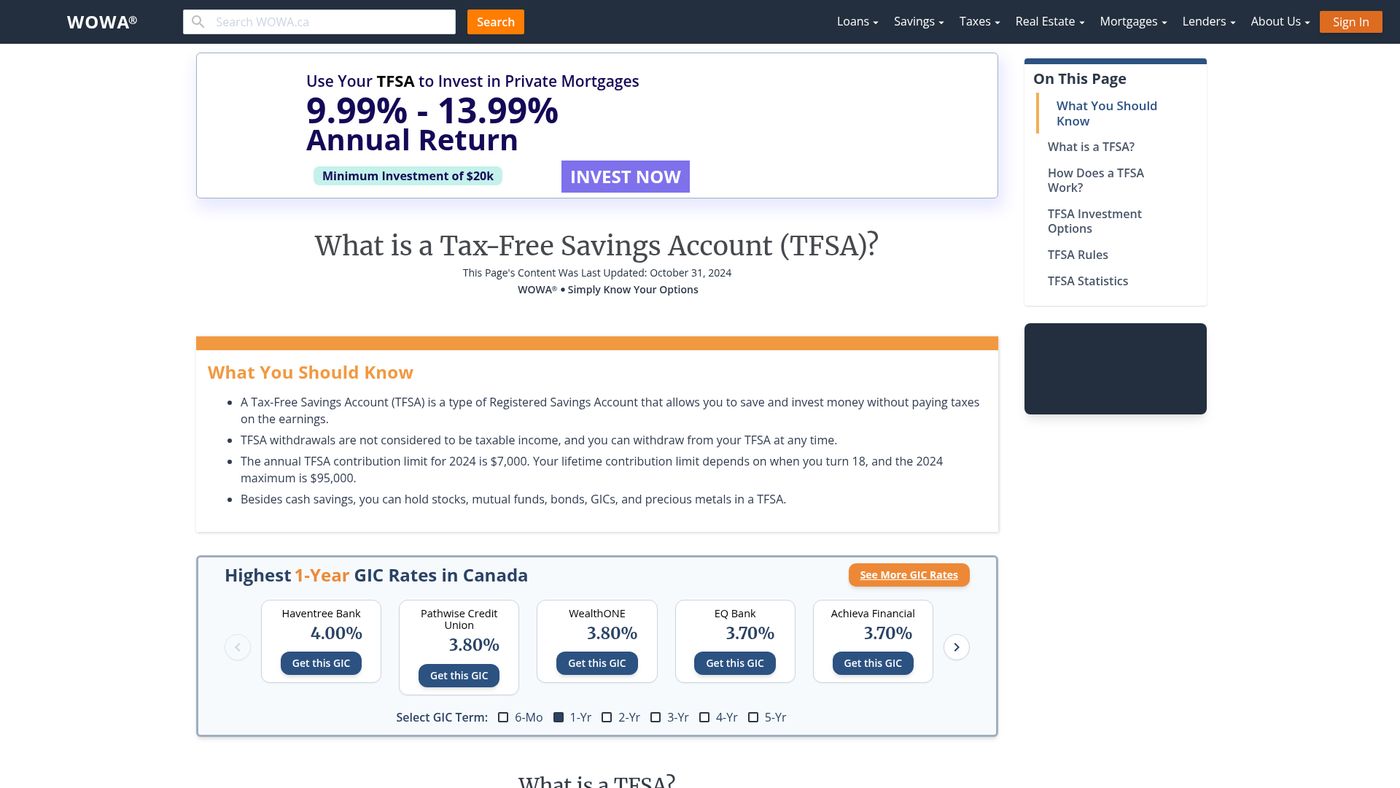
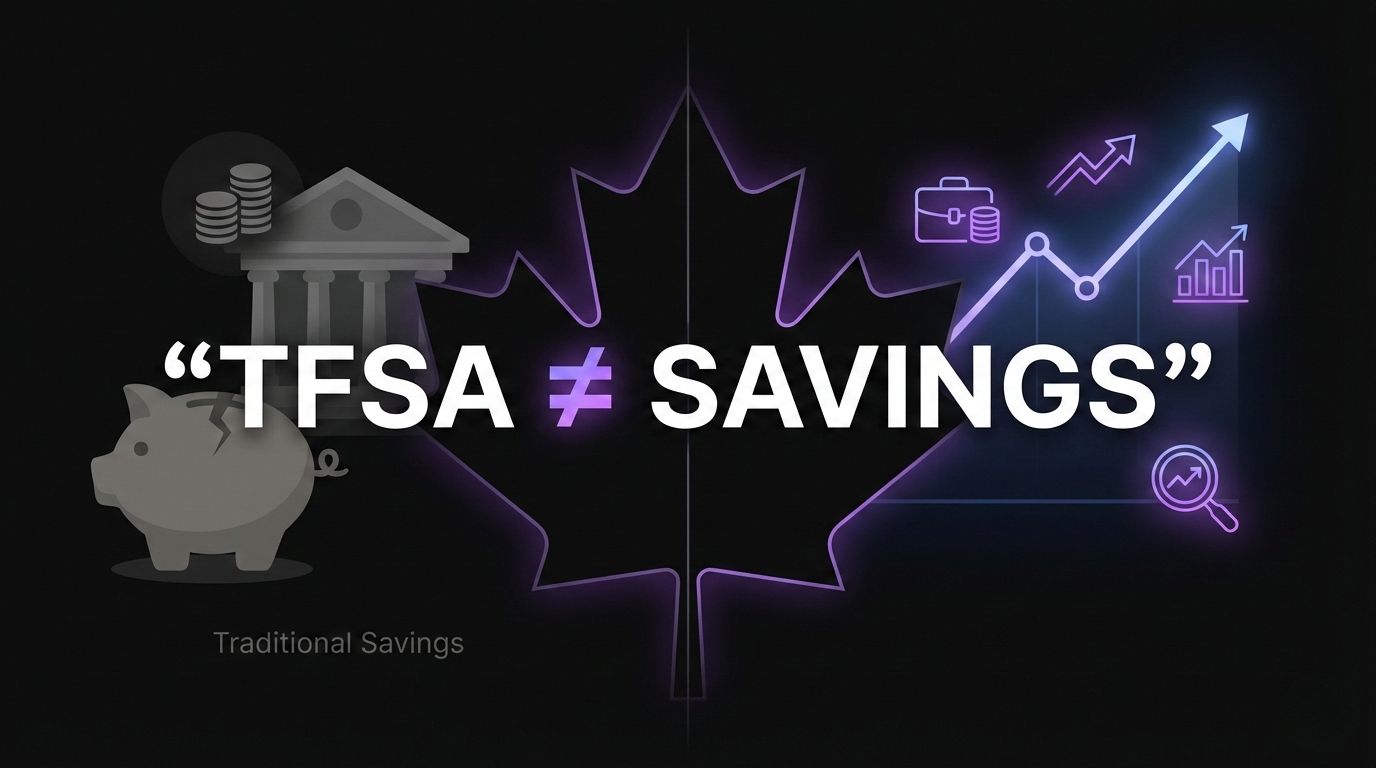
While often called a savings account, a TFSA is not limited to holding cash and is more accurately described as a registered investment account. It can hold a wide range of qualified investments similar to those allowed in a Registered Retirement Savings Plan (RRSP). Account holders are responsible for tracking their own contributions to ensure they do not exceed their personal limit, as financial institutions and the Canada Revenue Agency (CRA) may not provide real-time updates. The CRA receives annual reports from TFSA issuers, but there is a reporting lag, especially in the early months of a new year. Because a TFSA does not generate taxable income and contributions are not tax-deductible, the account normally has no bearing on individual tax returns, and contributors do not receive tax slips, provided they are not U.S. citizens or residents. However, contributions and account balances are reported annually to the CRA.
History and Introduction
The Tax-Free Savings Account was first proposed by then-Federal Finance Minister Jim Flaherty in the 2008 federal budget. The program officially came into effect on January 1, 2009, creating a new registered account option for Canadians. The policy was widely supported by economic think tanks and industry groups at the time, including the C.D. Howe Institute, which praised it as a novel and beneficial program. Other supporters included the Canadian Federation of Independent Business, the Canadian Bankers Association, Bank of Montreal economist Doug Porter, the Canadian Chamber of Commerce, and the Canadian Taxpayers Federation. The initial annual contribution limit was set at $5,000, which remained in place through 2012, and the measure was designed to encourage Canadians to start saving early and often.
The contribution limit was first increased to $5,500 in 2013, with a mechanism to index future increases to inflation in $500 increments. A significant one-time increase to $10,000 was announced in the 2015 federal budget, but this change was short-lived and also eliminated indexation for inflation. Following the federal election later that year, the new government proposed restoring the limit to $5,500 for 2016 and reinstating inflation indexing thereafter. The program has since evolved with periodic increases to the annual limit, reflecting its indexed structure and growing cumulative contribution room for eligible Canadians. The TFSA has become a staple of Canadian personal finance, offering a versatile way for residents to set money aside tax-free throughout their lifetime.
Contribution Rules and Limits
TFSA contribution room begins to accumulate in the year a Canadian resident turns 18 years of age. There is no requirement to have earned income to contribute, which distinguishes it from an RRSP. The annual contribution limit is set by the federal government and is uniform for all eligible individuals. A key feature is that any unused contribution room from previous years is carried forward indefinitely, allowing individuals to make larger lump-sum contributions in later years. The total cumulative contribution room for someone who has been eligible since 2009 reached $109,000 as of January 1, 2026. Canadian residents may only begin accumulating contribution room once they have reached the age of 18, and upon turning 18, they can contribute up to the maximum allowed limit for that year, with annual limits for subsequent years accumulated in one's total contribution room.
Withdrawals are a critical component of the contribution rules. When money is taken out of a TFSA, the withdrawal amount is not added back to the contributor's available room until January 1 of the following calendar year. A common error is to re-contribute withdrawn funds in the same year, which can lead to an over-contribution if the individual has already maximized their room. The Canada Revenue Agency monitors contributions and imposes a penalty tax of 1% per month on the highest excess amount in the account for each month that the excess remains. In the 2012 tax year, the CRA sent over-contribution notices to approximately 74,000 taxpayers out of about nine million TFSAs existing at the end of that year, following about 76,000 notices in 2011 and 103,000 in 2010.
| Year | Annual Contribution Limit |
|---|---|
| 2009 to 2012 | $5,000 |
| 2015 | $10,000 |
| 2026 | $7,000 |
The annual TFSA contribution limits show the program's growth and changes over time. The maximum annual contribution room was five thousand dollars per year prior to 2013. The limit increased to five thousand five hundred dollars in 2013 and was indexed to inflation. The 2015 federal budget raised the limit to ten thousand dollars but a newly elected government later proposed to restore the five thousand five hundred dollar limit for 2016. As of January 1, 2026, the total cumulative contribution room for a TFSA is one hundred nine thousand dollars for eligible individuals. It is important for individuals to verify their personal contribution room through the Canada Revenue Agency's My Account service. The CRA's information may not be fully updated until after February each year due to reporting delays. Financial institutions have until the end of February to share records for the previous year with the CRA. A check in January may show inaccurate contribution room that does not yet account for the previous year's activity.
Eligible Investments and Account Types
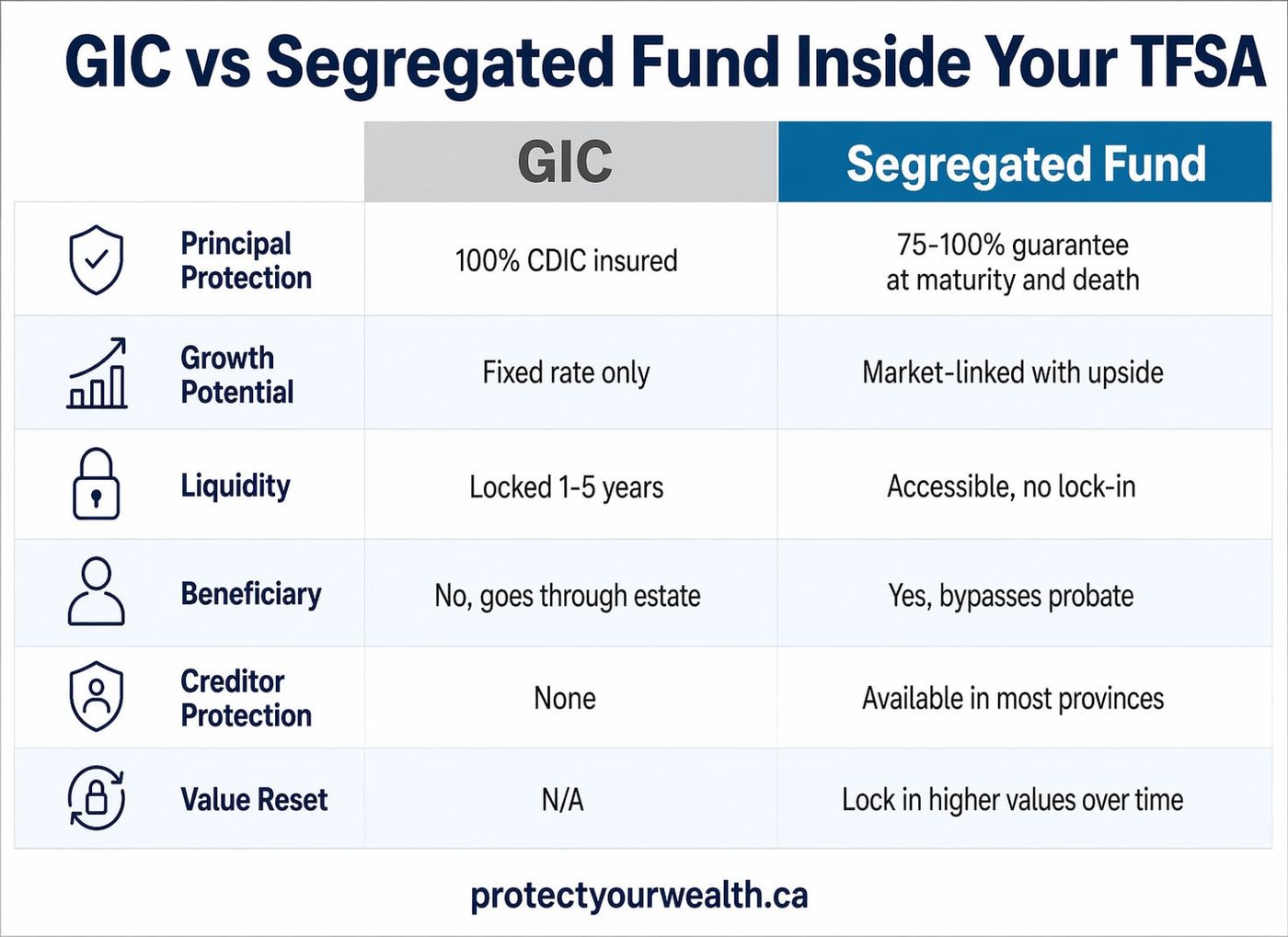
A TFSA can hold a broad array of qualified investments, identical to those permitted within an RRSP. This includes cash savings, guaranteed investment certificates (GICs), bonds, mutual funds, exchange-traded funds (ETFs), and publicly traded stocks on eligible exchanges. The specific investments available depend on the type of account and the financial institution where it is held. For example, a TFSA at a bank may offer cash deposits and GICs, while a self-directed TFSA at a brokerage can hold individual stocks, bonds, and ETFs. Eligible investments also extend to certain shares of private corporations, certain debt obligations, instalment receipts, trust interests including real estate investment trusts, annuity contracts, warrants, rights, options, registered investments, royalty units, partnership units, and depository receipts, and money can be denominated in any currency.
The choice of institution shapes the account's functionality and the investment selection process. Many banks offer advisor-guided TFSAs that provide access to mutual funds and segregated funds with professional management, and they may offer access to an advisor in-person, by phone, or over video. Discount brokerages offer self-directed TFSAs for investors who prefer to make their own trading decisions in stocks, options, ETFs, mutual funds, bonds, and GICs, and these accounts are ideal if you want to make your own investment decisions. Some institutions also offer hybrid robo-advisor models that use algorithm-driven ETF portfolios designed for different investor risk profiles, which are ideal if you want to invest online and access portfolio advisors. Regardless of the provider type, all investment income earned within the account shelter remains free from Canadian income tax, and you can invest in both Canadian and US dollar components within your TFSA at some brokerages.
Key Differences from an RRSP
The TFSA and the Registered Retirement Savings Plan (RRSP) are both registered accounts with tax advantages, but their structures are fundamentally different and essentially opposite in tax treatment. An RRSP provides an upfront tax deduction for contributions, which reduces taxable income in the year of contribution, and withdrawals of both contributions and investment income are all taxable. In contrast, TFSA contributions are made with after-tax money and provide no immediate tax deduction, but all withdrawals are entirely tax-free. The CRA describes the TFSA as being for everything else in your life, while an RRSP is primarily intended for retirement, and interest paid on money borrowed to invest in either a TFSA or RRSP is not tax deductible.
Other important distinctions involve lifecycle rules and impact on government benefits. An RRSP must be converted to a Registered Retirement Income Fund (RRIF) by the end of the year the holder turns 71, triggering mandatory minimum withdrawals. A TFSA has no such requirement, does not expire, and can be maintained indefinitely. Withdrawals from a TFSA do not count as income, so they do not affect eligibility for federal income-tested benefits like the Guaranteed Income Supplement (GIS) or Old Age Security (OAS) or credits such as the Age Credit. RRSP/RRIF withdrawals are considered taxable income and can reduce these benefits. Furthermore, if an account holder withdraws funds from a TFSA, their contribution room is increased by that amount on January 1 after the withdrawal, whereas RRSP contribution room is not increased to reflect withdrawals.
Important Considerations and Risks
While TFSAs offer significant advantages, account holders must be aware of specific rules and potential pitfalls. Over-contribution is a common error, resulting in a costly penalty of 1% per month on the excess amount, and an over-contribution occurs if an individual whose TFSA contributions have already been maximized mistakenly believes a withdrawal immediately creates contribution room and re-contributes later the same calendar year. Another critical consideration is the general lack of creditor protection for assets held within a TFSA in the event of bankruptcy or a financial judgement, unlike the protection generally afforded to RRSPs. Protection may only be available if the TFSA holdings are in certain segregated fund contracts with an insurance company, which are insurance products that can provide this feature.
For investors holding U.S. dividend-paying stocks, a notable drawback exists because a TFSA is not considered by the United States Internal Revenue Service to be a pension plan. The Canada-U.S. tax treaty exemption from the 15% U.S. withholding tax on dividends, which applies to RRSPs and RRIFs, does not extend to TFSAs. This tax is withheld at source and cannot be recovered or credited against other payable taxes as would be the case with non-registered accounts. Some financial products use swap agreements to replicate returns without directly holding the stocks, but these often involve fees from the counterparty and the fund's own management fee that may exceed the withholding tax cost. Furthermore, U.S. citizens and residents face complex reporting requirements and potential adverse tax treatment from the Internal Revenue Service (IRS) for holdings within a Canadian TFSA.
- U.S. Tax Reporting: A TFSA may be considered a Passive Foreign Investment Company (PFIC) or a grantor foreign trust by the IRS, requiring complex forms like 8621, 3520A, and 3520, with Form 3520A due March 15 and Form 3520 due with Form 1040.
- PFIC Taxation: Absent certain elections, distributions from a PFIC can be taxed at the highest marginal rate, with income averaged over the investment's duration and interest charged retroactively from the date the income is deemed to have occurred, leading to effective tax rates as high as 50% or more.
- Earnings Taxed by U.S.: All investment income earned inside a TFSA is fully taxable by the United States for U.S. citizens and residents, and Canadian mutual funds held in TFSAs are generally considered PFICs.
For U.S. citizens and U.S. residents, a TFSA can be disadvantageous from a tax perspective. Canadian mutual funds held in TFSAs are generally considered by the IRS to be passive foreign investment companies. U.S. citizens must report these on IRS Form 8621. A TFSA may also be considered a grantor foreign trust, requiring the filing of IRS Forms 3520A and 3520. These forms are complex and involve significant penalties for late filing. Earnings inside a TFSA are taxed by the United States. Professional cross-border tax advice is strongly recommended due to these significant penalties.
Provincial Rules and Account Opening
While the federal government sets the core rules for TFSAs, provincial regulations concerning the age of majority can affect when an individual can actually open an account. The federal rule states that TFSA contribution room begins to accumulate at age 18. However, in provinces where the age of majority is 19, financial institutions may not allow an individual to open a TFSA until they reach that provincial age. This applies to residents of British Columbia, New Brunswick, Newfoundland and Labrador, Nova Scotia, the Northwest Territories, Nunavut, and Yukon. Despite this delay in opening an account, the individual's contribution room continues to accrue from age 18, and they can make a lump-sum contribution up to their cumulative limit once they are eligible to open the account.
Any Canadian resident with a valid Social Insurance Number (SIN) who has reached the age of majority in their province can open a TFSA. Newcomers to Canada begin accumulating contribution room in the year they become residents. There is no minimum contribution amount required to open an account at many institutions, though specific investment products within the account may have their own minimums. Individuals can have multiple TFSAs at different institutions, but the total contributions across all accounts must not exceed their personal contribution room. Transfers between TFSAs at different institutions are possible without affecting contribution room, but they must be done as direct transfers initiated by the financial institutions to avoid being treated as a withdrawal and a re-contribution.
International Comparisons
The Canadian TFSA shares similarities with tax-advantaged savings accounts in other countries, though with distinct features that often provide greater flexibility. It is most often compared to the Roth Individual Retirement Account (IRA) in the United States. Both accounts are funded with after-tax dollars and allow for tax-free growth and qualified withdrawals. A TFSA is similar to accounts in other countries. It is similar to a Roth individual retirement account in the United States, although a TFSA has no withdrawal restrictions. In the United Kingdom, similar tax advantages have been available in Personal Equity Plans and Individual Savings Accounts since 1986. South Africa launched its Tax-Free Investment accounts on March 1, 2015. The Canadian TFSA's design includes flexibility and a lack of withdrawal restrictions. Any unused contribution room can be carried forward to subsequent years without any upward limit. This makes it a unique and powerful component of Canada's personal savings landscape. It is intended to encourage saving and investing for goals like a car, home, vacation, or retirement.
Frequently asked questions
What is the TFSA contribution limit for 2026?
The annual TFSA contribution limit for 2026 is $7,000. This is in addition to any unused contribution room carried forward from previous years. The total cumulative contribution room for an individual who has been eligible since 2009 is $109,000 as of January 1, 2026. Contribution limits are indexed to inflation and can change in future years in $500 increments.
Can I withdraw money from my TFSA anytime?
Yes, you can withdraw money from your TFSA at any time, for any reason, and the withdrawal is completely tax-free. The amount withdrawn is added back to your contribution room, but not until January 1 of the following calendar year. If you re-contribute the withdrawn amount in the same year, it may cause an over-contribution if you have no remaining room. Some investments like non-redeemable GICs must be held until maturity before withdrawal, so your timing does depend on the investments you hold.
What is the difference between a TFSA and an RRSP?
The main difference is in the tax treatment. RRSP contributions are tax-deductible, reducing your taxable income now, but withdrawals are fully taxed. TFSA contributions are made with after-tax money and provide no deduction, but withdrawals are tax-free. Additionally, RRSPs must be converted to a retirement income plan by age 71, while TFSAs have no age limit or mandatory withdrawals. TFSA withdrawals also do not affect income-tested government benefits like OAS and GIS, whereas RRSP withdrawals do.
How do I find my TFSA contribution room?
You can find your TFSA contribution room by logging into the Canada Revenue Agency's My Account service online. The CRA reports contribution room annually based on information from financial institutions. However, this information may not be fully updated until after the end of February each year, as institutions have until then to report the previous year's transactions. It is crucial for contributors to track their own contributions and withdrawals because the CRA's figure can be outdated, especially early in the year. The CRA does not provide tax slips for TFSAs, making personal record-keeping essential to avoid over-contributions.
What happens if I over-contribute to my TFSA?
If you over-contribute to your TFSA, you will be subject to a penalty tax of 1% per month on the highest excess amount in the account for each month that the excess remains. The Canada Revenue Agency monitors contributions and will issue notices for over-contributions, as it did for about 74,000 taxpayers in 2012. An over-contribution occurs if you contribute more than your allowable TFSA contribution room at any time in the year. A common cause is re-contributing withdrawn funds in the same calendar year, as withdrawal room is only restored on January 1 of the following year. It is the account holder's responsibility to track contributions to avoid this tax.
What kinds of investments can I hold in a TFSA?
A TFSA can hold any investments that are eligible for a Registered Retirement Savings Plan. This includes cash, savings deposits, guaranteed investment certificates, bonds, mutual funds, publicly traded stocks on eligible exchanges, exchange traded funds, and certain shares of private corporations. The specific investment options available depend on where you open the account, such as at a bank for savings products or a brokerage for self directed trading. Eligible investments also extend to segregated funds, annuity contracts, trust interests like real estate investment trusts, and various debt obligations. The account is not limited to cash savings despite its name.
Sources and further reading
- Tax-free savings account (Wikipedia) en.wikipedia.org
- Tax-Free Savings Account (TFSA) - Investments rbcroyalbank.com
- Tax-Free Savings Account (TFSA) | TD Canada Trust td.com
- What is a TFSA and how does it work? getsmarteraboutmoney.ca
- Tax-Free Savings Account (TFSA) scotiabank.com
- Tax-free savings account (TFSA) canadalife.com
This article explains how things work and is not financial, tax or legal advice. Rules, limits and rates change, so check the current figures with the Canada Revenue Agency, your province or your financial institution before you act.