The initial public offering (IPO) of SpaceX on June 12, 2026, was the largest in history, raising $86 billion and valuing the aerospace company at approximately $1.75 trillion. The stock, trading on the Nasdaq under the ticker SPCX, surged 19% on its first day of trading. For Canadian investors, the listing provides direct access to a global leader in space technology and satellite internet through standard brokerage accounts. This event marked a significant moment for public market investment in the high-growth aerospace and telecommunications sectors.
What Was the SpaceX IPO?
The SpaceX initial public offering was the process by which the privately held aerospace manufacturer first sold its shares to the public on a stock exchange. The company completed its IPO on June 12, 2026, listing on the Nasdaq stock exchange. The offering price was set at $135 per share, and the company sold 555.6 million shares to raise approximately $75 billion, with total gross proceeds reaching $86 billion. This fundraising event established a new record as the largest IPO ever conducted, surpassing all previous offerings. The debut gave SpaceX a staggering valuation of about $1.75 trillion, placing it among the world's most valuable companies immediately upon going public.
On its first day of trading, the share price experienced significant demand, closing at $160.95, which represented a 19 percent gain from the offering price. This first-day surge is commonly referred to as an IPO pop. The listing made SpaceX stock accessible to retail and institutional investors worldwide, including those in Canada. The company's decision to go public provided it with substantial capital to fund its ambitious projects, including the expansion of its Starlink satellite internet constellation and the development of its Starship launch vehicle. The IPO also created a public market for existing shareholders, including employees and early investors, to eventually monetize their holdings.
Company History and Path to Going Public
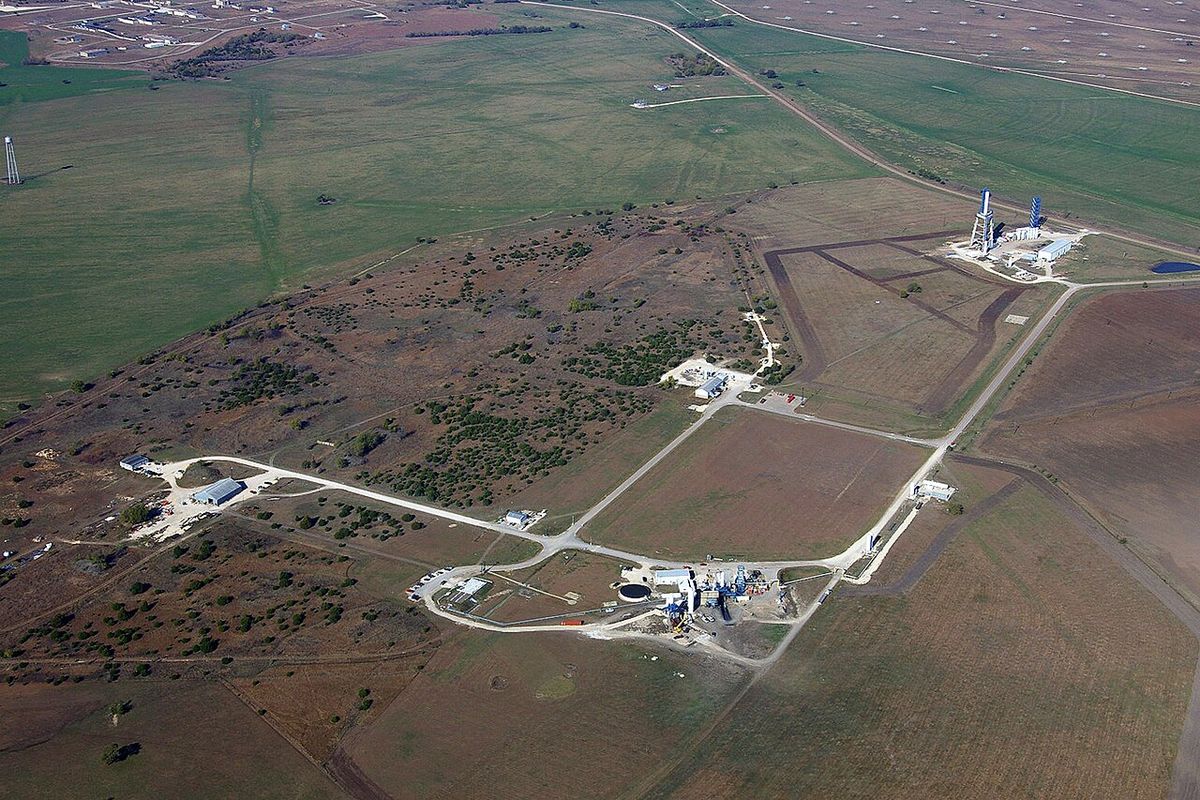
SpaceX was founded in 2002 by Elon Musk with the goal of reducing space transportation costs and enabling the colonization of Mars. The company's early years were fraught with financial difficulty, nearly ending after three consecutive launch failures of its first rocket, the Falcon 1, between 2006 and 2008. The company's fortunes turned with its first successful launch in September 2008, followed by a crucial $1.6 billion Commercial Resupply Services contract from NASA in December of that year. This contract financially saved the company and set the stage for its subsequent growth in the launch services market. By December 2010, the company's production line was manufacturing one Falcon 9 rocket and one Dragon spacecraft every three months.
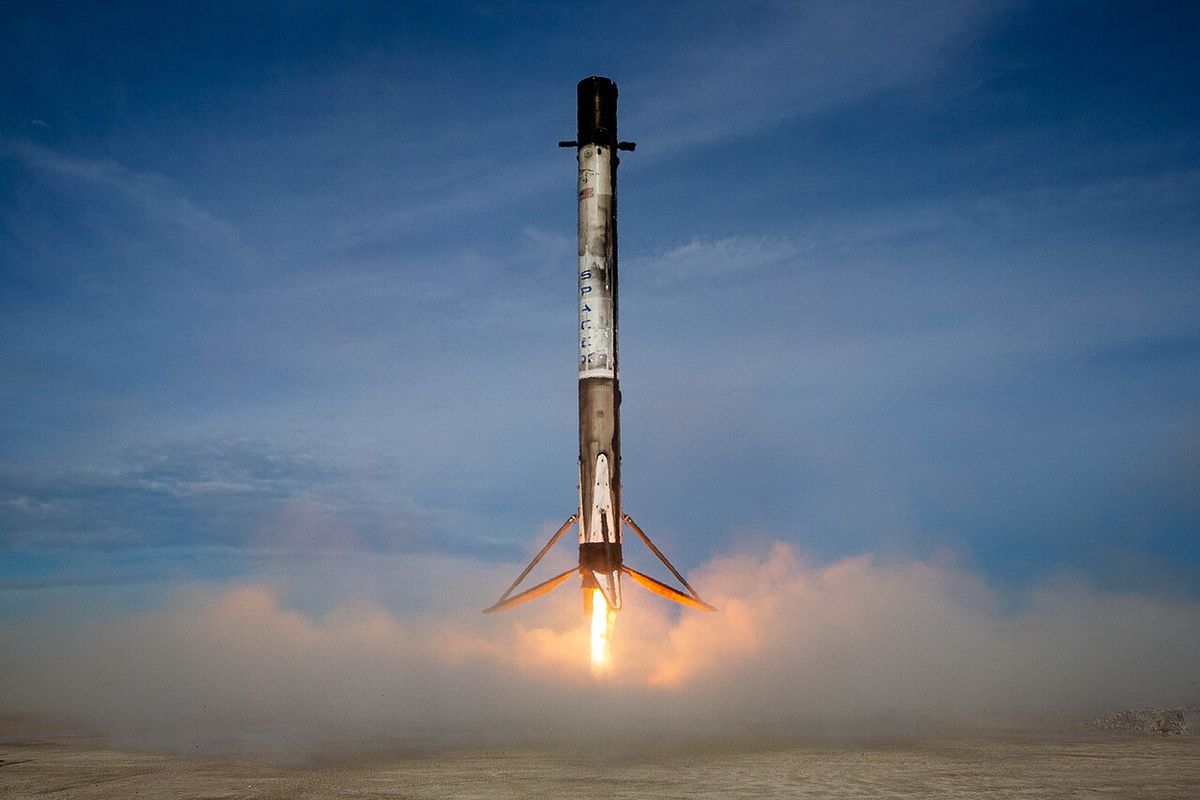
Key technological milestones defined SpaceX's rise and increased its private valuation ahead of the public offering. The company's active reusability test program began in late 2012, leading to the first successful landing of an orbital-class rocket booster in December 2015. The first reflight of a used booster occurred in March 2017. The company diversified its revenue significantly with the launch of its Starlink satellite internet constellation, beginning with a large batch of 60 satellites in May 2019. By 2022, Starlink had over 6,000 satellites in orbit and had become a major income source. The timeline of SpaceX's development includes several critical funding and valuation events.
- 2006: Awarded $396 million by NASA under the Commercial Orbital Transportation Services (COTS) program.
- January 2015: Raised $1 billion from Google and Fidelity, achieving a $12 billion valuation.
- May 2019: Valuation rose to $33.3 billion.
- August 2020: After a $1.9 billion raise, valuation increased to $46 billion.
- February 2021: Raised $1.61 billion, lifting valuation to approximately $74 billion.
- October 2021: Valuation reached $100.3 billion.
- 2022: A funding round valued the company at $127 billion.
- June 2026: Acquired AI company xAI and announced joint venture with Tesla to build Terafab semiconductor plant.
SpaceX expanded through strategic moves, including the 2026 acquisition of Elon Musk's artificial intelligence company xAI. This company was subsequently operated as the wholly owned subsidiary SpaceXAI. A series of large private funding rounds occurred before the initial public offering. For instance, the company raised $1.33 billion across three rounds in 2019. Another significant raise of $1.9 billion occurred in August 2020. These rounds demonstrated sustained investor interest during the company's private phase. The company's total funding over its first decade of operation was approximately $1 billion. Of this amount, private equity provided about $200 million. Elon Musk invested approximately $100 million of his own capital during that period.
How Canadian Investors Can Access SpaceX Shares
Canadian investors can purchase shares of SpaceX just like any other publicly traded U.S. stock, as it lists on the Nasdaq exchange under the ticker SPCX. To buy shares, an investor needs a self-directed brokerage account that provides access to U.S. markets. Many Canadian brokerages and online trading platforms, such as Questrade, RBC Direct Investing, and Wealthsimple Trade, offer this access. Investors must convert Canadian dollars to U.S. dollars to make the purchase, and some platforms offer competitive currency conversion rates. Once the account is funded, investors can place market or limit orders for SPCX shares during regular trading hours.
Some brokerages also offered Canadian clients the opportunity to participate in the IPO itself by submitting conditional offers to buy shares at the offering price before trading began. For example, Wealthsimple allowed eligible clients to request shares through its platform, though allocation was not guaranteed. The process typically involved expressing interest during the offering period, after which the brokerage would notify the client on the IPO day if they received an allocation. If demand exceeded the shares available to the brokerage, allocations were made based on a disclosed, weighted selection process. The specific steps for participating in an IPO through a platform like Wealthsimple generally follow a defined sequence.
- Check the brokerage's up-to-date list of IPO offerings and select the SpaceX IPO.
- Enter the number of shares you want to buy as a conditional offer to buy.
- The brokerage reserves the requested amount with the money you have available.
- Wait for notification once the IPO price is finalized. Orders can be cancelled before the bidding deadline.
- On the IPO day, the brokerage notifies you of your share allocation, which may be all, some, or none of your request.
- If you receive shares, they are deposited into your trading account. Unused cash is released back.
Investors who did not participate in the initial public offering can buy shares on the open market now that the stock is publicly traded. Brokerages acquire new issues on a best-efforts basis for their clients. This means they cannot guarantee any client will receive the number of shares they request. All clients in Canada are able to access American initial public offerings. This access is permitted so long as the offerings are marketed in Canada by way of a prospectus. The SpaceX offering was marketed in Canada with a prospectus.
Financial Details and Valuation Debate
The financial scale of the SpaceX IPO was unprecedented. The company aimed to raise between $50 billion and $80 billion, ultimately achieving gross proceeds of $86 billion. The $135 per share price valued the company at approximately $1.75 trillion. This valuation was primarily driven by the growth prospects of its Starlink broadband internet business and its dominant position in the global commercial launch market. In 2022, SpaceX conducted 61 launches, the most ever by a single vehicle type in a year, and by May 2026, Falcon 9 launches averaged about three missions per week. The company's contract backlog was substantial, with more than 100 launches on its manifest representing about $12 billion in contract revenue as of March 2018.
Despite the market enthusiasm, significant debate surrounded the IPO valuation. Some analysts considered the offering price to be high relative to the company's financial performance. Research firm Morningstar published an analysis suggesting SpaceX was significantly overvalued, estimating a fair value of $63 per share, a 53 percent discount to the $135 IPO price. The company's own regulatory filings disclosed a history of net losses and stated it may not achieve profitability in the future. These factors contributed to the investment risk profile, highlighting the disparity between market hype and fundamental analysis. The debate extended to the unprecedented size of the offering and the high valuations sought by other technology firms planning IPOs around the same time.
Risks and Governance Considerations for Investors
Investing in the SpaceX IPO and its subsequent public shares carries several layers of risk. First, the company operates in the capital-intensive and technically complex aerospace sector, where development timelines are long and missions can fail, as seen in the Falcon 1 failures and the 2015 CRS-7 explosion. Second, despite its revenue growth, SpaceX has a history of net losses, and future profitability is not guaranteed. Third, the stock's valuation at IPO was exceptionally high, creating potential for volatility if the company fails to meet lofty growth expectations. These factors combine to make the investment speculative, particularly for retail investors.
Governance structure presents another key consideration. Elon Musk owns 39 percent of SpaceX's outstanding shares and controls 84 percent of the voting power through super-voting stock. This concentration of control means public shareholders have limited influence over corporate decisions. Furthermore, post-IPO trading can be volatile due to lock-up expirations. Early investors and employees were subject to lock-up periods preventing them from selling shares immediately, with significant institutional investors like Musk locked up for 366 days after the IPO. When these lock-ups expire, increased selling pressure can push the share price lower. Investors must be prepared for the possibility of losing their entire investment. Specific risks associated with the company's operations and the IPO process include the following.
- Technical Failure Risk: Rocket launches can fail, destroying payloads. The AMOS-6 satellite worth $200 million was destroyed in a 2016 pre-launch test explosion.
- Profitability Uncertainty: The company's SEC filings state a history of net losses and an uncertain path to future profitability.
- High Valuation: The $1.75 trillion IPO valuation was challenged by analysts who believed it was not supported by fundamentals.
- Retail Access Limitations: While SpaceX allocated up to 30% of IPO shares to retail investors, receiving an allocation through a brokerage was not guaranteed.
- Lock-Up Expirations: Sales by early investors after lock-up periods end can create downward pressure on the share price.
- Concentrated Control: Elon Musk's 84% voting power limits traditional public company governance and shareholder influence.
SpaceX's Business Segments and Market Position
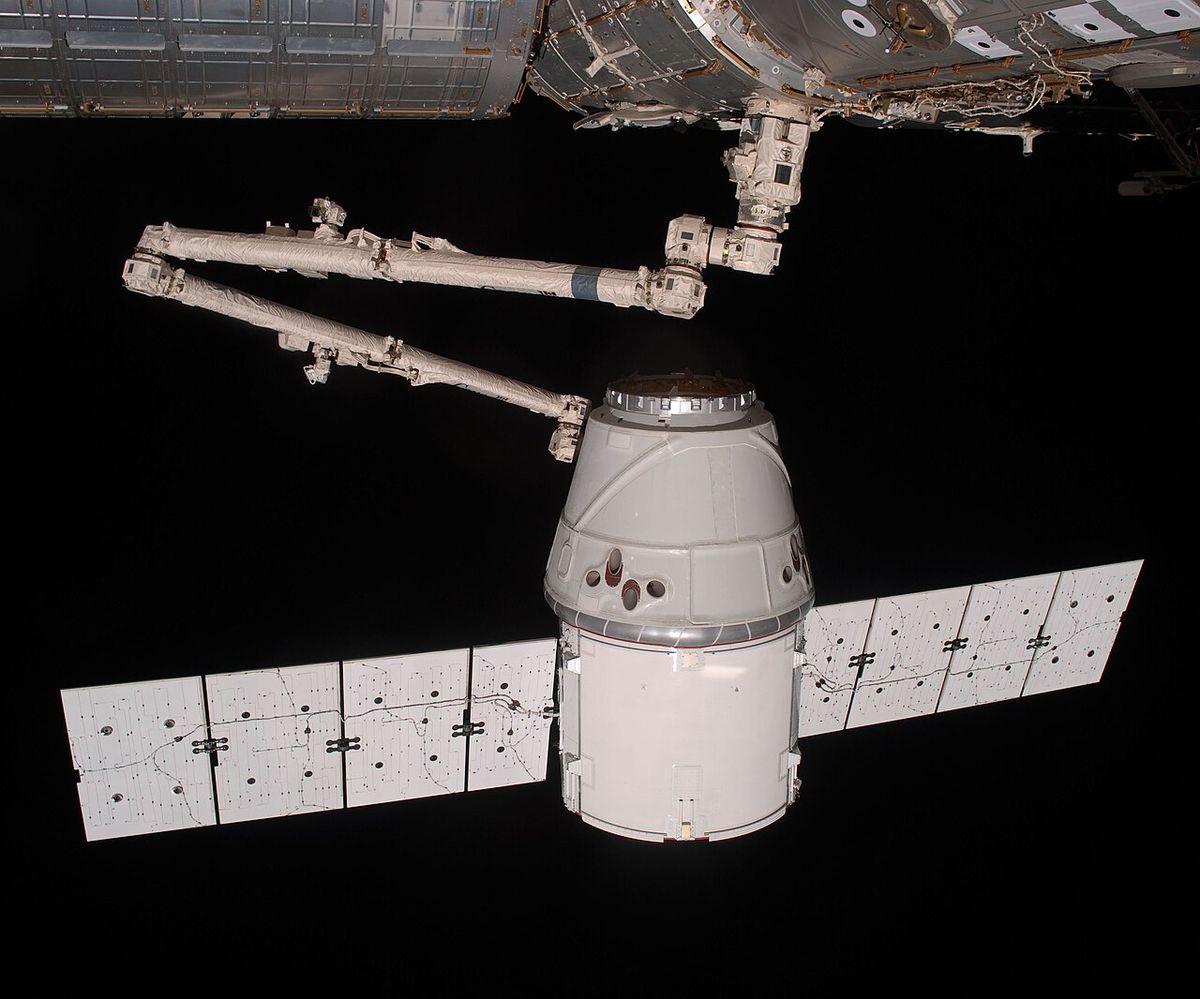
SpaceX operates three primary business segments that form the basis of its valuation. The Space segment develops and flies launch vehicles like the Falcon 9, Falcon Heavy, and the in-development Starship, as well as the Dragon spacecraft. This segment made SpaceX the leading global commercial launch provider by manifested launches as of 2018, conducting more orbital launches annually than any other entity. Its largest customers include NASA, the United States Space Force, and the National Reconnaissance Office. The company's success in achieving rocket reusability has been a key factor in reducing costs and securing market share. By May 2026, Falcon boosters had completed nearly 650 landings and reflights.
The Connectivity segment operates the Starlink satellite constellation, a low-Earth orbit network providing high-speed broadband internet globally. Starlink has generated the bulk of SpaceX's income since its deployment and has a military counterpart called Starshield. The AI segment is conducted through the wholly owned subsidiary SpaceXAI, which develops the Grok family of large language models, operates the social network X, and builds large-scale data centres. This diversification across space transportation, telecommunications, and artificial intelligence forms the core investment thesis for the company's future growth. The company's market influence extends to affecting competitors. In 2014, Arianespace requested additional European government subsidies to face competition from SpaceX.
Post-IPO Trading, Market Impact, and Index Inclusion
Following its debut, SpaceX shares began trading publicly with the high volatility typical of major IPOs. The first-day pop of 19 percent demonstrated strong retail and institutional demand. The stock's ongoing performance is closely tied to the operational and financial results of its Starlink business and its launch cadence. As a newly public company, SpaceX is now subject to quarterly earnings reports and greater public scrutiny of its financials and operations. Its inclusion in major indices, such as the Nasdaq-100, which relaxed rules to allow quicker inclusion of new listings, means that many index funds and exchange-traded funds (ETFs) automatically hold the stock, broadening its investor base. Anyone who owns a fund that tracks the index will likely end up owning a slice of SpaceX.
The IPO's success has implications for the broader market, potentially kicking off a wave of large technology listings. Other prominent AI firms like Anthropic and OpenAI have also filed for IPOs with valuations nearing $1 trillion each. For the space industry, SpaceX's public listing provides a benchmark for valuing other private aerospace companies and could increase investment in the sector. For Canadian investors, the listing offers a rare opportunity to gain exposure to a pure-play global aerospace and satellite technology leader, diversifying portfolios that are often heavily weighted in traditional Canadian sectors like financials and resources. The event also highlighted the evolving role of online brokerages in democratizing access to high-profile IPOs for retail investors in Canada.
Pre-IPO Private Market and Secondary Trading
Before its historic public offering, SpaceX stock was privately held and traded on private markets. Platforms like the Nasdaq Private Market facilitated transactions for accredited investors and employees. According to data from that platform, the estimated share price for SpaceX was $141.09 as of June 11, 2026, the day before the IPO, reflecting final private market activity. Private company valuations leading up to the IPO were tracked through such secondary market data, which institutional investors relied on for due diligence. The process for selling private shares before an IPO involved specific steps and eligibility criteria, and these private markets provided a glimpse into the company's perceived value before the public set the price.
Employees, former employees, and other shareholders of private companies like pre-IPO SpaceX could explore selling their shares through a secure and compliant platform. Nasdaq Private Market worked with such shareholders to facilitate transactions on terms agreeable to both the seller and the company. Following the IPO, these private market sales are no longer the primary method of liquidity, as shares can be sold through any public brokerage. The transition from a private to a public company marks a significant shift in how shares are valued, traded, and regulated, providing transparency and access to a much larger pool of investors worldwide, including in Canada.
Frequently asked questions
What is the SpaceX stock ticker symbol?
SpaceX trades on the Nasdaq stock exchange under the ticker symbol SPCX. The company began trading on June 12, 2026. Canadian investors can find the stock listed as SPCX.TO for trading on Canadian platforms. The ticker symbol is used to access vital stock quote information and history for trading purposes.
How much did the SpaceX IPO raise?
The SpaceX IPO raised $86 billion, which is the largest initial public offering in history. The offering occurred on June 12, 2026. The company had targeted gross proceeds between $50 billion and $80 billion, ultimately surpassing that range. This massive fundraising event was a key moment in the company's financial history.
What was the IPO price and first-day closing price?
The SpaceX IPO was priced at $135 per share. On its first day of trading, June 12, 2026, the share price surged 19 percent. This increase resulted in a first day closing price of $160.95. The IPO price valued the company at $1.8 trillion US, marking an unprecedented valuation for a public debut.
Who are the major owners of SpaceX after the IPO?
Elon Musk remains the largest shareholder, owning 39 percent of the outstanding shares. He also controls 84 percent of the voting power through his super-voting stock. Early institutional investors like Google and Fidelity Investments have previously held stakes. The IPO provided liquidity but did not significantly alter Musk's controlling ownership structure.
What are the main risks of investing in SpaceX stock?
Key risks include the company's high valuation at IPO, set at $1.8 trillion. The aerospace industry carries inherent technical and operational risks, as seen in past launch failures. Elon Musk's concentrated voting control at 84 percent limits shareholder influence. Furthermore, the company has historically required significant capital for projects like Starlink and Starship, impacting financials.
Sources and further reading
- SpaceX (Wikipedia) en.wikipedia.org
- How to Buy SpaceX Stock in Canada After IPO? moomoo.com
- Get shares at IPO prices, before the market does wealthsimple.com
- SpaceX kicks off wave of monster IPOs cbc.ca
- SpaceX IPO Overview & Pre-IPO History nasdaqprivatemarket.com
- IPO Centre | Latest IPOs and new issues questrade.com
This article explains how things work and is not financial, tax or legal advice. Rules, limits and rates change, so check the current figures with the Canada Revenue Agency, your province or your financial institution before you act.