Shopify Inc. is a Canadian multinational e-commerce company headquartered in Ottawa, Ontario. It provides a cloud-based commerce platform that enables businesses of all sizes to sell products online and in person through retail point-of-sale systems. The company serves over five million customers globally and processed US$292.3 billion in transactions in 2024. For Canadian entrepreneurs and global brands alike, Shopify offers a comprehensive suite of tools to start, scale, and manage a retail business.
What Shopify Is and How It Works
Shopify is a commerce technology company that provides a cloud e-commerce management platform. The platform offers a centralized system for merchants to manage products, inventory, orders, payments, shipping, and customer relationships. Businesses use Shopify to create online storefronts, manage physical retail locations through point-of-sale systems, and sell across social media channels and marketplaces. The software is designed for ease of use, allowing entrepreneurs to launch a store with minimal technical expertise. Shopify Payments is a fully integrated payment processing service that allows merchants to accept card payments online and offline without a third-party gateway. The company also provides tools for analytics, reporting, financing through Shopify Capital, and domain registration. Major global brands using the platform include Tesla, LVMH, Nestlé, PepsiCo, AB InBev, Kraft Heinz, Lindt, Whole Foods Market, Red Bull, and Hyatt.
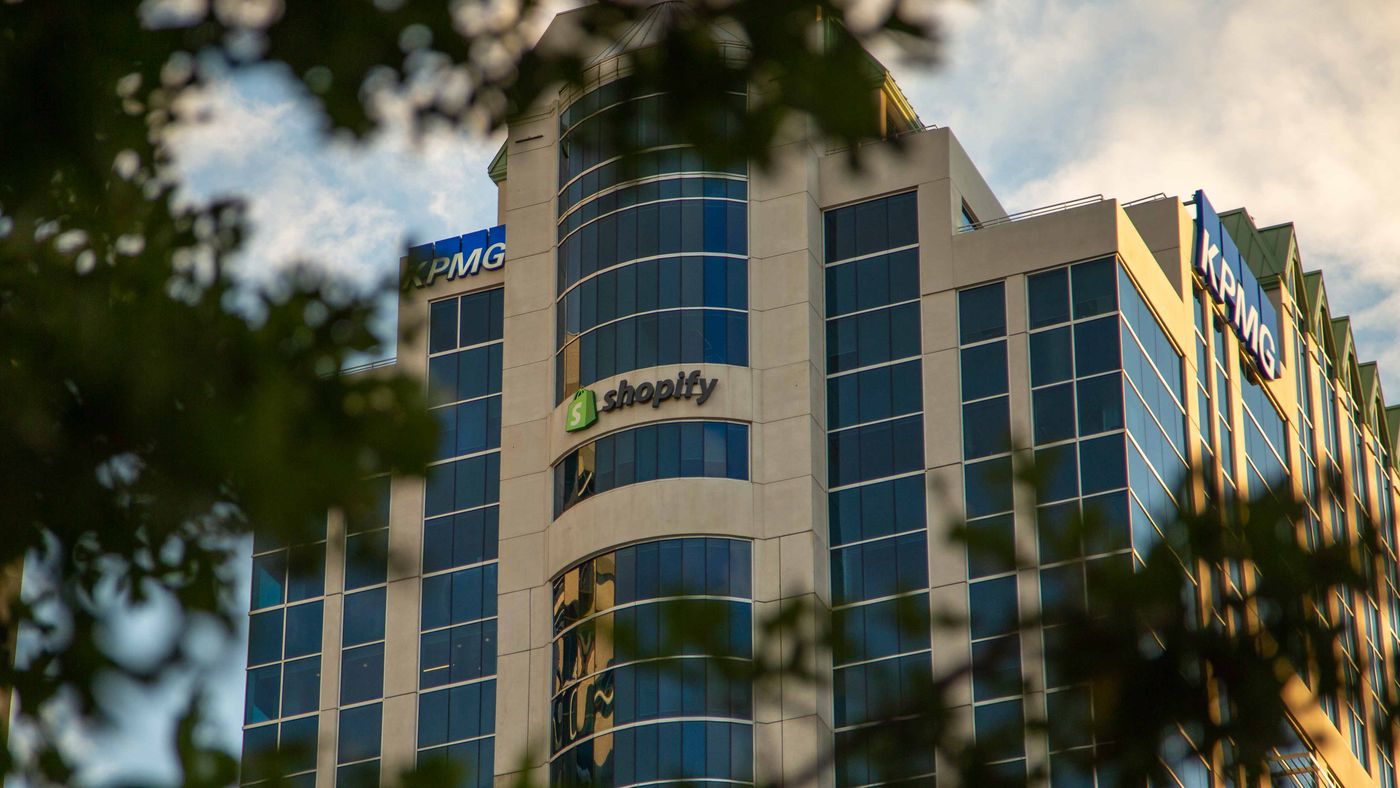
Company History and Major Milestones
Shopify originated from an online snowboarding equipment store called Snowdevil, launched in 2004 by founders Tobias Lütke, Daniel Weinand, and Scott Lake. Dissatisfied with existing e-commerce tools, Lütke built a new platform using Ruby on Rails, leading to the official launch of Shopify in June 2006. The company created its own open-source template language called Liquid that same year. A major development came in June 2009 with the launch of the Shopify App Store and an API platform, allowing third-party developers to create applications for the ecosystem. The company secured its first major venture capital, a $7 million Series A round at a $20 million pre-money valuation, in December 2010 when it had an annualized transaction value of $132 million.
The 2010s saw rapid expansion and product diversification. Shopify launched its own payment system, Shopify Payments, in partnership with Stripe in August 2013 and announced a point-of-sale system for in-person sales. The company went public on the New York Stock Exchange and Toronto Stock Exchange in May 2015, raising over $131 million. Key acquisitions during this period included design studio Jet Cooper in 2013 and warehouse robotics company 6 River Systems in 2019 for US$450 million. The 2020s brought further growth and strategic shifts. During the COVID-19 pandemic, Shopify shifted to a permanent remote work model and its stock prices were lifted by increased online shopping. The company made a major foray into logistics with the US$2.1 billion acquisition of Deliverr in 2022, but wound down its logistics arm in May 2023, selling those assets to Flexport and Ocado Group. In early 2026, the company reported full-year 2025 revenue of $11.56 billion, a 30% increase from the previous year, driven by B2B sales and AI commerce tools.
Shopify was founded in 2006 after its founders launched an online store for snowboarding equipment in 2004. The company launched its App Store and API platform in June 2009. In August 2013, Shopify launched Shopify Payments in partnership with Stripe and announced a point of sale system. The company went public via an initial public offering on May 21, 2015. In January 2020, the company announced plans to hire in Vancouver, Canada.
- 2006: Shopify is officially founded after the launch of the Snowdevil store, and the Liquid template language is created.
- 2009: The Shopify App Store and API platform launch, enabling third-party app development.
- 2013: Shopify Payments launches in partnership with Stripe, and the company acquires Jet Cooper.
- 2015: Shopify holds its initial public offering (IPO) on May 21.
- 2016: Shopify Capital, a cash advance product for merchants, is announced in April.
- 2019: The company acquires 6 River Systems and launches the Shopify Fulfillment Network.
- 2022: Shopify acquires Deliverr for US$2.1 billion and lays off roughly 10% of its workforce in July.
- 2025: The company transfers its U.S. stock listing from the NYSE to the Nasdaq and reports $11.56 billion in annual revenue.
- 2026: Shopify announces the Universal Commerce Protocol with Google and a $2 billion share buyback program.
Shopify was initially built on Ruby on Rails and later introduced sharding to distribute its databases. The company launched Shopify Capital, a cash advance product, in April 2016. Shopify made strategic acquisitions such as Boltmade in 2016 and Deliverr in 2022. In January 2026, Shopify announced an AI project to co-develop the Universal Commerce Protocol with Google.
Key Products and Services for Merchants
Shopify's core offering is its subscription-based commerce platform, with tiered plans for businesses from startups to large enterprises. Shopify Plus is the enterprise-level plan launched in February 2014, offering advanced features and dedicated support for high-volume merchants. For payments, Shopify Payments provides integrated card processing, while Shop Pay, launched in 2017 and rebranded in 2020, is a one-click accelerated checkout system with over 150 million users worldwide by 2024. Shopify Capital, launched in April 2016, offers cash advances to merchants based on their sales history, having provided over $5.1 billion in funding with advances up to $2 million.
The Shopify App Store, launched in 2009, is a critical ecosystem component. By 2024, it hosted over 10,000 apps that extend platform functionality for marketing, accounting, inventory, and more. In 2021, Shopify reduced its revenue share to 0% for app developers earning less than US$1 million annually. For brick-and-mortar retail, Shopify provides a full point-of-sale system including hardware like card readers and retail stands. The company also offers Shopify Shipping for discounted shipping labels and has developed AI tools like Sidekick, built into the admin interface, to help automate tasks and identify growth opportunities.
Shopify provides Shopify Capital, which offers cash advances to merchants. The company offers Shopify Payments to allow merchants to accept payments without a third-party gateway. Shopify also provides a point of sale system for in-person sales. Furthermore, the company has offered logistics services, such as through its acquisition of Deliverr.
- Shopify Capital: A merchant cash advance service that has provided over $5.1 billion in funding since its 2016 launch, with maximum advances of $2 million.
- Shopify Payments: An integrated payment processor allowing merchants to accept card payments without a third-party gateway, launched in 2013.
- Shop Pay: An accelerated checkout system with saved customer information, converting up to 50% higher than guest checkout and used by over 150 million people.
- Shopify Fulfillment Network: A logistics service launched in 2019 to handle shipping for qualifying U.S. merchants, though the logistics arm was later sold in 2023.
- Shopify Shipping: A service providing discounted shipping labels directly within the merchant admin.
- Shopify Studios: A full-service television and film content production house announced in January 2019.
- Shopify Partner Directory: A public listing of certified third-party experts, agencies, and freelancers who can help merchants build and manage stores.
Shopify offers an e-commerce platform and a point of sale system. It provides Shopify Payments for payment processing and Shopify Capital for merchant funding. The company also operates an App Store with over 10,000 apps. Additionally, Shopify has developed services like Shop Pay for accelerated checkout.
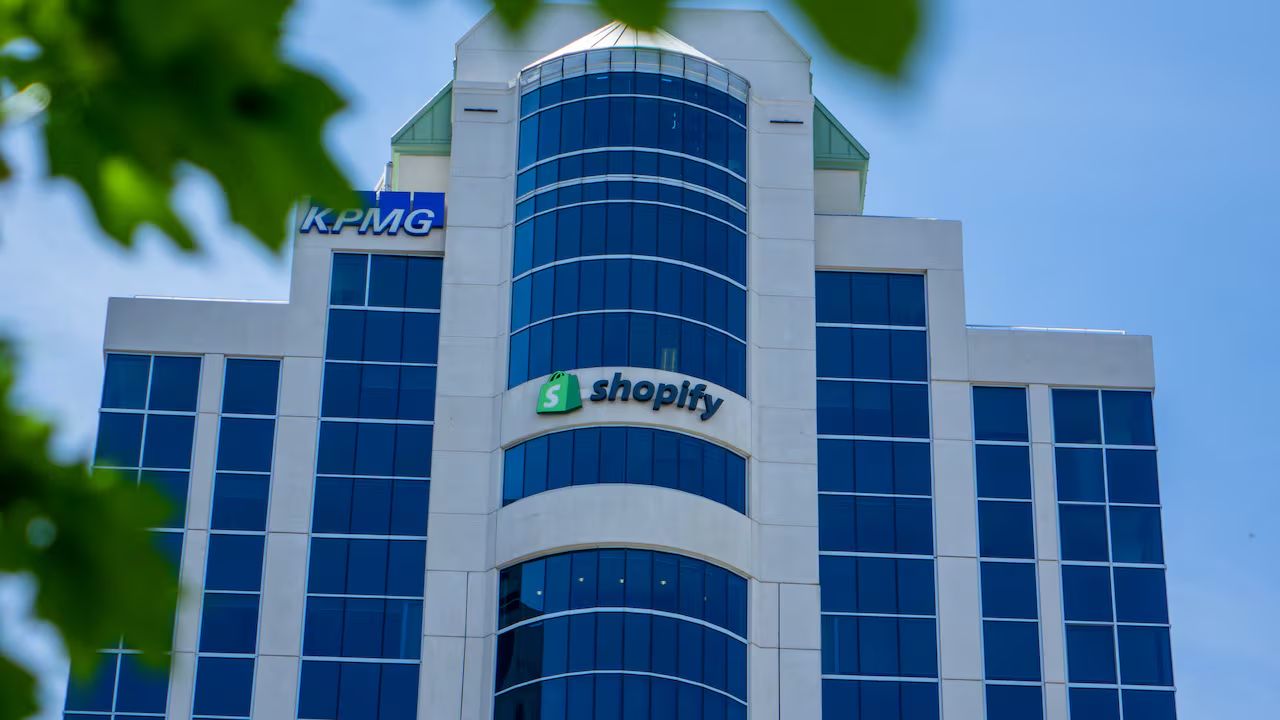
Shopify's Operations and Impact in Canada
As a Canadian-founded company headquartered in Ottawa, Shopify has a significant domestic presence and influence. The company's software played a key role in the launch of legal online cannabis sales in Ontario in October 2018 and has been used for in-person cannabis sales in the province since 2019. Shopify has expanded its physical offices within Canada, announcing plans in 2018 for a larger Toronto office space in the King West neighbourhood's The Well complex, which is jointly owned by Allied Properties REIT and RioCan REIT. The company also announced hiring plans in Vancouver in January 2020 and has made several Canadian acquisitions, including Toronto-based studios Jet Cooper and Tiny Hearts.
Shopify supports Canadian merchants with localized features, including the ability to set up taxes and payments in Canadian dollars. The Shopify Partner Directory helps connect merchants with certified Canadian experts, developers, and agencies. In 2025, company leadership engaged in public debate on trade policy, with founder Tobias Lütke criticizing the Canadian government's retaliatory tariffs against the United States after President Donald Trump enacted 25% tariffs on Canadian goods. Lütke expressed disappointment with Trump's decision but added that Trump believed Canada had not held its side of the bargain. Chief operating officer Kaz Nejatian similarly criticized Canadian policies, stating the country had turned a blind eye to being used as a training ground for foreign countries, gangs and terrorist groups.
Technology and Platform Development
Shopify's technology stack has evolved significantly since its inception. The platform was originally built on the Ruby on Rails framework using a single MySQL database. In 2014, the company introduced database sharding to distribute load across multiple systems and later moved to fully isolated instances for better performance and reliability. For front-end development, Shopify maintains Hydrogen, an open-source headless JavaScript stack built on React and Remix, launched in 2021. Developers can deploy Hydrogen storefronts to Oxygen, Shopify's managed hosting and content delivery network, which helps ensure stores run strong even during high-traffic events like product drops.
A major focus in recent years has been artificial intelligence and interoperability. In 2026, Shopify announced that its new AI search features were responsible for improving shopping conversion rates and boosting sales. The company also co-developed the Universal Commerce Protocol with Google, an open standard announced in January 2026 designed to allow AI agents to discover products and complete transactions across different platforms. In September 2026, Shopify added Meta to its Agentic Storefronts channels. Furthermore, by 2025, Shopify had migrated all its mobile applications to React Native, allowing a single codebase to be used across all client platforms, which streamlines development and maintenance.

Financial Performance and Market Position
Shopify has demonstrated substantial revenue growth, reaching $11.56 billion in total revenue for 2025, a 30% increase from 2024. The fourth quarter of 2025 alone saw revenue of $3.67 billion, a 31% year-over-year increase. This growth has been driven by expansion in business-to-business sales and the adoption of its AI commerce tools. In February 2026, alongside its earnings report, the company announced a $2 billion share buyback program. The company's gross merchandise volume is immense, with $292.3 billion in transactions processed in 2024, 57% of which originated in the United States.
The company's stock is listed on the Toronto Stock Exchange under the symbol SHOP and on the Nasdaq under the same symbol. In a notable move, Shopify transferred its U.S. listing from the NYSE to the Nasdaq Global Select Market in March 2025, began trading on Nasdaq on March 31, and became a component of the Nasdaq-100 index on May 19 at the market open. The stock has attracted significant institutional investment, with both Cathie Wood and Thrive Capital announcing nine-figure investments in May 2026. Shopify's market valuation received a boost from its early stake in Affirm, with its 8% share worth $2 billion following Affirm's IPO in January 2021, and the company was reported to likely see a valuation rise from its options in Affirm prior to that IPO.
Shopify raised $7 million in a Series A round in December 2010. The company raised $15 million in a Series B round in October 2011. Shopify went public in May 2015, raising more than $131 million. In February 2026, Shopify reported full-year 2025 revenue of $11.56 billion.
| Year | Key Financial Event or Metric |
|---|---|
| 2010 | Annualized transaction value of $132 million at time of Series A funding. |
| 2014 | Earned $105 million in revenue, double the amount raised in 2013. |
| 2015 | Raised more than $131 million in its initial public offering. |
| 2021 | 8% stake in Affirm worth $2 billion after Affirm's IPO. |
| 2024 | Processed US$292.3 billion in total transactions. |
| 2025 | Full-year revenue of $11.56 billion, up 30% from 2024. |
| 2026 | Announced a $2 billion share buyback program in February. |
In December 2010, Shopify had an annualized transaction value of $132 million. The company earned $105 million in revenue in 2014. Shopify processed US$292.3 billion in transactions in 2024. Its major customers include Tesla, LVMH, Nestlé, PepsiCo, AB InBev, Kraft Heinz, Lindt, Whole Foods Market, Red Bull, and Hyatt.
Challenges and Strategic Shifts
Shopify's rapid growth has been accompanied by strategic pivots and workforce adjustments. The company undertook significant layoffs in July 2022, cutting roughly 10% of its workforce after CEO Tobias Lütke stated that planning on continued pandemic growth rates did not pay off. A larger round of layoffs, affecting approximately 20% of employees, occurred in May 2023 alongside the sale of its logistics business. The company's foray into last-mile logistics, marked by the 2022 acquisition of Deliverr for US$2.1 billion, was short-lived. By May 2023, Shopify had sold Deliverr and 6 River Systems to Flexport and Ocado Group respectively, taking a 13% stake in Flexport and making it the platform's official logistics partner, which followed an earlier 2021 investment in Toronto-based logistics startup Swyft.
Technical outages have also posed challenges. In December 2025, Shopify's stock closed down 5.9% after a service disruption where some business owners were unable to access their admin portals or process point-of-sale sales. The company has faced partnership disputes, such as the termination of its integration agreement with email platform Mailchimp in March 2019 over customer privacy and data collection issues. Furthermore, social media sales channel partnerships have seen volatility, such as TikTok discontinuing its integrated shopping service in 2023 after a 2020 launch, though the company has established other partnerships with platforms like Twitter and Snapchat.
Acquisitions and Ecosystem Investments
Shopify has grown its capabilities and talent through a series of strategic acquisitions. Early acquisitions focused on design and mobile expertise, including Select Start Studios in 2012 along with 20 mobile engineers and designers, and Toronto-based Jet Cooper in 2013. The company acquired Toronto mobile studio Tiny Hearts in 2016, turning its building into a Shopify research and development office. Later acquisitions targeted specific commerce functionalities. In 2019, Shopify acquired Handshake, a B2B wholesale platform, and integrated its team into Shopify Plus, making founder Glen Coates Director of Product for Shopify Plus. That same year, it bought warehouse robotics firm 6 River Systems.
More recent acquisitions have focused on enhancing the checkout experience and developer tools. In 2022, Shopify acquired influencer marketing startup Dovetale and the full-stack framework Remix. In 2024, the company acquired Checkout Blocks, an app enabling no-code checkout customizations, and business communication startup Threads. Beyond acquisitions, Shopify has made strategic investments in partners, including a $100 million investment in marketing automation platform Klaviyo in 2022, making it the recommended email partner for Shopify Plus, and Klaviyo was originally launched on the Shopify App Store in 2012.
Shopify acquired Boltmade in October 2016. In 2016, Shopify acquired Kit CRM, an app designed to help merchants manage their stores. In May 2022, Shopify announced its acquisition of Deliverr for US$2.1 billion. In August 2022, Shopify made a strategic investment into Klaviyo.
- Select Start Studios (2012): Acquired for mobile engineering and design talent.
- Jet Cooper (2013): A 25-person Toronto design studio acquired to improve user experience.
- Tiny Hearts (2016): A Toronto mobile product development studio turned into a Shopify R&D office.
- Handshake (2019): A B2B e-commerce platform acquired and integrated into Shopify Plus.
- 6 River Systems (2019): A warehouse robotics company bought for US$450 million to bolster fulfillment capabilities.
- Deliverr (2022): An e-commerce fulfillment startup acquired for US$2.1 billion in cash and stock.
- Remix (2022): A full-stack TypeScript framework acquired to improve developer tools.
- Checkout Blocks (2024): An app enabling no-code checkout customizations, acquired from the Shopify App Store.
Shopify acquired Deliverr, a fulfilment startup, for US$2.1 billion. The company made a $100 million strategic investment into Klaviyo in 2022. In May 2023, Shopify sold Shopify Logistics, including Deliverr, to Flexport. Shopify had previously invested in Swyft, a logistics startup, in April 2021.
Frequently asked questions
What is Shopify used for?
Shopify is a commerce platform used to create and manage online stores and in-person retail operations. It provides tools for managing products, inventory, orders, payments, shipping, and customer relationships. Businesses use it to sell across web and mobile storefronts, physical locations, social media, and online marketplaces. The platform is used by over five million customers, from small startups to major global brands.
Is Shopify a Canadian company?
Yes, Shopify is a Canadian multinational company. It was founded in Ottawa, Ontario in 2006 and is still headquartered there. The company is publicly traded on the Toronto Stock Exchange under the symbol SHOP and on the Nasdaq as SHOP. Shopify's software was used for the launch of legal online cannabis sales in Ontario and it maintains significant office and hiring plans in Canadian cities like Toronto and Vancouver.
How much does Shopify cost?
Shopify operates on a subscription model with different pricing tiers for businesses of various sizes. The company often runs promotional offers, such as a trial period followed by a reduced rate for new merchants. Specific plan prices are detailed on the Shopify website and vary based on features and transaction volumes. The enterprise-level plan, Shopify Plus, was launched in February 2014 for large businesses seeking additional features and support.
What is Shopify Payments?
Shopify Payments is the platform's fully integrated payment processing service. It allows merchants to accept and process debit and credit card payments online and at physical point-of-sale locations without requiring a separate third-party payment gateway. It is designed to simplify the transaction process for store owners. Shopify Payments was launched in August 2013 in partnership with Stripe.
What is the Shopify App Store?
The Shopify App Store is an marketplace launched in 2009 where merchants can find over 10,000 third-party applications to add functionality to their stores. These apps help with marketing, accounting, inventory management, and more. In 2021, Shopify reduced its commission to 0% for developers earning less than US$1 million annually on the app store. A typical merchant used six apps to manage their business as of 2021.
What is Shop Pay?
Shop Pay is a one-click accelerated checkout system developed by Shopify. Launched in 2017 as Shopify Pay and rebranded in 2020, it allows customers to save their shipping and payment information for faster purchases across any participating Shopify store. By 2024, Shop Pay had over 150 million users worldwide and is also an accepted payment method on Facebook and Instagram. Shopify reports it converts up to 50% higher than guest checkout.
Sources and further reading
- Shopify (Wikipedia) en.wikipedia.org
- Shopify: Your Commerce Platform to Sell Online & In Person ... shopify.com
- Shopify Inc. (SHOP.TO) Stock Price, News, Quote & History ca.finance.yahoo.com
This article explains how things work and is not financial, tax or legal advice. Rules, limits and rates change, so check the current figures with the Canada Revenue Agency, your province or your financial institution before you act.