The Royal Canadian Mint is the Crown corporation responsible for producing all of Canada's circulation coins, including pennies before their discontinuation, as well as the loonie and toonie. It also manufactures coins for other nations and creates a wide array of collector and bullion products, such as the globally recognized Gold and Silver Maple Leaf coins. Operating under the Royal Canadian Mint Act, the mint functions in a commercial manner to serve the public interest without relying on taxpayer funding. Its operations are split between two main facilities: the historic Ottawa plant, which focuses on collector coins and bullion, and the Winnipeg plant, which produces circulation coinage for Canada and the world.
History and Development
For the first fifty years after Canadian coinage began in 1858, coins for the Province of Canada were struck at the Royal Mint in London or the private Heaton Mint in Birmingham, England. As Canada's need for coinage grew, the proposal for a domestic mint was authorized in 1901. The Ottawa branch of the Royal Mint officially opened on January 2, 1908, with Lord Grey activating the presses to strike the first coin, a 50-cent piece. When Canada became an independent dominion in 1931, the mint's assets were transferred to the Canadian government, and it was formally established as the Royal Canadian Mint, a branch of the Department of Finance, in December of that year.
By the 1960s, the Ottawa mint had reached capacity, forcing some coin production to occur in the United States and Hull, Quebec. A 1968 study deemed the Ottawa facility antiquated. In April 1969, the mint was reorganized as a Crown corporation under the Royal Canadian Mint Act, granting it greater autonomy and a commercial mandate. To expand capacity, a controversial decision was made to build a new facility in Winnipeg, proposed by Supply and Services Minister James Richardson, who was from that city. Despite being over 1,600 kilometres from Ottawa, the proposal was accepted in December 1971 after a study showed merits like sourcing raw materials from Alberta. Construction began in 1972, and the Winnipeg facility opened in 1976. A significant modern change occurred in March 2012 when the Canadian government decided to cease penny production, with the final penny minted in Winnipeg on May 4, 2012.
Organizational Structure and Governance
The Royal Canadian Mint operates as a Crown corporation, meaning it serves the public interest but is mandated to function in anticipation of profit, operating commercially without taxpayer support. It has a board of directors composed of a chair, the president and CEO, and eight other directors. The board is accountable to the Minister of Finance, who serves as the link between the mint, Cabinet, and Parliament. The president and CEO, traditionally known as the master of the mint, is Marie Lemay, appointed in 2019. The mint has four primary lines of business: Bullion and Refinery Service, Canadian Circulation, Foreign Business, and Numismatics. It was named one of Canada's Top 100 Employers by Mediacorp Canada Inc. from 2007 to 2010.
Production Facilities and Their Roles
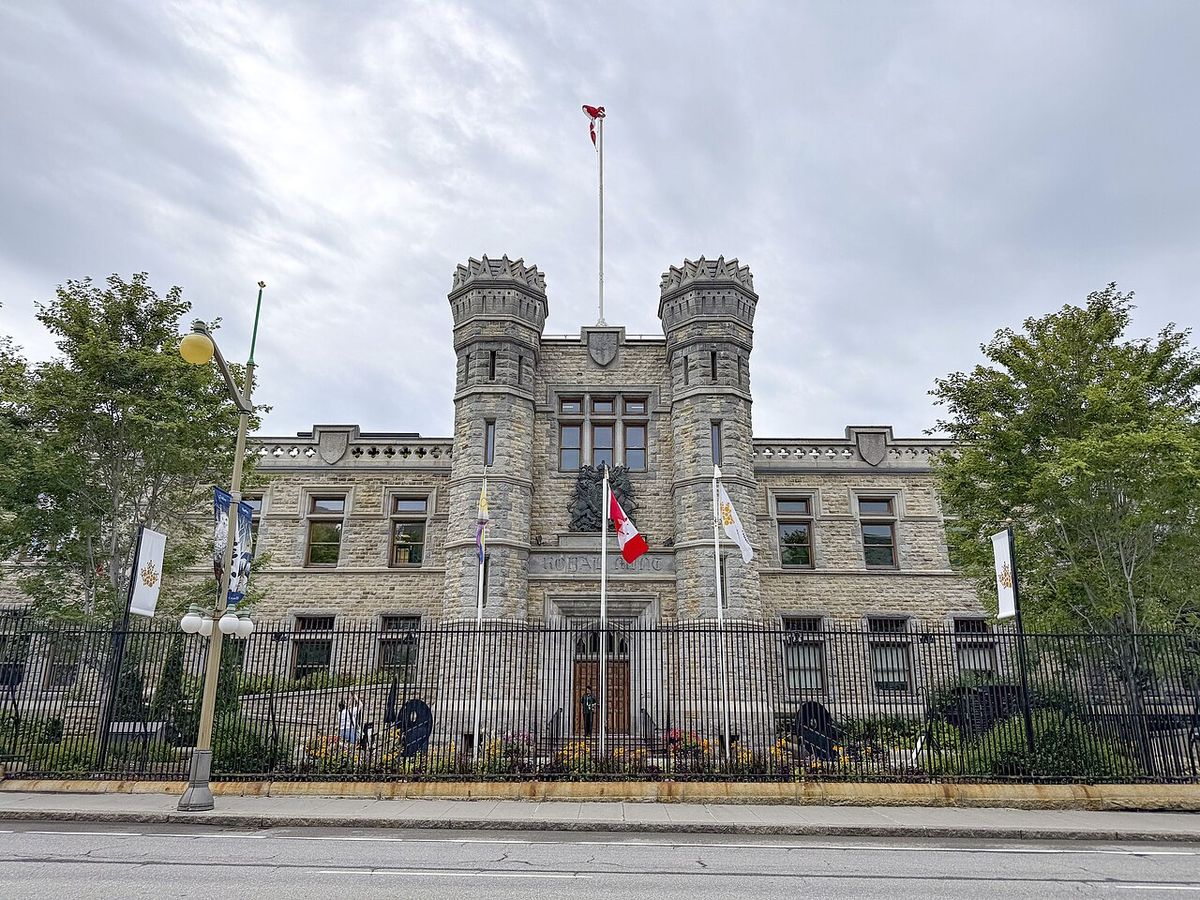
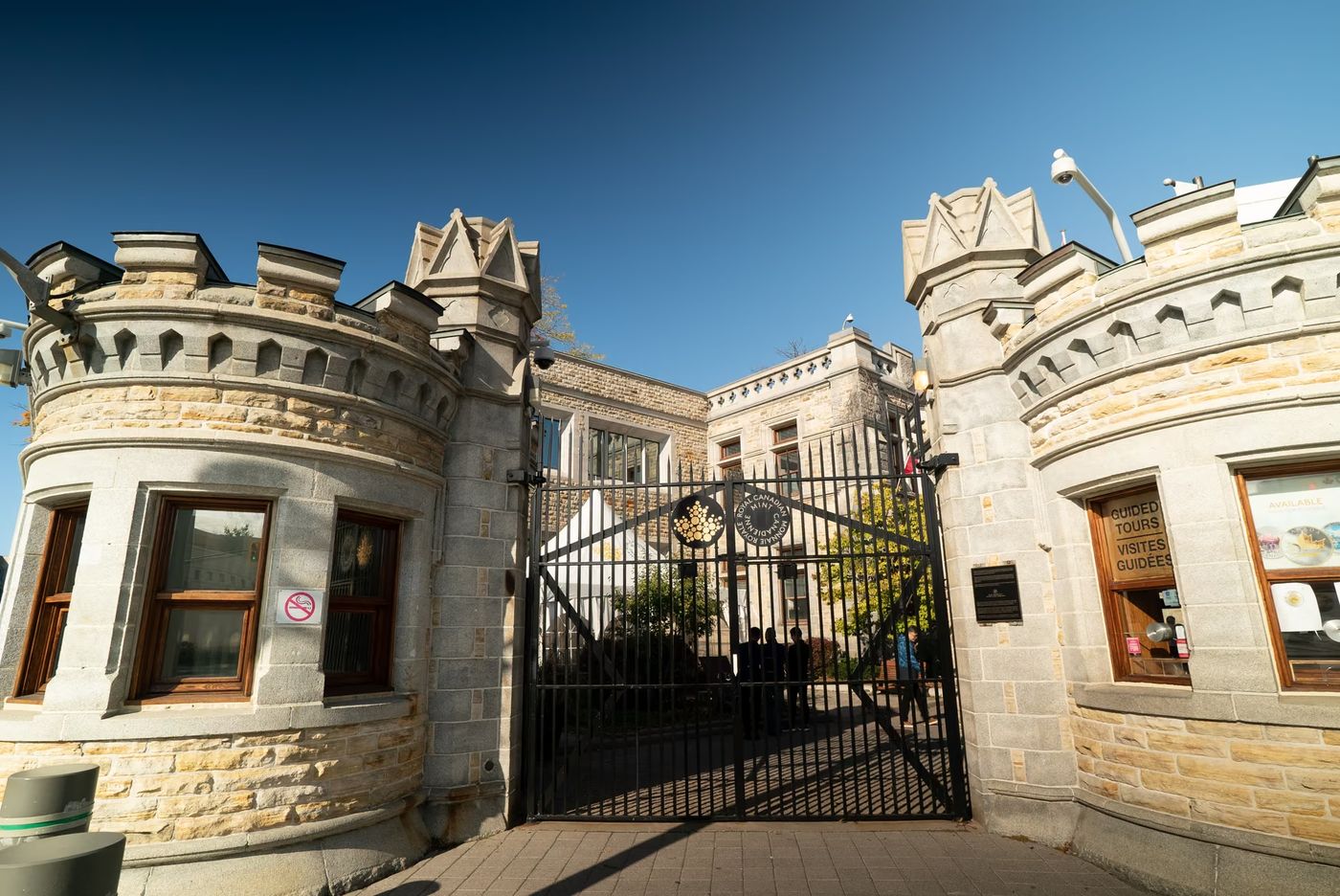
The mint operates two principal production facilities with distinct roles. The Ottawa facility, opened in 1908, was designated a National Historic Site in 1979 for its Tudor-Gothic architecture and its role in the patriation of control over Canada's currency. This location concentrates solely on producing collector coins, precious metal bullion coins, medals, medallions, and tokens, and offers gold and silver refinery and assay services. The Winnipeg facility, designed by architect Étienne Gaboury as a striking triangular building, opened in 1976. It is responsible for producing all of Canada's circulation coins and also manufactures circulation coins on behalf of other nations. This division of labour ensures specialized production streams for different coin types.
The history of the Ottawa facility includes notable staff members and operational milestones. The last surviving member of the original 1908 staff was Owen Toller, who started as a junior clerk and retired as an administrative officer after 45 years of service in 1953. The Winnipeg plant's construction followed a period of debate and planning in the late 1960s and early 1970s. The facility was built in collaboration with the Number Ten Architectural Group, led by partner-in-charge Allan Hanna. The following list outlines key dates in the establishment and evolution of the mint's physical operations:
- 1908: Ottawa branch of the Royal Mint opens with 61 employees.
- 1931: Mint assets transferred to Canadian government, established as Royal Canadian Mint.
- 1969: Reorganized as a Crown corporation via the Royal Canadian Mint Act.
- 1971: Decision finalized to build new facility in Winnipeg.
- 1972: Land purchased in Winnipeg, construction begins.
- 1976: Winnipeg production facility officially opens.
- 1979: Ottawa building designated a National Historic Site.
- 2012: Final penny minted at the Winnipeg plant on May 4.

Key Products and Technological Innovations
The Royal Canadian Mint's product portfolio is vast, encompassing all Canadian circulation coins, foreign circulation coins, precious and base metal collector coins, and gold, silver, palladium, and platinum bullion coins. Its most famous bullion products are the Gold Maple Leaf and Silver Maple Leaf coins, recognized globally for their purity and security features. The mint has a history of notable firsts and innovations in coin production. In 1999, it issued the world's first colour coin in a collector set and the first hologram coin set. The year 2004 saw the world's first coloured circulation coin, a 25-cent piece featuring a red poppy, released in partnership with Tim Hortons. Other innovations include the first irregularly shaped coin in 2006, the first million-dollar face-value coin made of 100 kg of pure gold, and the first glow-in-the-dark circulation coin in 2017 as part of Canada's 150th-anniversary set.
A major technological advancement was the development and patenting of multi-ply plating technology in 2000. This process, used for 5¢ to 50¢ coins and later for the $1 and $2 coins, involves plating a steel core with alternating layers of nickel and copper. It reduces production costs, increases durability, and allows for unique electromagnetic signatures that enhance security against fraud. The mint also adapted physical vapour deposition technology to extend the life of coin dies. Its ability to produce coins for other nations was demonstrated in 2008 with colourized 50-toea coins for Papua New Guinea, using robotic mechanisms to ensure design orientation. The mint's record of innovation includes several specific world-first achievements:
- 1999: First colour coin (20th anniversary Gold Maple Leaf set) and first hologram coin set.
- 2004: First coloured circulation coin (25¢ poppy coin).
- 2006: First irregular shaped coin (square sterling silver beaver).
- 2007: First coloured coin using plasma technology (International Polar Year $20 coin).
- 2007: First 100 kg, 99.999% pure gold million-dollar coin.
- 2017: First glass-added coin (Under the Sea: Seahorse) and first glow-in-the-dark circulation coin (Canada 150 $2 coin).
- 2022: First Gold Maple Leaf from a confirmed single source (Meliadine Gold Mine, Nunavut).
Mint Marks, Privy Marks, and Their Meanings
Throughout its history, the Royal Canadian Mint has used various mint marks and privy marks on coins for identification and special purposes. These small symbols tell a story about a coin's origin, year, or commemorative nature. For example, a 'C' was used on sovereigns produced in Ottawa between 1908 and 1919, while an 'H' identified coins struck by the Heaton Mint in Birmingham before 1907. A dot mint mark was placed on some 1936-dated coins in 1937 following King Edward VIII's abdication. The famous 1947 Maple Leaf coins used a small maple leaf beside the date to signify production in 1948 after India's independence required tooling changes. From 2001 to 2006, a 'P' mint mark indicated coins made with the mint's plating process. The mint's official logo has also been used as a privy mark on circulation and numismatic coins since 2006 to strengthen brand recognition.
Other marks serve specific commemorative or testing purposes. The Innukshuk mint mark appeared on all circulation coins for the 2010 Vancouver Olympics. A 'T/É' mark was used on a 2007 test bullion coin of 99.999% gold purity. A teddy bear privy mark was featured on a sterling silver dollar coin in a Baby Lullabies set. The following list details several key mint marks and their specific uses as recorded in the mint's history:
- C: Ottawa-minted sovereigns, 1908 to 1919.
- H: Coins struck by the Heaton Mint (Birmingham) until 1907.
- Dot: On 1936-dated 1¢, 10¢, and 25¢ coins minted in 1937 after the abdication crisis.
- Maple Leaf: The '1947 Maple Leaf' coins, actually minted in 1948.
- P: Indicates plating process on circulation coins from 2001 to 2006.
- RCM Logo: Privy mark introduced in 2006 for brand recognition on circulation and numismatic coins.
- Innukshuk: On all circulation coins for the 2010 Vancouver Olympics.
- W/WP: 'W' for specimen sets from Winnipeg (from 1998); 'WP' for 2003 plated uncirculated set from Winnipeg.
Security Operations and Incidents
Security is a paramount concern for the mint, managed by the Royal Canadian Mint Protective Services. Officers wear distinctive black uniforms with body armour and carry 9 mm Glock Model 17 pistols. Their duties include operating x-ray machines, inspecting garbage in high-security areas, CCTV monitoring, access control, and monitoring shipments. The mint has faced security challenges, including a 2009 discrepancy in its precious metals holdings reported by the Auditor General of Canada. A subsequent review attributed 9,350 troy ounces to estimation errors and recovered a further 1,500 troy ounces through refining slag, ultimately accounting for all misplaced gold. The multi-ply plating technology itself acts as a security feature, creating coins with unique electromagnetic signatures that are difficult to counterfeit.
Past incidents have tested the mint's security and asset control protocols. In 2000, the mint lent new plated 10¢, 25¢, and 50¢ test coins marked with a 'P' to the vending industry. Some of these coins were not returned and potentially sold to collectors at a premium. The 2009 audit discrepancy highlighted the challenges of physically accounting for precious metal stockpiles. The security team's comprehensive responsibilities are designed to prevent such issues and protect the mint's assets, which include raw materials, finished coins, and refining processes. Their specific duties as outlined include:
- Operating x-ray machines for screening.
- Inspecting garbage in high-security production areas.
- Continuous CCTV monitoring of facilities.
- Controlling access to secure areas.
- Monitoring all shipments received and dispatched from mint facilities.
- Providing security escorts as needed.
- Managing parking and coordinating evacuations.
Notable Events, Digital Ventures, and Workplace Culture
The mint's history includes several significant events beyond its technological achievements. In April 2012, it announced the development of MintChip, a digital currency backed by the Government of Canada. This project was later sold to Toronto-based nanoPay in January 2016. The mint has also faced internal challenges regarding workplace culture. In 2021, reports surfaced alleging racism and sexual harassment, with an external report subsequently describing the workplace culture as toxic. These events highlight the operational and social complexities of managing a major Crown corporation. The mint continues to evolve, as seen in its 2022 release of a Gold Maple Leaf bullion coin sourced from a single mine, the Meliadine Gold Mine in Nunavut, emphasizing traceability and Canadian provenance.
The mint has engaged in various special projects and commemorations. It released a glow-in-the-dark coin in 2019 to commemorate the 1967 Shag Harbour UFO incident, as part of an unexplained phenomena series. Its foray into digital currency with MintChip represented an attempt to innovate in the payment space. The organization's status as a Top 100 Employer from 2007 to 2010 was contrasted by the 2021 reports on workplace culture, indicating a period of significant internal scrutiny. The mint's journey reflects its adaptation to changing economic conditions, technological possibilities, and social expectations.
Financial and Commercial Mandate
As a Crown corporation operating under the Royal Canadian Mint Act, the mint has a dual mandate to serve the public interest and to operate in anticipation of profit. This means it must function in a commercial manner without relying on taxpayer subsidies to fund its operations. Its financial sustainability comes from the revenue generated across its four business lines: selling bullion products and refinery services, producing Canadian circulation coins, minting coins for foreign nations, and creating numismatic products for collectors. The mint's board of directors and executive team are tasked with ensuring this commercial viability while upholding the mint's role as a national institution. This structure allows it to invest in innovations like multi-ply plating and coloured coin technology, which reduce long-term costs and open new product markets, ultimately benefiting both the mint's balance sheet and the Canadian public.
The commercial focus is evident in decisions like the cessation of penny production, which was driven by cost considerations, and the development of products for foreign clients. The mint's ability to operate profitably is periodically reviewed, and its financial accounting is subject to audits, as seen in the 2009 precious metals review. The requirement to operate in anticipation of profit distinguishes it from regular government departments and shapes its strategic decisions, from facility location to product development and technological investment. The mint's governance includes a board of directors with ten members and an executive team with twelve members, all working to balance its public service role with commercial success.
Frequently asked questions
Where are Royal Canadian Mint coins made?
The mint has two main production facilities. The Winnipeg plant manufactures all of Canada's circulation coins and coins for other nations. The Ottawa facility, which is a National Historic Site, produces all collector coins, bullion coins (like gold and silver Maple Leafs), medals, medallions, and tokens. The Ottawa location also handles precious metal refining and assay services.
What are Royal Canadian Mint gold coins?
The Royal Canadian Mint produces several gold bullion coins, most notably the Gold Maple Leaf. These coins are recognized worldwide for their high purity, typically 99.99% pure gold, and advanced security features. The mint also creates gold collector coins with various designs. Bullion coins are primarily investment products, while collector coins often have artistic or commemorative themes and may carry a premium.
What is the Royal Canadian Mint?
The Royal Canadian Mint is the Crown corporation responsible for minting all of Canada's circulation coins. It operates under the Royal Canadian Mint Act and its shares are held in trust for the Crown. The mint functions in a commercial manner without relying on taxpayer support, mandated to operate 'in anticipation of profit'. Beyond domestic coinage, it manufactures circulation coins for other nations and produces collector coins, bullion, medals, and tokens. It also offers gold and silver refinery and assay services. The mint is governed by a board of directors consisting of a chair, the president and CEO, and eight other directors.
When did the Royal Canadian Mint stop making pennies?
The Royal Canadian Mint ceased production of the penny in 2012. The Canadian government made the decision to end penny production in March of that year. The final penny was struck at the mint's Winnipeg plant on the morning of May 4, 2012. This marked the conclusion of the mint's production of the one cent circulation coin, which had previously been produced using a copper plated steel blank through its multi ply plating technology.
What was the MintChip digital currency?
MintChip was a digital currency project developed by the Royal Canadian Mint. The mint announced it was developing MintChip in April 2012. It was designed to be a digital currency backed by the Government of Canada that allowed for anonymous transactions and could be denominated in a variety of currencies. The initiative was later sold. On January 12, 2016, MintChip was acquired by the Toronto based financial technology company nanoPay.
What are some innovations from the Royal Canadian Mint?
The Royal Canadian Mint has pioneered numerous coin innovations. In 2004, it issued the world's first coloured circulation coin, a 25 cent piece featuring a red poppy. In 2017, it released the first glow in the dark circulation coin, a two dollar piece for Canada's 150th anniversary. The mint also patented multi ply plating technology in 2000, a process that creates more secure and cost effective circulation coins. Furthermore, it produced the world's first million dollar face value coin, a 100 kilogram 99.999% pure gold piece.
Sources and further reading
- Royal Canadian Mint (Wikipedia) en.wikipedia.org
- Canadian Coins, Gold, Silver & More | The Royal Canadian Mint mint.ca
- Royal Canadian Mint aubullion.ca
This article explains how things work and is not financial, tax or legal advice. Rules, limits and rates change, so check the current figures with the Canada Revenue Agency, your province or your financial institution before you act.