A Registered Disability Savings Plan (RDSP) is a long-term savings program established by the Government of Canada to help individuals with disabilities and their families save for future financial security. The plan allows contributions to grow tax-deferred and provides access to government grants and bonds to boost savings. Eligibility hinges on qualification for the Disability Tax Credit, and the plan is designed to work alongside provincial disability benefits without affecting them. The RDSP is a key financial tool for many Canadians with disabilities, offering a structured path to long-term independence.
What is an RDSP?
The Registered Disability Savings Plan is a specialized savings vehicle intended to help Canadians with severe and prolonged mental or physical impairments save for their long-term financial needs. It operates similarly to other registered plans like the Registered Education Savings Plan, where investment growth accumulates on a tax-deferred basis. The plan is established for a single individual known as the beneficiary, who must be approved for the federal Disability Tax Credit. The primary goal of the RDSP is to provide financial security in later life, helping to avoid poverty and enable independence for individuals with disabilities. The plan is not an alternative to other estate planning tools like trusts but is designed to be used in conjunction with them to build a comprehensive financial strategy. Funds within the RDSP can be invested in products like cash, mutual funds, and Guaranteed Investment Certificates, and they grow without tax until withdrawal.
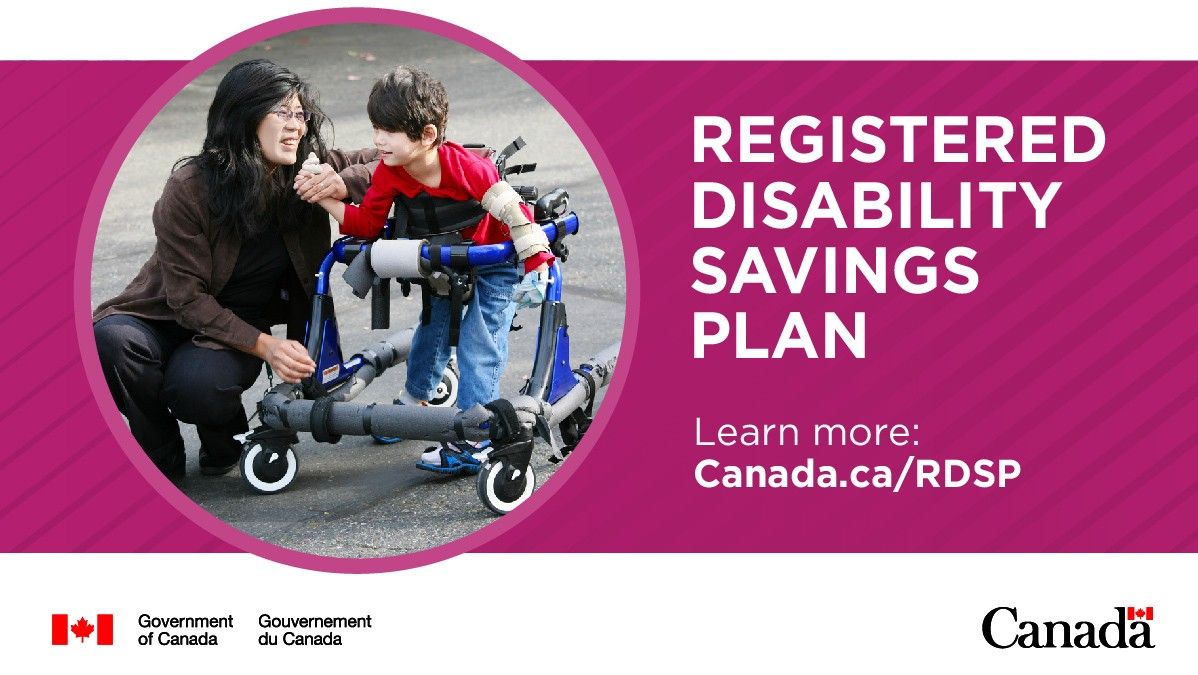
Eligibility and Plan Holders
To open an RDSP, the beneficiary must meet several strict criteria. They must be eligible for the Disability Tax Credit, which requires being markedly restricted in basic activities of daily living such as walking, feeding, or mental functions. The beneficiary must also be a resident of Canada, have a valid Social Insurance Number, and be 59 years of age or younger as of December 31 of the year the plan is opened. Only one RDSP can be established per qualifying individual. The person who opens and manages the RDSP is called the plan holder. If the beneficiary is a minor, a qualifying person such as a legal parent or guardian can establish the plan. An adult beneficiary who has the mental capacity to enter into a contract must establish the plan themselves, though family or friends can contribute with permission. If an adult beneficiary lacks that capacity, a qualifying person or legally authorized representative must act as the plan holder. There can be more than one plan holder, such as joint holders, and the plan holder can be changed at any time. Individual plan holders must also have a valid Social Insurance Number.
How Contributions and Government Assistance Work
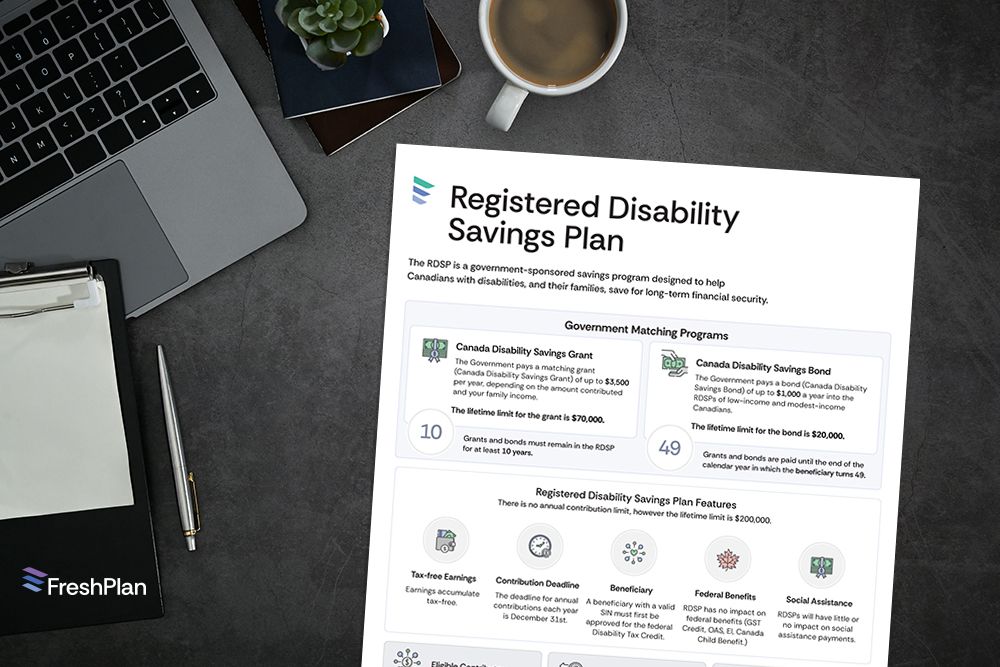
There is no annual limit on personal contributions to an RDSP, but there is a lifetime contribution limit of $200,000 per beneficiary. Anyone can contribute to the plan with the holder's consent, including family and friends. Contributions are made with after-tax dollars and are not tax-deductible. The powerful incentive for using an RDSP comes from two federal programs: the Canada Disability Savings Grant and the Canada Disability Savings Bond. The Grant provides matching contributions based on the amount contributed and the beneficiary's family net income. The Bond provides funds directly to the RDSPs of low and moderate-income individuals, even if no personal contributions are made. Both the Grant and Bond are paid only until December 31 of the year the beneficiary turns 49, though personal contributions can continue until age 59. Unused Grant and Bond entitlement can be carried forward for up to 10 years, allowing for catch-up contributions. If maximum matching contributions are made from when a child turns 18, the full $90,000 in available grants and bonds can be received by the time they turn 38.
The Canada Disability Savings Grant provides matching contributions to an RDSP based on family income and the amount contributed. The grant can provide up to $3,500 per year, with a lifetime maximum of $70,000. The Canada Disability Savings Bond provides funding to RDSPs for low and moderate income beneficiaries, with up to $1,000 per year and a lifetime maximum of $20,000. Government grants and bonds are paid until December 31 of the year the beneficiary turns 49 years old.
| Program | Maximum Annual Amount | Lifetime Maximum | Income Tested |
|---|---|---|---|
| Canada Disability Savings Grant (CDSG) | $3,500 | $70,000 | Yes |
| Canada Disability Savings Bond (CDSB) | $1,000 | $20,000 | Yes |
The specific matching rate for the Grant depends on family net income. For family net income above $75,769, the matching rate is 100% on contributions up to $1,000. An initial contribution of $1,500 from a lower-income beneficiary can thus yield the full $3,500 in Grant money. The Bond is available to beneficiaries with a family net income below a certain threshold, which was $21,287 for recent years. No contributions are required to receive the Bond, making it a direct support for lower-income individuals.
Tax Treatment and Withdrawal Rules
Investment earnings, grants, and bonds within an RDSP grow tax-free until withdrawn. When funds are taken out, they are considered a blend of non-taxable personal contributions and taxable amounts comprising grants, bonds, and investment earnings. The taxable portion must be declared as income by the beneficiary in the year of withdrawal. A critical feature is that RDSP assets and withdrawals generally do not affect eligibility for federal benefits like Old Age Security or GST credits, nor do they affect most provincial disability assistance programs. Withdrawals must begin by the time the beneficiary turns 60, and they are subject to a formula that sets a maximum annual payment amount. Withdrawals can be made before age 60, but this triggers the 10-year repayment rule, which can require a portion of government assistance to be repaid. The plan is designed as a retirement vehicle, with the ideal time to take money out being after age 60 when there are no penalties or required repayments of government money. RDSP payments are blended on a pro-rata basis, meaning each withdrawal contains a portion of taxable and non-taxable funds.
The 10-Year Rule and Specified Disability Savings Plans
A central rule governing RDSPs is the 10-year assistance holdback rule. Any grant or bond money paid into the plan in the last 10 years is subject to potential repayment if a withdrawal is made. For every dollar withdrawn, up to three dollars of government assistance may need to be repaid, depending on how much assistance was received in the preceding decade. This rule makes early withdrawals potentially costly and underscores the plan's design as a long-term savings vehicle. An important exception exists for beneficiaries with a shortened life expectancy through a Specified Disability Savings Plan (SDSP). Once an RDSP is designated as an SDSP, no further contributions can be made, no new grants or bonds are paid, and payments must start before the end of the following calendar year. This provision allows for greater flexibility in accessing funds for those with significant health challenges. In the event of the beneficiary's death, the plan's value is paid to their estate, still subject to this 10-year assistance holdback rule for any recent government contributions.
History and Legislative Changes
The RDSP was first announced in the 2007 federal budget and became available to Canadians in 2008. It was created following expert panel recommendations on financial security for children with severe disabilities. A significant legislative change occurred in Budget 2019, which eliminated the previous requirement to close the RDSP if the beneficiary no longer qualified for the Disability Tax Credit. Under the new rules, the plan can remain open, though no new contributions can be made and no new grants or bonds will be paid. The existing funds can continue to grow tax-deferred until withdrawal. This change provided greater security for beneficiaries whose medical condition might improve or fluctuate over time. The federal Minister of Finance had commissioned an expert panel report titled A New Beginning, which helped shape the program's development to better serve families.
Financial Institutions Offering RDSPs
RDSP accounts are offered by a variety of banks, trust companies, and credit unions across Canada. Plan holders can typically invest in a range of products within the plan, including savings deposits, Guaranteed Investment Certificates (GICs), mutual funds, and portfolio solutions. Some providers also offer self-directed investment options and pre-authorized contribution plans to automate savings. The following is a list of some major providers that offer RDSP accounts.
- Bank of Montreal (BMO)
- Scotiabank
- Canadian Imperial Bank of Commerce (CIBC)
- Royal Bank of Canada (RBC)
- TD Waterhouse Canada Inc.
- Desjardins
- Central 1 Credit Union / Central 1 Trust Company
- Community Trust Company
- Credential Qtrade Securities
- Investors Group Trust Co. Ltd.
- Mackenzie Financial Corporation
- Natcan Trust Company
- ATB Securities Inc.
Fees, investment options, and services for an RDSP vary by financial institution provider. Some providers may charge a transfer fee if moving an RDSP to an institution outside their corporate group. For example, one provider charges a $150 fee for such a transfer. Potential plan holders should compare the features offered by different RDSP providers. Free guidance is often available from non-profit organizations dedicated to disability planning.
Key Considerations and Planning Steps
Opening an RDSP early is highly advantageous because it maximizes the period during which government grants and bonds can be received. If maximum contributions are made from age 18, the full $90,000 in available grants and bonds could be received by age 38. The plan is designed as a retirement vehicle, with funds ideally remaining invested until age 60 to benefit from long-term compounding. It is crucial to coordinate RDSP savings with other elements of a financial plan, such as Henson trusts or insurance products, to ensure comprehensive support. In the event of the beneficiary's death, the value of the plan is paid to their estate, subject to the 10-year assistance holdback rule for any recent government contributions. Numerous non-profit organizations across Canada offer free guidance and helplines to assist families with understanding and accessing the RDSP.
There are several concrete steps individuals should take when planning with an RDSP. First, confirm eligibility for the Disability Tax Credit, as this is the gateway to the plan. Second, choose a financial institution from the list of providers and open the account. Third, develop a contribution strategy to maximize government matching, especially by using the 10-year carry-forward provision for unused grant and bond room. Fourth, select appropriate investments within the RDSP based on the beneficiary's time horizon and risk tolerance. Fifth, understand the withdrawal rules thoroughly to avoid the costly 10-year repayment rule for early access. Sixth, regularly review the plan, especially if the beneficiary's Disability Tax Credit status or family income changes. Finally, integrate the RDSP into a broader estate and financial plan that may include trusts and other savings vehicles.
Common Scenarios and Account Management
Managing an RDSP involves understanding specific rules for different life situations. If a beneficiary loses eligibility for the Disability Tax Credit after 2019, the RDSP does not need to be closed. The account remains open, no new contributions are allowed, and no new grants or bonds are paid, but existing funds continue to grow tax-deferred. If a beneficiary regains DTC eligibility, contributions and government assistance can resume. Transfers between RDSP providers are permitted provided all funds are moved and certain conditions are met, though a fee may apply. In cases where an adult beneficiary lacks legal capacity, the plan holder must be the party legally authorized to act on their behalf, such as a court-appointed guardian. Funds can be withdrawn for any purpose that benefits the person with the disability, providing flexibility for needs as they arise. It is also possible for family and friends to contribute to the plan with the written consent of the plan holder, allowing for collective support for the beneficiary's future. Another scenario involves the plan holder changing, which can be done at any time provided the new holder meets the eligibility requirements.
Frequently asked questions
How much can I contribute to an RDSP?
There is no annual contribution limit for an RDSP. However, there is a lifetime contribution limit of $200,000 per beneficiary. Contributions can be made by anyone, including family and friends, with the plan holder's consent. You can contribute until the end of the year in which the beneficiary turns 59 years old.
What are the Canada Disability Savings Grant and Bond?
The Canada Disability Savings Grant is a matching contribution from the federal government. Depending on family income, it can match personal contributions at 100%, 200%, or 300%, up to a maximum of $3,500 per year and $70,000 over a lifetime. The Canada Disability Savings Bond provides up to $1,000 per year ($20,000 lifetime) to RDSPs of low-income individuals, even if no personal contributions are made. Both are paid only until the end of the year the beneficiary turns 49.
Who is eligible to open an RDSP?
An individual is eligible to open an RDSP if they qualify for the Disability Tax Credit, are a resident of Canada, have a valid Social Insurance Number, and are 59 years of age or younger as of December 31 of the current year. To qualify for the Disability Tax Credit, the individual must be markedly restricted in at least one basic activity of daily living due to a severe and prolonged impairment. Only one RDSP account may be set up per qualifying individual. The plan can be opened by the beneficiary themselves if they have the mental capacity, or by a qualifying family member or legal guardian on their behalf if they do not.
Can I take money out of my RDSP before I turn 60?
Yes, you can take money out of your RDSP before you turn 60, but such withdrawals are subject to complex rules. Specifically, the 10 year assistance holdback rule may require the repayment of government grant and bond money paid into the plan in the preceding decade. For every dollar withdrawn, up to three dollars of government assistance may need to be repaid, which can make early withdrawals financially disadvantageous. Withdrawals must otherwise adhere to the plan's terms, and payments to the beneficiary must begin by the time they turn 60.
Does an RDSP affect provincial disability benefits?
In most cases, an RDSP does not affect provincial disability benefits. The assets within an RDSP and the income withdrawn from it are generally exempt from asset testing and means testing for provincial or territorial disability assistance programs. This means a person receiving such benefits can set up and hold an RDSP without it affecting their eligibility or the amount of their benefits. The RDSP is designed to provide long term financial security without creating a poverty trap.
Sources and further reading
- Registered Disability Savings Plan (Wikipedia) en.wikipedia.org
- Registered Disability Savings Plans (RDSPs) scotiabank.com
- Registered Disability Savings Plan (RDSP) inclusioncanada.ca
- Registered Disability Savings Plan (RDSP) rbcroyalbank.com
- Registered Disability Savings Plan rdsp.com
- How Registered Disability Savings Plans work getsmarteraboutmoney.ca
This article explains how things work and is not financial, tax or legal advice. Rules, limits and rates change, so check the current figures with the Canada Revenue Agency, your province or your financial institution before you act.