A mortgage is a loan secured by real estate, typically used to finance the purchase of a home. In Canada, mortgages are a primary mechanism for home ownership, with most home purchases funded through this type of loan. The loan is secured on the borrower's property, meaning the lender can take possession and sell it if the borrower defaults. Key features like interest rates, amortization periods, and down payment requirements are shaped by Canadian regulations and market practices.
What Is a Mortgage?
A mortgage is a loan used to purchase real estate or to raise funds using existing property as collateral. The loan is secured on the borrower's property through a legal process called mortgage origination. This security interest means the lender has the right to foreclose on the property if the borrower fails to repay the loan according to its terms. The word mortgage originates from a Law French term used in Britain in the Middle Ages meaning death pledge, signifying the pledge ends when the debt is paid or the property is taken. Mortgage borrowers can be individuals buying a home or businesses financing commercial property, such as business premises or rental investments.
Lenders are typically financial institutions like banks, credit unions, or building societies, and loan arrangements can be made directly or through intermediaries. The loan's characteristics, including its size, interest rate, maturity, and repayment method, can vary widely. In the event of borrower bankruptcy or insolvency, the mortgage lender's claim on the secured property takes priority over other creditors. This priority means other creditors are only repaid from the sale of the property after the mortgage lender is paid in full. In many jurisdictions, including Canada, using a mortgage to buy a home is normal due to the high cost of property and because few individuals have enough savings to purchase outright.
Mortgages can be funded through the banking sector via short-term deposits or through the capital markets via securitization. Securitization converts pools of mortgages into fungible bonds that can be sold to investors in small denominations. The lender's rights over the property may entail restrictions on its use or disposal, such as requirements to purchase home insurance, mortgage insurance, or pay off the debt before selling. The basic components of a mortgage are the property, the security interest, the borrower or mortgagor, the lender or mortgagee, the principal, the interest, and the terms for foreclosure and redemption.

How a Mortgage Works: Key Components and Process
A mortgage is an encumbrance on the right to the property, as the owner pledges their interest as security or collateral for a loan. The process ends with redemption, which is the final repayment of the amount outstanding. Redemption may be a natural redemption at the end of the scheduled term or a lump sum redemption, typically when the borrower decides to sell the property. Mortgage loans are generally structured as long-term loans, the periodic payments for which are similar to an annuity and calculated according to the time value of money formulae. The most basic arrangement would require a fixed monthly payment over a period of ten to thirty years, depending on local conditions. Over this period the principal component of the loan would be slowly paid down through amortization.
Lenders earn interest income and generally fund mortgages by borrowing money themselves, such as through taking deposits or issuing bonds. The price at which lenders borrow therefore affects the cost of borrowing for the mortgage customer. Lenders may also sell the mortgage loan to other parties interested in receiving the stream of cash payments, often through a mortgage-backed security, in which case the initial lender is the mortgage originator. Lenders assess the riskiness of the loan based on the borrower's likelihood of repayment, the ability to foreclose on the assets, and financial risks like interest rate risk.
During underwriting, a mortgage loan underwriter verifies the applicant's financial information including income, employment, credit history, and the property's value via an appraisal. This process can take from a few days to a few weeks, and it is advisable for applicants to maintain the same employment and not open new credit during this time. Any changes to credit, employment, or financial information could result in loan denial. The underwriting process may take so long that provided financial statements need to be resubmitted to be current.
- Property: The physical real estate serving as collateral. The form of ownership varies by country.
- Borrower (Mortgagor): The person or entity taking out the loan and creating an ownership interest.
- Lender (Mortgagee): The financial institution providing the loan. Can also be an investor via a security.
- Principal: The original loan amount, which may or may not include other costs, and decreases as repaid.
- Interest: A financial charge for use of the lender's money, reflecting the lender's risk.
- Foreclosure/Repossession: The lender's right to seize and sell the property upon default, essential to the loan.
- Completion: The legal finalization of the mortgage deed, starting the mortgage.
- Redemption: The final repayment that closes the mortgage account.
Mortgage Types and Key Financial Features
Mortgages are broadly defined by factors like interest type, loan term, payment amount and frequency, and prepayment rules. The two fundamental types are fixed-rate mortgages and adjustable-rate mortgages, also known as floating rate or variable rate mortgages. In a fixed-rate mortgage, the interest rate remains constant for the entire loan or term, providing payment security. In the case of an annuity repayment scheme, the periodic payment remains the same throughout the loan.
In an adjustable-rate mortgage, the interest rate is generally fixed for an initial period, after which it will periodically adjust up or down to a market index, such as annually or monthly. Adjustable rates transfer part of the interest rate risk from the lender to the borrower and are used where fixed rate funding is difficult or expensive. The initial interest rate on an ARM may be 0.5 to 2 percent lower than the average 30-year fixed rate, with the differential related to debt market conditions. Combinations of fixed and floating rates are common, with a fixed period followed by a variable period.
The loan-to-value ratio is a critical risk indicator, representing the loan size against the property's value. A down payment of 20 percent means an LTV of 80 percent. A higher LTV signifies greater risk that the property value will be insufficient to cover the loan if foreclosed. Lenders also evaluate payment-to-income and debt-to-income ratios to gauge a borrower's ability to repay, with higher ratios associated with psychological stress. Many jurisdictions have a concept of standard or conforming mortgages that define acceptable risk levels, such as no more than 70 to 80 percent LTV and no more than one-third of gross income going to mortgage debt. This affects whether a loan can be easily sold or securitized.
| Feature | Fixed-Rate Mortgage (FRM) | Adjustable-Rate Mortgage (ARM) |
|---|---|---|
| Interest Rate | Fixed for life of loan/term. | Fixed initially, then adjusts periodically to market index. |
| Risk Allocation | Interest rate risk borne by lender. | Interest rate risk transferred to borrower. |
| Typical Starting Rate | Higher initial rate. | 0.5% to 2% lower than average long-term fixed rate. |
| Payment Certainty | High. Payment amount stable. | Lower. Payment amount can change. |
Mortgages in the Canadian Context: Market and Regulation
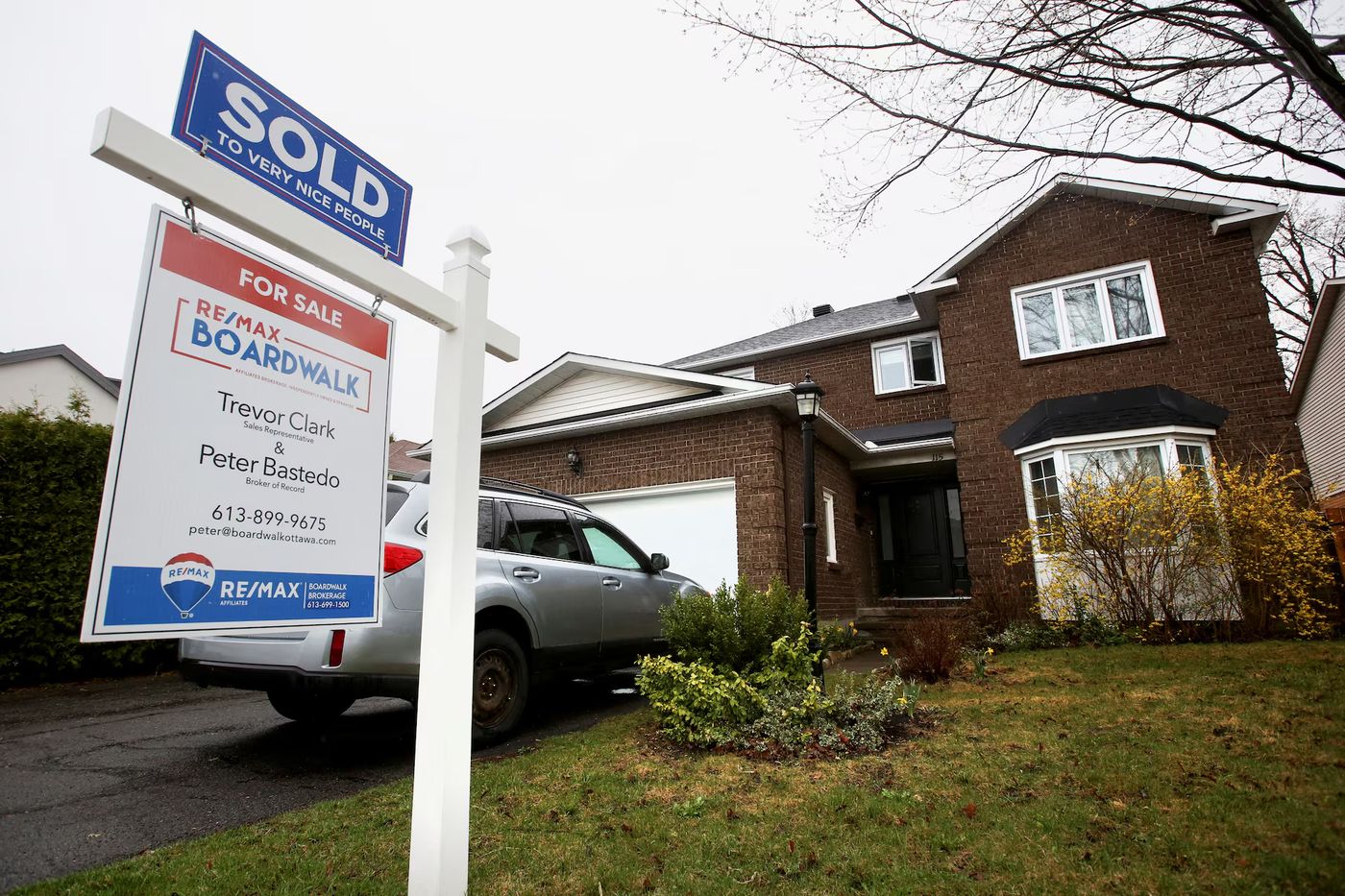
The Canadian mortgage market is shaped by specific regulations, government agencies, and market practices. The Canada Mortgage and Housing Corporation is Canada's trusted source for housing finance solutions and unbiased thought leadership, focusing on market housing which is home to 95 percent of Canadians. A central rule is that high-ratio mortgages with less than a 20 percent down payment are required by law to be insured against default. For homeowners, mortgage interest is not tax-deductible on a primary residence, unlike in some other countries.
Standard mortgage amortization periods in Canada are typically 25 to 30 years as a usual maximum term. The maximum amortization for insured mortgages is more strictly capped. Lenders in Canada, such as banks and mortgage brokerages, face restrictions on lending more than 80 percent of a property's value without mandatory mortgage insurance. Mortgages amortized over more than 25 years accounted for 58.6 percent of new insured homeowner volume in the second quarter of 2026, though this was down slightly. The Bank of Canada's policy rate directly influences variable mortgage rates, while fixed rates track Government of Canada bond yields, meaning the two can move in opposite directions.
As of October 2026, the Bank of Canada's policy rate was 2.25 percent, with a common prime rate of 4.45 percent as set by some lenders. The Canadian Real Estate Association downgraded its forecast for home sales activity in 2026 for the third straight quarter. National housing analysis indicates a supply gap, with Canada needing 187,000 to 238,000 new homes each year to close it. Construction falling short of demand has implications for Canada's housing future, and housing remains difficult to find and afford in many regions, including the North.
| Rate Type | Insured Average (2026) | Uninsured Average (2026) | Notes |
|---|---|---|---|
| 5-Year Fixed | 5.18% (Big 6 Avg) | 5.39% | Lowest insured rate at nesto was 4.59%. |
| 3-Year Fixed | 5.23% (Big 6 Avg) | 5.23% | Lowest insured rate at nesto was 4.54%. |
| 5-Year Variable | 4.27% (Big 6 Avg) | 4.47% | Priced as a discount/premium to prime (4.45%). |
| 3-Year Variable | 5.05% (Big 6 Avg) | 4.65% | Uninsured files often priced closer to prime. |
Rules, Limits and Qualification in Canada
Qualifying for a mortgage in Canada involves meeting strict lender criteria for creditworthiness, income, and the property's appraised, estimated, or actual transaction value. Lenders use measures like the gross debt service ratio and total debt service ratio to determine how much of a borrower's income can go toward housing costs and all debt obligations. A standard or conforming mortgage in Canada often defines an acceptable risk level, influencing whether a mortgage is easily sold. Non-standard or nonconforming loans represent higher risk tolerance by the lender.
Federal rules mandate mortgage stress testing for both insured and uninsured mortgages from federally regulated lenders. This test requires borrowers to qualify at the greater of the contract rate plus two percentage points or a benchmark rate set by the Bank of Canada. For homes over $1 million, the minimum down payment is 20 percent. Non-residents face additional restrictions, and the federal foreign homebuyers ban was set to expire at the end of 2026, with the government mulling its options.
Lenders may require borrowers to have one or more months of reserve assets available to cover housing costs in case of job loss. Documentation for creditworthiness includes income tax returns and pay stubs. Some lenders offer no-doc or low-doc lending standards under certain circumstances. The charge to the borrower depends on credit risk and interest rate risk, with jumbo mortgages and subprime lending not supported by government guarantees and facing higher rates. Mortgage interest rates in Canada tend to decrease with higher competition between financial institutions.
- Stress Test: Qualify at the greater of contract rate + 2% or the Bank of Canada benchmark rate.
- High-Ratio Insurance: Mandatory by law for down payments less than 20%.
- Maximum Amortization: Typically 25 years for insured mortgages with less than 20% down.
- Maximum LTV without Insurance: 80% of the property's appraised value.
- Standard Risk Measure: No more than one-third of gross income for mortgage debt.
- Property Value Assessment: Via appraisal, transaction price, or lender estimate.

Repayment Structures and Borrower Choices
Repaying a mortgage depends on locality, tax laws, and culture, with various structures to suit different borrowers. The most common method is to make regular principal and interest payments over a set term, known as amortization. Payments are calculated based on time value of money formulas, and details like interest calculation on a 360-day year or daily compounding can be specific to location. Legal restrictions and consumer protection laws may specify or prohibit certain practices, including prepayment penalties.
In Canada, borrowers can choose from different payment frequencies such as weekly, bi-weekly, or monthly, which affects how quickly the principal is paid down. Mortgage payment calculators help determine these schedules. Borrowers can often make annual lump-sum prepayments, typically up to 10-20 percent of the original principal, and increase regular payment amounts. However, fully paying off a closed mortgage before term may trigger a prepayment charge. Some mortgages have no amortization or require full repayment at a certain date.
Other products include home equity lines of credit, which allow homeowners to take out equity up to 65 percent of the loan-to-value ratio. Lenders may also offer special offers or promotional rates. The Annual Percentage Rate is a key measure that includes all interest and non-interest charges. If there are no non-interest charges, the APR and interest rate are the same. For example, an APR may be based on a $350,000 mortgage with a 25-year amortization, including estimated fees for property valuation and legal costs.
Risks, Debates and Current Market Trends
Mortgages carry several risks for both borrowers and lenders, and the Canadian market is subject to ongoing debates about stability and affordability. For borrowers, the primary risks include payment shock from rising interest rates on variable mortgages, the potential for foreclosure if they default, and being underwater if property values fall below the mortgage balance. For lenders, the risk is borrower default and the possibility that foreclosure proceeds may not cover the outstanding loan, especially with high LTV ratios. These risks are mitigated through underwriting, insurance, and regulations.
Current debates in the Canadian market centre on housing affordability, mortgage renewals, and market stability. Canadian home prices have doubled since 2005, creating significant affordability challenges. Experts analyze how slowing population growth and higher borrowing costs are weighing on housing demand, though stronger business investment could help revive it. A significant trend is the prevalence of long amortizations. In Q2 2026, 58.6 percent of new insured mortgages had amortizations over 25 years. There is ongoing discussion about the housing supply gap and what building too little now could mean for Canada's housing future.
The trajectory of interest rates is a major focus. As of late 2026, rising bond yields were pushing fixed rates higher, and experts were divided on whether Bank of Canada rate hikes would erode the savings from variable mortgages. Economists and traders were expecting further rate hikes after Bank of Canada surveys showed inflation expectations rising. The market for mortgage renewals is significant, as borrowers facing renewal may see large payment increases. Industry analysis also explores trends in borrower preferences, digital tools, changing homeownership trends, and the economic forces shaping the mortgage market, including savings and funding flows.
Additional risks include foreign currency mortgages, which are not common in Canada but exist in countries with depreciating currencies, where borrowers take on currency risk. In Canada, oversight and cyber defences for financial institutions using advanced AI are noted as needing to keep pace with adoption. Government policy interventions, such as new heat-pump rebates and financing for apartment upgrades, also influence the housing and mortgage landscape. The mortgage industry itself is active, with events like the Mortgage Hall of Fame and partnerships with organizations like Habitat for Humanity Canada, which has received a pledge of $200,000 and volunteer support from Mortgage Professionals Canada.
Frequently asked questions
What is a 50 year mortgage?
A 50 year mortgage refers to an amortization period, which is the total time it would take to pay off the loan in full with regular payments. While standard amortizations in Canada are 25 to 30 years, historically some products with longer amortizations have been available, potentially up to 50 years plus in some global markets. These significantly lower monthly payments but result in paying vastly more interest over the life of the loan. As of 2026, Canadian regulations generally limit insured mortgages to a maximum 25 year amortization, especially for high-ratio loans. Mortgages amortized over more than 25 years still accounted for a majority of new insured volume in mid-2026.
How does mortgage insurance work in Canada?
Mortgage default insurance is required by law for high-ratio mortgages where the down payment is less than 20 percent of the purchase price. This insurance protects the lender if the borrower defaults. The Canada Mortgage and Housing Corporation is the main federal provider, but private insurers also exist. The insurance premium is calculated based on the loan-to-value ratio and is typically added to the mortgage loan amount and paid by the borrower over the life of the loan. For example, with CMHC insurance, you can get financing up to 95 percent of the loan-to-value. This insurance allows lenders to offer mortgages with lower down payments while managing their risk, and it is a key part of Canada's housing finance system.
What is the difference between fixed and variable rate mortgages?
A fixed rate mortgage has an interest rate that is locked in and does not change for the entire term of the mortgage, commonly between one and ten years, providing payment certainty. In an annuity scheme, the payment stays the same. A variable rate mortgage, also called an adjustable-rate or floating rate mortgage, has an interest rate that fluctuates with the lender's prime rate. The prime rate moves in relation to the Bank of Canada's policy rate, typically after one of its eight scheduled annual announcements. Your payment amount may stay constant, but the portion going to interest changes. Variable rates often start 0.5 to 2 percent lower than long-term fixed rates but carry the risk of increasing payments if interest rates rise.
What is the mortgage stress test?
The mortgage stress test is a federal rule requiring borrowers to prove they can afford payments at a qualifying interest rate higher than their actual contract rate. You must qualify at the greater of your contract rate plus two percentage points or a benchmark rate published by the Bank of Canada. This test is applied to both insured and uninsured mortgages from federally regulated lenders. It is designed to ensure borrowers can handle higher payments if interest rates rise at renewal. The test uses the gross debt service and total debt service ratios to calculate affordability under the higher stress-tested rate, adding a buffer against future financial strain.
How is a mortgage interest rate determined?
Mortgage interest rates are determined by several interconnected factors. Fixed rates are primarily influenced by the yields on Government of Canada bonds of a similar term, which can move daily. Variable rates are set as a fixed discount or premium to the lender's prime rate, which itself is based on the Bank of Canada's policy rate. Your personal rate also depends on your credit risk, the loan-to-value ratio, the mortgage term, and whether the mortgage is insured. Insured mortgages typically secure the lowest rates. Other factors include the lender's cost of funds, competition in the market, and the perceived riskiness of the loan. Jumbo and subprime loans face higher rates due to lack of government guarantees.
Can I pay off my mortgage early?
Most mortgages in Canada allow for early repayment, but often with specific conditions and potential penalties. You may be permitted to make annual lump-sum prepayments up to a certain percentage of the original principal, typically between 10 and 20 percent. You may also be allowed to increase your regular payment amount. However, paying off the entire mortgage before the end of its term, or prepaying more than the allowed annual amount, may trigger a prepayment charge or penalty. The specifics of these rules, including any prepayment restrictions or penalties, are detailed in your mortgage contract. Some types of mortgages may limit or restrict prepayment entirely.
Sources and further reading
- Mortgage (Wikipedia) en.wikipedia.org
- CMHC: Canada Mortgage and Housing Corporation cmhc-schl.gc.ca
- Compare best mortgage rates in Canada today ratehub.ca
- Residential Mortgage Rates ca.statebank
- Canadian Mortgage Trends canadianmortgagetrends.com
- Today's Mortgage Rates in Canada | Compare All Terms nesto.ca
This article explains how things work and is not financial, tax or legal advice. Rules, limits and rates change, so check the current figures with the Canada Revenue Agency, your province or your financial institution before you act.