The Hudson's Bay Company (HBC) was a Canadian holding company of department stores and commercial property and the oldest corporation in North America. Founded in 1670 and liquidated in 2025, its history is profoundly intertwined with the colonization and development of Canada. For centuries, HBC controlled the fur trade across vast territories and later transitioned into a major retail chain. Its story encompasses exploration, commerce, and the complex relationships between European traders and Indigenous nations, leaving an indelible mark on the Canadian landscape.
Origins and Royal Charter
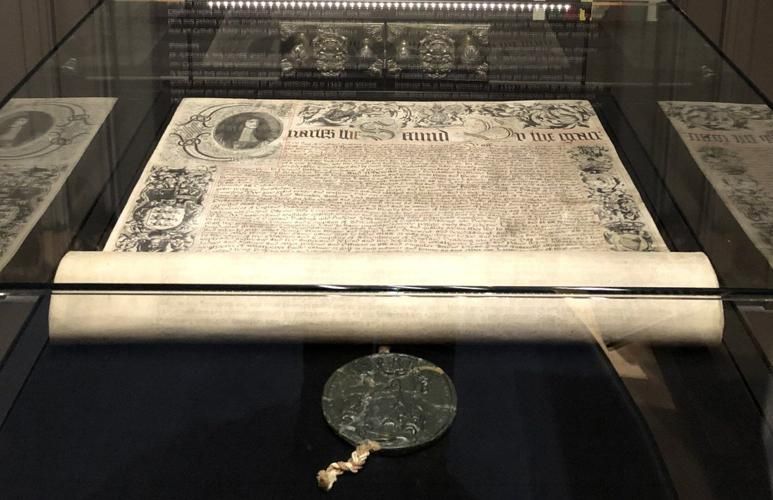
The Hudson's Bay Company originated from a proposal by French fur traders Pierre-Esprit Radisson and Médard des Groseilliers. After being denied support by French authorities in New France, they sought backing from English merchants. Their plan involved establishing a direct trade route to the rich fur regions via Hudson Bay, bypassing the arduous overland routes. With the sponsorship of Prince Rupert, cousin of King Charles II, an expedition was launched in 1668. The ship Nonsuch successfully reached James Bay and established Charles Fort, later known as Rupert House. The profitable return of furs to England in 1669 demonstrated the venture's viability. On 2 May 1670, King Charles II granted a royal charter incorporating "The Governor and Company of Adventurers of England, trading into Hudson's Bay." This charter granted the company a monopoly over trade in the vast territory drained by all rivers flowing into Hudson Bay, an area named Rupert's Land. The charter's grant of "sole trade and commerce" was based on the Hudson Bay drainage basin, covering most of what is now central Canada and parts of the northern United States.
The Fur Trade Era and Rupert's Land
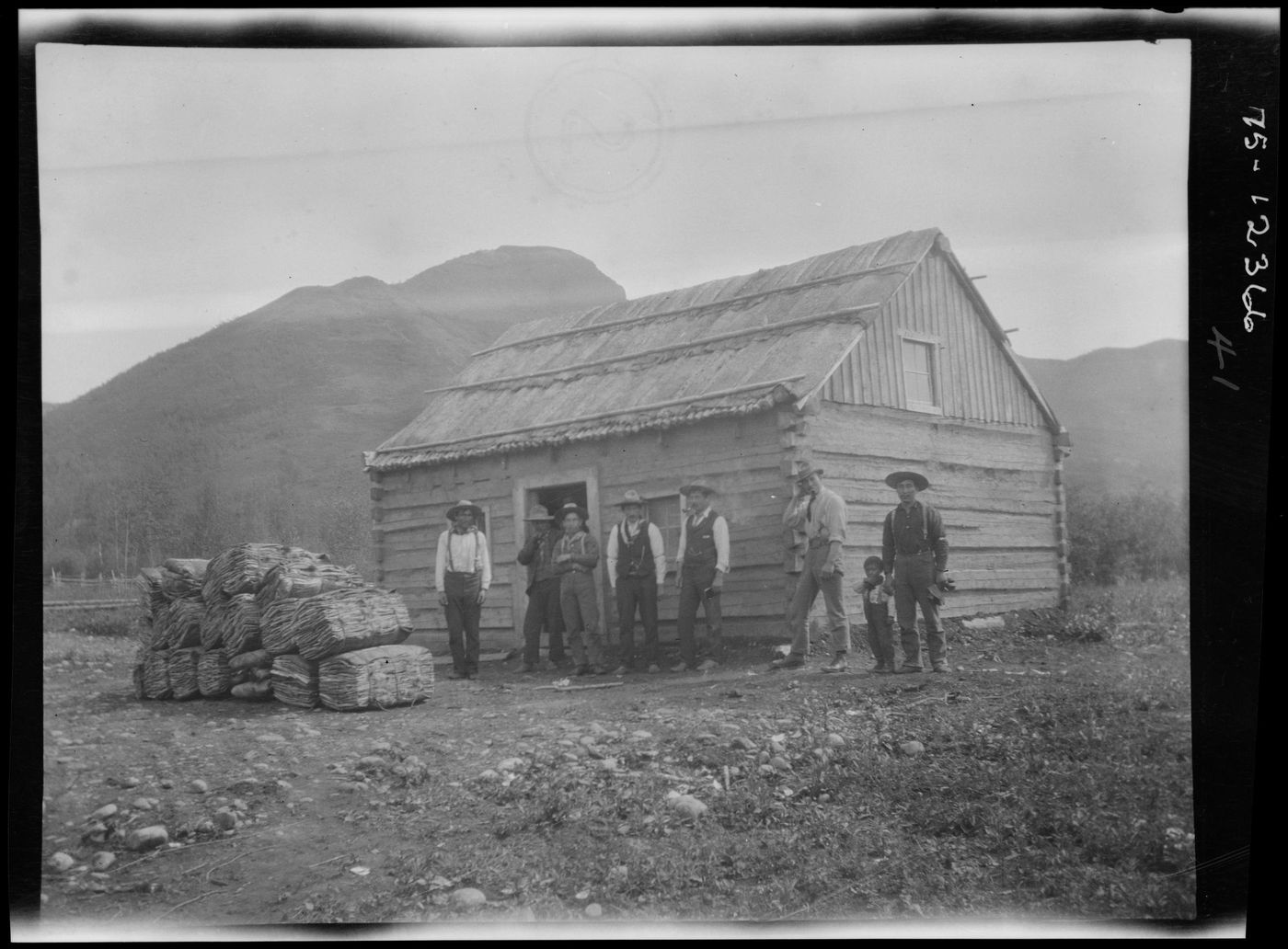
For nearly two centuries, the Hudson's Bay Company's primary business was the fur trade, specifically beaver pelts used for felt hats in Europe. The company established a network of coastal trading posts, known as factories, around Hudson and James Bays. Key early posts included Moose Factory (1673), Fort Albany (1679), and York Factory (1684). Inland posts were not built until 1774, after which York Factory became the main post due to its access to interior waterways. Trade was conducted with Indigenous trappers who brought furs to these posts. In exchange, they received European manufactured goods such as metal tools, guns, textiles, and the Hudson's Bay point blanket. By the 18th century, point blankets accounted for more than 60 per cent of the trade. To standardize transactions, HBC introduced the "Made Beaver" as a unit of trade currency, equivalent to one prime male beaver pelt. This period was marked by both cooperation and conflict with Indigenous peoples, as the trade introduced new goods and devastating diseases, altering traditional economies and societies.
Conflict, Competition, and Merger
The company's early operations were contested by French rivals. In March 1686, a French raiding party captured HBC posts along James Bay, and conflicts continued through the late 17th century, including the Battle of Hudson's Bay in 1697, the largest naval battle in the history of the North American Arctic. These conflicts impacted the company's dividends for over 20 years. The Treaty of Utrecht in 1713 solidified British control of Hudson Bay. A major competitor emerged later in the form of the Montreal-based North West Company (NWC), founded in 1779 as the first joint-stock company in Canada. The intense rivalry between the HBC and the NWC, including the Pemmican War, culminated in the Battle of Seven Oaks in 1816. By government intervention, the two companies were forcibly merged in 1821. The HBC then established an extensive inland post system, with Fort Vancouver becoming its Pacific headquarters. After the merger, the company had a corps of 25 chief factors and 28 chief traders who shared in its profits.
Key Events and Posts in the Fur Trade
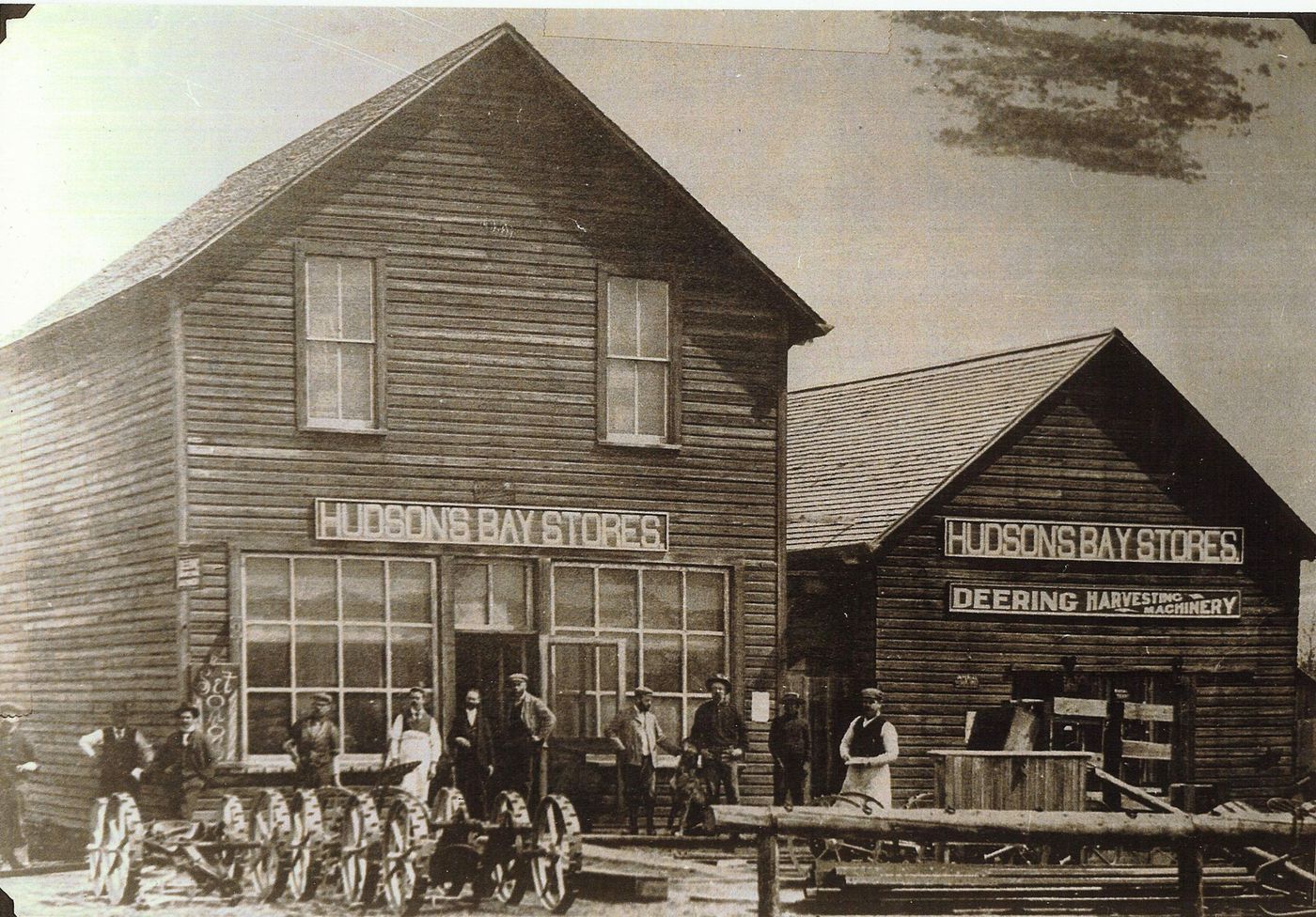
The expansion and operation of the Hudson's Bay Company's trade network can be traced through specific posts and events. The company's first inland trading post was established by Samuel Hearne in 1774 at Cumberland House, Saskatchewan. However, other inland houses pre-date this, such as Henley House established in 1743. The rivalry with the North West Company defined much of the late 18th and early 19th centuries. The company also faced competition from independent traders like James Sinclair and Andrew McDermot in the Red River Colony during the 19th century. In the Pacific Northwest, based at Fort Vancouver, the HBC enforced a policy to discourage U.S. settlement in the region it effectively controlled. The company carried on the early presence of the NWC in the present-day United States at sites like Spokane House, Fort Okanogan, and Fort Nez Percés after the 1821 merger.
Significant developments during this era include the establishment of the company's first inland trading post by Samuel Hearne in 1774, which was Cumberland House in Saskatchewan. In 1779, rival traders founded the North West Company in Montreal to compete with the Hudson's Bay Company. This competition intensified and led to the Pemmican War, culminating in the Battle of Seven Oaks in 1816. The British government forcibly merged the two companies in 1821 to end the violent rivalry. Following the merger, their combined territory was extended by a licence to the North-Western Territory, reaching to the Arctic and Pacific Oceans.
- 1668: Nonsuch expedition establishes Charles Fort (Rupert House).
- 1670: Royal charter granted, establishing HBC and Rupert's Land.
- 1686 to 1713: Period of conflict with French traders, including capture of posts.
- 1743: Henley House established inland from Hudson Bay.
- 1774: Cumberland House becomes first official inland post.
- 1779: Founding of the rival North West Company.
- 1816: Battle of Seven Oaks during the Pemmican War.
- 1821: Forced merger of HBC and the North West Company.
- 1820 to 1870: HBC issues its own paper money in sterling in Rupert's Land.
Transition from Fur Trade to Retail
The HBC's role as a governing power in western Canada ended in 1869 when it relinquished control of Rupert's Land to the new Dominion of Canada. The company received £300,000 and one-twentieth of the fertile land in the region. This transfer was important for Canadian westward expansion and settlement. Following this, HBC began diversifying its business interests. It established its namesake department stores, with the first Hudson's Bay department store opening in 1881 in Winnipeg. The company expanded through acquisitions, purchasing the Zellers and Fields discount store chains in 1978. It also acquired and converted several regional department stores like Morgan's, Simpsons, and Woodward's into The Bay banner. This marked the company's evolution from a fur trading entity into a major Canadian retail and commercial property holding company. In 1999, the company launched the Home Outfitters home furnishings chain.
Ownership Changes and International Expansion
The latter half of the 20th century saw significant changes in HBC's ownership structure. The Thomson family was the majority stockholder from 1979 to 1992, selling its last shares in 1997. In 2006, American businessman Jerry Zucker bought the company and took it private. After Zucker's death in 2008, HBC was acquired by NRDC Equity Partners and was operated by the latter's holding company Hudson's Bay Trading Company until 2012. The company returned to public trading on the Toronto Stock Exchange from 2012 to 2020, with NRDC as the main shareholder. During the 2010s, HBC expanded internationally, owning luxury retailers like Lord & Taylor and Saks Fifth Avenue in the United States, and operating stores in the Netherlands until selling them in 2019. However, the traditional department store model faced severe challenges from e-commerce and shifting consumer habits. By the 2020s, the company's fortunes had declined sharply.
Liquidation and Final Corporate Steps
The final chapter of the Hudson's Bay Company began with a series of corporate divestments and restructuring. In November 2024, the company spun off its American assets into a separate holding company called Saks Global. By early 2025, its business consisted solely of its Canadian Hudson's Bay stores and the Canadian locations of Saks stores operated under a licensing agreement, which included 3 Saks Fifth Avenue and 13 Saks OFF 5TH stores. In March 2025, HBC filed for creditor protection. At that time, it employed approximately 9,364 people and operated 80 Hudson's Bay stores. All remaining stores were closed by 1 June 2025. The company's intellectual property and brand assets, including the rights to the point blankets, were sold to Canadian Tire Corporation, Ltd. in June 2025 following court approval. The company was formally renamed 1242939 B.C. Unlimited Liability Co. in August 2025. By December 2025, the liquidation was essentially complete, with its historic royal charter and art collection auctioned off, and former store leases sold or returned. As of February 2026, only eight employees remained, a stark contrast to its peak of roughly 70,000 employees in 2006.
Historical Employment and Store Counts
The scale of the Hudson's Bay Company fluctuated dramatically over its long history, reflecting its changing business focus from fur trade to retail. The following table illustrates key figures at different points in time, highlighting its expansion and eventual contraction. These figures underscore the company's dramatic decline in its final years. The store count also diminished from a national network to just the 80 Hudson's Bay locations before their closure in 2025. The company's intellectual property, however, continues under new ownership at Canadian Tire. The company's first paper money was issued between 1820 and 1870, denominated in sterling for circulation primarily in the Red River Colony.
| Year | Key Business Notes |
|---|---|
| 2006 | Peak employment prior to privatization. |
| 2012 to 2020 | Publicly traded on TSX. Owned U.S. luxury retailers. |
| March 2025 | At filing for creditor protection. 80 HBC stores. |
| February 2026 | Final employees during liquidation. |
The Made Beaver and Trade Goods
A central mechanism of the Hudson's Bay Company's fur trade was the Standard of Trade and the use of the Made Beaver (MB) as a currency. Instituted in the 18th century, this system ensured consistent pricing for goods and furs across all trading posts in Rupert's Land. The Made Beaver was defined as one prime, worn beaver pelt ready for processing. All other trade items and animal pelts were assigned a value in MB. For example, two otter pelts might equal one Made Beaver. Popular trade goods exchanged for furs included knives, kettles, beads, needles, and the woollen point blankets. The arrival of Indigenous trappers at the posts was a major annual event, marked by formal trading ceremonies between the chief trader and the captain of the Indigenous contingent. This standardized economic system facilitated the exchange that drove the company's operations for generations.
Frequently asked questions
What happened to the Hudson's Bay Company?
The Hudson's Bay Company ceased operations and was liquidated in 2025. After years of financial decline, it filed for creditor protection in March 2025 and closed all its remaining stores by June 2025. Its intellectual property, including the brand and rights to products like the point blanket, was sold to Canadian Tire Corporation. The corporate entity was formally renamed 1242939 B.C. Unlimited Liability Co. in August 2025, marking the end of its 355-year history.
What is the Hudson's Bay point blanket?
The Hudson's Bay point blanket is a woollen blanket with distinctive coloured stripes, or points, woven into it. It was one of the company's most popular trade goods during the fur trade era, exchanged with Indigenous trappers for beaver pelts. By 1700, these blankets accounted for over 60 per cent of the trade. The number of points indicated the blanket's finished size. The design remains well-known and is now produced under licence by Canadian Tire.
Did the Hudson's Bay Company only operate in Canada?
No, while its core operations were in Canada, the Hudson's Bay Company expanded internationally at various points. In the 2010s, it owned and operated several U.S. department store chains, including Lord & Taylor and Saks Fifth Avenue. It also operated stores in the Netherlands until selling that business in 2019. However, its historical heartland was always the Canadian territories tied to the fur trade and, later, its national retail network.
When was the Hudson's Bay Company founded?
The Hudson's Bay Company was founded on 2 May 1670. On that date, King Charles II of England issued a royal charter incorporating 'The Governor and Company of Adventurers of England, trading into Hudson's Bay.' This charter granted the company a monopoly over trade in the vast territory of Rupert's Land, defined by the Hudson Bay drainage basin. The company was established following successful exploratory voyages, including the 1668 journey of the ship Nonsuch which led to the founding of Charles Fort. This founding date makes HBC the oldest corporation in North America.
Who owns the Hudson's Bay Company brand now?
The Hudson's Bay Company brand and intellectual property are now owned by Canadian Tire Corporation. This transfer occurred following HBC's liquidation in 2025. As part of the liquidation process, the company's remaining assets, including its well-known brand, were sold. Canadian Tire acquired these rights and now sells Hudson's Bay branded merchandise, such as the famous point stripe blankets, within its own retail stores. The former HBC corporate entity was formally renamed 1242939 B.C. Unlimited Liability Co. in August 2025 after the sale of its intellectual property.
Sources and further reading
- Hudson's Bay Company (Wikipedia) en.wikipedia.org
- Hudson's Bay Company thecanadianencyclopedia.ca
- The untold story of the Hudson's Bay Company canadiangeographic.ca
- The Hudson's Bay Company, Canada History Society canadahistorysociety.ca
This article explains how things work and is not financial, tax or legal advice. Rules, limits and rates change, so check the current figures with the Canada Revenue Agency, your province or your financial institution before you act.