A Home Equity Line of Credit (HELOC) is a revolving secured loan that uses a homeowner's property as collateral, akin to a second mortgage. In Canada, HELOCs provide a flexible way to access funds for major expenses like home renovations, education, or debt consolidation, often at interest rates lower than unsecured credit products. Their popularity surged in the early 2000s alongside rising property values, leading to significant regulatory changes to manage risk. For Canadian homeowners, understanding HELOC rules, limits, and the inherent risks is crucial when considering this form of borrowing.
What Is a HELOC and How It Works
A Home Equity Line of Credit is a revolving type of secured loan where the lender agrees to lend up to a maximum amount, using the borrower's property as collateral. It functions similarly to a second mortgage and is categorized as such within the lending industry. The key feature of a HELOC is its flexibility, allowing borrowers to draw funds, repay, and redraw again as needed during the draw period, paying interest only on the outstanding balance. This revolving nature distinguishes it from a conventional home equity loan, which provides a lump sum upfront. Because the loan is secured against a home, lenders generally see it as low-risk, which often leads to more attractive interest rates compared to unsecured credit options like credit cards or personal loans.
The term of a HELOC is split into two distinct periods. The first is the draw period, which typically lasts 10 years, during which the borrower can access funds up to their credit limit. During this time, payments are often interest-only on the amount used. Following the draw period is the repayment period, where the outstanding balance plus interest becomes due. Repayment during this phase can be structured as a lump-sum balloon payment or according to a loan amortization schedule, requiring payments on both principal and interest. Borrowers can usually make early repayments at any time during the term, choosing to pay the minimum interest-only amount or the full drawn amount plus interest.
Lenders determine the maximum HELOC amount based on two primary variables: the value of the property and the borrower's creditworthiness. This is expressed through a combined loan-to-value (CLTV) ratio. In Canada, the Office of the Superintendent of Financial Institutions (OSFI) caps the maximum loan-to-value ratio for a HELOC alone at 65% of the home's value. However, the total combined borrowing, including the first mortgage and the HELOC, cannot exceed 80% of the home's total appraised value. This regulatory framework is designed to mitigate risk and ensure homeowners maintain a buffer of equity.
History and Market Growth in Canada
The HELOC market in Canada experienced rapid growth in the early 2000s, expanding by approximately 20% per year. The total value of HELOCs grew from $35 billion in 2000 to roughly $186 billion by 2012. During this period, HELOCs' share of non-mortgage consumer debt increased dramatically from 10% to 40%, while credit cards consistently held about a 15% market share. This surge was driven by low interest rates and sustained increases in property prices, which gave homeowners growing equity to secure larger loans. The product's flexibility and the perception of it being more favourable than a 'second mortgage' also contributed to its popularity.
The 2008 financial crisis and the subsequent recession prompted the Canadian government to implement measures to mitigate risks associated with HELOCs. Growth stabilized after 2008, averaging around 2% per year, due to lower demand, exceptionally low mortgage rates, and a more regulated market. Key regulatory changes included a 2011 decision to make HELOCs ineligible for government-backed portfolio insurance, which lenders had used to securitize pooled mortgages. Furthermore, OSFI introduced a cap limiting the maximum LTV ratio for HELOCs to 65% and enforced stricter underwriting rules through the Residential Mortgage Underwriting Practices and Procedures Guideline. These actions were taken to limit homeowner leverage and ensure financial system stability.
The HELOC market in Canada is mature and well-established, especially when compared to other countries. For context, the United Kingdom did not have a similar product until a fintech introduced one in 2021, and Brazil saw its first HELOC offered by a fintech only in 2023. The Canadian market's development and subsequent regulation serve as a model for how such credit products evolve in response to economic cycles and housing market dynamics. The history shows a pattern of rapid adoption followed by regulatory tightening to prevent the kind of systemic risks seen in other markets.
Rules, Limits, and Qualification in Canada
Canadian homeowners must meet specific rules and limits to qualify for a HELOC. The primary regulatory limit, set by OSFI, stipulates that a HELOC alone cannot exceed 65% of the home's lending value. Furthermore, the combined total of a homeowner's mortgage and HELOC balance cannot surpass 80% of the home's total appraised value. To calculate the maximum accessible amount, one would take 80% of the home's value, subtract the current mortgage balance, and ensure the result does not exceed 65% of the home's total value. For example, a homeowner with a $600,000 home and a $200,000 mortgage could access up to $280,000 via a HELOC, which represents 46.7% of the home's value and is within the 65% limit.
Qualifying for a HELOC requires proof of home equity, a strong credit history, and stable income. Applicants must also pass a stress test administered by the lender. The stress test evaluates the borrower's ability to make payments at a higher interest rate, using either the OSFI-set qualifying rate of 5.25% or the contract rate plus 2%, whichever is higher. This test is similar to the one used for mortgage approvals and is designed to ensure borrowers can handle potential rate increases during the loan's term. Lenders also typically require that borrowers maintain a minimum level of equity in the home, often between 15% and 20%, as a condition of providing the line of credit. This equity acts as a safety buffer for both the borrower and the lender.
- Maximum HELOC-only LTV: 65% of home value (OSFI rule).
- Maximum combined LTV (mortgage + HELOC): 80% of home value.
- Stress test rate: Higher of 5.25% or contract rate + 2%.
- Typical minimum equity requirement: 15-20%.
- Common draw period length: 10 years.
- Common interest type: Variable rate tied to lender's prime rate.
Failure to repay a HELOC or meet its requirements may result in foreclosure because the loan is secured against the borrower's home. Lenders generally require borrowers to maintain a certain level of equity in the home as a condition of providing the line of credit. In Canada, regulatory measures such as a maximum loan-to-value ratio cap for HELOCs aim to mitigate risks. These rules are designed to reduce the likelihood of adverse outcomes for homeowners.

Types of HELOCs Available in Canada
Canadian financial institutions primarily offer two types of HELOCs: combined (or readvanceable) and stand-alone. A combined HELOC, such as RBC's Homeline Plan or Scotiabank's Scotia Total Equity Plan (STEP), integrates a traditional mortgage with a home equity line of credit under a single credit limit. These products allow borrowers to access up to 80% of their home's value in total, with the HELOC portion capped at 65%. As the mortgage is paid down, the available credit on the HELOC portion increases automatically, providing ongoing access to equity without reapplying. These plans often allow for multiple mortgage components with different terms and rates within the same structure, offering significant flexibility for financial management.
A stand-alone HELOC is not tied to the borrower's primary mortgage and can be obtained even if the mortgage is held with a different lender. It is a revolving line of credit secured solely against the home's equity. The borrowing limit for a stand-alone HELOC is also subject to the 65% LTV cap. This type is suitable for homeowners who do not wish to refinance their existing mortgage but want to access their equity. Both types of HELOCs function with variable interest rates, typically set at the lender's prime rate plus a margin, which can range from prime plus 1.00% and higher depending on the borrower's credit profile and the lender.
Some lenders offer specialized HELOC products with unique features. National Bank's All-In-One product, for instance, combines a mortgage and line of credit, allowing access to repaid principal up to 65% of the property's value. These integrated products aim to provide financial flexibility and consolidation benefits, often featuring flat monthly fees for account integration and consolidated statements. Other examples include products from EQ Bank and HomeEquity Bank, which cater to different borrower needs, demonstrating the variety and innovation within the Canadian HELOC marketplace.
Comparison with Other Borrowing Options
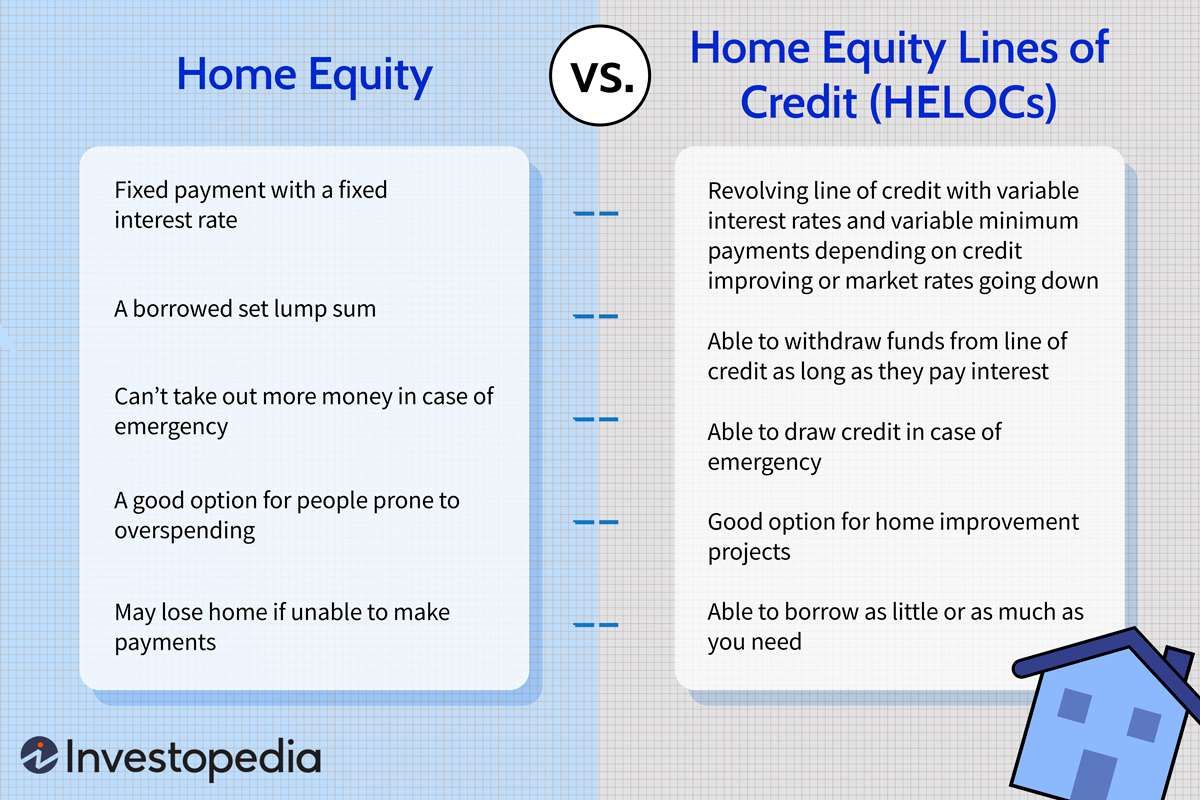
When considering how to finance a major expense, Canadians often weigh a HELOC against alternatives like a home equity loan or a personal loan. A home equity loan provides a one-time lump sum with either a fixed or variable interest rate, and it is repaid in regular installments over a set term. The total borrowed, including the existing mortgage, can also go up to 80% of the home's value. This option suits those who know the exact amount needed and prefer predictable payments. In contrast, a HELOC offers revolving credit with a variable rate, ideal for ongoing or uncertain costs where funds are needed intermittently over time.
Comparing a HELOC to an unsecured personal loan highlights significant differences in structure, risk, and cost. Personal loans are not secured by property, so they do not risk foreclosure, but they come with higher interest rates and lower borrowing limits, often capped around $50,000. HELOCs typically offer lower interest rates because they are secured, but they put the borrower's home at risk if payments are missed. The choice between them depends on the borrower's need for flexibility, the amount required, and their comfort with using their home as collateral. A HELOC is generally advisable for homeowners with at least 20% equity who value flexibility and anticipate needing funds over an extended period.
| Feature | HELOC | Personal Loan |
|---|---|---|
| Credit Type | Revolving | Term loan |
| Interest Rate | Variable (Prime + margin) | Usually fixed |
| Repayment Style | Interest-only during draw. Principal + interest during repayment | Fixed payments (principal + interest) |
| Maximum Amount | Up to 65% of home value | ~$50,000 (varies) |
| Collateral | Home (secured) | None (unsecured) |
A personal loan differs from a HELOC as it provides a borrower with a fixed sum upfront rather than a revolving line of credit. A personal loan is typically unsecured, meaning it is not backed by property like a home. This type of loan usually comes with a structured repayment plan from the beginning. Consumers should consider these differences when choosing a product that aligns with their financial needs.
Risks and Considerations for Canadian Borrowers
The primary risk of a HELOC is that it is secured against the borrower's home. Failure to repay the loan or meet its terms can lead to foreclosure, where the lender may seize the property to recover the debt. This risk is heightened because HELOCs have variable interest rates. Payments can increase if the Bank of Canada raises its policy rate, which directly influences lenders' prime rates. Borrowers must be prepared for potential payment increases, especially if they are only making interest-only payments during the draw period, as this does not reduce the principal balance. A significant rate hike could therefore make the debt much more expensive to service.
Another significant consideration is the potential for over-borrowing. The flexibility of a HELOC can tempt homeowners to use it for day-to-day expenses or discretionary spending, which is not its intended purpose. Using home equity for non-essential purchases can erode financial security and increase overall debt levels. Furthermore, when the draw period ends and the repayment period begins, borrowers may face a significant jump in monthly payments as they start repaying principal plus interest, which can strain budgets if not planned for in advance. This shift can be a shock for those accustomed to making only minimal interest payments.
Regulatory measures in Canada, such as the 65% LTV cap and stress tests, are designed to mitigate these risks by ensuring borrowers maintain equity and can withstand higher rates. However, borrowers should personally assess their financial discipline, future income stability, and the purpose of the funds. It is also crucial to understand all associated fees, such as monthly account fees (e.g., $7 per month), appraisal costs, or legal fees, which can add to the overall cost of the HELOC. Careful evaluation of these factors is essential before committing to a home equity line of credit.
Current Landscape and Lender Offerings
As of 2026, the Bank of Canada's policy rate influences HELOC rates across the country. HELOC interest rates are typically expressed as the lender's prime rate plus a margin. For example, offers may be listed as 'Prime + 1.00%', resulting in a variable rate that changes with the prime rate. Major Canadian banks and financial institutions, including TD Canada Trust, RBC, Scotiabank, EQ Bank, and National Bank, offer various HELOC products, each with specific features, fees, and rate structures. Borrowers can find products tailored to different needs, from integrated mortgage plans to stand-alone lines of credit.
TD Canada Trust offers the Home Equity FlexLine, allowing access to up to 80% of the home's value. RBC's Homeline Plan combines a mortgage and HELOC, also up to 80% of the home's value. Scotiabank's STEP provides a flexible borrowing plan that can include multiple mortgage components and lines of credit under one first-priority mortgage. National Bank's All-In-One product features a flat monthly fee and allows access to repaid principal. EQ Bank and other lenders offer stand-alone HELOCs with competitive rates. These products demonstrate the market's maturity and the variety of options available to Canadian homeowners seeking to leverage their equity.
The Canadian HELOC market remains active, with products continuously evolving to offer more integration with everyday banking and financial management. The stability of mortgage rates and a regulated environment help maintain a balance between accessibility for borrowers and systemic financial risk management. Homeowners are advised to compare offers from multiple lenders, focusing not only on the interest rate but also on fees, repayment terms, and the ability to convert balances to fixed rates if desired. This due diligence ensures they select a product that best fits their long-term financial strategy.
Frequently asked questions
What is a HELOC and how does it work in Canada?
A Home Equity Line of Credit (HELOC) is a revolving line of credit secured by your home, functioning like a second mortgage. In Canada, you can borrow up to a limit, repay, and borrow again during a draw period (typically 10 years), making interest-only payments. After the draw period, you enter a repayment period where you must pay back the principal and interest. The maximum you can borrow through a HELOC alone is 65% of your home's value, and your total mortgage plus HELOC debt cannot exceed 80% of your home's value.
How much can I borrow with a HELOC in Canada?
The amount you can borrow depends on your home's equity. Regulators cap the HELOC-only portion at 65% of your home's lending value. However, your total combined borrowing (first mortgage plus HELOC) cannot exceed 80% of your home's appraised value. To calculate your maximum, find 80% of your home's value, subtract your current mortgage balance, and ensure that result is not more than 65% of your home's total value. Lenders also consider your credit score and income during approval.
What are the risks of getting a HELOC?
The main risk is that your home serves as collateral. Failure to repay can lead to foreclosure. HELOCs also have variable interest rates, so your payments can increase if interest rates rise. There is a risk of over-borrowing due to the product's flexibility, potentially using equity for non-essential purchases. When the draw period ends, the shift to principal-plus-interest repayments can significantly increase your monthly payment, which must be planned for to avoid financial strain.
What is the difference between a HELOC and a home equity loan?
A HELOC is a revolving line of credit you can draw from repeatedly, usually with a variable interest rate and interest-only payments initially. A home equity loan provides a one-time lump sum with either a fixed or variable rate, repaid in regular installments of principal and interest from the start. Both are secured by your home and can total up to 80% of its value when combined with your mortgage. A HELOC offers flexibility for ongoing needs, while a home equity loan is better for a single, known expense.
Do I need to pass a stress test for a HELOC?
Yes, qualifying for a HELOC in Canada requires passing a stress test. Lenders must test your ability to make payments at a higher interest rate. They use either the qualifying rate set by OSFI, which is 5.25%, or your contract rate plus 2%, whichever is higher. This test ensures you can manage payments if interest rates increase during the term of your HELOC, similar to the stress test applied for mortgage approvals.
Can I get a HELOC if my mortgage is with a different bank?
Yes, you can obtain a stand-alone HELOC from a lender different from your mortgage holder. A stand-alone HELOC is a revolving line of credit secured against your home's equity separately from your primary mortgage. It is still subject to the same 65% LTV limit for the HELOC portion. Some homeowners prefer this option to avoid refinancing their existing mortgage while still accessing their equity. You will need to apply and qualify based on your equity, credit, and income with the new lender.
Sources and further reading
- Home equity line of credit (Wikipedia) en.wikipedia.org
- Home Equity Line of Credit or Loan rbcroyalbank.com
- HELOC rates Canada, Best Home Equity Line of Credit rates ratehub.ca
- How to choose between a home equity loan or ... scotiabank.com
- Home Equity Line of Credit (HELOC) nbc.ca
- What is a Home Equity Line of Credit (HELOC)? innovationcu.ca
This article explains how things work and is not financial, tax or legal advice. Rules, limits and rates change, so check the current figures with the Canada Revenue Agency, your province or your financial institution before you act.