Financial Planning and Analysis (FP&A) is a core corporate function focused on budgeting, forecasting, and strategic analysis to guide business decisions. It involves analyzing past and current financial data to model future performance and evaluate the financial implications of management choices. In Canada, this field is supported by professional bodies like FP Canada and the Financial Planning Association of Canada, and it represents a significant career path with thousands of job openings. For businesses, effective FP&A is crucial for assessing profitability, managing resources, and ensuring long-term stability and growth through informed financial trade-offs.
Definition and Core Functions of FP&A
Financial Planning and Analysis is an organized, intentional process of budgeting, forecasting, and deep-dive analysis within a company. It is a crucial function that supports management decision-makers by providing insights and data, rather than generating reports for external users. The FP&A group typically operates under the chief financial officer and is tasked with analyzing data to identify issues, support decisions, and make recommendations to address business problems. Its core purpose is to help executives evaluate the financial trade-offs and consequences of major decisions, ensuring company resources are used optimally to generate profits and control costs.
FP&A professionals answer critical questions about a business's future direction, moving beyond historical reporting to forward-looking forecasting. They help develop frameworks to evaluate one financial decision against another, such as whether to make or purchase materials or acquire new equipment. This involves creating financial models that actualize a business plan into a concrete financial plan, projecting future sales, costs, and profitability. For example, an FP&A professional might create a forecast for an eCommerce business to determine the units and price needed to hit a sales target, linked to inventory and cost projections.

Key Analytical Assessments and Techniques
Financial analysis within FP&A involves assessing several key elements of a firm to gauge its overall health and prospects. Profitability analysis examines a company's ability to earn income and sustain growth, primarily using the income statement. Solvency assessment determines the long-term ability to pay obligations to creditors, while liquidity analysis focuses on maintaining positive cash flow to meet immediate obligations. Stability evaluation considers the firm's ability to remain in business long-term without significant losses, utilizing both the income statement and the balance sheet alongside other indicators.
Analysts employ various techniques to conduct these assessments. Financial ratio analysis compares metrics of solvency, profitability, and growth across different time periods for the same firm or against similar companies. Percentage analysis, including vertical (common-size) and horizontal analysis, reduces financial statements to comparable percentages of a base amount, such as sales or total assets. Comparative analysis presents information for multiple periods side-by-side to identify trends. A central ongoing process is variance analysis, often called budget versus actuals (BVA), which compares actual performance against planned budgets to identify deviations and their causes.
- Profitability: Assessed via income statement ratios like net profit margin.
- Solvency: Evaluated using balance sheet ratios such as debt-to-equity.
- Liquidity: Measured with ratios like the current ratio from the balance sheet.
- Stability: Analyzed using a combination of financial statements and other indicators.
- Ratio Analysis: Comparison of metrics across time or against peers.
- Percentage Analysis: Vertical and horizontal analysis for comparability.
- Comparative Analysis: Side-by-side review of multi-period data.
- Variance Analysis: Budget versus actuals (BVA) performance review.
The FP&A Profession in Canada
The FP&A field in Canada is a well-established career path with strong professional support networks. Organizations like FP Canada provide tools and resources for certified financial planners, while the Financial Planning Association of Canada (FPAC) offers advocacy, community, and ethics resources for the planning community. In Quebec, the Association des Professionnels en Finance de Montréal (AFP-Montréal) creates opportunities for training, exchanges, and networking for finance professionals, including those in FP&A, and has expanded its conference offerings in this area since 2024. These bodies contribute to the professional development and standardization of practices within the field.
The job market for FP&A roles in Canada is active, with thousands of positions listed at any given time. Roles range from analysts to managers, with compensation reflecting the seniority and strategic importance of the function. In Toronto, for instance, salary ranges for Financial Planning and Analysis Manager positions can vary from approximately $121,500 to $170,640. Professionals in these roles are expected to develop strong performance management capabilities and top analytical skills. Their work is integral to the budgeting, forecasting, and analytics cadence that supports a company's major financial decisions, from capital investment to product line evaluation.

Practical Applications and Business Impact
FP&A has direct, practical applications across all types and sizes of businesses. For a startup that has recently raised capital, an FP&A professional can create a financial model to forecast how the funds should be spent to generate revenue and profit, answering critical questions about cost structures and timelines to profitability. In established companies, FP&A helps determine which products or divisions are most profitable and which may be draining resources, allowing management to strategically allocate limited cash and manpower. This analysis prevents profitable segments from subsidizing losses in others, which can be detrimental to the overall business.
The function also supports specific operational decisions. It can help evaluate whether to make or purchase materials, acquire or lease equipment, or issue shares versus negotiating a bank loan. For industries like Software as a Service (SaaS), FP&A reports may be a monthly requirement from investors, focusing on metrics like recurring revenue and customer acquisition costs. The insights provided help companies understand their financial health, forecast growth, and make informed decisions on profit margins and strategic direction, ultimately contributing to long-term viability and competitive advantage.
Theoretical Challenges and Limitations
Despite its utility, financial analysis within FP&A faces several inherent theoretical challenges that professionals must manage. Financial ratios, a fundamental part of analysis, provide little insight about a firm's prospects in an absolute sense. Their meaning is derived only through comparison to past performance or industry peers. A single ratio often holds little meaning and can be logically interpreted in multiple ways, requiring analysts to combine several related ratios to form a comprehensive picture of performance. This relative nature means the insights are dependent on the chosen reference points.
Other challenges stem from accounting practices and timing. Seasonal factors can distort year-end financial values, making them unrepresentative of the typical business cycle. Analysts often use average account values to mitigate this issue. Perhaps most significantly, financial ratios are not objective measures. They are directly influenced by the accounting methods and policies a company employs. Changes in these policies, such as depreciation methods or revenue recognition, can yield drastically different ratio values, complicating trend analysis and peer comparisons. These limitations underscore that FP&A is an interpretive discipline that requires professional judgment alongside quantitative analysis.
Essential Skills and Tools for FP&A
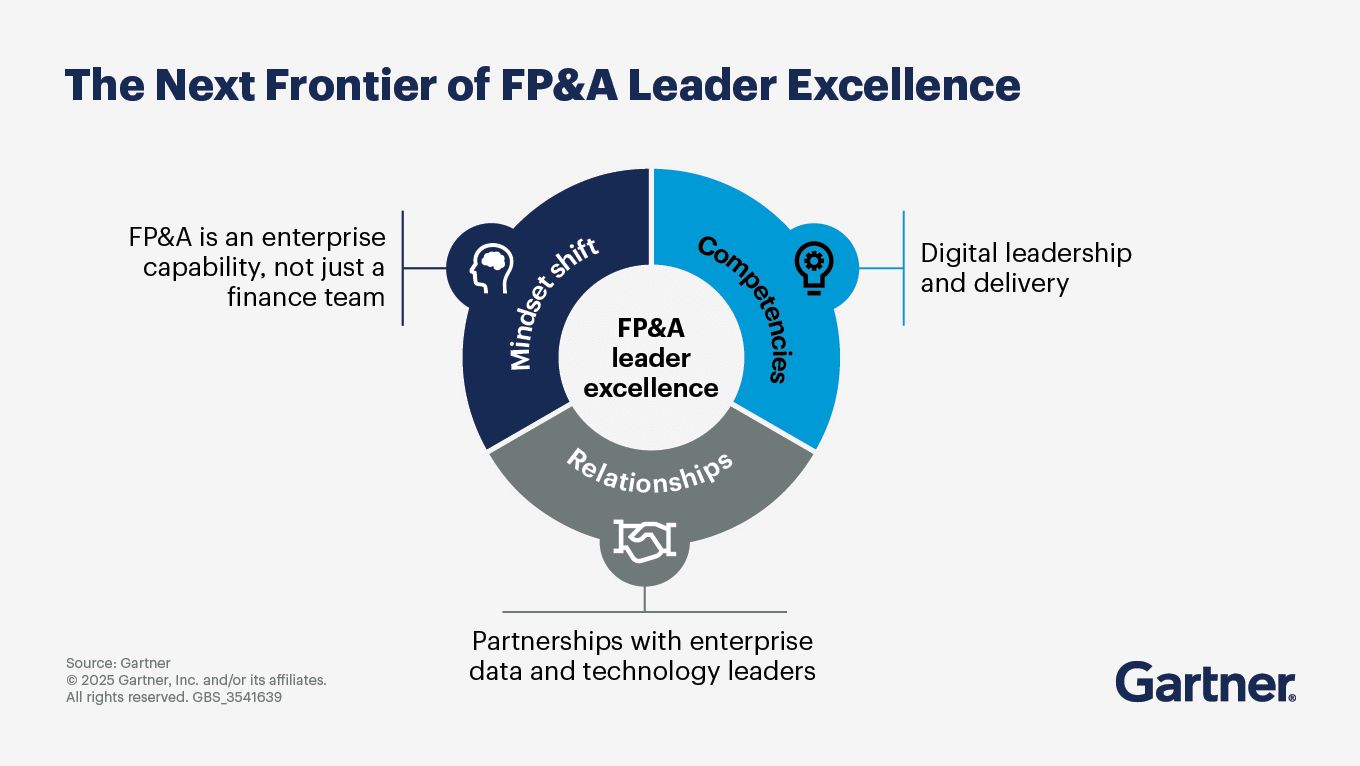
Success in FP&A requires a specific skill set focused on analysis, communication, and strategic thinking. Research indicates that developing strong performance management capabilities is crucial for those interested in the field. Top skills include advanced quantitative and qualitative analysis to evaluate financial trade-offs, proficiency in financial modeling and forecasting, and the ability to identify requirements for changes in management systems based on data insights. FP&A professionals must also be adept at communicating complex financial information clearly to support management decision-making.
The tools used in FP&A have evolved with technology. Specialized software like Sage Intacct offers dynamic reporting, budgeting, and planning capabilities designed for FP&A needs, often integrated into cloud-based Enterprise Resource Planning (ERP) systems. These tools facilitate multi-dimensional data collection and analysis, which is increasingly important for detailed reporting. The analysis functionality must handle nuances across different industries, from SaaS revenue recognition under standards like IFRS 15 to inventory planning for eCommerce, making adaptable and robust systems a key component of modern FP&A practice.
Frequently asked questions
What is a common challenge in financial ratio analysis?
A common challenge is that financial ratios are not objective. Their values depend heavily on the accounting methods a company uses. Changes in accounting policies can drastically alter ratio results. Additionally, a single ratio has little meaning without a reference point, such as comparison to past performance or industry competitors.
What does FP&A stand for?
FP&A stands for Financial Planning and Analysis. It is a crucial corporate function focused on financial planning, performance analysis, and strategic decision making. Professionals in this field analyze past, current, and future data to help teams and executives make informed business decisions. Their work involves organized budgeting, forecasting, and deep dive analysis to support a company's major financial choices and evaluate tradeoffs between different decisions.
What are typical FP&A job responsibilities?
Typical FP&A responsibilities include preparing budgets and long range forecasts, performing variance analysis such as comparing budget versus actuals, and creating financial models. They analyze data to identify issues, provide insights, and support management decisions. This involves evaluating the profitability of products or divisions and making recommendations to address business problems. Their work supports decisions on capital allocation, cost management, and strategic planning to optimize resource use.
Are there FP&A professional organizations in Canada?
Yes, there are several professional organizations for financial planning and analysis in Canada. FP Canada certifies financial planners and provides them with tools and resources. The Financial Planning Association of Canada (FPAC) offers advocacy, community, and ethics resources for planners. Furthermore, associations like AFP Montréal create opportunities for training, exchanges, and networking specifically for finance professionals, contributing to their development through conferences and events.
How does FP&A help a startup business?
FP&A helps a startup by creating a financial model that turns a business plan into a concrete financial forecast. This helps founders understand how to effectively spend raised capital to generate revenue and profit. The professional develops a framework to evaluate tradeoffs between financial decisions, projects future costs, and determines sales targets. For example, they can forecast the units and price needed to hit a sales goal, linked to an inventory plan, providing crucial data for early strategic decisions.
Sources and further reading
- Financial analysis (Wikipedia) en.wikipedia.org
- FP&A afp-montreal.ca
- Financial Planning & Analysis | CPA Ontario Centre for ... uwaterloo.ca
- Financial Planning and Analysis verticalcpa.ca
- What is financial planning and analysis (FP&A) - Sage sage.com
This article explains how things work and is not financial, tax or legal advice. Rules, limits and rates change, so check the current figures with the Canada Revenue Agency, your province or your financial institution before you act.