The Canadian Imperial Bank of Commerce, known as CIBC, is one of Canada's largest financial institutions and a member of the Big Five banks. Formed in 1961 through the historic merger of the Canadian Bank of Commerce and the Imperial Bank of Canada, CIBC serves millions of clients across personal, commercial, and capital markets sectors. Headquartered at CIBC Square in Toronto's Financial District, the bank operates extensively within Canada and internationally. CIBC plays a significant role in the daily financial lives of Canadians through its vast branch network, digital banking services, and diverse product offerings.
Origins and Predecessor Banks
The Canadian Imperial Bank of Commerce was born from the merger of two historic Ontario-based banks. The Canadian Bank of Commerce was founded in Toronto in 1867 by businessman William McMaster. It grew rapidly, acquiring other banks and expanding its branch network, becoming a major financial force with expertise in currency trading. By 1874, it had 24 branches, including its first outside Ontario in Montreal. The Imperial Bank of Canada was founded in Toronto in 1875 by Henry Stark Howland, a former vice-president of the Canadian Bank of Commerce. It expanded westward, opening the first chartered bank branch in Calgary in 1886. Both banks grew significantly through the late 19th and early 20th centuries, with the Canadian Bank of Commerce pursuing an aggressive acquisition strategy. It acquired banks such as the Bank of British Columbia, the Bank of Halifax, and the Bank of Hamilton, which helped it build one of the strongest branch networks in the country.
The two banks operated independently for decades, handling events like the First World War and the Great Depression. The Canadian Bank of Commerce constructed its notable 34-storey head office in Toronto in 1931, which was the tallest building in the Commonwealth for over 30 years. In 1936, it became the first Canadian bank to establish a personal loans department. Following World War II, both banks expanded their services, with Canadian banks beginning to offer mortgages for new construction in 1954 after government encouragement. The stage was set for their eventual combination, which would create a banking giant.
The Historic Merger and Early Growth
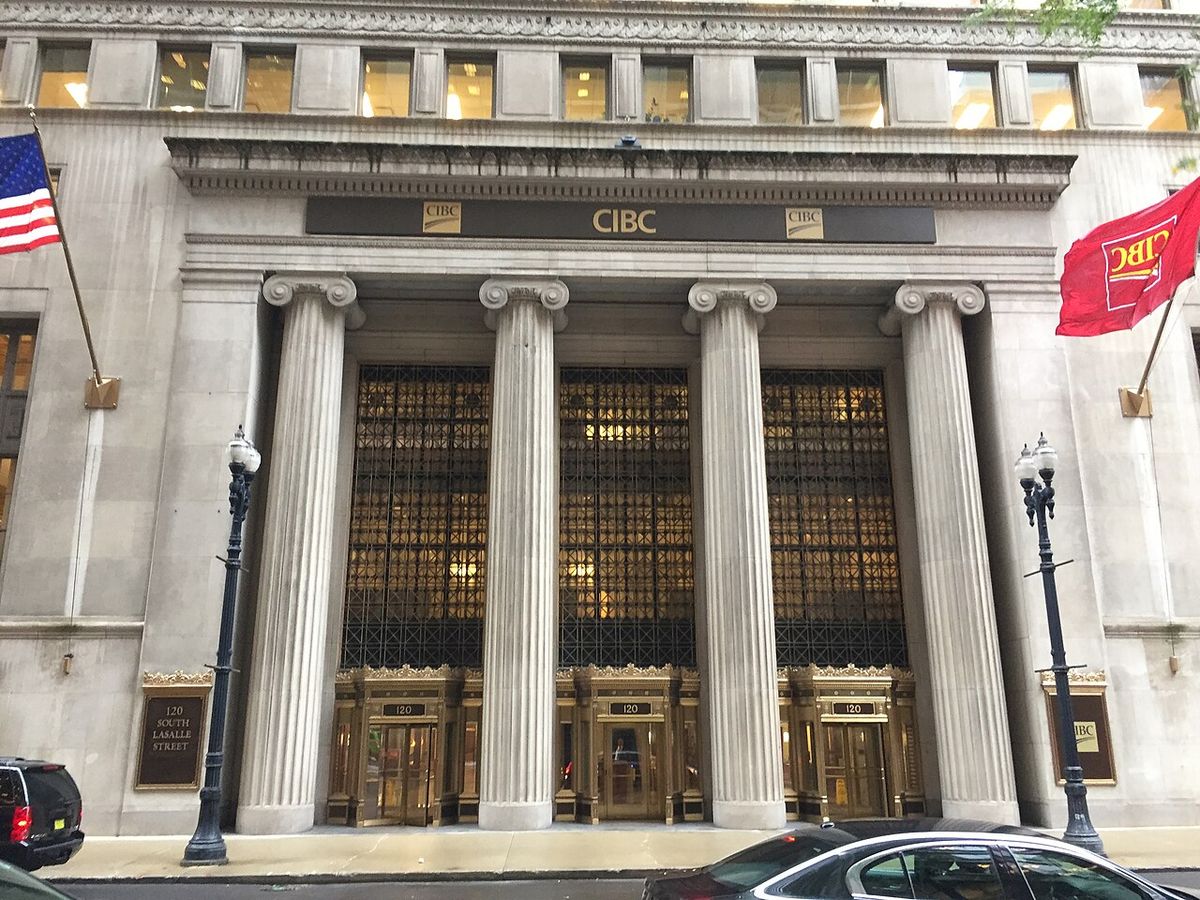
Barclays Bank, which had sold its Canadian operations to the Imperial Bank in 1956, began buying Imperial stock on the open market in 1960. Fearing a foreign takeover, Imperial's chairman, L. Stuart Mackersy, secretly approached Neil J. McKinnon, the president of the Canadian Bank of Commerce. Their agreement, reached swiftly at McKinnon's home in Toronto's Forest Hill neighbourhood, led to the largest merger between chartered banks in Canadian history. On June 1, 1961, the Canadian Imperial Bank of Commerce was officially formed with over 1,200 branches across Canada, instantly becoming the bank with the greatest resources and most branches in the country.
The newly merged bank quickly began modernization and expansion. In 1967, CIBC celebrated Canada's centennial by operating a branch on-site at Expo 67. It was an early adopter of technology, introducing the first computer-updated customer bank books at its Yonge and Bloor branch in Toronto and pioneering inter-branch banking. CIBC also introduced Canada's first 24-hour cash dispenser, a precursor to the modern ATM. The bank commissioned a new headquarters complex, Commerce Court, designed by architect I. M. Pei. When the 57-storey Commerce Court West tower was completed in 1973, it was the tallest building in Canada and the largest stainless-steel-clad building in the world.
Modern Expansion and Strategic Shifts
Regulatory changes in 1987 ended the separation of banks, investment dealers, trust companies, and insurance companies. CIBC moved quickly to become the first Canadian bank to operate an investment dealer open to the public, CIBC Securities. It acquired a majority interest in the respected underwriter Wood Gundy in 1988, merging it with its securities arm to form CIBC Wood Gundy, which later became CIBC World Markets. In 1998, CIBC partnered with Loblaws to create President's Choice Financial, a pioneering direct banking venture.
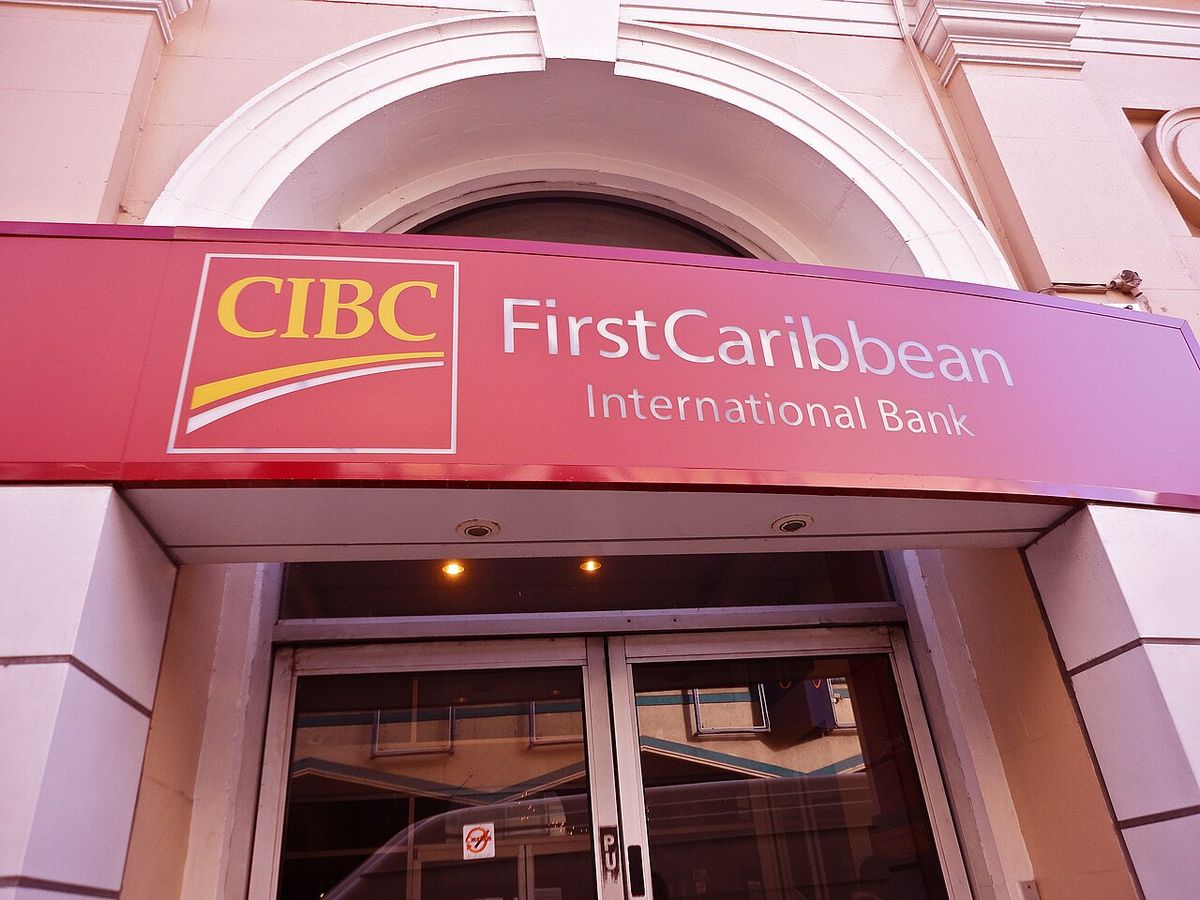
The early 21st century involved strategic divestments and acquisitions to sharpen the bank's focus. CIBC sold its stake in the Toronto Blue Jays in 2000 and its U.S. venture Juniper Financial to Barclays in 2004. A major expansion in the Caribbean occurred in 2006 when CIBC acquired Barclays' stake in FirstCaribbean International Bank, gaining majority control and later rebranding it CIBC FirstCaribbean. In 2010, CIBC acquired a large credit card portfolio from Citibank Canada. A significant move into the United States came in 2017 with the acquisition of Chicago-based PrivateBancorp for US$3.8 billion, rebranding it as CIBC Bank USA. That same year, CIBC launched Simplii Financial as a direct banking subsidiary after ending its joint venture with Loblaw.
- 1988: Acquired majority interest in Wood Gundy.
- 2006: Acquired majority control of FirstCaribbean International Bank.
- 2010: Acquired a CA$2.1-billion credit card portfolio from Citibank Canada.
- 2013: Acquired wealth management unit Atlantic Trust for US$210 million.
- 2017: Acquired PrivateBancorp, establishing CIBC Bank USA.
- 2017: Launched direct banking subsidiary Simplii Financial.
In recent years, CIBC has continued to evolve. It moved its headquarters to the newly developed CIBC Square in Toronto in 2021. The bank has been active in digital innovation, launching a mobile banking iPhone app in 2010 and introducing generative AI pilot programs. In 2025, CIBC became the first major Canadian bank to sign the federal government's voluntary code of conduct for generative AI. Under incoming CEO Harry Culham, the bank signaled a strategic shift to expand in high-margin areas like wealth management and U.S. commercial banking.
Business Operations and Structure
CIBC operates as a diversified financial institution through four primary strategic business units. Canadian Personal and Business Banking provides everyday banking services, loans, mortgages, and credit cards to individuals and small businesses across Canada. Canadian Commercial Banking and Wealth Management offers tailored financial solutions, investment management, and private banking for commercial clients and affluent individuals. U.S. Commercial Banking and Wealth Management, operating through CIBC Bank USA, provides middle-market commercial banking, personal banking, and private banking services mainly in the United States. The Capital Markets division delivers corporate lending, foreign exchange, investment banking, and global market products to institutional, corporate, and government clients.
The bank's operations extend beyond North America. It has a long-standing presence in the Caribbean, dating back to 1920 when the Canadian Bank of Commerce opened its first branches there. Today, this is managed through CIBC FirstCaribbean International Bank. CIBC also has operations in Asia and the United Kingdom. The bank serves approximately 15 million clients globally and employs around 50,000 people. Its institution number for Canadian banking transactions is 010, and its SWIFT code for international wires is CIBCCATT. CIBC trades on the Toronto Stock Exchange and the New York Stock Exchange under the symbol CM.
Financial Scale and Recent Performance
CIBC is a major financial force, consistently ranking among Canada's largest banks by assets. In 2023, the bank reported revenue of $23.3 billion and net income of $5.0 billion. It held total assets of $975.72 billion, underscoring its significant role in the financial system. The bank's market capitalization was approximately $39 billion. These figures reflect CIBC's extensive lending, investment, and deposit-taking activities across its business lines. The bank's performance is closely tied to the Canadian and U.S. economies, particularly in areas like residential mortgages, commercial lending, and capital markets activity.
Recent quarterly results demonstrate the bank's ongoing profitability. In the third quarter of 2025, CIBC reported adjusted net income of C$2.1 billion. The bank's financial results are influenced by interest rate environments, credit conditions, and economic growth. As a publicly traded company, CIBC returns capital to shareholders through dividends and share buybacks. Its financial strength supports its ability to invest in technology, expand its services, and manage economic cycles while maintaining regulatory capital requirements.

Corporate Governance and Leadership History
CIBC has experienced notable succession battles and leadership transitions throughout its history. When Al Flood became CEO, one of his first acts was to dismiss his chief rival, Paul Cantor. In 1999, a competition emerged between John S. Hunkin of Wood Gundy and Holger Kluge of Personal and Commercial banking, with Hunkin ultimately becoming chairman after Kluge retired. In 2004, Hunkin forced his heir-apparent, David Kassie, to resign as chairman of World Markets following several scandals in the United States. Gerald T. McCaughey succeeded Kassie and later became CEO, reportedly dismissing vice-chair Jill Denham to build his own executive team.
The positions of chairman and CEO were separated in 2003. The board of directors oversees the bank's strategic direction and risk management. Executive leadership is responsible for day-to-day operations and executing the business strategy across the bank's global divisions. In 2025, the bank signaled a new strategic direction under incoming CEO Harry Culham, focusing on expansion in wealth management and U.S. commercial banking. This history reflects the competitive and high-stakes nature of leadership at one of Canada's largest financial institutions.
Sponsorships and Community Involvement
CIBC has a long history of corporate sponsorship and community partnerships. It was a founding partner of the Toronto Blue Jays baseball club in 1977 and served as the team's official bank until selling its ownership stake in 2000. The bank was the lead partner for the 2015 Pan American and Parapan American Games held in Toronto. CIBC has also partnered with other Canadian corporations on co-branded products. As part of its 2010 acquisition from Citibank Canada, it gained and continues to market the co-branded Petro-Canada rewards credit card. It was the primary issuer of Aeroplan credit cards from 1991 to 2014 and remains a secondary issuer after an agreement with Toronto-Dominion Bank.
Community support extends to education and local initiatives. CIBC is an industry partner of the University of Waterloo Stratford Campus. The bank has supported Thompson Rivers University students through financial awards, co-operative education programs, and mentorship, earning the university's Milestone Achievement Award in 2014. Through its U.S. arm, CIBC Bank USA, it sponsors Chicago Fire FC soccer team. These sponsorships and partnerships align with the bank's brand and community engagement objectives, connecting it with clients across various aspects of their lives.
Risks and Contemporary Challenges
Like all major financial institutions, CIBC faces a range of operational and strategic risks. Cybersecurity is a persistent concern, with the bank reporting a surge in phishing attacks impersonating its brand. In 2018, CIBC was among the top brands used in phishing attacks, seeing a 600 percent increase in fake email attempts in one quarter. The bank must continuously invest in security measures to protect client data and transactions. Regulatory compliance is another significant area, as the bank operates under strict rules from Canadian, U.S., and international authorities governing capital, consumer protection, and anti-money laundering.
Market and economic risks directly impact CIBC's performance. The bank's large portfolio of Canadian residential mortgages makes it sensitive to shifts in housing prices and interest rates. Economic downturns can lead to higher loan losses, particularly in its commercial and credit card portfolios. Strategic execution also presents challenges, such as successfully integrating acquisitions like CIBC Bank USA and achieving growth targets in competitive markets. Furthermore, the bank must handle public scrutiny and maintain trust, especially following past regulatory issues in its capital markets operations. Adapting to technological change, including the rise of fintech competitors and the adoption of artificial intelligence, remains a key challenge and opportunity.
Frequently asked questions
What does CIBC stand for?
CIBC stands for the Canadian Imperial Bank of Commerce. This name was established in 1961 following the merger of the Canadian Bank of Commerce and the Imperial Bank of Canada. The merger was the largest between chartered banks in Canadian history. The bank is a Canadian multinational financial services corporation and is one of the two Big Five banks founded in Toronto. It is commonly known by its acronym in everyday financial contexts.
Is CIBC only in Canada?
No, CIBC is not only in Canada. While it is a major Canadian bank, it has significant international operations. This includes U.S. Commercial Banking and Wealth Management through CIBC Bank USA, formerly PrivateBancorp. It also operates in the Caribbean through CIBC FirstCaribbean International Bank and has additional operations in Asia and the United Kingdom, serving a global client base from its Toronto headquarters.
What is CIBC's institution number?
CIBC's institution number for Canadian banking transactions is 010. This three digit code is used within Canada to identify the bank for electronic transactions such as direct deposits and wire transfers. For international wire transfers, the bank uses the SWIFT code CIBCCATT. These codes are part of the standard identifiers used in the global and domestic financial system to route transactions correctly.
When was CIBC formed and from what merger?
CIBC was formed on June 1, 1961, through the merger of the Canadian Bank of Commerce and the Imperial Bank of Canada. This was the largest merger between chartered banks in Canadian history. The Canadian Bank of Commerce was founded in 1867, and the Imperial Bank of Canada was founded in 1873. The new bank began with over 1,200 branches across Canada, possessing the greatest resources and most branches of any bank in the country at that time.
What are CIBC's main business units?
CIBC operates through four strategic business units. These are Canadian Personal and Business Banking, Canadian Commercial Banking and Wealth Management, U.S. Commercial Banking and Wealth Management, and Capital Markets. This structure allows the bank to serve a diverse range of clients across different regions and financial needs. The bank serves 15 million clients globally and has 50,000 employees.
Where is CIBC headquartered?
CIBC is headquartered at CIBC Square in Toronto's Financial District. The bank moved its principal headquarters to this location on November 1, 2021. The decision to move to the Bay Park Centre development, which became CIBC Square, was announced in April 2017. CIBC is one of two Big Five banks originally founded in Toronto, the other being Toronto Dominion Bank.
Sources and further reading
- Canadian Imperial Bank of Commerce (Wikipedia) en.wikipedia.org
- CIBC: Personal Banking and Financial Services cibc.com
- CIBC Capital Markets | Industry-Leading Global Financing ... cibccm.com
- Canadian Imperial Bank of Commerce (CM.TO) ca.finance.yahoo.com
- Canadian Imperial Bank of Commerce (CIBC) thecanadianencyclopedia.ca
This article explains how things work and is not financial, tax or legal advice. Rules, limits and rates change, so check the current figures with the Canada Revenue Agency, your province or your financial institution before you act.