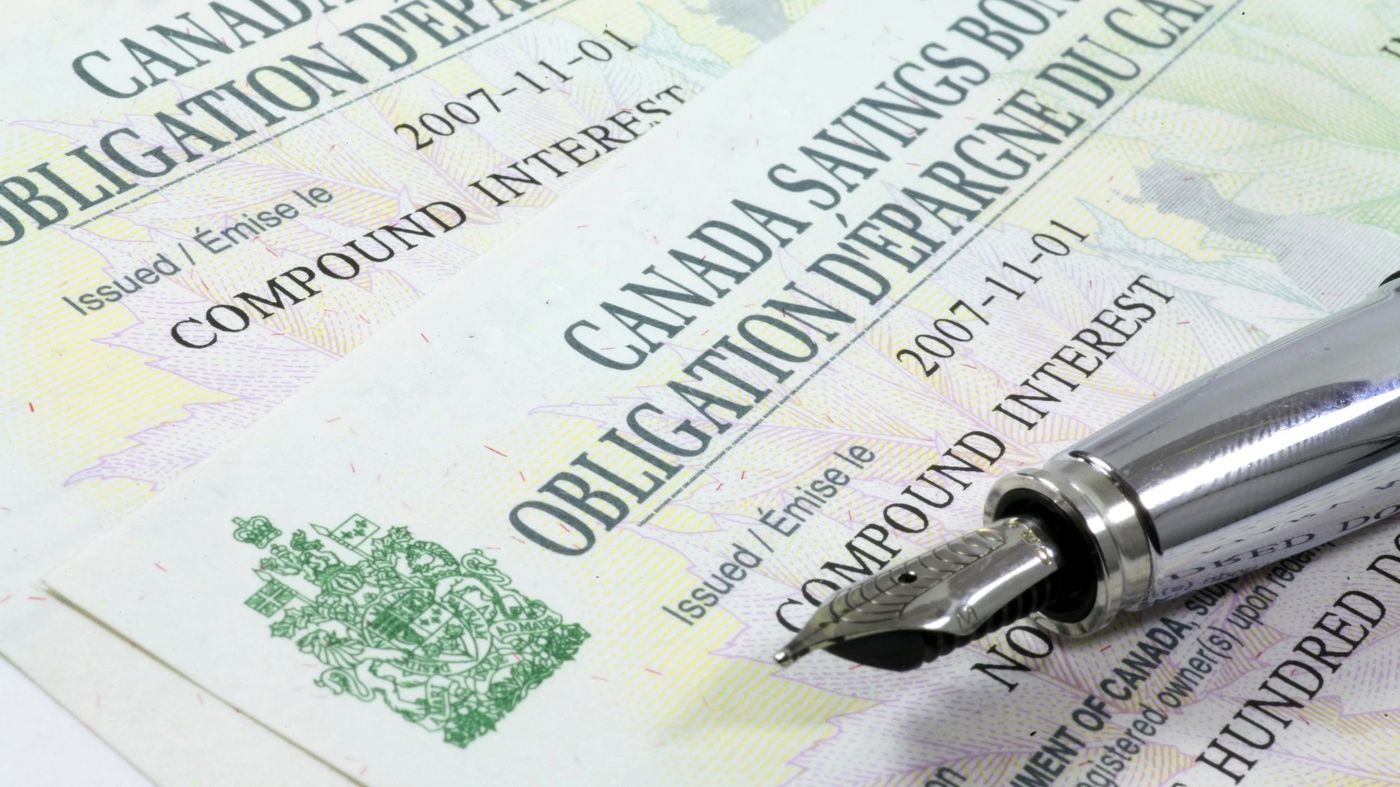
The Canada Savings Bond (CSB) was a debt security issued by the Government of Canada from 1945 to 2017. It allowed individual Canadians to lend money directly to the federal government in exchange for interest payments. The program was managed by the Bank of Canada and was designed to offer a competitive, guaranteed return, serving as a popular and secure savings vehicle for generations. Its sale was discontinued in 2017, though existing bonds continue to be honoured until redemption.
What Was a Canada Savings Bond
A Canada Savings Bond was a means for the Government of Canada to borrow money directly from individual Canadians. When an investor purchased a CSB, they were essentially loaning money to the federal government. In return, the government agreed to pay back the principal amount at maturity plus interest. These bonds were marketed to all Canadians, unlike other Government of Canada bonds which were primarily marketed to financial institutions. The bonds were intended to offer a competitive interest rate and carried a guaranteed minimum interest rate, making them one of the safest investments available. They were sold annually between early October and December 1. The program was a direct replication of the successful Victory Bond campaigns used during the World Wars, adapted for peacetime savings.
Historical Development and Decline
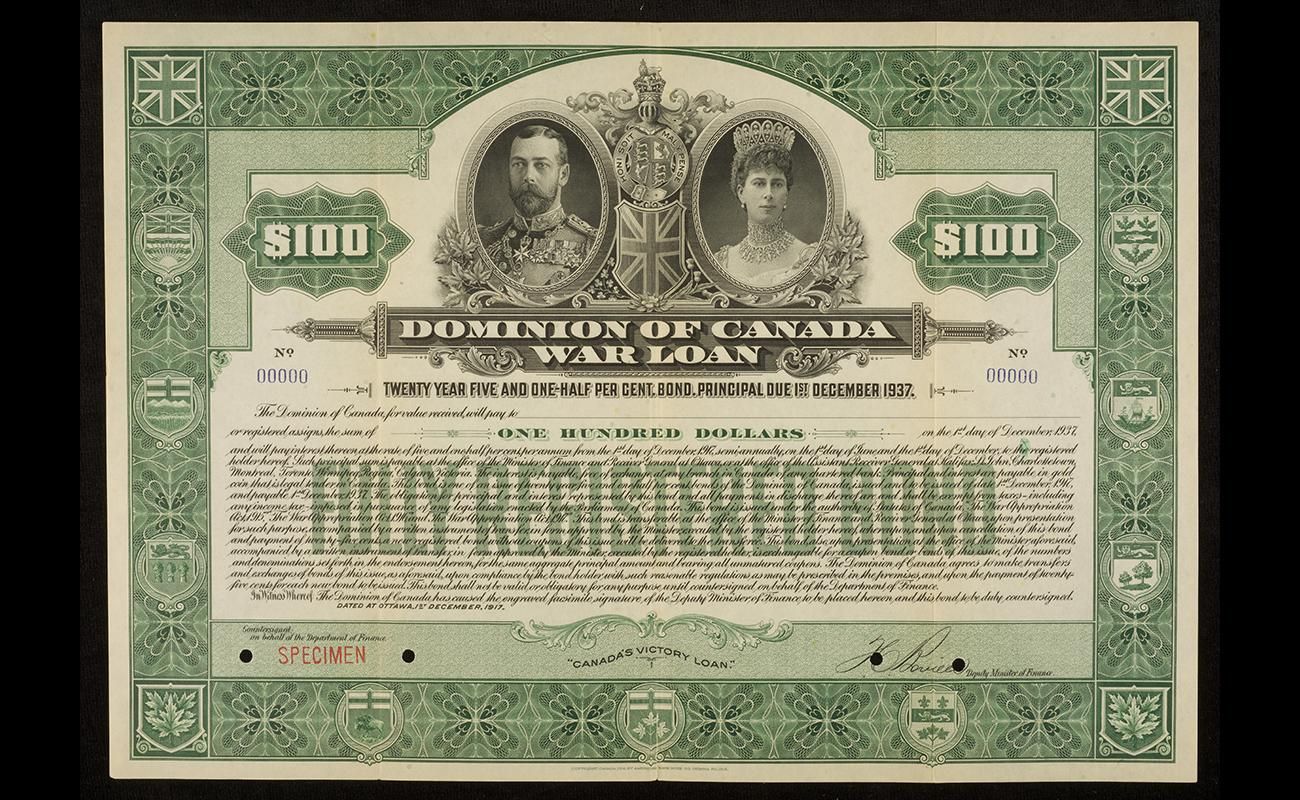
The concept of selling bonds directly to citizens originated with Victory Bonds, first sold in 1917 to finance Canada's efforts in World War I. Five bond campaigns were held between 1915 and 1919, and the program used extensive advertising, parades, and celebrity endorsements to encourage purchases. Community members who bought many Victory Bonds were given a Victory Loan Honour Flag as a token of gratitude. The program was revived for World War II. Building on this success, the Canada Savings Bond program was launched in 1945 to provide a secure postwar savings instrument for Canadians and a reliable funding source for the government. For decades, the program was highly popular, with issuance peaking at $55 billion in 1987. However, its relevance declined as the Canadian financial system evolved. By 2015, the annual issuance value had fallen to just over $6 billion. A government-commissioned study by KPMG in June 2015 estimated the program cost taxpayers $58 million annually and recommended its cancellation. Despite this, the Department of Finance initially ruled out ending the program. This was not the first review, as consultants had given the Department of Finance a report in 2004 suggesting scrapping the program for savings of about $650 million over nine years, but then-finance minister Ralph Goodale rejected it, opting to make the program more competitive instead. Following a later review, the federal budget announced on March 22, 2017, that the sale of new CSBs would be discontinued, with the final sales ending in 2017 and the program closing as of November 1, 2017.
Types of Canada Savings Bonds
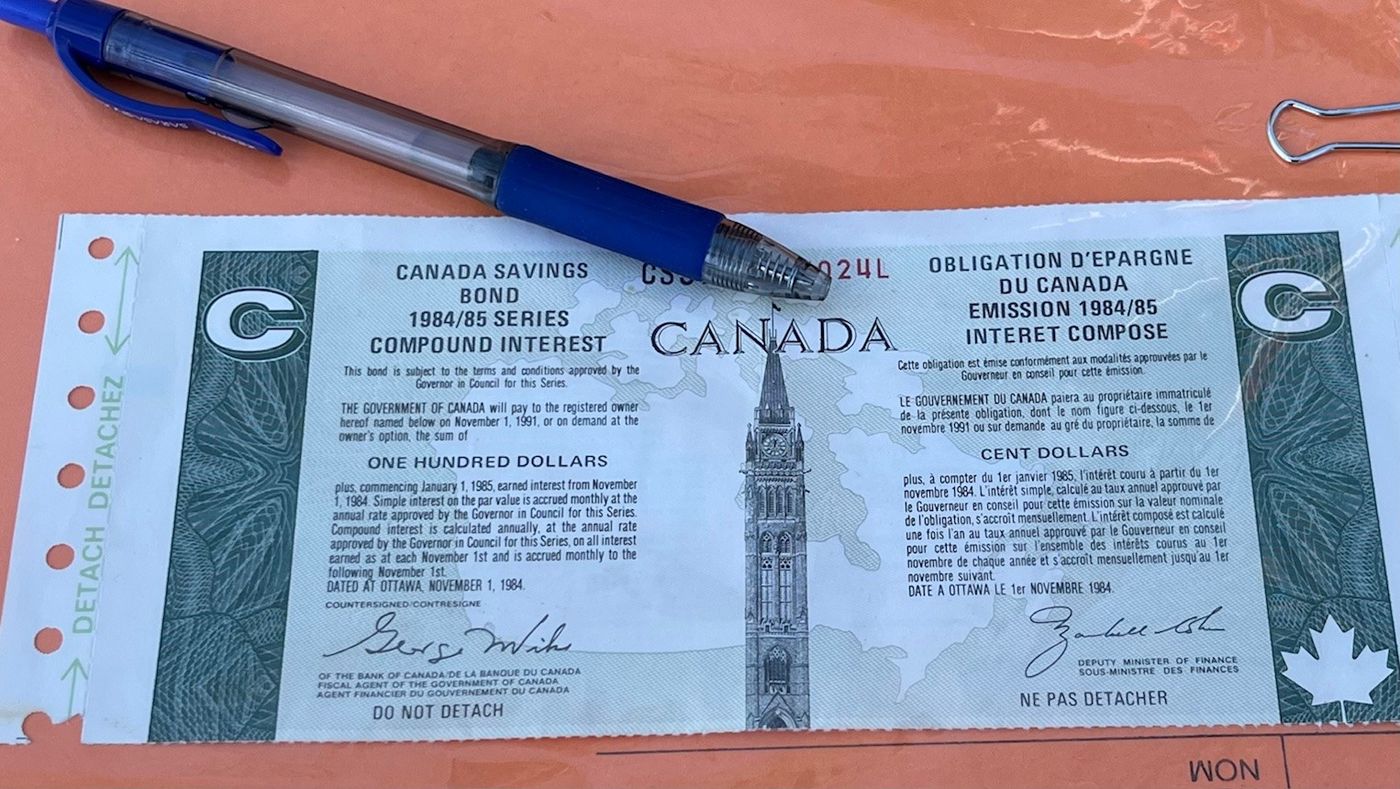
Over its history, the program offered three main types of bonds, each with distinct features. All types were available in two interest payment styles: regular interest, which paid interest directly to the holder, and compound interest, which added interest to the principal for future calculations, paying out only upon redemption. The regular interest bonds for Canada Savings Bonds originally had physical coupons that investors would detach and exchange for periodic interest payments, though physical coupons were not used in later years. For compound interest bonds, each period's interest was added to the principal to calculate the next period's interest, with the total paid upon redemption.
The Canada Savings Bond was a standard bond with a ten year term. Its interest rate was guaranteed for the first year. The interest rate could then fluctuate with market conditions for the remaining nine years until its maturity. These bonds were redeemable at any time. They were available in regular interest and compounding interest types.
The Canada Premium Bond was introduced in 1997. It also had a ten year term and was available in regular and compounding interest types. It differed from the regular savings bond by offering a higher interest rate that was fixed for the first three years. The interest rate would then fluctuate for the remaining seven years with market conditions until its maturity. These bonds were only redeemable on the anniversary of the issue date or during the thirty days after that.
The Canada Investment Bond was a non redeemable bond with a three year maturity. It was a shorter term bond available only through investment brokers. These bonds were offered from October 1, 2003, and April 1, 2004. Only six series were issued before their discontinuation.
How the Bonds Worked for Investors
Canadians could purchase Canada Savings Bonds through financial institutions or via payroll deduction programs offered by many employers. The bonds were fully guaranteed by the federal government, representing the highest quality and most secure bond available. Investors received periodic interest payments, either by cashing physical coupons attached to older bonds or via cheque or direct deposit in later years. If an investor did not receive an interest payment, they needed to ensure the CSB administrator had their correct information on file. For compound interest bonds, all interest accrued was paid out when the bond was redeemed. To maximize returns, bonds could be held within registered plans like Registered Retirement Savings Plans (RRSPs) or Tax-Free Savings Accounts (TFSAs) to shelter interest from tax. The bonds were registered in the owner's name, providing protection if they were lost or stolen, as replacements could be issued. The table below outlines the key operational features of the main bond types.
| Bond Type | Term | Interest Rate Feature | Redemption Rules |
|---|---|---|---|
| Canada Savings Bond (CSB) | 10 years | Rate guaranteed for 1st year, variable for remaining 9 | Redeemable at any time |
| Canada Premium Bond (CPB) | 10 years | Rate fixed for 1st 3 years, variable for remaining 7 | Redeemable only on anniversary date + 30 days |
| Canada Investment Bond (CIB) | 3 years | Fixed rate for full term | Non-redeemable until maturity |
All CSBs and CPBs have now reached maturity and stopped earning interest. Bondholders must cash in their certificates at a financial institution to receive their principal and final interest. The Bank of Canada provides an Online Redemption Value Tool and other resources for financial institutions to process these redemptions. The posted yields for Canada Savings Bonds on the Bank of Canada website are for reference only and are used to calculate certain business loans, as the bonds are not traded on any secondary market.
Investment Context and Comparison to Other Bonds
Bonds are a way to lend money to governments or corporations in exchange for regular interest payments and the return of the principal at maturity. They are generally considered lower risk than stocks but still carry risks like interest rate changes and issuer default. The Canada Savings Bond was a specific type of government bond, and understanding its place requires a view of the broader bond market available to Canadians. Bonds can have both fixed and variable rates of return, and some government issued bonds are 100% guaranteed, like CSBs were.
- Government of Canada bonds: These are issued by the federal government and are considered the highest quality and most secure bonds available. Traditional Government of Canada bonds, such as 5-year and 10-year bonds, are marketed primarily to financial institutions.
- Provincial bonds: Issued by provincial governments, these are not as secure as federal bonds but often offer higher rates of return.
- Municipal bonds: Issued by municipal governments, their rates can be higher or lower than provincial bonds.
- Corporate bonds: These include investment-grade bonds (rated BBB- or Baa3 and above) and higher-risk, higher-yield bonds often called junk bonds. They carry credit and default risk tied to the issuing company's financial health.
- Strip coupons and residual bonds: These are separated parts of a bond where the interest payments (strip coupons) and the principal (residual bond) are sold individually.
The Canada Savings Bond program was marketed to all Canadians. It was a means for the Government of Canada to borrow money. The bonds were issued by the Bank of Canada and offered a competitive interest rate with a government guarantee. The program was discontinued in 2017. Canadians now have other investment options like savings accounts and mutual funds.
Provincial Savings Bond Programs
Inspired by the federal model, several Canadian provinces launched their own retail savings bond programs. These were typically limited to residents of the issuing province and offered features tailored to local investors. The existence of these programs demonstrated the retail bond model's appeal for regional governments seeking direct funding from their citizens. These provincial bonds were not as secure as federal Government of Canada Bonds but often offered higher rates of return.
- Ontario Savings Bonds: Issued from 1995 until 2018, these bonds were available only to Ontario residents. They came in three varieties: variable interest rate three-year bonds where rates changed annually, step-up five-year bonds where the interest rate would increase each year until maturity, and fixed-rate bonds offered with 3-year, 7-year and 10-year maturities. Fixed-rate bonds could only be redeemed at maturity, while step-up bonds could be redeemed semiannually for two-week periods starting June 21 and December 21. Variable rate bonds could be redeemed each year for two weeks beginning June 21.
- Saskatchewan Savings Bonds: This program was limited to Saskatchewan residents, and its issuance stopped in 2010.
- Quebec Savings Bonds: Issued by Épargne Placements Québec, these bonds are still offered. They are 10-year bonds with interest rates set annually.
Some provinces imitated the Canada Savings Bond program. Ontario Savings Bonds were issued from 1995 until 2018. Saskatchewan Savings Bonds were also issued, and their purchase was limited to Saskatchewan residents. Quebec's program, Épargne Placements Québec, continues to operate as a unique provincial offering.
Reasons for the Program's Discontinuation
The decision to end the Canada Savings Bond program was driven by several converging factors. The primary reason was a steep and sustained decline in sales, from $55 billion in 1987 to just over $6 billion in 2015. This reflected a major shift in the Canadian financial landscape where banks and other financial institutions grew to dominate the system. The government found it could finance its debt more efficiently and cheaply by selling bonds directly to large financial institutions rather than administering a costly retail program. Simultaneously, Canadians gained access to a wider, more competitive array of investment and savings options, including high-interest savings accounts, Guaranteed Investment Certificates (GICs), mutual funds, exchange-traded funds (ETFs), and dividend stocks, which reduced the unique appeal of CSBs. A 2015 KPMG study highlighted that the program cost an estimated $58 million annually to administer, a significant expense for a shrinking asset base. Despite initial resistance following the 2004 and 2015 reviews, the federal government concluded that the program was no longer a cost-effective tool for raising capital or serving investor needs. As of October 2016, the Liberal government was considering ending the program, leading to the formal announcement in the March 2017 budget.
Redeeming Bonds and Current Status
Although no new Canada Savings Bonds have been sold since 2017, existing bonds remain valid. All CSBs and CPBs have reached their final maturity dates and have stopped earning interest. Bondholders must proactively cash in their bond certificates at a financial institution to receive their principal and any final interest owed. The Bank of Canada maintains a Bond Status Search tool and an Online Redemption Value Tool for financial institutions to process these transactions. If a bond certificate is lost, stolen, or destroyed, the owner can report it lost by calling the Canada Savings Bonds program at 1‑800‑575‑5151, providing details like the bond number, series, issue date, and registration information to initiate a replacement and redemption. Investors who held CSBs or CPBs within the program's proprietary registered retirement accounts, known as Canada RSPs or Canada RIFs, must transfer those funds to another registered account at a financial institution or withdraw them, noting that a withdrawal counts as taxable income. These accounts also no longer earn interest. The posted yields for Canada Savings Bonds on the Bank of Canada website are for reference only and are used to calculate certain business loans, as the bonds are not traded on any secondary market. These rates are valid for the remaining term of the issue and could have different terms and, consequently, different rates.
Frequently asked questions
What was the difference between a Canada Savings Bond and a Canada Premium Bond?
Both were 10-year bonds guaranteed by the federal government. The key differences were in interest rate stability and redemption rules. Canada Premium Bonds offered a higher interest rate fixed for the first three years, but could only be redeemed on their anniversary date or within 30 days after. Regular Canada Savings Bonds had a rate guaranteed for only the first year but could be redeemed at any time.
Why did the government stop selling Canada Savings Bonds?
The program was ended due to declining sales and high costs. Annual issuance fell from $55 billion in 1987 to just over $6 billion in 2015. A 2015 study estimated the program cost $58 million per year to run. The government found it could borrow money more cheaply from financial institutions, and Canadians had many other investment options available.
Did any provinces have similar savings bond programs?
Yes, several provinces had programs modelled on the CSB. Ontario offered Ontario Savings Bonds from 1995 to 2018, and Saskatchewan offered Saskatchewan Savings Bonds until 2010. Quebec continues to offer Quebec Savings Bonds through Épargne Placements Québec. These programs were typically restricted to residents of the respective province.
Are Canada Savings Bonds still sold?
No, Canada Savings Bonds are no longer sold. The federal budget announced on March 22, 2017, that the sale of new Canada Savings Bonds would be discontinued that same year. No further bond purchases have been allowed since 2017. The program, which had run annually from 1945, was officially ended. This decision followed a government commissioned study and years of declining issuance value, which fell from $55 billion in 1987 to just over $6 billion in 2015.
I have old Canada Savings Bonds. What should I do?
You should redeem your old Canada Savings Bonds. All Canada Savings Bonds and Canada Premium Bonds have reached maturity and stopped earning interest. You can cash in your physical bond certificates by bringing them to your financial institution. If your bonds are lost, stolen, or destroyed, you can report them by calling 1‑800‑575‑5151 to arrange for redemption. The Bank of Canada, which issued the bonds, continues to honour existing bonds until they are redeemed.
Could Canada Savings Bonds be held in an RRSP?
Yes, Canada Savings Bonds could be held in registered accounts. Both Canada Savings Bonds and Canada Premium Bonds could be purchased under tax shelters like Registered Retirement Savings Plans and Tax Free Savings Accounts. This allowed the interest earned to grow tax deferred or tax free. The Canada Savings Bond program also offered its own registered accounts called Canada RSPs and Canada RIFs, though these accounts no longer earn interest and funds must be transferred to another registered account.
Sources and further reading
- Canada Savings Bond (Wikipedia) en.wikipedia.org
- What are bonds and how do they work? | TD Direct Investing td.com
- Yield, Government of Canada bonds Canada Savings ... desjardins.com
- Canada Savings Bonds wowa.ca
This article explains how things work and is not financial, tax or legal advice. Rules, limits and rates change, so check the current figures with the Canada Revenue Agency, your province or your financial institution before you act.