OTTAWA
The federal government's 2026 budget aims to spark a private investment "supercycle" through tax incentives and a regulatory overhaul, while maintaining immigration targets and offering a path to permanence for some temporary residents.
The budget's big theme is sovereignty, a response to the chaos and uncertainty wrought by the Trump administration, said Jason Kirby, a reporter with The Globe and Mail.
"The budget document basically rests on three ideas: prudent spending, sparking a private investment supercycle and diversifying trade and technology," Kirby said.
The most significant business measure is the Productivity Mega Deduction, which allows companies to write off the cost of capital asset purchases up front, said reporter Mark Rendell.
"Think mining equipment, bulldozers, even rail track," Rendell said.
The government is also taking a more aggressive approach to industrial policy, putting public money into pipelines and mining projects, he said.
On the regulatory side, Bill C-39 aims to implement Ottawa's "one project, one decision, one year" promise by overhauling environmental review legislation.
The budget also creates a Major Projects Office to act as a concierge service for companies executing large natural resource and infrastructure projects.
"The hope is that this, combined with the tax and regulatory changes, will crowd-in private sector investment," Rendell said.
The budget did not include sweeping corporate tax cuts, according to the notes.
It maintained the number of immigrants admitted to Canada over the next three years and announced a plan to transition up to 200,000 temporary residents to permanent resident status by the end of 2027.
This is part of an effort to reduce a massive backlog of applications, Kirby said.
The budget projects a deficit of $62.3 billion, shrinking only to $52.9 billion in the coming years, despite higher energy prices boosting revenue.
Spending growth has dropped from more than eight percent a year during the last decade to two percent, and the government is trimming the public service, Kirby noted.
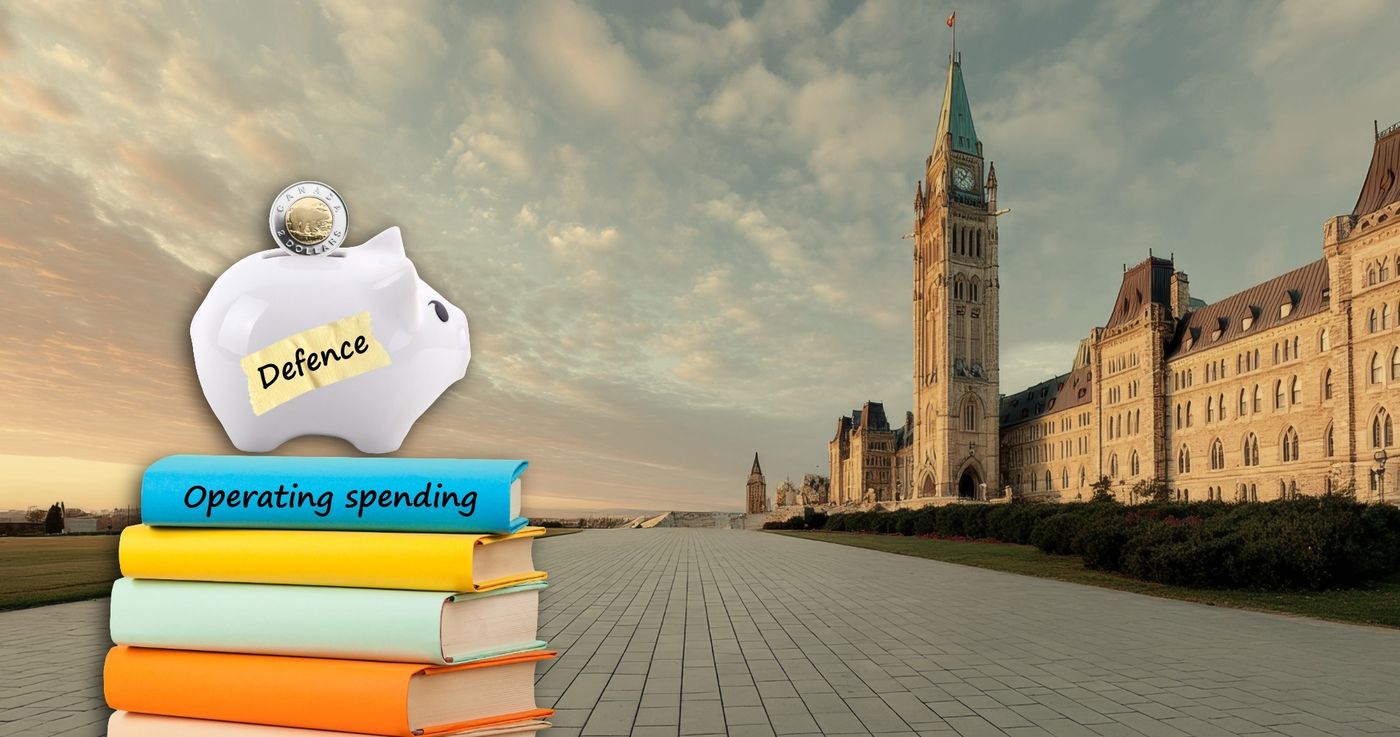
On defence, the budget provides $11.2 billion in new spending over five years, far less than the $84 billion plan unveiled in 2025.
Even by 2030, Canada will still be roughly $37 billion short of the annual military-spending level needed to reach its commitment to bring core military spending to 3.5 percent of GDP by 2035, according to reporting by The Globe and Mail.
The budget allocates up to $2.5 billion in financing to Alberta-based De Havilland to ramp up its waterbomber production for wildfire response.
It also folds investments into growing and training the Armed Forces into the same envelope as improving national disaster preparedness.
Most other emergency preparedness lines are related to strengthening the resilience of First Nations communities with previously announced funding, said reporter Pippa Norman.
The budget includes tens of billions of dollars for housing, First Nations infrastructure and other social supports, including a one-time top-up to the Canada Groceries and Essentials Benefit.
e2gold.ca reported in November that small businesses were seeking tax cuts and tariff relief in the federal budget.
Finance Minister François-Philippe Champagne had previously said the budget would simplify the tax code for small businesses.
This story was written by the e2gold.ca newsroom from reporting by The Globe and Mail and The Hill Times. Quotes are checked word for word against that reporting.