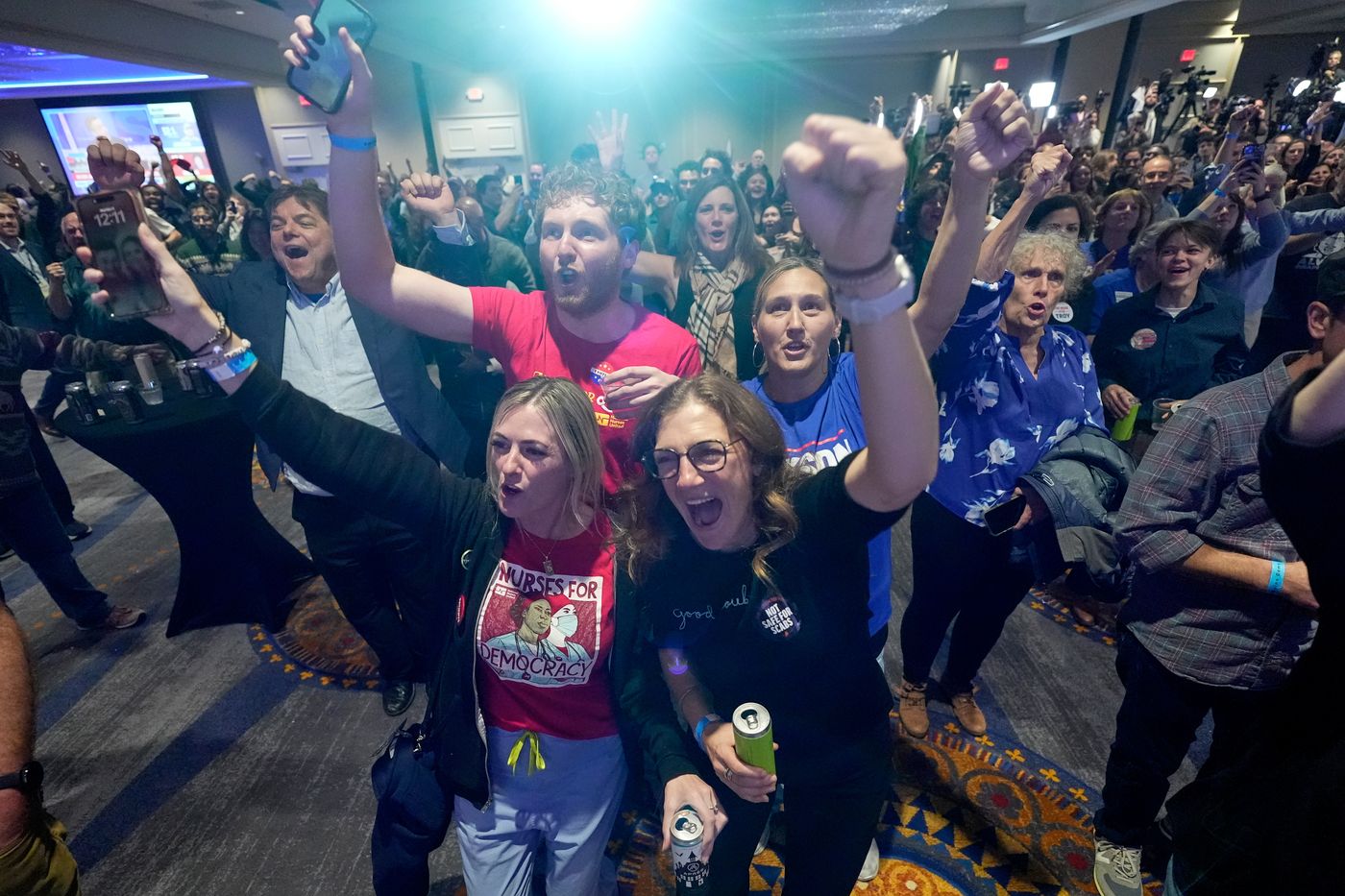
Democratic control of the U.S. Congress is unlikely to lead to a permanent easing of trade tensions with Canada, analysts say.
While the Democrats won both the House of Representatives and the Senate in the midterm elections, President Donald Trump will continue to set the administration's trade strategy.
"The Trump administration’s foreign policy is like a car going down the highway," said James Green, a research fellow at the Center for European Reform and former Congressional aide. "Congress has the ability to slow that car down, maybe make it put on a turn signal, but it’s going to be very difficult for Congress to change the overall route over the next two years."
Prime Minister Mark Carney acknowledged the challenge this week as he sought to manage expectations about the revival of trade talks.
"What is important for us is to reach an agreement that is in the best interests of Canadians," Carney said Tuesday. "Secondly, we want an agreement that includes elements that strengthen the incentives for all parties, especially the Americans, to abide by the deal. That is a challenge, but we are looking for ways to achieve all of this."
Trump has threatened to double auto tariffs from 25 per cent to 50 per cent on Jan. 1 and to apply them to auto parts for the first time.
The Democrats will not take control of Congress until Jan. 3, and even then, they have a duty to protect American interests, analysts note.
U.S. Senator-elect Abdul El-Sayed, a Democrat who will represent Michigan, called Trump’s trade war "insane." However, many on the left also believe the United States-Mexico-Canada Agreement is a raw deal for American workers.
The United Auto Workers union has criticized Trump’s trade action against Canada but has also called for a "comprehensive rewrite of the USMCA and other bad trade deals."
Analysts say Congress has relatively weak foreign policy powers, and Trump has embraced executive power. e2gold.ca reported earlier this month that the president's tariff powers are on firm legal ground and a divided Congress has limited ability to change his policies.
Congress could use tools like government funding bills or investigations to exert pressure, but these are unlikely to force a major shift in trade policy.
"I don’t think the midterms will dramatically shape Trump’s policy toward Europe one way or another," said Peter Rough, a senior fellow at the Hudson Institute.
In fact, Congress recently passed the Graham Act, which grants the White House additional tariff powers, including against countries that continue to import Russian oil.
"This pretty much opens up any EU country to attack from the president on these tariffs," said Nevada Joan Lee, a policy fellow with the European Council on Foreign Relations. "It took a lot of power out of Congress's hands."
Member of the European Parliament Bernd Lange said a Democratic victory "could lead to more confrontational decisions, especially on trade and tariffs" from Trump. "A lame duck could become an angry duck," he added.
The next major shift in U.S. foreign policy toward its allies is not expected until the 2028 presidential election.
This story was written by the e2gold.ca newsroom from reporting by The Globe and Mail, Fisher Phillips LLP, Al Jazeera and The Parliament Magazine. Quotes are checked word for word against that reporting.