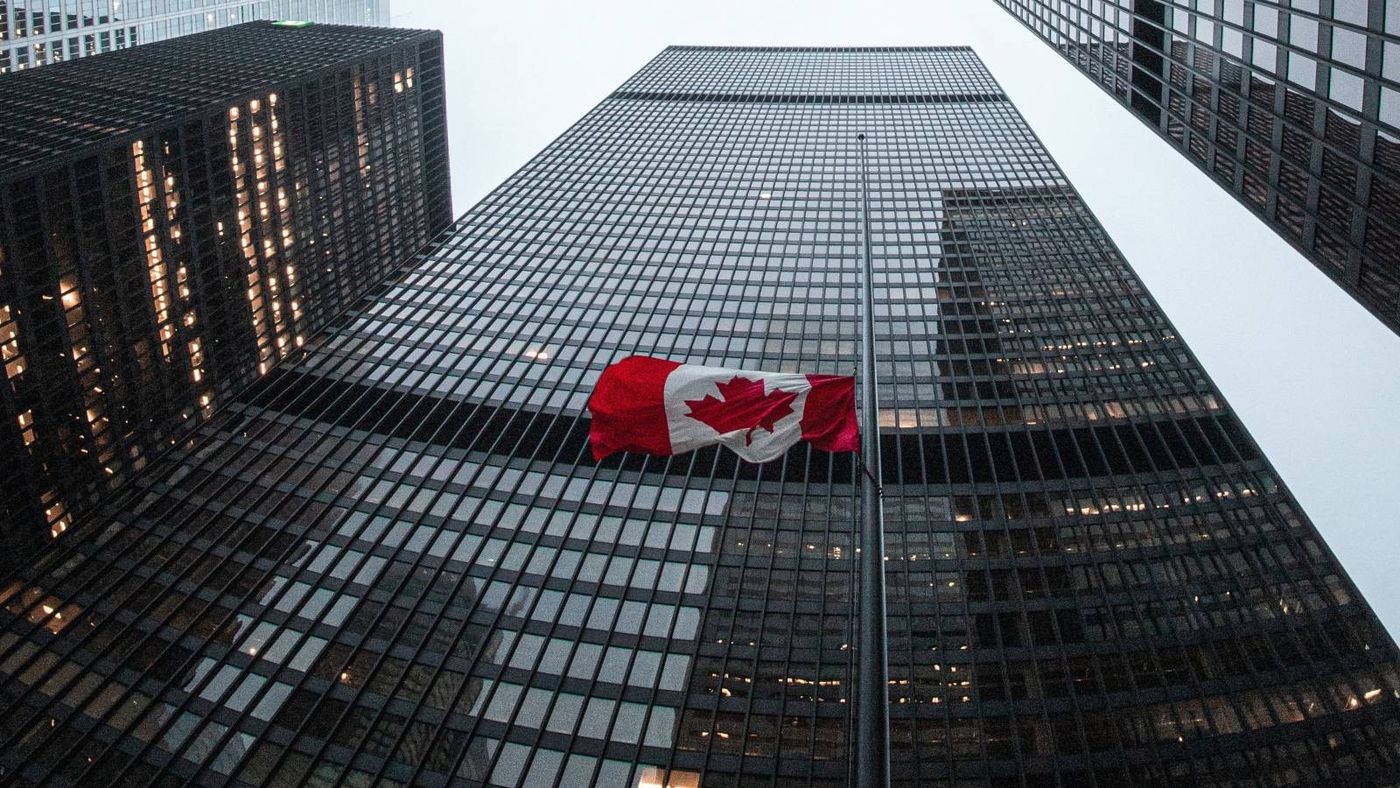
The Bank of Canada raised its benchmark interest rate by 25 basis points to 2.5 percent last week, its first hike in more than three years.
The move, which was widely expected, came after the bank held rates steady in early September.
"Prior to the decision, inflation risks had increased amid raised energy prices and renewed U.S.-Canada trade tensions," according to an analysis from J.P. Morgan Wealth Management.
The Bank of Canada says future rate hikes are not off the table for 2027 as inflation concerns persist.
The Canadian hike is part of a broader global shift toward tighter monetary policy in 2026.
The Federal Reserve, European Central Bank, Bank of Japan, Reserve Bank of Australia, Reserve Bank of New Zealand and Norway's Norges Bank have all raised rates this year.
The moves come as higher energy prices and supply disruptions tied to the conflict in Iran have complicated the inflation outlook.
On Sept. 16, the Federal Open Market Committee raised the federal funds target range by 25 basis points to a range of 3.75 percent to 4.00 percent, its first increase since 2023.
The Fed's September projections signaled at least one additional quarter-point increase in 2026, widely expected to come in December.
The European Central Bank raised its three key interest rates by 25 basis points in June and again in September as higher energy prices increased its inflation projections.
The Bank of Japan raised its policy rate to around 1.0 percent in June and increased it again to 1.25 percent in September, the highest level in 31 years.
The Reserve Bank of Australia raised its cash rate four times in 2026, bringing it to 4.60 percent, and is expected to raise rates again in November.
The Reserve Bank of New Zealand increased its official cash rate to 2.75 percent in September, and a hike is still likely at its December meeting.
Norway's Norges Bank raised its policy rate to 4.50 percent in September and indicated it is prepared to raise rates further if inflation persists.
Other central banks, including the Bank of England, Sweden's Riksbank and the Swiss National Bank, have held rates steady so far but may still raise them before year-end.
For investors, the return to rising rates recalls the tumultuous period of 2022 and 2023, when the Bank of Canada's benchmark policy rate shot from 0.25 percent to 5 percent.
During that cycle, variable-rate mortgage holders felt significant pain as their monthly payments increased.
"The lesson is clear. If you have a variable-rate mortgage, now’s the time to consider switching to a fixed-rate mortgage or, if possible, to aggressively pay it off," wrote early retirees and financial authors Bryce Leung and Kristy Shen.
Bond funds also suffered, as bond prices move in the opposite direction of interest rates.
An aggregate bond index like the iShares Core Canadian Universe Bond Index ETF fell 11.8 percent between the first quarter of 2022 and the third quarter of 2023.
Short-term bond funds fared better, with the iShares Core Canadian Short Term Bond Index ETF falling 3 percent.
Money market funds and floating rate note funds gained 5.6 percent and 5.8 percent, respectively, during that period as their payouts rose with interest rates.
While 2026 is not the same as 2022, if interest rates continue to climb, paying down a variable-rate mortgage, shortening bond durations and owning floating rate notes are some strategies to protect money, the authors noted.
The renewed trade tensions cited by the Bank of Canada follow a U.S. election where tariffs were a key issue. e2gold.ca reported earlier this month that the economic fallout from tariffs helped Democrats flip the U.S. Senate.
This story was written by the e2gold.ca newsroom from reporting by The Globe and Mail and Chase Bank. Quotes are checked word for word against that reporting.