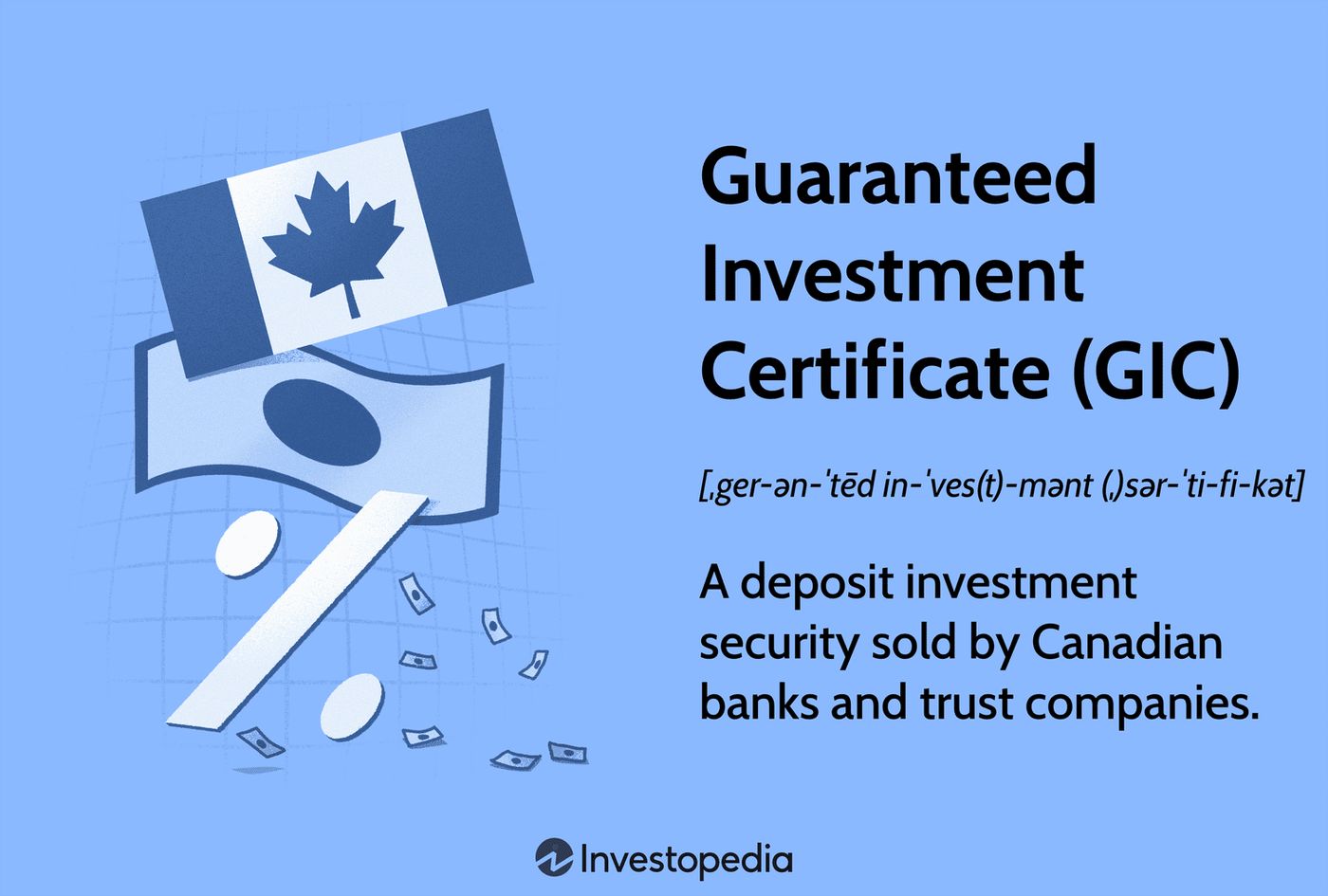
National Bank of Canada offers a range of Guaranteed Investment Certificate (GIC) products with fixed interest rates that vary by term and type. As of October 2026, example rates for non-redeemable GICs include 3.15% for a 12-month term, 3.55% for 24 months, and 4.00% for a 60-month term. These investment products provide Canadians with a low-risk way to earn interest on savings, with principal protection through Canada Deposit Insurance Corporation coverage. Understanding the rates, terms, and features helps investors align these tools with specific financial goals.
Understanding National Bank GIC Products
National Bank provides several distinct types of Guaranteed Investment Certificates, each designed for different investor needs and timelines. The non-redeemable GIC is a core product, offering a fixed interest rate for a set maturity date where the investment is locked in for the term. This type typically provides higher interest rates compared to redeemable options, with terms available from as short as 30 days up to 10 years. The bank also offers a redeemable GIC, which allows investors to cash in their investment at any time without penalty while still protecting the principal and accrued interest. For those seeking exposure to market performance with principal protection, National Bank provides market-linked guaranteed investment certificates, whose returns are variable and tied to an underlying index or basket of assets.
All National Bank GICs share several foundational features. A minimum investment of $500 is required for any GIC purchase, whether in Canadian or U.S. dollars. Interest is calculated on an annual basis, and the products can be held within various account structures including tax-free savings accounts, registered retirement savings plans, and non-registered investment accounts. The bank structures its offerings into short-term options like 3, 6, 9, 12, and 18-month terms, as well as medium and long-term options extending to five years and beyond. This range allows investors to match a GIC's term with specific financial objectives, whether saving for a near-term purchase or building long-term savings.
Current GIC Rate Examples and Comparisons
National Bank's advertised GIC rates are subject to change but provide a snapshot of potential returns based on term length and product type. As illustrated in available data for October 2026, non-redeemable GIC rates increase with longer commitment periods. A 12-month non-redeemable GIC might offer a rate around 3.15%, while an 18-month term could be approximately 3.30%. Moving to a two-year commitment sees the rate rise to about 3.55%, and a five-year non-redeemable GIC could offer a rate of 4.00%. These rates are for standard Canadian dollar products and represent the fixed return guaranteed for the entire term.
When compared to other financial institutions in the Canadian market, National Bank's rates position it competitively within the Big Six banks. For context, as of September 2026, the highest paying one-year GIC rate in Canada was 3.65% offered by Achieva Financial, while the highest five-year rate was 4.15% from Haventree Bank. National Bank's rates generally fall within the spectrum offered by major Canadian banks, which often provide slightly lower rates than some digital-only banks or credit unions. It is important for investors to note that rates for market-linked GICs are not fixed and are published separately in a rates bulletin, as their returns depend on the performance of the linked markets.
- 12-month non-redeemable GIC: Approximately 3.15%.
- 18-month non-redeemable GIC: Approximately 3.30%.
- 24-month non-redeemable GIC: Approximately 3.55%.
- 60-month non-redeemable GIC: Approximately 4.00%.
- Highest 1-year rate in Canada (Sept 2026): 3.65% from Achieva Financial.
- Highest 5-year rate in Canada (Sept 2026): 4.15% from Haventree Bank.
Eligibility, Accounts, and Purchase Process
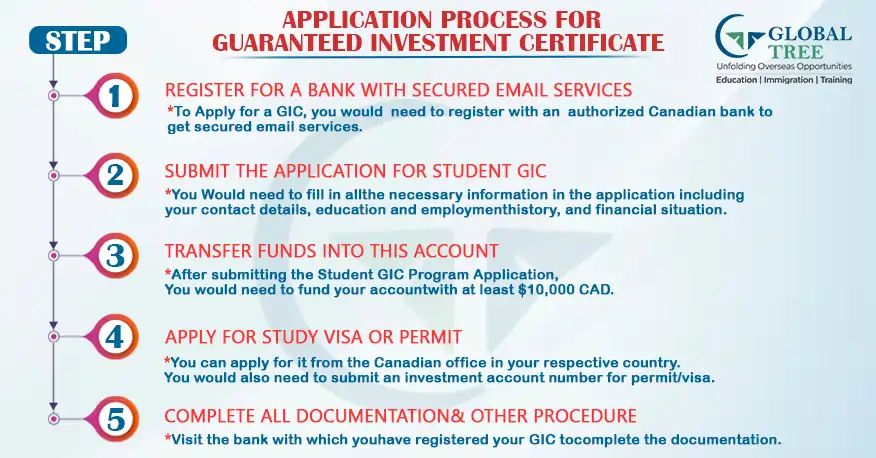
To purchase a GIC from National Bank, an individual must be a client of the bank. Existing clients can complete the entire process through their online banking portal, where they can select the GIC product, specify the investment amount, and choose the registered or non-registered account to hold it. The minimum age requirement is tied to the account type used. For example, holding a GIC within a TFSA requires the investor to be at least 18 years old. For RRSPs, investors must have available contribution room, which is calculated based on earned income and any unused room from prior years.
The bank supports holding GICs within three primary account types, each with distinct tax implications. A Tax-Free Savings Account allows all interest earned on the GIC to grow tax-free and withdrawals are not taxed. A Registered Retirement Savings Plan provides a tax deduction for the contribution amount, and the investment grows tax-deferred until withdrawal in retirement. Non-registered accounts are typically used after an investor has maximized contributions to their registered accounts, and interest income earned is taxable in the year it is accrued. The purchase process is standardized with the $500 minimum applying across all GIC types and terms.
- Must be an existing National Bank client to purchase.
- Minimum age for a TFSA GIC: 18 years old.
- RRSP GICs require available contribution room based on income.
- Account options: TFSA, RRSP, or non-registered account.
- Purchase method: Online banking for existing clients.
- Universal minimum investment: $500.

Rules for Maturity, Renewal, and Early Withdrawal
The rules governing access to funds in a National Bank GIC are strictly defined by the product type selected at purchase. For non-redeemable GICs, the principal and interest are locked in for the full term, and early withdrawal is generally not permitted. As the maturity date approaches, investors must take proactive steps if they do not wish the GIC to renew automatically. This involves contacting the bank by phone or submitting a secure instruction through online banking to specify whether to cash out or reinvest the proceeds. Failure to provide instructions typically results in the GIC renewing for an identical term at the prevailing interest rate at that future date.
Redeemable GICs provide much more flexibility, allowing investors to cash in their investment at any time without penalty. This feature comes at the cost of a lower guaranteed interest rate compared to a non-redeemable GIC of the same term. Market-linked GICs protect the original principal but have their own specific terms regarding liquidity, which are detailed in the product disclosure documents. A common strategy to balance liquidity and return is a GIC ladder, where an investor divides a sum into equal parts and purchases GICs with staggered one- to five-year terms, creating annual maturities.
Deposit Insurance and Safety of Principal
National Bank of Canada is a member of the Canada Deposit Insurance Corporation, a federal crown corporation that protects eligible deposits at member institutions. CDIC insurance covers GIC principal and accrued interest up to a limit of $100,000 per insured category, per depositor, at each member bank. This protection applies if the bank were to fail, ensuring investors receive their funds back within the insured limits. It is a key feature that defines GICs as low-risk investments, as the return of the initial capital is guaranteed both by the bank's promise and by the federal deposit insurance backstop.
The coverage differs from provincial deposit insurance plans that protect investments at credit unions. While both systems aim to protect savers, CDIC is the federal program for banks like National Bank. Investors should confirm that their specific GIC and account type are eligible for CDIC coverage, as there are specific rules regarding registered versus non-registered accounts and trust structures. This insurance does not protect against the erosion of purchasing power due to inflation, nor does it apply to potential losses in market-linked GICs related to poor market performance, as the principal itself remains guaranteed by the bank.
Common Considerations and Potential Mistakes
One frequent oversight involves not planning for the maturity date of a non-redeemable GIC. Investors who do not provide instructions near maturity may find their investment automatically renewed into a new GIC, potentially at a different interest rate, locking up their funds for another term. Another common mistake is not aligning the GIC term with actual cash flow needs, leading to either premature withdrawal penalties on non-redeemable products or accepting lower returns from a redeemable GIC when a longer-term fixed product would have been suitable. Investors should also clearly understand the tax implications of holding a GIC in a non-registered account, as interest income is fully taxable.
Failing to consider the impact of inflation on fixed returns is another consideration, especially for longer-term GICs in a rising price environment. Additionally, some investors may not fully utilize registered account space, such as TFSAs or RRSPs, to shelter GIC interest from taxation. It is also important to read the specific terms for market-linked GICs, as their return structure, participation rates, and caps can be complex. Finally, while shopping for the highest rate is logical, investors should ensure the institution is a CDIC member or has appropriate provincial insurance to guarantee the safety of their principal investment.
- Mistake: Not providing maturity instructions, leading to automatic renewal.
- Mistake: Choosing a term that doesn't match cash flow needs.
- Mistake: Not understanding tax on interest in non-registered accounts.
- Mistake: Overlooking inflation's impact on long-term fixed returns.
- Mistake: Not using TFSA/RRSP room for tax-sheltered growth.
- Mistake: Not verifying CDIC or provincial deposit insurance coverage.
Historical Context and Rate Environment
GIC rates are influenced by the broader interest rate environment set by the Bank of Canada. As of September 2026, with the Bank of Canada's overnight target rate holding at 2.25%, GIC rates across the market have remained relatively stable, generally below 4% for one-year terms. This represents a decrease from earlier periods. For example, in early 2024 the best five-year GIC rates were closer to 5%. Economic forecasts suggest uncertainty, with inflation around 3% and external pressures from trade and energy prices potentially influencing future rate decisions by the central bank.
This historical fluctuation illustrates that GIC rates are not static. The rates offered by National Bank and other institutions will change in response to monetary policy and economic conditions. For investors, this means that locking in a longer-term GIC rate provides certainty of return but may mean missing out if rates rise significantly in the future. Conversely, opting for short-term GICs or redeemable products offers flexibility to reinvest at potentially higher rates later but often at a lower initial return. Understanding this dynamic is part of aligning GIC investments with one's outlook on interest rates and inflation.
Frequently asked questions
Can I cash out my National Bank GIC early?
Early withdrawal options depend entirely on the type of GIC you hold. Non-redeemable GICs lock in your funds for the entire term, and early cash-out is generally not permitted. Redeemable GICs are designed to be cashed in at any time without penalty, protecting your principal and accrued interest. Market-linked GICs have their own specific liquidity terms detailed in the product documents.
What is the minimum amount to invest in a National Bank GIC?
The minimum investment required to purchase any Guaranteed Investment Certificate from National Bank is $500. This minimum applies across all GIC types, including non-redeemable, redeemable, market-linked, and U.S. dollar GICs. It is the same for both registered accounts like TFSAs and RRSPs and for non-registered investment accounts. National Bank clearly states that all of their GICs require this minimum $500 investment. This consistent requirement simplifies the investment process for clients, whether they are investing for a short or long term or using different account types to achieve their financial goals.
Are National Bank GICs protected by CDIC?
Yes, eligible National Bank GICs are protected by the Canada Deposit Insurance Corporation. CDIC is a federal agency that insures eligible deposits up to $100,000 per insured category, per depositor, at member banks like National Bank. This coverage protects your principal and accrued interest in the unlikely event of the bank's failure. National Bank is a member of the Canada Deposit Insurance Corporation, and your deposits in a Guaranteed Investment Certificate are insurable by the CDIC. This guarantee provides a significant layer of security, making GICs a very safe and low-risk investment option for savers and investors across Canada.
What types of accounts can hold a National Bank GIC?
National Bank GICs can be held in three main types of accounts. You can hold them in a Tax-Free Savings Account where interest grows tax-free, in a Registered Retirement Savings Plan where contributions may be tax-deductible and growth is tax-deferred, or in a non-registered account for funds after maximizing registered contributions, where interest income is taxable annually. As a National Bank client, you can purchase the GIC of your choice directly from your online bank and choose which plan you want to use to invest, such as a TFSA, RRSP, or non-registered account. This flexibility allows investors to align their GIC investments with their overall tax and retirement planning strategies.
How do I buy a GIC from National Bank?
Existing National Bank clients can purchase GICs directly through their online banking platform. The process involves signing in, selecting the desired GIC product, specifying the investment amount and term, and choosing which account will hold the investment. The bank's website provides direct links for this process, and all purchases are subject to the $500 minimum investment requirement. If you are a National Bank client, you can purchase the GIC of your choice directly from your online bank by signing in and choosing your plan. This convenient online access allows for easy management of your investments, though you may also contact your branch for personalized support during business hours.
What happens when my National Bank GIC matures?
As your non-redeemable GIC approaches its maturity date, you must provide instructions to the bank if you do not want it to renew automatically. You can contact National Bank by phone or through a secure form in your online banking to specify whether to cash out or reinvest the proceeds. If you take no action, the GIC will typically renew for an identical term at the interest rate prevailing on the renewal date. The process to close or cancel an NBC GIC depends on the type you hold. It is important to note that if you fail to provide specific instructions during the GIC application or take no action close to maturity, your GIC may automatically renew, which is a common practice to ensure the investment continues.
Sources and further reading
- Guaranteed Investment Certificate (GIC) nbc.ca
- Best National Bank GIC Rates for October 2026 nerdwallet.com
- The best GIC rates in Canada 2026 ratehub.ca
This article explains how things work and is not financial, tax or legal advice. Rules, limits and rates change, so check the current figures with the Canada Revenue Agency, your province or your financial institution before you act.