A Home Equity Line of Credit (HELOC) is a secured, revolving line of credit that allows Canadian homeowners to borrow against the equity in their property. HELOC interest rates in Canada are typically variable and are lower than rates for unsecured loans or credit cards, though they are generally higher than mortgage rates. Comparing HELOC rates and features is crucial because the product uses your home as collateral, and terms can vary significantly between lenders. Understanding the rules, limits, and costs helps Canadians make an informed decision about accessing their home equity.
How a HELOC Works and Its Key Features
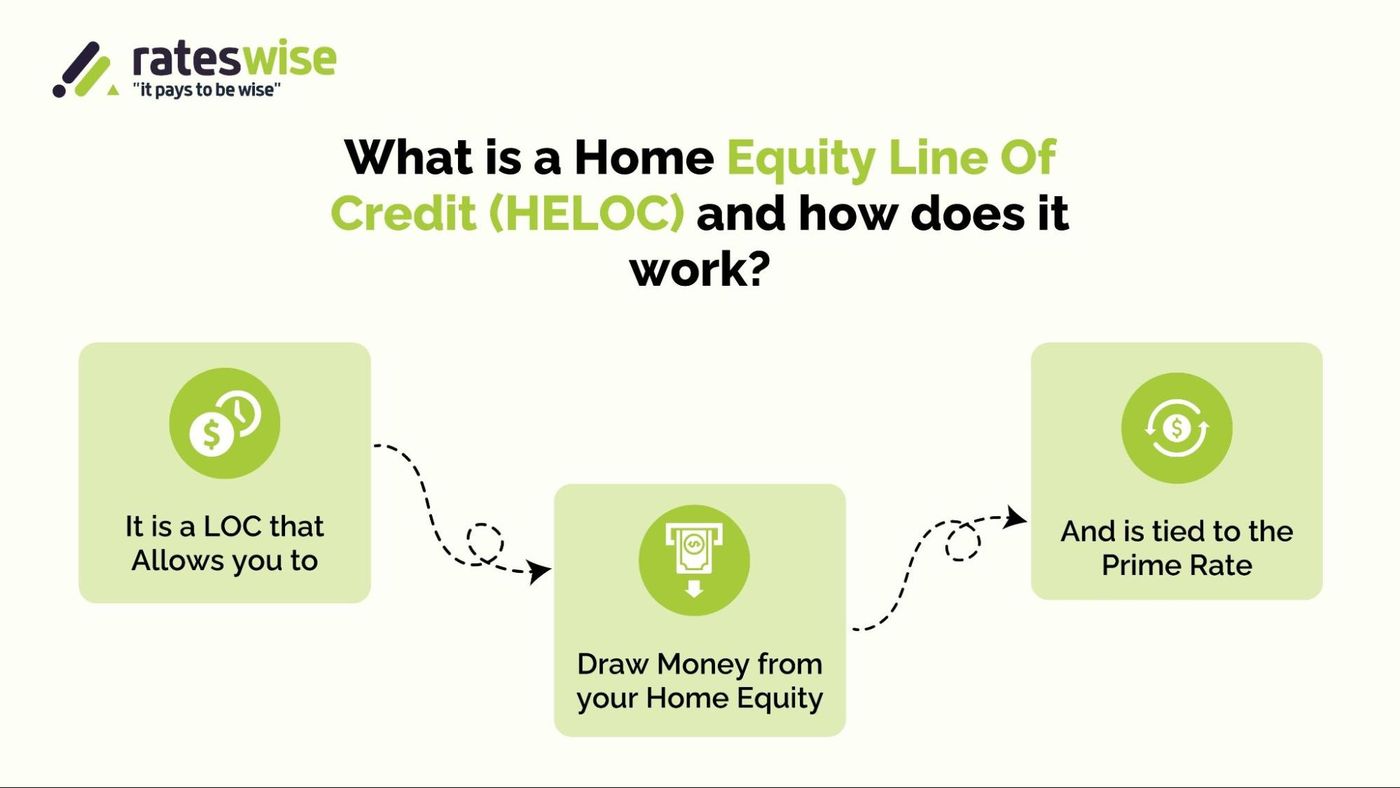
A Home Equity Line of Credit functions as revolving credit secured by your home, similar to how a credit card provides a reusable credit limit. You can borrow, repay, and borrow again up to your approved limit during the draw period, which typically lasts several years. During this draw period, you are usually only required to make monthly interest payments on the outstanding balance you have used. After the draw period ends, the HELOC enters a repayment phase where you must make payments covering both principal and interest. This structure provides flexibility but requires disciplined management as your home serves as collateral for the debt.
The interest rate on a HELOC is almost always variable, meaning it fluctuates with the lender's prime rate. As of October 2026, one major lender's prime rate was listed at 4.45%. HELOC rates are generally set at the prime rate plus a premium, which can vary by lender and borrower profile. This results in a rate that is lower than unsecured personal loans or credit cards but is typically higher than a primary mortgage rate. For example, a 5-year fixed mortgage rate for a refinance might be 5.09%, while a HELOC rate from the same lender could be 4.95%, illustrating the typical rate relationship.
Accessing funds from your HELOC is designed to be convenient. Most lenders allow you to withdraw money through online banking, by writing a cheque linked to the account, at an ATM, or using a specialized debit or Visa access card. You only pay interest on the amount you have actually drawn, not on the entire approved credit limit. This on-demand access makes a HELOC suitable for ongoing or unpredictable expenses, such as a multi-phase home renovation or covering educational costs over several years. The ability to use the funds for any purpose, from debt consolidation to major purchases, is a key feature that distinguishes it from a traditional term loan.
Rules and Limits for Borrowing with a HELOC
Federal regulations set by the Office of the Superintendent of Financial Institutions (OSFI) dictate the maximum amounts you can borrow through a HELOC in Canada. For a standalone HELOC not combined with a mortgage, you can borrow up to 65% of your home's appraised value. When a HELOC is combined with a mortgage, the total of both balances cannot exceed 80% of the home's total value. This means the HELOC portion itself is still capped at 65%, but the combined borrowing with the mortgage reaches the 80% ceiling. These rules are designed to manage risk for both borrowers and lenders.
To qualify for a HELOC, lenders will assess your income, credit score, and overall debt load. You must also pass a stress test to prove you could afford payments at a higher interest rate. The stress test uses either the OSFI-set qualifying rate of 5.25% or your contract HELOC rate plus 2%, whichever figure is higher. This ensures you could handle potential rate increases. Lenders will also require a professional appraisal to determine your home's current market value, which forms the basis for all borrowing calculations.
Calculating your potential HELOC limit involves a few steps. First, determine 80% of your home's current appraised value. From that figure, subtract the remaining balance on your primary mortgage. The result is the maximum combined borrowing available. You must then ensure that the HELOC amount alone does not exceed 65% of your home's value. After subtracting the $200,000 mortgage, they could access up to $280,000 via a HELOC, which is only 46.7% of the home's value and well under the 65% cap.
Comparing HELOC Types: Combined vs. Standalone
Canadian financial institutions primarily offer two structures for Home Equity Lines of Credit, each with distinct features. A combined HELOC, also known as a readvanceable or collateral mortgage, integrates a traditional mortgage with a HELOC under a single overall credit limit. This product is offered by most major banks. As you pay down the mortgage principal, your available credit on the HELOC portion automatically increases, up to the overall limit. This setup provides continuous access to growing equity without needing to reapply. The combined limit for this product adheres to the 80% of home value rule.
A standalone HELOC is not tied to your primary mortgage and can be obtained from a lender different from your mortgage holder. Its limit is strictly up to 65% of your home's appraised value and does not increase as you pay down your mortgage unless you formally apply for a new limit increase. This type of HELOC is often used by homeowners who have significant equity but do not want to refinance or alter their existing mortgage. The application process involves a full credit assessment and home appraisal, similar to the combined product.
The choice between a combined and standalone HELOC depends on your existing mortgage setup and goals for using the funds. A combined product is convenient if your mortgage and HELOC are with the same institution and you want automatic access to equity as you pay down your loan. A standalone HELOC offers more lender choice and can be suitable if you have a competitive mortgage rate you don't want to disturb. Both types are subject to the same federal borrowing limits and stress test requirements, ensuring a consistent regulatory framework for all secured home equity borrowing.
HELOC Versus Other Borrowing Options
When considering how to access home equity or fund large expenses, Canadians often compare a HELOC to a mortgage refinance or a personal loan. A cash-out mortgage refinance replaces your existing mortgage with a new, larger one, providing a lump sum of cash upfront. You can borrow up to 80% of your home's value through a refinance, minus your current mortgage balance. Interest accrues immediately on the entire new principal, and the rate can be fixed or variable, often lower than a HELOC rate. A refinance is better suited for a one-time, known expense where you want the certainty of a fixed rate and payment.
A personal loan is an unsecured product, meaning it does not use your home as collateral. This makes it riskier for the lender, resulting in higher interest rates compared to a HELOC. Personal loans are usually for smaller amounts, often capped around $50,000 depending on your credit, and come with fixed payments that include both principal and interest from the start. A HELOC provides more borrowing power at a lower cost but requires your home as security. A personal loan may be preferable if you need a fixed sum, want structured repayments, and do not wish to secure the debt against your property.
To decide between a HELOC and a refinance, consider your need for flexibility, the size of the sum required, and your current mortgage terms. A HELOC is ideal if you need funds intermittently over time, want to pay interest only on what you use, or face a large prepayment penalty for breaking your current mortgage. A refinance is typically better if you need a large lump sum immediately, can secure a lower interest rate than your current mortgage, or are near your renewal date when no penalty applies. The economic environment, including the Bank of Canada's policy rate which was held at 2.25% as of September 2026, influences variable HELOC rates and fixed mortgage rates alike, affecting the cost of both options.
Common HELOC Fees and Cost Considerations
Beyond the interest rate, several fees can be associated with establishing and maintaining a HELOC. Lenders may charge setup or administration fees to process the new credit account. A professional home appraisal is almost always required to determine your property's current market value, and this cost is typically borne by the borrower. There may also be legal fees to register the charge against your property's title, ensuring the lender's security interest. Some lenders offer promotions, such as cashback offers which, as of December 2026, could be as high as $5,100, but these come with specific conditions and expiry dates.
Ongoing costs are primarily the variable interest charged on the drawn balance. The advertised rate, such as prime plus 0.5% or 1%, determines this cost. It is important to note that the minimum monthly payment during the draw period is usually an interest-only payment. This payment does not reduce the principal owed and can fluctuate with rate changes. After the draw period, payments will include both principal and interest, which will be higher. Some lenders may offer the option to convert a portion of the HELOC balance into a fixed-rate term loan, which would involve its own terms and potentially different fees.
When comparing lenders, look beyond the headline rate. Inquire about all potential upfront fees, whether there are annual account fees, and the terms for the draw and repayment periods. Understand the lender's prime rate, as this is the benchmark for your variable rate. Broker-sourced rates may differ from rates available directly from a bank. Always read the agreement carefully to understand your obligations, including what happens if you sell your home while you have an outstanding HELOC balance, as it must be repaid from the sale proceeds. This repayment is a standard condition of using your home as collateral for the line of credit.
Steps to Apply for a HELOC in Canada
Applying for a Home Equity Line of Credit involves a process similar to applying for a mortgage, given the secured nature of the loan. The first step is to check your eligibility against the basic criteria. You must be a homeowner with sufficient equity, which generally means your mortgage balance is less than 80% of your home's value. You will need a stable income and a good credit score to pass the lender's assessment. Even if you have significant equity, you must still prove your ability to repay the debt under the stress test conditions.
Next, you should gather the necessary documentation. This includes proof of income such as recent pay stubs or tax notices, information on all existing debts, and details about your current mortgage. The lender will order an appraisal of your property to confirm its market value. You will then formally apply with the chosen lender, who will perform a credit check and use all the information to determine your maximum credit limit and the specific interest rate premium you qualify for. Approval is not guaranteed even with high equity if your income or credit history does not meet the standards.
Once approved, you will review and sign the loan agreement. This document outlines the credit limit, the interest rate (e.g., Prime + 0.5%), the draw and repayment periods, and all associated fees. The lender will then register a charge against your property's title, securing the line of credit. After this legal step is complete, the funds become accessible through your chosen methods, such as online banking or cheques. It is vital to manage the HELOC responsibly, using it for planned expenses rather than discretionary spending, to avoid over-leveraging your largest asset.
Potential Risks and Responsible Use of a HELOC
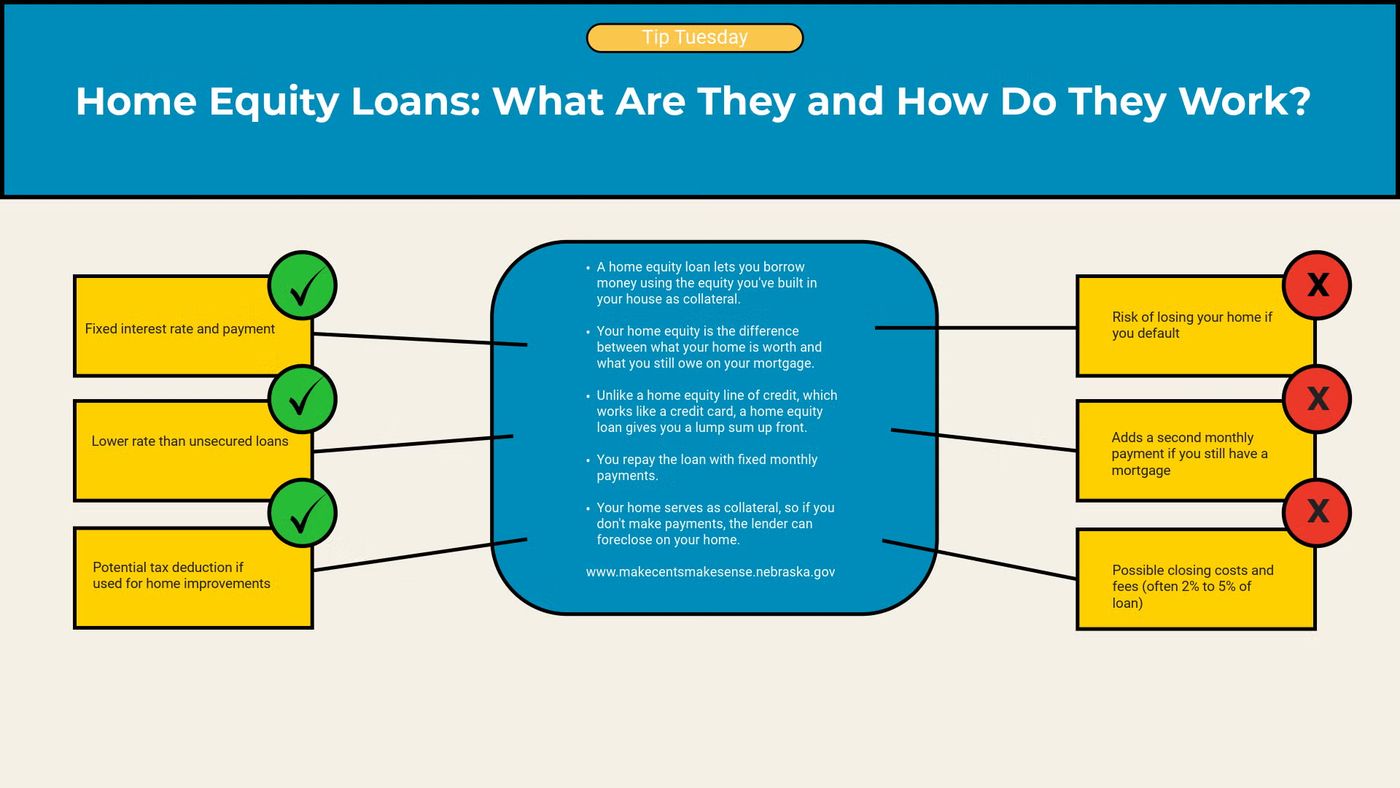
The primary risk of a HELOC is that it is secured by your home, meaning failure to repay could lead to foreclosure. The variable interest rate introduces payment uncertainty. As the Bank of Canada adjusts its policy rate, your lender's prime rate and thus your HELOC payments will change. During periods of rising rates, your interest costs can increase significantly. Furthermore, because you are only required to make interest payments during the draw period, it is easy to accrue a large principal balance without reducing it, which can become difficult to repay later.
Another common risk is over-borrowing due to the easy access to funds. A HELOC should ideally be used for investments that maintain or increase your net worth, such as home improvements that add value, debt consolidation that lowers interest costs, or education that enhances earning potential. Using a HELOC for discretionary consumer spending or vacations can lead to debt that is secured against your home without providing any financial return. It is crucial to have a clear repayment plan before drawing funds.
To use a HELOC responsibly, treat it as a strategic financial tool, not as extra income. Set a personal borrowing limit well below your approved maximum to maintain a safety margin. Consider making principal payments even during the interest-only draw period to reduce the balance. Monitor interest rate announcements from the Bank of Canada, as they directly affect your cost of borrowing. Finally, if your financial situation changes, such as a loss of income, communicate proactively with your lender to explore options before falling behind on payments. This proactive approach is key to managing the risks associated with secured, revolving debt.
Current HELOC Rate Landscape Among Lenders
HELOC rates in Canada are not always advertised publicly by all major banks, making direct comparison challenging. Many of the large financial institutions do not publish a standard HELOC rate, instead offering rates on a case-by-case basis that depend on the borrower's profile, the property, and the relationship with the bank. A common industry assumption is that rates from the major banks often start around their prime rate plus 1%, though this can vary. As of late 2026, public rates from some lenders and brokers showed HELOC rates around 4.45% to 4.95%, but these are specific examples and not universal.
Specialized lenders, monoline lenders, and credit unions may publish more transparent rates or offer competitive premiums over prime. Broker-sourced rates can sometimes be lower than walking into a bank directly, as brokers have access to multiple lender products and may secure volume discounts. However, it is important to verify that a broker-sourced rate is actually available from the underlying lender for your specific situation. All advertised rates are typically for the variable, revolving portion of the HELOC and do not include any optional fixed-rate term portions.
| Lender Type | Rate Transparency | Common Rate Structure |
|---|---|---|
| Major Banks (Big 5) | Rates often not published. Offered individually | Assumed to be Prime + a premium (e.g., Prime + 1%) |
| Credit Unions | May publish rates or offer clear premiums | Prime + a stated premium |
| Monoline & Specialized Lenders | Often publish rates for comparison | Published variable rate (e.g., 4.45%) |
| Broker-Sourced Rates | Rates are provided but may be lender-specific | Can be lower than direct rates. Requires verification |
When comparing, focus on the full package: the interest rate premium over prime, all associated fees, the flexibility of access, and the lender's service standards. A slightly higher rate from a lender with no annual fee and convenient access might be more cost-effective than a lower rate with high setup costs. Always ask for a detailed breakdown of all costs and the exact calculation of your credit limit based on your property's appraised value before committing to any HELOC product. This due diligence is essential for finding a suitable and cost-effective home equity solution.
Frequently asked questions
How does a HELOC interest rate compare to a mortgage rate?
HELOC interest rates are variable and typically higher than mortgage rates. They are usually set at the lender's prime rate plus a premium, such as prime + 0.5% or 1%. Mortgage rates for refinancing can be fixed or variable and are often lower than HELOC rates for comparable terms because they fund a term loan rather than revolving credit. For example, a 5-year fixed refinance rate might be 5.09%, while a HELOC rate could be 4.95%.
Can I use a HELOC for a down payment on another property?
Yes, you can use a HELOC to finance part of a home purchase. In Canada, you can use a HELOC to finance up to 65% of a property's purchase price. To finance more, you must use a traditional mortgage for the remaining amount, ensuring the total financing does not exceed 80% of the home's value. This strategy allows you to leverage equity from your primary residence to invest in another property.
Do I need to pass a stress test for a HELOC?
Yes, qualifying for a HELOC requires passing a stress test. Lenders must ensure you can afford payments at a higher interest rate. The test uses either the OSFI-set qualifying rate of 5.25% or your contract HELOC rate plus 2%, whichever is higher. This rule applies even if you are only making interest-only payments initially, as it tests your ability to handle potential rate increases over the life of the credit facility.
What is the maximum I can borrow with a HELOC in Canada?
The maximum amount you can borrow with a standalone HELOC is up to 65 percent of your home's appraised value, as per OSFI regulations. If you combine a HELOC with a mortgage, the total of both balances cannot exceed 80 percent of your home's value. Your actual borrowing limit is calculated by taking 80 percent of your home's value and subtracting your current mortgage balance. You must then ensure the resulting HELOC amount does not exceed 65 percent of your home's total value. For example, on a home valued at 600000 dollars with a 200000 dollar mortgage, you could access up to 280000 dollars through a HELOC.
What are the monthly payments on a HELOC?
During the draw period, your minimum monthly payment is typically interest only, calculated on the outstanding balance you have used. This payment will fluctuate as the variable interest rate, which is tied to the lender's prime rate, changes. After the draw period ends, the HELOC enters the repayment phase. Your payments will then include both principal and interest, which will be higher than the interest only payments. You also have the flexibility to make lump sum payments or pay the entire balance at any time without penalty.
What is the difference between a HELOC and a cash out refinance?
A HELOC is a revolving line of credit that lets you borrow funds as needed over time, paying interest only on the amount you use. A cash out refinance replaces your existing mortgage with a larger one, giving you a lump sum of cash upfront, on which interest accrues immediately on the full amount. A refinance can allow you to borrow up to 80 percent of your home's value, often at a lower interest rate than a HELOC. However, a HELOC offers more flexibility for ongoing or uncertain expenses, while a refinance provides a fixed, one time amount.
Sources and further reading
- HELOC rates Canada, Best Home Equity Line of Credit rates ratehub.ca
- Home Equity Line of Credit (HELOC) truenorthmortgage.ca
- Best Canada HELOC Rates - 4.45% wowa.ca
- HELOC vs Mortgage: What's the Difference in Canada? nesto.ca
- TD Home Equity FlexLine (HELOC), TD Canada Trust td.com
This article explains how things work and is not financial, tax or legal advice. Rules, limits and rates change, so check the current figures with the Canada Revenue Agency, your province or your financial institution before you act.