CIBC GIC rates are the annual interest rates offered by the Canadian Imperial Bank of Commerce on its Guaranteed Investment Certificates. These rates are fixed for the term of the GIC and are calculated on an annual basis. The rates vary by product type, term length, and investment amount, with promotional Bonus Rate GICs typically offering higher returns than regular GIC rates. For Canadians, GICs provide a secure, CDIC insured investment that guarantees 100 percent of the original deposit. This makes them a core component of low risk savings strategies for short term goals or conservative portfolio allocations.
Understanding CIBC GIC Rate Structures
CIBC advertises prevailing or posted interest rates for its GICs, which are calculated on an annual basis. These rates are fixed for the duration of the GIC's term and apply to both annual interest payment and at-maturity interest payment options. It is important to note that these prevailing rates can change at any time without prior notice. CIBC distinguishes between its regular GIC interest rates and its promotional Bonus Rate GICs, with the latter typically offering more competitive returns. For example, as of October 2026, a CIBC Bonus Rate GIC for a 12-month term was listed at 2.45%, while other non-redeemable GICs for 9 to 11 months were at 2.60%. The specific rate a customer receives is determined at the time of purchase and is locked in for the full term.
The interest rates offered are directly influenced by the term length and the investment amount tier. Longer terms generally command higher interest rates, reflecting the commitment of locking funds away for an extended period. CIBC also structures its rates into investment tiers, such as the $1,000 to $4,999 tier and the $5,000 to $999,999 tier for its Bonus Rate GIC, with potentially different rates for each level. For cashable GICs, which offer the flexibility to withdraw funds, the regular interest rates are notably lower, ranging from 0.05% to 0.90% depending on the term selected. This trade-off between liquidity and return is a fundamental characteristic of GIC products across all Canadian financial institutions.
Types of CIBC GICs and Their Features
CIBC offers a wide array of GIC products to suit different investor needs, from short-term parking for cash to long-term wealth building. The primary categories are defined by their liquidity features, interest rate structure, and currency. Non-Redeemable GICs, including the standard CIBC Bonus Rate GIC, offer fixed rates and do not permit access to funds before maturity without a penalty or loss of interest. These are available for terms ranging from short-term (30-364 days) to long-term (1 to 7 years) and are eligible for most registered and non-registered accounts. Cashable or Redeemable GICs guarantee principal and interest while allowing cash-outs at any time, albeit at specified early redemption rates that are lower than the full term rate.
Beyond the basic fixed-rate GICs, CIBC provides several specialized products. The CIBC Variable Rate GIC has a one-year term and an interest rate tied to the CIBC Prime Rate, meaning earnings increase or decrease with changes to the prime rate. Market Linked GICs have their interest tied to the performance of stock market indexes, offering the potential for higher returns with a minimum guaranteed return over the term. The CIBC Escalating Rate GIC offers guaranteed returns with rates that increase each year over a three or five-year term, available in both redeemable and non-redeemable versions. For systematic savers, the CIBC Easy Builder GIC uses a laddering strategy, splitting an investment across five GICs with different term lengths to provide periodic access to a portion of the funds.
- Non-Redeemable GIC: Fixed rate, no early access. Terms from 30 days to 7 years.
- Cashable/Redeemable GIC: Lower fixed rate, access funds anytime. Terms from 29 days to 7 years.
- Variable Rate GIC: Rate fluctuates with CIBC Prime Rate. 1-year term, cashable after 29 days.
- Market Linked GIC: Return linked to market index performance. Minimum guaranteed return.
- Escalating Rate GIC: Interest rate increases each year. 3-year or 5-year term.
- Easy Builder GIC: Laddered investment across five terms. Non-redeemable but 20% accessible per maturity.
- Short-Term GIC: For terms of 30 to 364 days. Fixed rate.
- U.S. Dollar GIC: Non-redeemable investment in U.S. currency.
Investment Amounts and Account Eligibility
The minimum investment required for a CIBC GIC varies significantly by product, which is a key detail for investors with smaller amounts to commit. For most GIC types, the minimum typically ranges from $500 to $2,500. Specifically, the CIBC Easy Builder GIC has a minimum of $2,500, or $500 per term, while Escalating Rate GICs have a $500 minimum. The CIBC Variable Rate GIC requires a minimum of $1,000. For the promotional CIBC Bonus Rate GIC, the minimum investment is $1,000 for the lower tier, but a higher minimum of $5,000 applies specifically to the 30-day term option. The maximum investment for most CIBC GICs, including the Bonus Rate GIC, is $999,999.
CIBC GICs can be held within a variety of account types, providing flexibility for tax planning and retirement savings. They are available in non-registered (taxable) accounts as well as registered plans. Eligible registered accounts include Tax-Free Savings Accounts (TFSAs), Registered Retirement Savings Plans (RRSPs), Registered Retirement Income Funds (RRIFs), Life Income Funds (LIFs), First Home Savings Accounts (FHSAs), Registered Education Savings Plans (RESPs), and Registered Disability Savings Plans (RDSPs). It is important to note that not all GIC types are available in every account. For instance, U.S. Dollar Non-Redeemable GICs are only available within a CIBC Investment Account. Investors should confirm product availability for their specific account type before proceeding.
How to Purchase a CIBC GIC
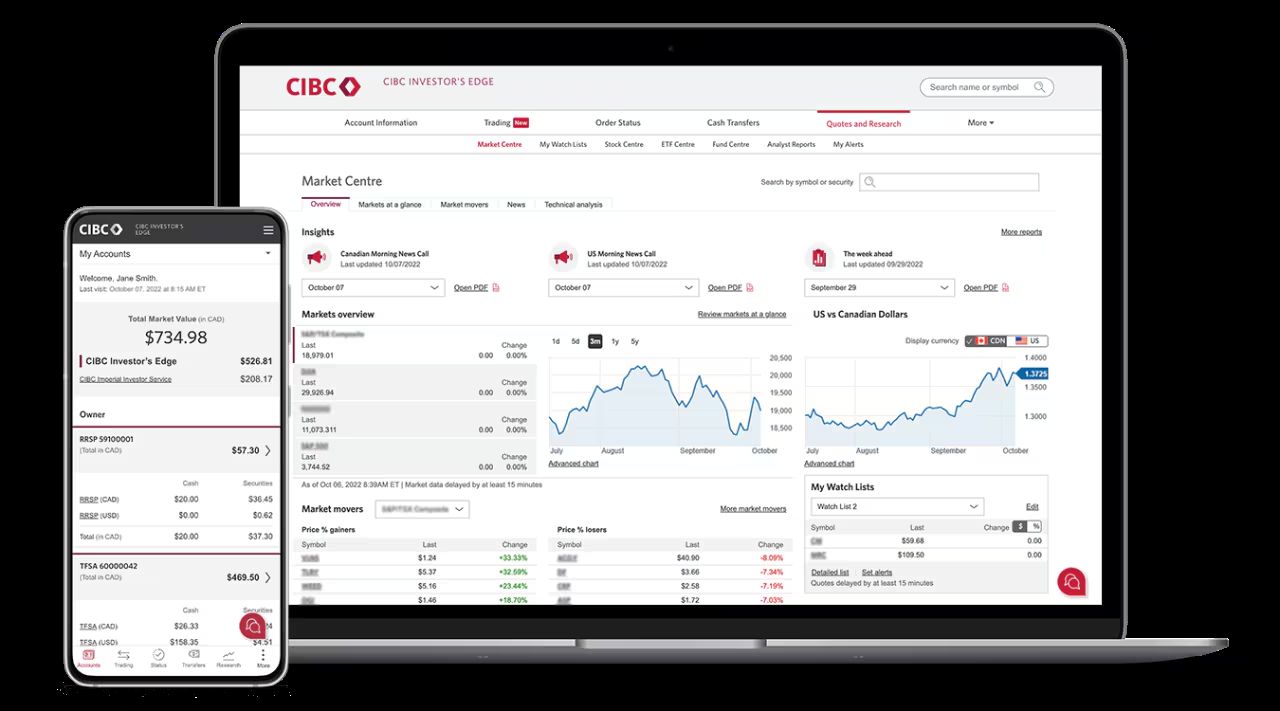
Purchasing a CIBC GIC requires the investor to meet basic eligibility criteria. The individual must have reached the age of majority in their province or territory of residence. They must also have an existing CIBC bank account or investment account from which to fund the GIC purchase. For qualified customers, the process can often be completed online in just a few minutes through CIBC's digital banking platform. Alternatively, investors can purchase GICs over the phone with a banking representative or by visiting a CIBC Banking Centre in person. The steps to purchase involve selecting the desired GIC type, term length, and investment amount, and then specifying the account from which the funds will be drawn and into which the GIC will be placed.
Investors must also choose an interest payment option, typically either annual payments or a single payment at maturity. It is crucial to review the terms and conditions, including the specific interest rate being offered at the time of purchase, as it will be fixed for the entire term. After the GIC is purchased, a confirmation will be provided, and the investment will appear within the holder's account summary. This process ensures that the GIC is properly registered and that the investor understands the commitment for the chosen term.
Maturity, Renewal, and Early Redemption Rules
When a CIBC GIC reaches its maturity date, the principal and any accrued interest are paid out. Investors have several options at this point. They can choose to withdraw the funds, either transferring them to a linked bank account or receiving a cheque. Alternatively, they can reinvest the proceeds into a new GIC, often at the prevailing interest rates at that future date. CIBC offers renewable GICs, which will automatically renew into a new GIC of the same term and type unless the investor instructs otherwise. Investors typically have a 10-business-day window after receiving renewal confirmation to cancel the automatic renewal if they wish.
Accessing funds before the maturity date is governed by strict rules that vary by GIC type. Non-Redeemable GICs cannot be cashed out early without incurring a significant penalty, which usually involves forfeiting some or all of the accrued interest. Redeemable or Cashable GICs, as the name implies, allow for withdrawal at any time. To redeem a cashable GIC, the investor must contact CIBC by phone, visit a branch, or submit a written request. The interest paid on an early redemption will be calculated at the specified early redemption rate, which is lower than the full-term rate. For the CIBC Cashable Escalating Rate GIC, funds can be accessed on each anniversary date or up to seven days after, providing a structured form of liquidity within the investment term.
Safety and Insurance for CIBC GICs
All eligible CIBC GICs are protected by the Canada Deposit Insurance Corporation (CDIC), a federal Crown corporation. This insurance guarantees 100% of the original deposit amount, up to applicable coverage limits, in the unlikely event that CIBC were to fail. CDIC coverage applies per depositor, per insured category, at each member institution. For GICs held within registered accounts like TFSAs and RRSPs, they are covered under separate insurance categories. This safety net makes GICs one of the most secure investment vehicles available in Canada, appealing to investors whose primary concern is capital preservation. The guarantee extends to the principal amount invested and any interest that has been earned and credited up to the date of a bank failure, within the coverage limits.
It is important for investors to understand that CDIC insurance covers deposit-type products, which GICs are, but does not cover market-linked investments where the return is not fixed. However, CIBC's Market Linked GICs still provide a minimum guaranteed return of principal, which is a key safety feature. The combination of a guaranteed return from the bank and backing from federal deposit insurance makes CIBC GICs a fundamental part of low-risk investment portfolios for Canadians. This dual layer of security ensures that investors can plan their finances with confidence in the safety of their principal.
Comparing CIBC GIC Rates and Features
When evaluating CIBC GICs, it is useful to compare the rates and features across the main product categories. CIBC offers several types of GIC products including fixed rate, cashable, variable rate, market linked, laddered, and US dollar GICs. These products are available for terms ranging from 30 days to seven years. The minimum investment amount typically ranges from 500 dollars to 2,500 dollars depending on the specific GIC type. Rates are illustrative and subject to change at any time without prior notice.
| GIC Type | Typical Term | Interest Rate Feature | Redemption Flexibility |
|---|---|---|---|
| Bonus Rate GIC (Non-Redeemable) | 1-2 years | Fixed promotional rate | No early access |
| Cashable GIC | 29 days - 7 years | Lower fixed rate (0.05%-0.90%) | Cashable anytime |
| Market Linked GIC | e.g., 2 years | Tied to index, min/max return | Non-redeemable |
| Variable Rate GIC | 1 year | Fluctuates with Prime Rate | Cashable after 29 days |
| Escalating Rate GIC | 3 or 5 years | Rate increases each year | Redeemable or Non-Redeemable |
| Long-Term Non-Redeemable | 1-7 years | Fixed rate | No early access |
The choice between these products involves balancing the desire for higher potential returns against the need for liquidity and risk tolerance. For instance, an investor seeking the highest guaranteed rate might choose a long-term non-redeemable GIC but must be comfortable locking funds away. Someone needing emergency access might opt for a cashable GIC, accepting a lower rate for that flexibility. The CIBC Easy Builder GIC offers a middle ground for laddering, providing some periodic liquidity while maintaining exposure to longer-term rates. Investors should always verify the current rates and terms directly with CIBC at the time of investment, as they are subject to frequent change.
Frequently asked questions
What is the minimum amount needed to open a CIBC GIC?
The minimum investment for a CIBC GIC depends on the specific product. It typically ranges from $500 to $2,500. For example, the CIBC Easy Builder GIC requires $2,500, while Escalating Rate GICs have a $500 minimum. The CIBC Bonus Rate GIC has a minimum of $1,000 for most tiers, but requires $5,000 specifically for a 30-day term.
Can I cash out my CIBC GIC early?
Early redemption depends on the GIC type. Non-Redeemable GICs cannot be cashed out before maturity without a penalty, usually involving loss of interest. Redeemable or Cashable GICs allow withdrawal at any time, but interest is paid at a lower, specified early redemption rate. The CIBC Variable Rate GIC is cashable after the first 29 days.
Are CIBC GICs covered by CDIC insurance?
Yes, eligible CIBC GICs are covered by the Canada Deposit Insurance Corporation. This federal insurance guarantees 100 percent of the original deposit amount, up to applicable limits. CIBC is one of the major banks in Canada and all of its GICs are CDIC insured. This provides security for investors in the unlikely event that the bank fails.
What is a CIBC Bonus Rate GIC?
A CIBC Bonus Rate GIC is a promotional, non redeemable GIC that offers a competitive fixed interest rate for a specific term. It has investment amount tiers, such as 1,000 dollars to 4,999 dollars and 5,000 dollars to 999,999 dollars. The maximum investment is 999,999 dollars. These promotional rates are typically higher than CIBC's regular GIC interest rates.
How does a CIBC Market Linked GIC work?
A CIBC Market Linked GIC earns interest based on the performance of a stock market index. The interest rate is tied to market performance, so you have a chance to earn more than a traditional GIC. It offers a minimum guaranteed total return over the term, protecting the principal. For example, a product may offer a minimum total return of 6.90 percent over two years, with a maximum cap of 12 percent.
What types of accounts can hold a CIBC GIC?
CIBC GICs can be held in non registered accounts and various registered plans. Eligible registered accounts include Tax Free Savings Accounts, Registered Retirement Savings Plans, Registered Retirement Income Funds, and Life Income Funds. They are also available in First Home Savings Accounts, Registered Education Savings Plans, and Registered Disability Savings Plans within a CIBC Investment Account. This wide range of account types provides flexibility for different savings goals. Specific GIC products, such as cashable or escalating rate options, are explicitly noted as being available for these registered plans. This allows investors to incorporate GICs into both their taxable and tax advantaged investment strategies smoothly.
Sources and further reading
- Interest Rates on GICs cibc.com
- The best CIBC GIC rates in Canada ratehub.ca
- Best CIBC GIC Rates for October 2026 nerdwallet.com
This article explains how things work and is not financial, tax or legal advice. Rules, limits and rates change, so check the current figures with the Canada Revenue Agency, your province or your financial institution before you act.