The best savings account in Canada is one that offers a competitive interest rate, minimal fees, and features that align with your financial goals. Savings accounts are a secure place to hold funds while earning interest, with high-interest savings accounts (HISAs) typically offering more attractive rates than standard accounts. Canadians can choose from a wide range of options offered by large traditional banks, online banks, and credit unions. Understanding the features, interest calculation methods, and potential limitations of these accounts is essential for making an informed decision.
Understanding Savings Account Types
Savings accounts in Canada serve as secure vehicles for holding money while earning interest, differing primarily in their interest rates and access terms. The most common type is the high-interest savings account (HISA), which offers rates significantly higher than basic savings accounts, often ranging between 1% and 2.50% for standard rates. Financial institutions also offer tiered savings accounts where the interest rate increases as your account balance grows, providing an incentive to save more. Some accounts are designed for specific currencies, allowing Canadians to hold and earn interest on U.S. Dollars, Euros, or British Pounds. It is important to distinguish savings accounts from chequing accounts, as savings accounts are primarily for accumulating funds and typically do not come with cheque books or unlimited transaction capabilities.
Registered savings accounts, such as Tax-Free Savings Accounts (TFSAs) and Registered Retirement Savings Plans (RRSPs), are another category designed for specific long-term goals with tax advantages. These registered accounts can hold cash but are often used for investments. For everyday savings goals, non-registered high-interest savings accounts provide easy access without contribution limits. Many financial institutions promote these accounts with limited-time promotional interest rates, which can be as high as 4.60% or 5.00% for an introductory period, such as the first three to five months. After the promotional period ends, the interest rate reverts to the institution's standard, often lower, rate.
Key Features and How Interest is Calculated
Savings accounts function by paying you interest on the money you deposit, with the rate expressed as an annual percentage. The interest is not paid annually, however, but is calculated daily and paid monthly into your account. The calculation uses a simple interest formula: the principal amount is multiplied by the daily interest rate, which is the annual rate divided by 365, and then multiplied by the number of days since the last payment. For example, with a $5,000 deposit in an account with a 4.70% annual rate, the daily interest rate is approximately 0.000129, leading to about $19.35 in interest earned for a 30-day month.
Most savings accounts offer features designed for convenience and growth. Electronic transfers between accounts at the same bank are typically free and can be done through online or mobile banking. Many banks also offer tools to automate savings, such as setting up pre-authorized transfers from a chequing account on a scheduled basis. Some institutions, like RBC, provide automated savings tools like NOMI Find & Save, which analyzes spending patterns and automatically moves small, surplus amounts into a savings account.
Major Financial Institutions Offering Savings Accounts
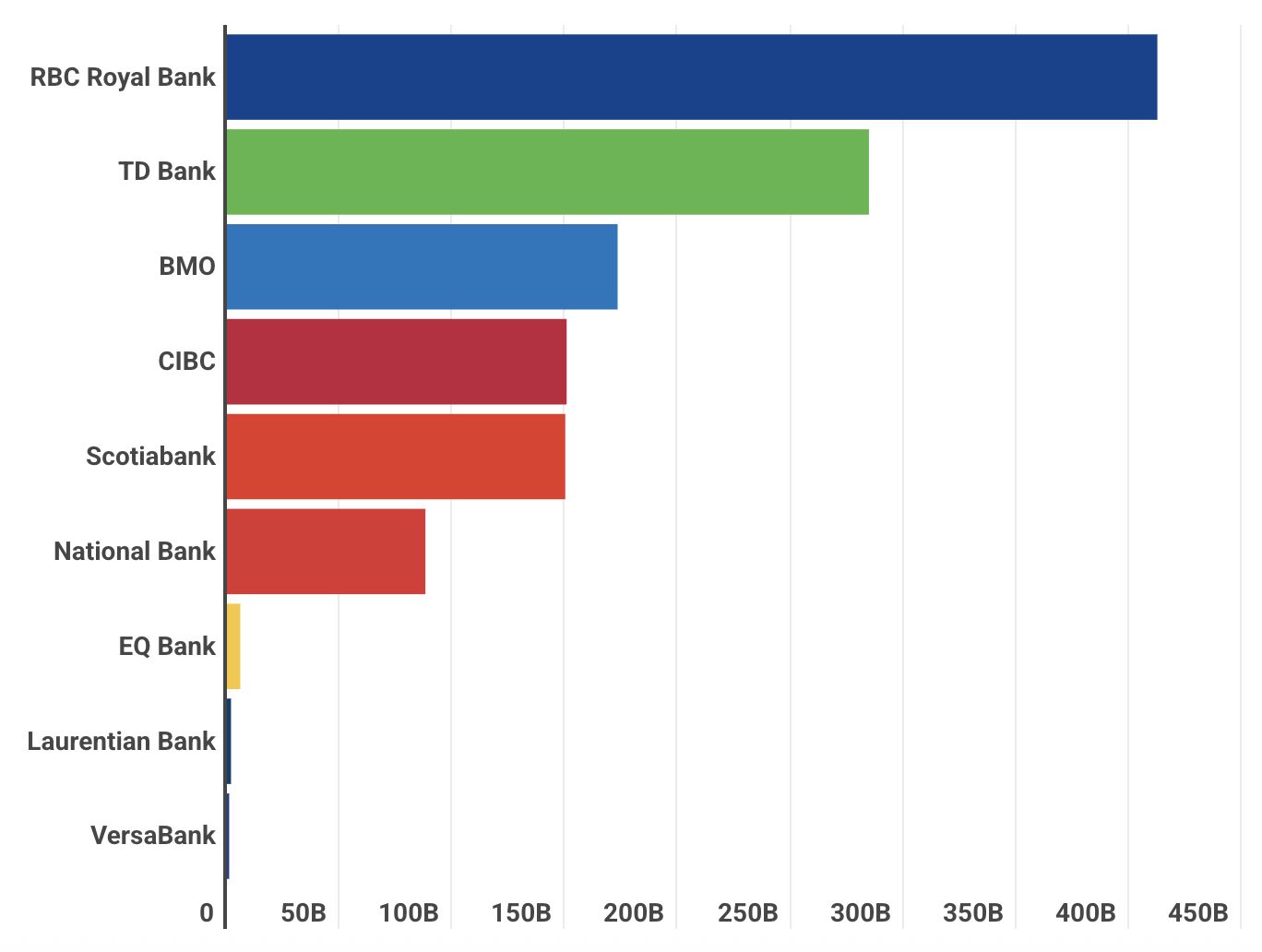
Canadians can open savings accounts with a variety of financial institutions, each with different strengths. The largest and most established are the Big Five banks: Royal Bank of Canada (RBC), Toronto-Dominion Bank (TD), Bank of Montreal (BMO), Scotiabank, and Canadian Imperial Bank of Commerce (CIBC). These institutions have extensive branch and ATM networks across the country and offer a full suite of financial products alongside savings accounts. Their savings accounts may be part of broader banking packages, and some offer bonus incentives for bundling products. For instance, Scotiabank has offered a cash bonus bundle where clients could earn up to $1,000 for opening an eligible chequing account, savings account, and credit card together during a promotional period.
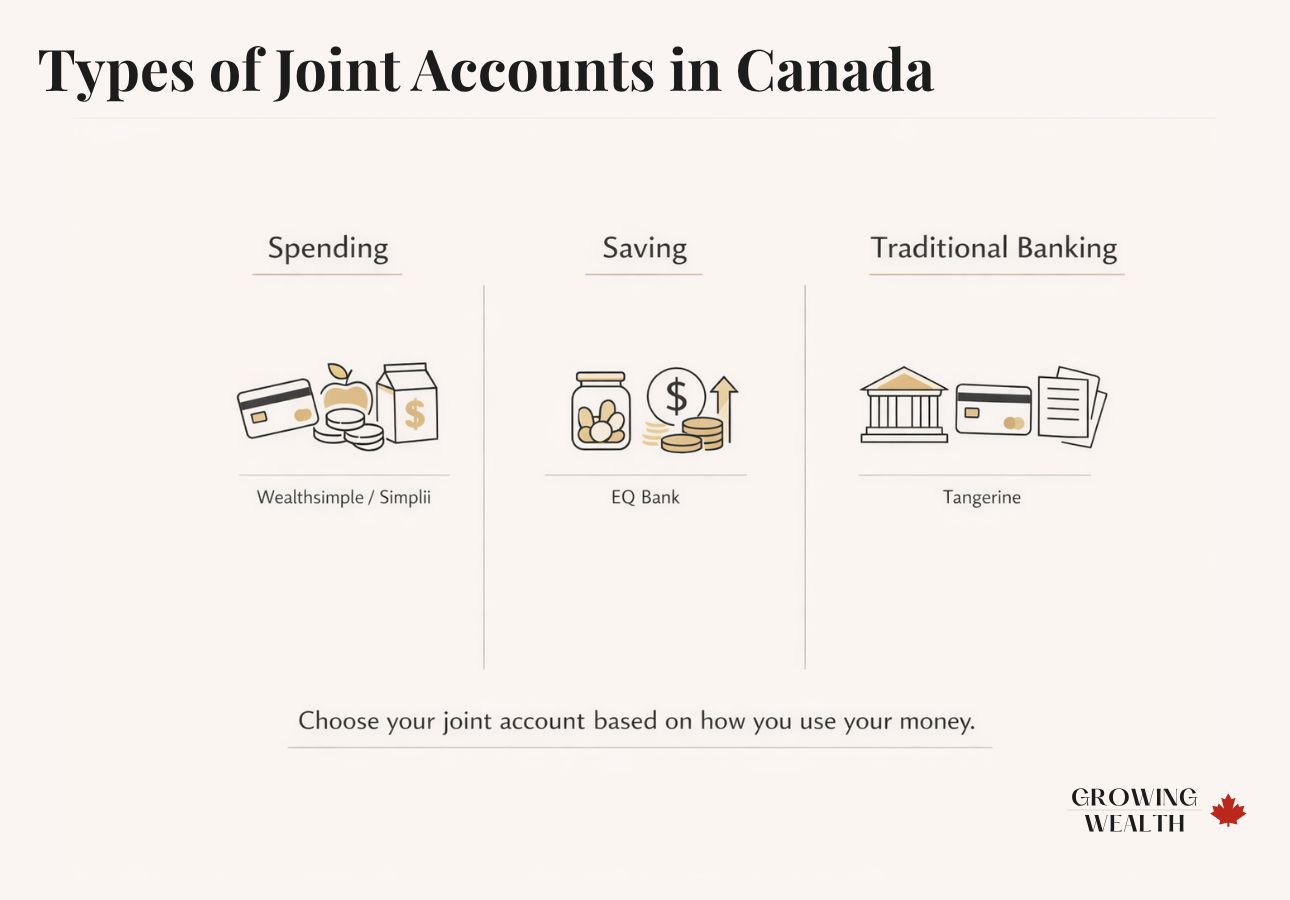
Online banks and financial technology companies have become prominent competitors, often offering higher interest rates and lower fees due to lower overhead costs. Examples include EQ Bank, Wealthsimple, Simplii Financial, and Tangerine. These digital-first providers typically operate without physical branches, providing service through apps and websites. Credit unions, such as Meridian Credit Union in Ontario or FirstOntario Credit Union, are member-owned financial cooperatives that also offer competitive savings accounts, though some products may be restricted to residents of a specific province. The choice between a large traditional bank, an online bank, or a credit union often depends on a customer's preference for in-person service, digital experience, and the specific account features and rates offered.
Factors to Consider When Comparing Accounts
Selecting a savings account requires careful comparison of several factors beyond just the advertised interest rate. The annual percentage yield is the primary figure to compare, but it is crucial to note whether a rate is a limited-time promotional offer or the standard ongoing rate. Many institutions advertise attractive promotional rates, like 4.60% for the first five months, which then drop to a base rate below 2%. Fees are another critical consideration. Look for monthly maintenance fees, transaction fees for exceeding withdrawal limits, and any fees for transferring funds. Many of the best high-interest savings accounts have no monthly fees and no minimum balance requirements to open the account.
Accessibility and convenience features should also be evaluated. This includes the ability to make free transfers between your own accounts, use of Interac e-Transfer for sending money to others, and the quality of the bank's mobile app for depositing cheques and managing your money. Some accounts limit the number of withdrawals or transfers you can make each month without incurring fees, as banks prefer to keep those funds available for lending. Furthermore, consider whether the account can be linked to a registered plan like a TFSA or RRSP, which may be important for long-term, tax-advantaged savings goals. Evaluating these factors in the context of your own savings habits and objectives will lead to a more suitable choice.
Common Limitations and Potential Drawbacks
While savings accounts are valuable tools, they come with certain limitations designed to encourage saving over spending. A common restriction is a limit on the number of withdrawals or transfers you can make from the account per month. Exceeding this limit can result in fees per transaction or a reduction in the interest rate earned for that month. Some accounts may also require a minimum daily or monthly balance to qualify for the advertised interest rate or to avoid monthly maintenance fees. It is important to read the account's terms and conditions to understand these requirements fully.
Another significant drawback to watch for is the use of temporary promotional interest rates. An account may be advertised with a high rate, but this rate often applies only to new deposits for a short initial period, such as 90 days or five months. After this period, the rate can drop significantly, sometimes to a level below that of competitors. Additionally, some tiered savings accounts offer higher rates only when your total relationship balance with the bank, which may include chequing, savings, and investment accounts, reaches a specific threshold, such as $500,000. For the average saver, these tiered rates may be less attainable than a flat, competitive rate from another institution.
Provincial and Regional Account Options
In addition to nationally available accounts, several financial institutions offer savings products restricted to residents of specific provinces. These are often provided by regional credit unions or trust companies. For example, ATB Financial's High Interest Savings Account is available only to residents of Alberta. FirstOntario Credit Union offers a High Interest eSavings Account exclusively to Ontario residents. Similarly, Island Savings provides a High Interest Savings Account for residents of British Columbia only. These provincial accounts are regulated by provincial authorities, such as the Financial Services Regulatory Authority of Ontario (FSRA), and deposits are protected by provincial deposit insurance plans.
While they may not have the national branch network of the Big Five banks, they can offer competitive interest rates and personalized service to members within their region. Canadians should investigate these local options as part of their comparison process. Some credit unions and online banks are limited to residents of a single province. These institutions may provide favourable terms for residents who are eligible to open an account.
- ATB Financial High Interest Savings Account (Alberta residents only)
- FirstOntario Credit Union High Interest eSavings Account (Ontario only)
- Island Savings High Interest Savings Account (British Columbia only)
- Kindred Credit Union High Interest Savings (Ontario only)
Steps to Open a Savings Account
Opening a savings account in Canada is a straightforward process, especially with the prevalence of online applications. The first step is to compare accounts from different institutions using online comparison tools or by reviewing their websites directly. Once you have selected an account, you will need to gather the required identification documents. These typically include a government-issued photo ID, such as a driver's licence or passport, and your Social Insurance Number (SIN). The application can usually be completed online, by phone, or in person at a branch for traditional banks.
The online process involves filling out a digital application form with your personal details, contact information, and employment data. You will also need to agree to the account's terms and conditions. After submitting the application, you may receive an email confirmation once it is approved. To fund the account, you can set up an electronic funds transfer from another bank account, deposit a cheque through a mobile app, or visit a branch to make a cash deposit. Many accounts have no minimum deposit to open, allowing you to start with any amount.
- Compare accounts from different institutions.
- Gather required ID (government photo ID and SIN).
- Complete the application online, by phone, or in person.
- Agree to the account's terms and conditions.
- Receive email confirmation of approval.
- Fund the account via transfer, cheque deposit, or cash.
Promotional Rates and Bonus Offers for 2026
Financial institutions frequently use promotional interest rates and cash bonus offers to attract new customers. For 2026, several notable promotions have been advertised. Simplii Financial offered a 4.60% interest rate on a new High Interest Savings Account for the first five months on eligible deposits up to $200,000, with the offer ending on October 31, 2026. Scotiabank promoted a welcome offer where new Scotia High Interest Savings Account holders could earn up to 5.00% for the first three months if they were not current or recent account holders.
Cash bonus bundles have also been available. For example, Scotiabank ran a cash bonus bundle offer from July 3 to October 29, 2026, where clients could earn up to $1,000 by opening an eligible banking package, savings account, and credit card and meeting specific transaction conditions. These promotions are always subject to detailed terms and conditions, including specific qualifying activities like setting up direct deposits or completing a minimum number of transactions. It is vital to read all the fine print to understand exactly what is required to earn the bonus or promotional rate and what happens once the promotional period concludes.
- Simplii Financial: 4.60% for first 5 months, offer ends October 31, 2026.
- Scotiabank: Up to 5.00% for first 3 months for new HISA holders.
- Scotiabank Cash Bonus Bundle: Up to $1,000 for bundling accounts, offer period July 3 to October 29, 2026.
- Manulife Bank: Promotional rate of 3.00%.
- Oaken Financial: Promotional rate of 2.80%.
Alternatives to Standard Savings Accounts
While savings accounts are excellent for short-term goals and emergency funds, Canadians have other options for holding cash. Guaranteed Investment Certificates (GICs) offer a fixed interest rate for a locked-in term, which can often be higher than savings account rates, but your money is inaccessible until maturity without penalty. Money market funds, available through investment accounts, are mutual funds that invest in short-term debt and can sometimes offer competitive yields, though they are not covered by CDIC insurance. For those with specific long-term goals, registered accounts like Tax-Free Savings Accounts (TFSAs) and Registered Retirement Savings Plans (RRSPs) can hold savings account products.
The advantage here is that any interest earned grows tax-free in a TFSA or is tax-deferred in an RRSP, which can significantly enhance returns over time. Registered accounts can help you achieve specific financial goals like saving for retirement or a child's education. Some financial institutions also offer U.S. dollar savings accounts for Canadians who want to hold U.S. funds. The choice between a standard savings account and these alternatives depends on your financial goals, time horizon, and tax situation.
Frequently asked questions
What is a high-interest savings account (HISA) in Canada?
A high-interest savings account (HISA) is a type of savings account that offers a higher annual interest rate compared to basic savings accounts. In Canada, standard HISA rates typically range from 1% to 2.50%, though promotional rates can be much higher, sometimes exceeding 4.60% for a limited introductory period. HISAs are offered by banks, credit unions, and online financial institutions, and they provide a secure place to grow savings with easy access to funds. They are distinct from chequing accounts as they are designed primarily for saving, not for daily transactions.
How is interest calculated on a Canadian savings account?
Interest on Canadian savings accounts is calculated daily and paid monthly. The calculation uses the principal amount, the daily interest rate, and the number of days in the period. The daily interest rate is derived by dividing the advertised annual interest rate by 365. For example, with an annual rate of 4.70% on a $5,000 balance, the daily rate is about 0.000129, resulting in approximately $19.35 in interest for a 30-day month. This method of daily calculation means you earn interest on your interest as it compounds each month.
Are there fees for savings accounts in Canada?
Many high-interest savings accounts in Canada have no monthly maintenance fees and no minimum balance requirements to open. However, some accounts may charge fees if certain conditions are not met, such as falling below a minimum balance. A common fee structure involves charges for transactions that exceed a monthly limit on withdrawals or transfers. It is important to review the account's terms and conditions to understand all potential fees, including those for Interac e-Transfers, wire transfers, or using non-network ATMs.
What is the difference between a promotional rate and a standard rate?
A promotional rate is a special, higher interest rate offered by a financial institution for a limited time to attract new customers. For example, a bank may offer 4.60% for the first five months on a new savings account. The standard rate is the ongoing interest rate that applies after the promotional period ends, which is often significantly lower, frequently between 1% and 2%. When comparing accounts, it is crucial to consider both the promotional rate and its duration as well as the long-term standard rate to understand the true earning potential.
Are online bank savings accounts safe?
Yes, savings accounts from reputable online banks in Canada are safe. Online banks that are divisions of larger CDIC-member banks, like Simplii Financial (CIBC) and Tangerine (Scotiabank), are covered. Credit unions are protected by provincial deposit insurance plans that offer similar protection. These safeguards mean your money is secure against institutional failure, regardless of whether the bank has physical branches.
Can I open a savings account if I am not a Canadian citizen?
Yes, non-citizens can open savings accounts in Canada. The process typically requires providing identification, such as a passport from your home country, along with proof of Canadian residency like a study permit, work permit, or permanent resident card. A Social Insurance Number (SIN) is often required for tax reporting on any interest earned. Many of Canada's popular banks, including the Big Five (RBC, TD, BMO, CIBC, Scotiabank) as well as online options, offer services to newcomers. These institutions may provide specific banking packages designed to help newcomers establish their financial life in the country, which can include savings accounts alongside other essential services.
Sources and further reading
- Compare savings accounts in Canada ratehub.ca
- Best High-Interest Savings Accounts in Canada for 2026 nerdwallet.com
- Open a Savings Account Online scotiabank.com
- Savings Accounts in Canada rbcroyalbank.com
- Popular banks in Canada wealthsimple.com
This article explains how things work and is not financial, tax or legal advice. Rules, limits and rates change, so check the current figures with the Canada Revenue Agency, your province or your financial institution before you act.