The best Guaranteed Investment Certificate (GIC) rates in Canada offer a secure way to grow savings with guaranteed returns. As of late 2026, the highest rates for standard terms range from approximately 2.45% to 4.40% for one- to five-year non-redeemable GICs. These rates are influenced by the Bank of Canada's policy decisions and can vary significantly between financial institutions and product types. For Canadian savers and investors, understanding current GIC rates is essential for making informed decisions about preserving capital and earning predictable interest.
Understanding GIC Rates and How They Work
A Guaranteed Investment Certificate is a low-risk investment where you deposit money with a financial institution for a predetermined term in exchange for a guaranteed rate of return. The interest rates offered on GICs are directly influenced by your bank's prime rate, which itself is influenced by the Bank of Canada's overnight target rate. When the central bank raises its policy rate, GIC rates typically follow, and they generally fall when the policy rate is cut. As of September 2026, the Bank of Canada's overnight target rate is holding at 2.25%, which has contributed to relatively stable GIC rates generally sitting below 4% for one-year terms. The interest paid on a GIC can be structured in different ways, such as simple interest paid at maturity or compounded interest calculated annually. For terms longer than one year, interest is usually compounded annually, meaning the interest earned each year is added to the principal for the next year's calculation, leading to greater overall returns.
The formula for calculating compound interest on a fixed-rate GIC is A = P(1 + r/n)^(nt), where A is the final amount, P is the principal investment, r is the annual interest rate, n is the number of times interest is compounded per year, and t is the term in years. For example, a $1,000 investment in a 5-year GIC at a 5.00% annual rate compounded annually would grow to $1,276.28 at maturity. If the interest were paid out annually instead of compounded, the total return would be only $1,250. Some providers offer more frequent compounding, such as quarterly or monthly, though these options often come with slightly lower advertised rates. It is crucial to understand that GIC rates are per annum and are always subject to change without notice, so the rate you see advertised is only guaranteed once you formally purchase the certificate.
Current Best GIC Rates by Term Length
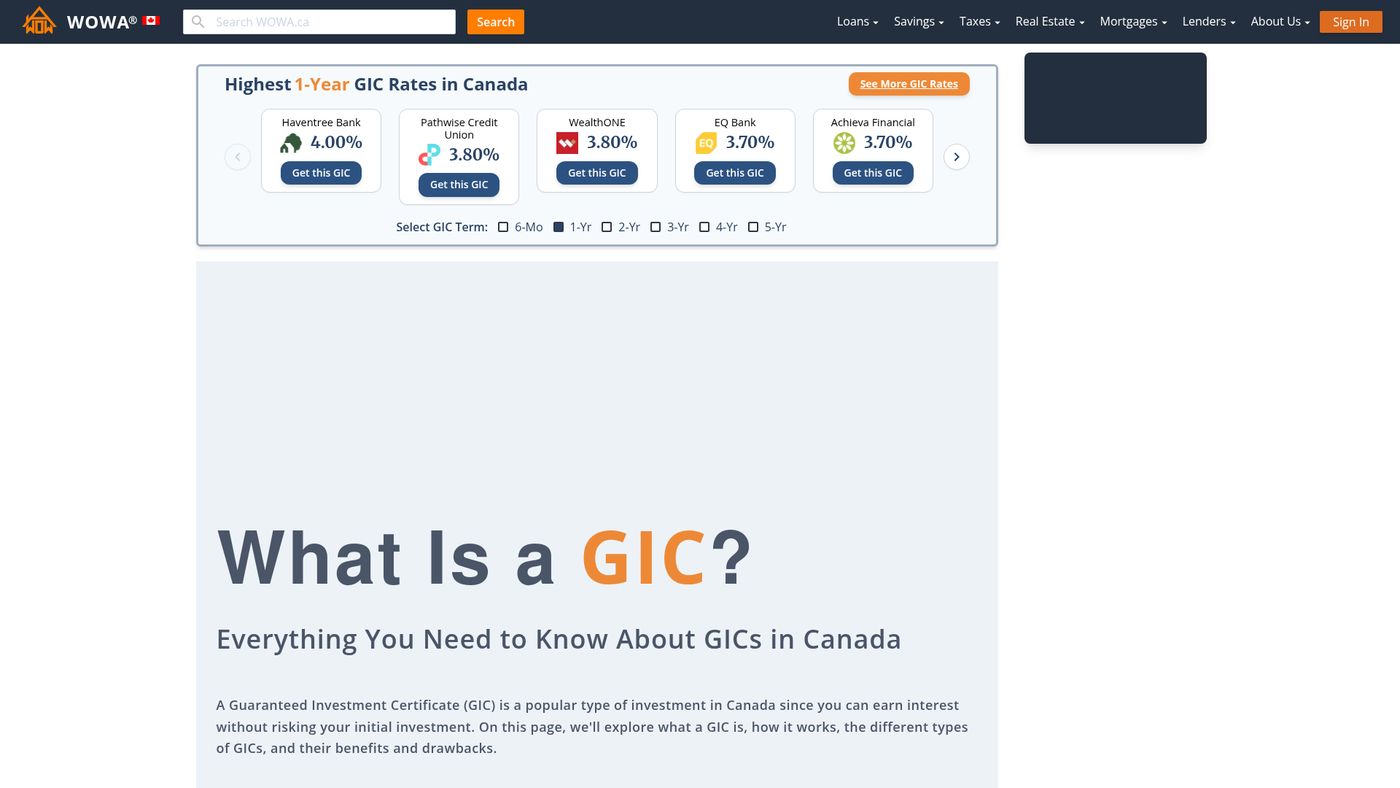
GIC rates vary considerably based on the term length, the issuing institution, and whether the GIC is registered or non-registered. As of October 20, 2026, the highest available rates for common non-redeemable, non-registered terms provide a snapshot of the market. The highest three-month GIC rate available is 2.81%, while the highest six-month rate is 3.12%. Longer terms often command higher rates, with some five-year offerings reaching up to 4.55%. It is important to note that these are the highest rates available from specific institutions at a point in time and may be part of limited-time promotional offers.
GIC rates are often tiered based on the investment amount. For example, some financial institutions offer a higher rate for deposits of $25,000 or more. Non registered rates are tiered and based on your balance. As an illustration, a rate of 3.00% may apply to deposits of $25,000 or more. These tiered structures mean larger investments can earn a higher rate of return. Investors should always verify the current rates and applicable balance tiers directly with providers, as rates are subject to change without notice.
| Term Length | Highest Advertised Rate (Oct 2026) |
|---|---|
| 3-Month | 2.81% |
| 6-Month | 3.12% |
| 2-Year | 4.30% |
| 5-Year | Up to 4.55% |
Specific institutions are known for leading rates in certain categories. As of September 2026, Achieva Financial offers the highest paying one-year term GIC rate in Canada at 3.65%. For five-year terms, Haventree Bank offers the highest rate at 4.15%. Other providers, such as EQ Bank, TD Canada Trust, and Scotiabank, also post competitive rates for various terms, like TD's featured 18-month rate of up to 3.25%. Always compare rates from multiple banks and credit unions, as the best rate for your chosen term may come from a smaller institution.
Types of GICs and Key Features
Financial institutions offer several types of GICs, each with different features catering to various savings goals and risk tolerances. The most common distinction is between redeemable (cashable) and non-redeemable GICs. Non-redeemable GICs, which are the standard, lock in your funds for the entire term and typically offer higher interest rates. Early withdrawal is either not allowed or comes with significant penalties that can reduce or eliminate earned interest. Redeemable or cashable GICs provide flexibility, allowing you to access your money before maturity, but they invariably pay lower interest rates as a trade-off for that liquidity.
Other GIC varieties include fixed-rate and variable-rate options. Fixed-rate GICs lock in a guaranteed interest rate for the entire term, providing certainty about your final return. Variable-rate GICs have an interest rate that fluctuates based on a benchmark, such as the bank's prime rate. This means your returns can increase if interest rates rise during the term, but they can also decrease if rates fall. For investors who expect interest rates to rise, a variable-rate GIC or a shorter-term fixed GIC might be preferable. There are also market-linked GICs, where the return is tied to the performance of a stock market index, offering the potential for higher returns while still guaranteeing the original principal. For example, BMO offers a Fund Linked GIC with a potential return of up to 35.00% over its term, though the actual return is not guaranteed and depends on market performance.
- Non-Redeemable GIC: Funds are locked in. Higher rates. No early withdrawal.
- Cashable/Redeemable GIC: Allows early access. Lower interest rates.
- Fixed-Rate GIC: Guaranteed rate for the full term.
- Variable-Rate GIC: Rate fluctuates with a benchmark index.
- Market-Linked/Index-Linked GIC: Return linked to market performance. Principal protected.
- Registered GIC: Held within a TFSA, RRSP, or FHSA for tax advantages.
- Non-Registered GIC: Held in a standard taxable account.
- US Dollar GIC: Denominated in US dollars. Rates differ from CAD GICs.
Deposit Insurance: CDIC vs. Provincial Coverage
One of the key safety features of GICs in Canada is deposit insurance, which protects your principal up to a specific limit if the issuing financial institution fails. The Canada Deposit Insurance Corporation is a federal crown corporation that insures eligible deposits at member banks, including GICs, up to $100,000 per insured category per depositor. Categories include different registration types, such as non-registered accounts, TFSAs, RRSPs, and FHSAs, each separately insured up to the $100,000 limit. Most major banks and their digital subsidiaries, like EQ Bank and Tangerine, are CDIC members. Provincial deposit insurance plans offer similar protection for GICs issued by credit unions and caisses populaires. These provincially regulated institutions, such as Meridian Credit Union or Saven Financial, are backed by their respective provincial insurance corporations. Coverage limits and specific rules can vary by province, but they generally provide protection comparable to CDIC. For example, in Ontario, the Financial Services Regulatory Authority of Ontario administers deposit insurance for credit unions. It is essential to confirm that your chosen credit union is a member of its provincial deposit insurance plan. Both CDIC and provincial insurance provide strong protection for your principal, making GICs a very low-risk investment vehicle.
How to Purchase a GIC: Steps and Limits
Purchasing a GIC is a straightforward process that can often be completed online in minutes. The first step is to decide on your investment amount, term length, and the type of GIC that fits your goals. You must then open an account with the chosen financial institution if you do not already have one. This could be a non-registered savings account or a registered account like a TFSA, RRSP, or FHSA. Once your account is funded, you can select the specific GIC product and term, agree to the terms and conditions, and finalize the purchase. The funds are then transferred from your account and locked into the GIC for the duration of the term.
Most institutions have minimum and maximum investment limits for individual GICs. A common minimum investment is $100, as offered by EQ Bank and others. Maximums per GIC can also apply. For example, EQ Bank sets a per GIC investment limit of $100,000 for non-registered GICs. There may also be limits on the number of active GICs you can hold simultaneously. EQ Bank allows a maximum of 20 active non-registered GICs per customer, but there is no limit on the number of registered GICs (TFSA, RRSP, FHSA) you can purchase. It is crucial to be aware of contribution limits for registered accounts to avoid over-contribution penalties set by the Canada Revenue Agency. Upon maturity, the institution will typically deposit the principal and earned interest back into the source account, and you will receive a maturity notice via email or SMS.
- Determine investment amount, term, and GIC type (e.g., fixed, non-redeemable).
- Open or access an account (non-registered or registered) with the chosen institution.
- Ensure the account is funded with the desired investment amount.
- Select the specific GIC product and confirm the interest rate and terms.
- Formally purchase the GIC, locking in the rate.
- Receive confirmation and wait for maturity. Interest may be paid periodically or at term end.
- At maturity, funds are returned to your account. You can withdraw or reinvest.
Tax Implications of GIC Investments
The tax treatment of GIC earnings depends entirely on whether the GIC is held inside a registered account or a non-registered account. Interest earned on GICs held within a Tax-Free Savings Account grows tax-free, and withdrawals are not taxed. For GICs within a Registered Retirement Savings Plan, growth is tax-deferred, meaning you pay tax on the funds only when you make withdrawals, typically in retirement. The new First Home Savings Account also allows for tax-free growth and tax-free withdrawals when used for a first home purchase. Interest earned on non-registered GICs is fully taxable as income in the year it is earned, even if the interest is not paid out until maturity. Financial institutions will issue a T5 tax slip for interest income over $50 per year, which must be reported on your annual income tax return. For GICs with terms longer than one year where interest compounds annually, you are generally taxed on the interest accrued each year, not just the amount paid out. This can create a tax liability on income you have not yet physically received, known as accrued interest. It is advisable to consult a tax advisor or refer to Canada Revenue Agency guidelines to understand your specific tax situation, especially for larger GIC investments.
Common Mistakes to Avoid When Choosing a GIC
One common mistake is not shopping around for the best rate. GIC rates can vary widely between big banks, digital banks, and credit unions, so comparing options is essential. Another error is overlooking the terms related to early withdrawal. Locking funds into a long-term non-redeemable GIC without being certain you won't need the money can lead to frustration or financial loss if you require early access. It is also important to understand the difference between advertised rates and effective yields. A GIC with interest compounded annually will yield more than one with the same nominal rate but with interest paid out annually, as demonstrated in the earlier calculation example. Investors sometimes forget to consider their investment horizon. Choosing a five-year GIC for money you might need in two years for a down payment is generally not advisable. Aligning the GIC term with your specific financial goals is crucial. Another oversight is not confirming deposit insurance coverage. While most major institutions are CDIC members, it is prudent to verify this and understand the $100,000 per category limit. For credit union GICs, ensure they are covered by a provincial deposit insurance plan. Finally, failing to plan for the tax consequences, especially for non-registered GICs, can lead to an unexpected tax bill. Keeping these points in mind can help you select a GIC that truly fits your financial plan.
Frequently asked questions
What is the highest GIC rate in Canada right now?
As of September 2026, the highest paying one-year GIC rate is 3.65% offered by Achieva Financial. For five-year terms, Haventree Bank offers the highest rate at 4.15%. These are specific promotional rates for non-redeemable GICs and are subject to change. It is important to check current rates directly with providers or comparison tools, as the best rate can vary daily and by term length.
Are GIC rates expected to go up or down?
GIC rates are closely tied to the Bank of Canada's overnight target rate. As of September 2026, the Bank is holding its rate at 2.25%, and GIC rates have remained relatively stable. Economists forecast that rates may stay unchanged in the near term, though inflation pressures and global economic conditions could influence future decisions. If you expect rates to rise, a shorter-term or variable-rate GIC might be suitable. If you value certainty, locking in a longer-term fixed rate could be preferable.
Can I cash out my GIC early?
You usually cannot cash out a GIC before its maturity date unless it is specifically a redeemable or cashable GIC. Most standard GICs are non-redeemable, meaning your money is locked in for the full term. Early withdrawal from a non-redeemable GIC is either not permitted or comes with penalties that can reduce or forfeit your earned interest. Always check the terms of your specific GIC agreement before purchasing to understand the redemption rules.
What is the difference between a GIC and a high-interest savings account?
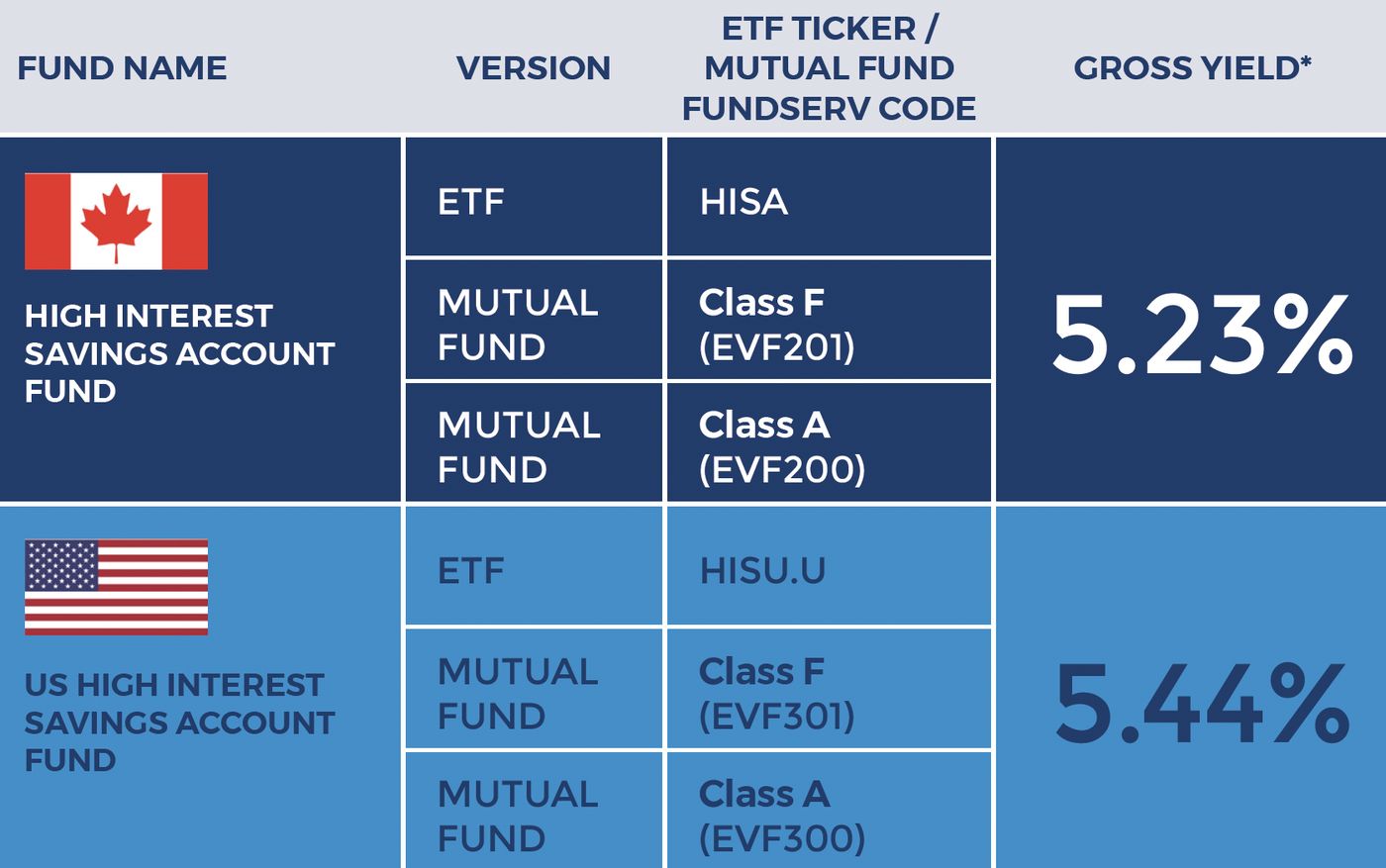
A GIC locks in your money for a fixed term at a guaranteed interest rate, offering higher returns in exchange for reduced liquidity. A high-interest savings account offers more flexibility, allowing you to deposit and withdraw funds at any time, but typically pays a lower variable interest rate. As of 2026, HISA rates range from about 1.50% to 4.60%, often depending on promotional offers. GICs are better for funds you are sure you won't need immediately, while HISAs are suitable for emergency funds or short-term savings goals.
Are GICs safe?
GICs are considered one of the safest investments available in Canada. They guarantee 100% of your principal plus the agreed-upon interest at maturity. Additionally, deposits at CDIC-member banks are insured up to $100,000 per insured category. GICs issued by credit unions are protected by provincial deposit insurance plans with similar protections. This combination of a guaranteed return and deposit insurance makes GICs a very low-risk option for capital preservation.
How is GIC interest calculated and paid?
Interest on GICs is calculated based on the annual rate (per annum) and the principal amount. For terms of one year or less, interest is usually simple and paid at maturity. For terms longer than one year, interest is typically compounded annually, meaning interest earned each year is added to the principal for the next year's calculation. Interest can be paid out at different intervals: at maturity, annually, semi-annually, or quarterly, depending on the specific GIC product. The payment frequency can affect your total return and tax situation.
Sources and further reading
- The best GIC rates in Canada 2026 ratehub.ca
- Best GIC Rates in Canada: Up to 4.55% (October 20, 2026) wowa.ca
- GICs eqbank.ca
- Non Cashable Gic Rates | TD Canada Trust td.com
- Best GIC Rates in Canada as of October 20, 2026 lifeannuities.com
This article explains how things work and is not financial, tax or legal advice. Rules, limits and rates change, so check the current figures with the Canada Revenue Agency, your province or your financial institution before you act.