A cashable Guaranteed Investment Certificate (GIC) offers Canadians a low-risk way to earn interest while retaining access to their funds before the term ends. These GICs provide flexibility, allowing you to withdraw your money, but typically at a lower interest rate compared to non-redeemable GICs. Understanding the specific rules, waiting periods, and rate structures is essential for making an informed decision. This guide explains how cashable GICs work in Canada, including current rates, eligibility, and common considerations.
How Cashable GICs Work
Cashable GICs are a specific type of Guaranteed Investment Certificate designed to offer liquidity. Unlike standard non-redeemable GICs, which lock in your funds for the entire term, cashable GICs permit you to access your principal and earned interest before the maturity date. This flexibility is a key feature for savers who may need their money for unexpected expenses or who are uncertain about their cash flow needs. In exchange for this access, financial institutions generally pay a lower rate of interest on cashable GICs compared to their non-redeemable counterparts. The trade-off between guaranteed access and potential return is the central characteristic of this investment product. The interest rate is typically fixed for the term, providing predictability on earnings if the GIC is held to maturity.
Most cashable GICs impose a mandatory waiting period, also known as a closed period, during which you cannot withdraw your funds without incurring a significant penalty. This period is commonly 30 days but can extend to 90 days depending on the issuer and the specific product. If you withdraw your investment before this waiting period elapses, the penalty is usually the forfeiture of all interest that would have been earned. This rule is designed to discourage very short-term use of the product, which is better suited to a high-interest savings account.
If you withdraw your funds after the waiting period but before the official maturity date, you will keep all the interest earned up to that point. The interest is calculated daily based on the annual posted rate. For instance, if you have a cashable GIC with a 2.00% annual rate and you withdraw after 180 days, you would receive interest for exactly 180 days at the 2.00% rate. The financial institution will not apply a complex penalty to the principal. The penalty is solely the opportunity cost of not earning the full term's interest. This structure makes cashable GICs a viable option for parking funds you might need in the medium term, with the understanding that your return is not maximized.
Current Cashable GIC Rates and Offers
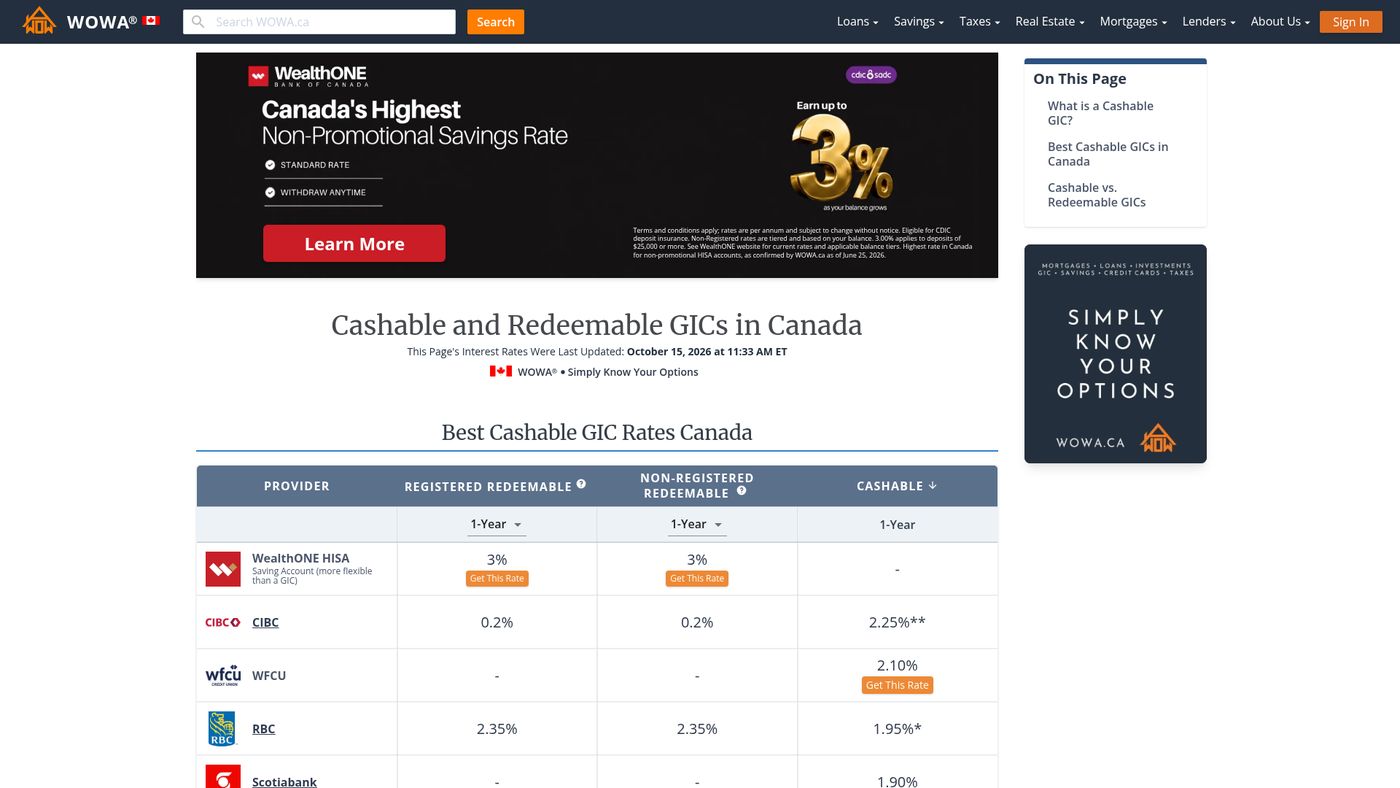
Cashable GIC rates are dynamic and vary between financial institutions, the specific term length, and the amount invested. As of recent information, rates for these flexible products are generally lower than those for fixed, non-redeemable GICs. For example, a major bank may offer a 1-year cashable GIC at a rate around 2.25%, while its non-redeemable 1-year GIC might be offered at 3.00% or higher. This differential illustrates the premium paid for liquidity. It is important to check the posted rates directly with banks and credit unions, as they are subject to change at any time without prior notice. Rates are calculated on a per annum basis, meaning the quoted percentage is the annual rate.
Some institutions offer tiered interest rates based on the deposit amount. A common structure might offer a lower rate for balances under $10,000 and a slightly higher rate for balances of $25,000 or more. For instance, a provider may advertise a cashable GIC rate of 3.00% for deposits of $25,000 or more, with a lower rate for smaller balances. These tiers are clearly outlined in the product terms and conditions. Furthermore, cashable GICs are available in various registered plans, including Tax-Free Savings Accounts (TFSAs), Registered Retirement Savings Plans (RRSPs), and First Home Savings Accounts (FHSAs). Holding a GIC within a registered account can provide tax advantages, such as tax-free growth in a TFSA.
The table below illustrates a sample of cashable GIC rates and terms from different types of Canadian financial institutions. For example, Royal Bank of Canada offers a 1-year cashable GIC rate of 2.25 percent. BMO offers a Redeemable Short-Term Investment Certificate with a 364-day term and a rate of 1.50 percent. National Bank offers a Redeemable GIC with a 60-month term and a rate of 0.65 percent. These figures are for illustration and are subject to frequent change.
| Financial Institution | Product Example | Noted Rate |
|---|---|---|
| National Bank | Redeemable GIC | 0.65% |
| BMO | Redeemable Short-Term Investment Certificate | 1.50% |
| RBC Royal Bank | Cashable GIC | 2.25% |
| Scotiabank | Personal Redeemable GIC | 2.75% |
| Peoples Bank of Canada | Short-Term GIC | 1.20% |
When comparing rates, it is crucial to read the full terms to understand the waiting period and withdrawal process. Financial institutions that offer cashable GICs pay slightly lower interest rates than they do on non-redeemable GICs. Digital banks and credit unions sometimes offer more competitive rates on cashable products than the large national banks. Always verify the current rate directly with the institution at the time of purchase, as all rates are subject to change.
Rules for Withdrawal and Redemption
The rules governing the withdrawal of funds from a cashable GIC are set by the issuing financial institution and are a critical part of the product agreement. The most common rule is the imposition of a waiting period from the date of purchase. During this closed period, any request to cash out the GIC will result in a penalty, which is typically the loss of all accrued interest. The principal amount is always returned, but the interest earned is reduced to 0%. This period is often 30 days for cashable GICs held in non-registered accounts. For GICs held within registered plans like RRSPs or RRIFs, the waiting period may be longer, such as 90 days, as noted by some providers.
After the waiting period has passed, you can usually redeem the GIC in full or in part without penalty. The process for doing so varies. Some institutions allow you to initiate a withdrawal online or through a mobile app, while others may require you to contact customer service or visit a branch. The funds from the redeemed GIC, including the principal and interest earned up to the redemption date, are typically deposited into your linked bank account within a few business days. It is important to confirm the specific redemption procedures with your provider, as some may have cut-off times for processing requests that can affect the interest calculation.
Interest on cashable GICs is accrued daily. This means that for each day you hold the investment, you earn a fraction of the annual interest rate. When you redeem, the institution calculates the exact interest owed based on the number of days your money was deposited. The interest is usually paid at the time of redemption or at maturity. For tax purposes in non-registered accounts, financial institutions report interest using the yield to maturity rate rather than the actual cash payments made each year, in accordance with Canadian income tax regulations. This reporting method ensures you are taxed on the interest you have earned, even if it has not yet been paid out to you.

Eligibility and How to Purchase
To purchase a cashable GIC in Canada, you must generally be a resident of Canada and have reached the age of majority in your province or territory. You will also need an existing account with the financial institution, such as a chequing or savings account, to fund the purchase and receive the proceeds upon redemption or maturity. Most institutions require you to have a valid Canadian social insurance number (SIN) for tax reporting purposes, especially for registered accounts. The purchase process is straightforward and can often be completed entirely online, by phone, or in person at a branch. The first step is to decide on the amount you wish to invest, as most cashable GICs have a minimum investment requirement, commonly $500, though some may have higher minimums, such as $1,000 or $5,000 for specific products or rates.
You must also choose the term, which for cashable GICs often ranges from short periods like 90 days up to several years. While the GIC is cashable, the term length indicates the period for which the quoted interest rate is guaranteed if you hold to maturity. Next, you select the type of account in which to hold the GIC. Common options include a non-registered account, a Tax-Free Savings Account (TFSA), a Registered Retirement Savings Plan (RRSP), or a First Home Savings Account (FHSA). The final steps involve transferring funds and agreeing to the terms. You will authorize the transfer of money from your linked bank account to purchase the GIC. Before confirming, you must review and accept the GIC's specific terms and conditions, which detail the interest rate, waiting period, redemption rules, and maturity instructions.
Once purchased, the GIC will appear in your account summary. You will receive a confirmation document, often called an investment direction or confirmation notice, which serves as your record of the investment's details. It is advisable to keep this document for your records. Many banks also offer online appointment booking tools to help you find the right GIC for your needs if you require assistance during the process. Buying a GIC online is generally quick, simple, and safe, and you will need a registered plan or a non-registered plan to complete the purchase.
Deposit Insurance Protection
Cashable GICs, like other deposit products, are eligible for deposit insurance in Canada, which protects your principal investment up to a certain limit. The type of insurance depends on the institution issuing the GIC. GICs purchased from banks are typically insured by the Canada Deposit Insurance Corporation (CDIC), a federal crown corporation. The CDIC provides protection for eligible deposits up to $100,000 per insured category at each member institution. This means your cashable GIC held in a non-registered account is insured separately from your GIC held in a TFSA at the same bank, each up to the $100,000 limit.
If you purchase a cashable GIC from a credit union, it is insured by a provincial deposit insurance corporation, not the CDIC. Each province has its own plan, such as the Deposit Insurance Corporation of Ontario (DICO) or the Alberta Credit Union Deposit Guarantee Corporation. It is important to verify the specific coverage rules with the credit union or the provincial insurer. This insurance protects your deposit in the unlikely event that the financial institution fails. It covers the principal amount and any interest accrued up to the date of the institution's failure, within the coverage limits. The insurance does not protect against a loss of value if you redeem early and incur an interest penalty. When considering a cashable GIC, especially from a smaller online-only bank or credit union, confirming that the issuer is a member of either CDIC or a provincial insurance plan provides an important layer of security for your savings.
Common Mistakes to Avoid
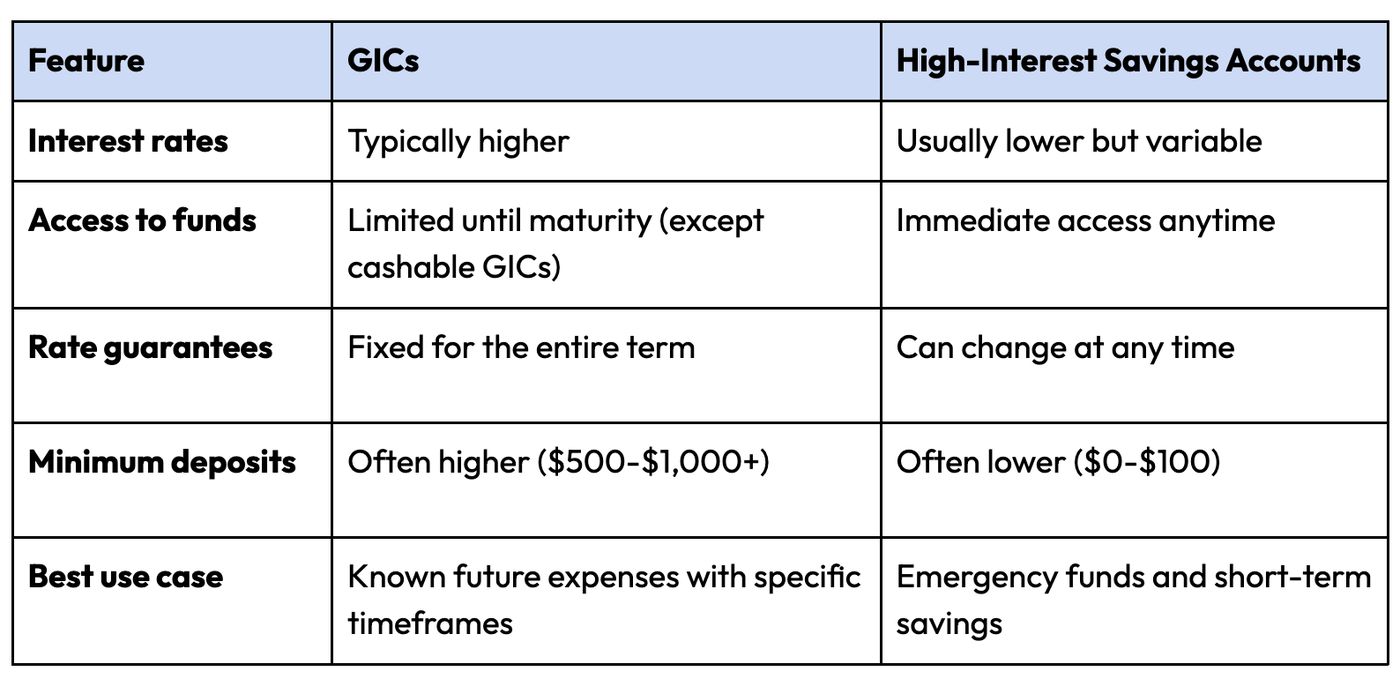
One frequent mistake is not understanding the waiting period or closed period. Investors may assume a cashable GIC can be withdrawn immediately without consequence, only to discover that redeeming within the first 30 or 90 days results in zero interest earned. This can turn what seemed like a flexible parking spot for cash into a less useful product. Always read the product disclosure to confirm the length of the closed period and the exact penalty for early redemption. Another related error is confusing a cashable GIC with a high-interest savings account, which typically offers immediate access without any waiting period, though often at a variable rate.
Another common oversight is neglecting to compare the cashable GIC rate with the rates for non-redeemable GICs of a similar term. While the cashable option offers flexibility, the interest rate difference can be substantial. For funds you are confident you will not need for the term's duration, a non-redeemable GIC will almost always yield a higher return. Failing to make this comparison means you could be leaving interest income on the table unnecessarily. Additionally, some investors do not check for tiered rates. Assuming the advertised headline rate applies to all investment amounts can lead to disappointment if your deposit is below the threshold for the best rate.
Investors sometimes also make errors regarding registered accounts. Placing a cashable GIC in a non-registered account when you have contribution room in a TFSA means the interest earned will be taxable. Using a TFSA shelters that interest from tax, making the effective return higher. Conversely, withdrawing a GIC from an RRSP before maturity is considered a deregistration and is subject to withholding tax and the inclusion of the amount in your annual income. It is crucial to understand the rules of the registered account holding the GIC, not just the GIC's own rules. Finally, a mistake is assuming rates are locked in at the time of inquiry. GIC rates can change daily, so the rate is only guaranteed once your purchase transaction is complete and the funds are received by the issuer.
Frequently asked questions
What is the difference between a cashable and a non-redeemable GIC?
A cashable GIC allows you to withdraw your funds before the maturity date, usually after a short waiting period, but offers a lower interest rate. A non-redeemable GIC locks in your money for the entire term for a higher guaranteed rate. Early withdrawal from a non-redeemable GIC is either not allowed or comes with penalties. Financial institutions that offer cashable GICs pay slightly lower interest rates than they do on non-redeemable GICs.
What happens if I withdraw my cashable GIC early?
If you withdraw before the specified waiting period, you will likely receive your original principal back but earn 0 percent interest. If you withdraw after the waiting period but before maturity, you will keep all interest earned up to the date of withdrawal. The interest is calculated daily based on the annual rate. For some products, there is a minimum investment period such as 30 days for non-registered accounts.
Are cashable GIC rates the same at all banks?
No, cashable GIC rates vary significantly between financial institutions. For example, Royal Bank of Canada's 1-year cashable GIC rate is 2.25 percent. BMO offers a rate of 1.50 percent on a 364-day Redeemable Short-Term Investment Certificate. Rates are also often tiered based on the deposit amount. It is important to compare current offers directly from providers.
Is my money safe in a cashable GIC?
Yes, cashable GICs are considered very safe investments. Your principal is guaranteed, and the deposits are eligible for protection through federal or provincial deposit insurance. GICs from banks are insured by the Canada Deposit Insurance Corporation up to 100000 dollars per category. Credit union GICs are covered by provincial insurance plans which offer similar protection.
Can I hold a cashable GIC in my TFSA or RRSP?
Yes, cashable GICs are commonly available for purchase within registered plans. They are offered in TFSA, RRSP, FHSA, RRIF, and RESP plans. Holding a GIC in a TFSA allows the interest to grow tax-free. Holding a GIC in an RRSP allows the money to grow tax-deferred. The minimum investment for these plans is often 500 dollars.
What is the typical minimum investment for a cashable GIC?
The minimum investment for a cashable GIC is commonly 500 dollars. For example, the National Bank Redeemable GIC has a minimum of 500 dollars. Some financial institutions may have higher minimums, such as 1000 dollars for a BMO product or 5000 dollars for certain non-registered accounts. The minimum amount is always clearly stated in the product terms.
Sources and further reading
- The best GIC rates in Canada 2026 ratehub.ca
- GIC Interest rates | Scotiabank Canada scotiabank.com
- Non Cashable Gic Rates | TD Canada Trust td.com
- GIC Rates, RBC Royal Bank rbcroyalbank.com
- Best Cashable and Redeemable GICs in Canada wowa.ca
This article explains how things work and is not financial, tax or legal advice. Rules, limits and rates change, so check the current figures with the Canada Revenue Agency, your province or your financial institution before you act.