The best 5-year variable mortgage rates in Canada are typically offered on insured mortgages and are priced as a discount from a lender's prime rate. As of October 2026, the lowest available 5-year variable mortgage rate in Canada is 3.30%, while specific lenders advertise rates as low as 3.41% for insured mortgages. These rates are important for Canadian homebuyers and renewing borrowers because they often offer lower initial payments than fixed-rate alternatives, but they fluctuate with the Bank of Canada's policy decisions, introducing payment uncertainty. The five-year term is overwhelmingly the most popular choice for variable-rate mortgages, selected by 98% of variable-rate borrowers with one lender in April 2026.
How 5-Year Variable Mortgage Rates Work
Variable mortgage rates in Canada are directly tied to a lender's prime rate, which itself moves in response to changes in the Bank of Canada's overnight lending rate. When the Bank of Canada adjusts its policy rate, lenders quickly adjust their prime rates, causing variable mortgage payments to change almost immediately. As of September 2026, the Bank of Canada has held its overnight rate at 2.25%, which has kept the lender prime rate stable at 4.45%. This stability has resulted in the lowest available five-year variable mortgage rate remaining at 3.30%. The five-year term is by far the most popular choice for variable-rate mortgages, with 98% of nesto borrowers who chose a variable rate in April 2026 selecting the five-year term. The cost to break the mortgage, prepayment flexibility, and amortization schedule are generally the same as for a shorter variable term, but the longer term means less frequent renegotiation of the rate discount.
Key Factors That Determine Your Variable Rate
Several specific factors determine the exact 5-year variable mortgage rate a borrower qualifies for in Canada. The most significant factor is the mortgage's insurance status, which is determined by the size of the down payment. Mortgages with a down payment of less than 20% are classified as insured and typically receive the lowest rates because the lender's risk is covered by default insurance. For properties under $1.5 million, the minimum down payment is 5% on the first $500,000 and 10% on the portion from $500,000 to $1.5 million. Borrowers with a 20% or more down payment have uninsured mortgages, which generally carry higher rates. A borrower's credit score is another critical factor, with the best rates reserved for those with strong credit, generally a score around 700 or higher, and verified income. The property location also influences the rate, as lenders and brokers compete province by province, leading to variations in the lowest available rate across different regions.
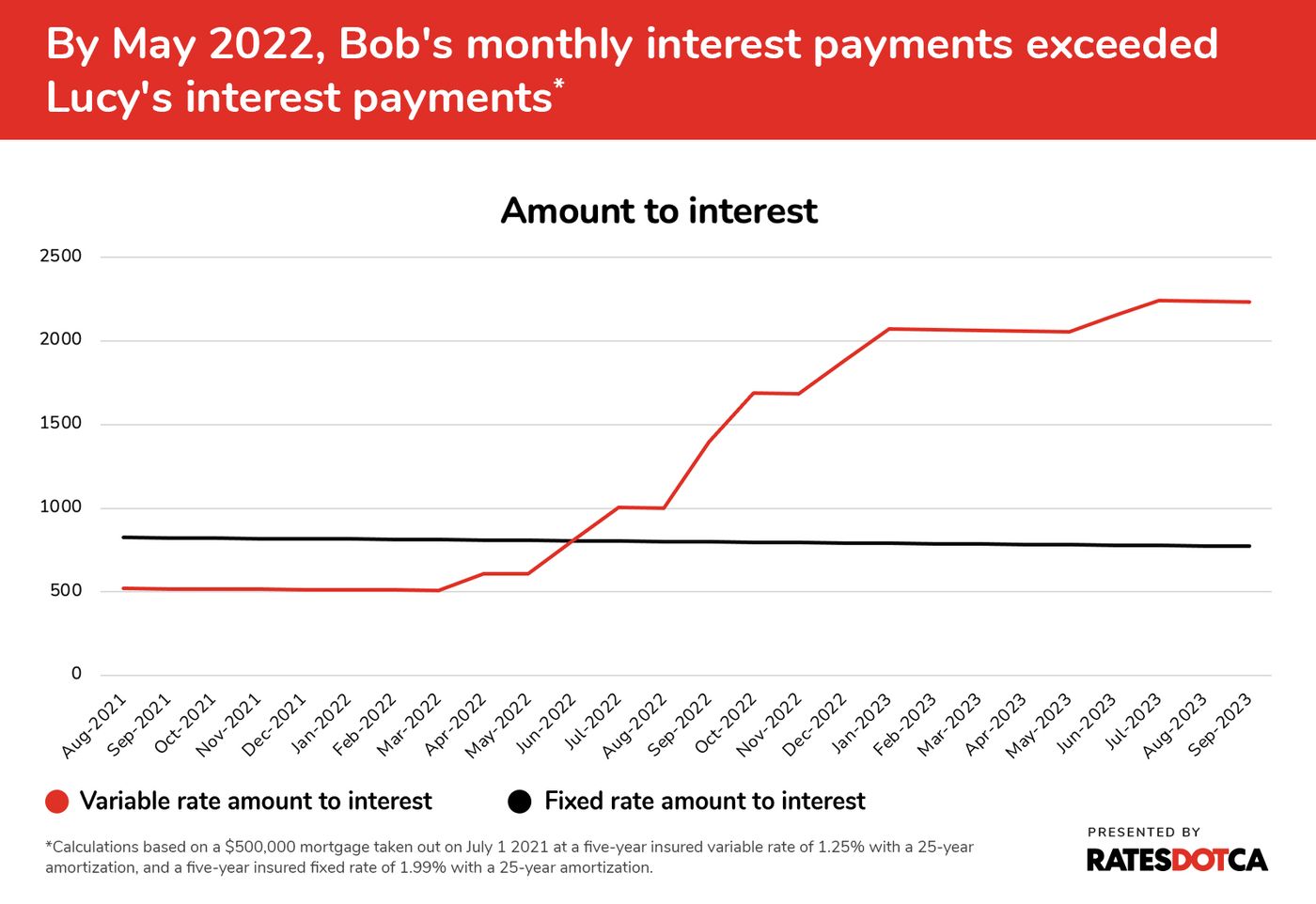
The economic environment, particularly the Bank of Canada's monetary policy, is the overarching driver of variable rate levels. The Bank's decisions on the overnight rate directly influence lender prime rates. After cutting rates nine times between June 2024 and October 2025, the Bank has held steady, contributing to relative stability in variable mortgage pricing in 2026. Inflation, which was hovering around 3% in 2026, along with factors like energy prices and tariffs, influences the Bank's decisions on whether to hold, cut, or eventually raise rates again. The spread between variable and fixed rates is also a consideration for borrowers, as a meaningful gap can make variable rates more appealing for potential savings. When the prime rate is above its five-year average and flattening out, short and variable rates have historically tended to outperform.
Current Rate Landscape and Provincial Variations
As of October 2026, the mortgage rate landscape shows variable rates maintaining a cost advantage over fixed rates. The lowest available five-year variable mortgage rate is 3.30%, compared to 4.09% for the lowest insured five-year fixed rate. Specific lender offerings vary, with nesto advertising a 5-year variable insured rate of 3.41% and TD Canada Trust advertising a special 5-year variable closed rate of 4.29% based on its prime rate of 4.60%. The average 5-year conventional variable mortgage rate across Canada's Big Six banks was 4.27% as of October 19, 2026, which was up 2 basis points from the prior week and 3 basis points from the prior month. Mortgage rates are not uniform across the country due to provincial licensing and competitive markets. Borrowers in different provinces may find different best available rates from the same national lender. Major urban centres like Toronto, Calgary, Vancouver, Montreal, and Ottawa also have distinct rate environments influenced by local market conditions and lender competition.
The following table illustrates sample 5-year variable mortgage rates from different lenders as advertised in October 2026. As of October 21, 2026, the best high-ratio, 5-year variable rate in Canada was 3.43 percent. For example, RBC advertised a 5 Year Variable Closed rate at RBC Prime Rate minus 0.300 percent, which equated to 4.150 percent. TD Canada Trust advertised a special 5 Year Variable Closed rate of 4.29 percent, which is its prime rate minus 0.31 percent. Another source listed a best 5-year variable insured rate of 3.49 percent. These figures demonstrate the range of pricing available and how rates are structured relative to prime.
| Lender / Source | Advertised Rate |
|---|---|
| nesto (Insured) | 3.41% |
| TD Canada Trust | 4.29% |
| Canada Mortgage Rates site | 3.49% |
| Lowest Available (Market) | 3.30% |
| Average (Big 6 Banks) | 4.27% |
Risks and Considerations for Variable Rate Borrowers
Choosing a 5-year variable mortgage rate involves accepting payment fluctuation risk for the potential of lower overall interest costs. The primary risk is that an increase in the Bank of Canada's policy rate will lead to a higher prime rate and, consequently, higher mortgage payments. Borrowers with fixed-payment variable mortgages face an additional risk known as hitting the trigger rate. If rates rise enough, the fixed payment may no longer cover all the interest owed, causing the loan balance to increase instead of decrease, a situation called negative amortization. Before selecting a variable rate, borrowers must ensure their finances can withstand potential payment increases. It is also prudent to consider future rate movements. As of late 2026, further rate cuts appear less certain due to economic data, though declines remain possible. The decision ultimately hinges on a borrower's comfort with uncertainty versus their desire for payment stability.
Variable-rate mortgages come with important prepayment privileges and conversion options. Most variable-rate mortgages allow borrowers to make extra payments or increase regular payments within annual limits without penalty, providing flexibility to pay down the mortgage faster. A key feature is the ability to convert a variable-rate mortgage to a fixed rate, usually at any time during the term. An internal conversion with your current lender is the simplest path, though it typically locks you into the lender's posted or discounted fixed rate at that time and requires no new approval. Switching to a fixed rate with a new lender requires a full refinance, which involves requalification, potential break penalties, legal costs, and a new stress test. Borrowers should weigh the rate spread carefully. Locking in when fixed rates are significantly higher than your current variable rate will increase your payments. However, if market signals point to rising rates or if you prefer stable payments, converting can offer peace of mind.
Common Mistakes When Choosing a Variable Rate
Many borrowers make avoidable errors when selecting and managing a 5-year variable mortgage rate. A frequent mistake is focusing solely on the initial low rate without budgeting for possible payment increases, which can lead to financial strain if rates rise. Another common error is not understanding the specific terms of their variable mortgage, particularly whether they have a fixed payment or an adjustable payment that changes with each rate move, and not knowing their trigger rate. Borrowers sometimes fail to use the flexibility offered by variable mortgages, such as making lump-sum prepayments to reduce principal when rates are low. Some also rush to convert to a fixed rate during a period of rate increase panic, potentially locking in at a higher rate without considering that the economic cycle may eventually turn. Finally, not shopping across multiple lenders, including monoline lenders and brokerages, can mean missing out on a better discount or more favourable terms, as rates and conditions can vary significantly.
- Failing to budget for potential payment increases due to rising prime rates.
- Not understanding the difference between fixed-payment and adjustable-payment variable mortgages and the risk of trigger rates.
- Overlooking the prepayment privileges that allow for faster principal reduction.
- Locking into a fixed rate reactively during market volatility, potentially at a peak.
- Not comparing offers from a wide range of lenders, including banks, credit unions, and monoline lenders.
- Ignoring the impact of mortgage default insurance on rate eligibility and cost.
- Assuming the best advertised rate applies to all down payment scenarios and property types.
The Application and Qualification Process
Qualifying for the best 5-year variable mortgage rates follows a standard process that begins with determining your down payment and insurance status. Lenders require proof of income, verification of employment, a review of your credit history and score, and an assessment of your existing debts. For insured mortgages, the property must be owner-occupied and priced under $1.5 million. All mortgage applicants in Canada are subject to a stress test, where they must qualify at the higher of their contract rate plus 2% or the minimum qualifying rate set by the Office of the Superintendent of Financial Institutions. For variable-rate mortgages, the stress test uses the benchmark rate or the contract rate plus 2%, whichever is higher. Once pre-approved, borrowers can often lock in a rate for a period, such as 120 days, while they search for a property. The final application involves a property appraisal and a review of the purchase agreement before funds are advanced.
Working with a mortgage broker can provide access to rates from multiple lenders, potentially including monoline lenders that offer competitive discounts. It is important to provide accurate information and documentation throughout the process to avoid delays. Borrowers should be aware that advertised rates are for prime borrowers, and individual offers may vary based on the complete financial profile. The entire process, from initial inquiry to funding, typically takes several weeks, with the rate lock protecting the borrower from market increases during that time.
Comparing Variable and Fixed Rate Mortgages
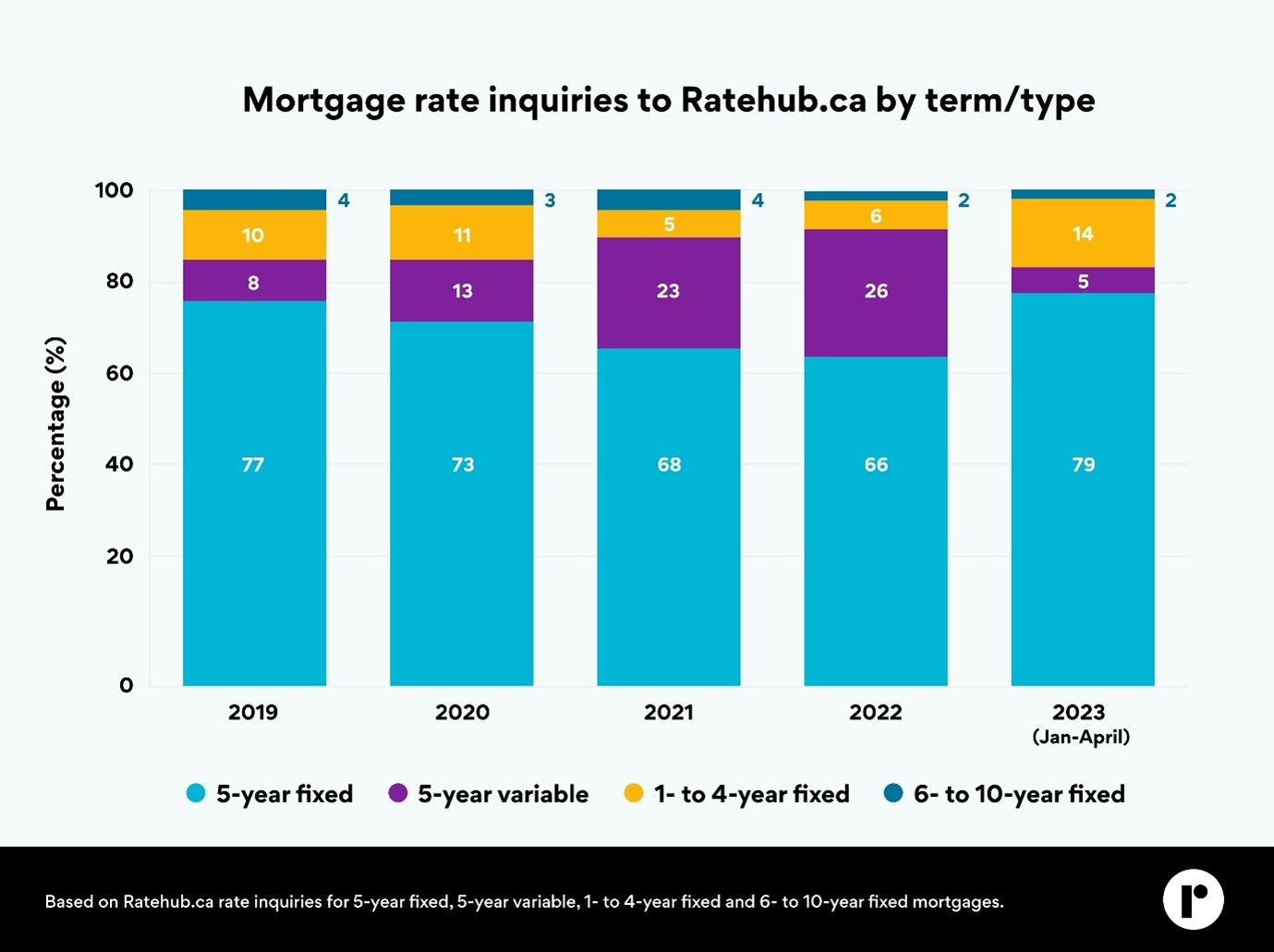
The choice between a 5-year variable and a 5-year fixed mortgage involves a trade-off between potential savings and payment certainty. Variable rates are generally lower at the outset, as seen in October 2026 where the best variable rate was 3.30% versus 4.09% for the best insured fixed rate. This spread allows variable borrowers to save on interest and pay down principal faster when rates are stable or falling. Fixed rates provide payment stability for the entire term, which can be valuable for budgeting, but they typically come at a higher initial cost. Fixed mortgage rates move with government bond yields, while variable rates move with the lender's prime rate. Historically, the 5-year fixed mortgage has been Canada's most popular option, although shorter terms gained popularity between 2023 and 2025 as borrowers anticipated lower future rates. In 2026, shorter terms remain popular as they are priced more competitively. The right choice depends on your financial resilience, risk tolerance, and outlook on interest rate trends.
Financial Implications and Long-Term Costs
The financial impact of choosing a 5-year variable rate can be significant, both in monthly savings and total interest paid over the term. For example, on a $500,000 mortgage with a 25-year amortization, the monthly payment at nesto's 3.41% variable rate would be $2,479.05. Over a five-year term, this savings equals $14,114.40 in interest, while also paying down an extra $6,696.60 on the principal. These calculations assume rates remain stable, which underscores the importance of rate forecasts. The potential for negative amortization in a rising rate environment with a fixed-payment variable mortgage adds a layer of long-term cost risk, as the principal balance could grow. Borrowers should use mortgage calculators to model different rate scenarios before committing to understand the full range of possible financial outcomes over their chosen term.
Frequently asked questions
What is the best 5-year variable mortgage rate in Canada right now?
As of October 2026, the lowest available 5-year variable mortgage rate in Canada is 3.30%. Specific lenders advertise rates as low as 3.41% for insured mortgages, which require a down payment of less than 20% on a property under $1.5 million. The average 5-year variable rate offered by Canada's major banks is higher, sitting at 4.27% as of October 19, 2026. Rates are expressed as a discount from a lender's prime rate, which is currently 4.45%.
How does a variable mortgage rate change over time?
A variable mortgage rate changes in direct correlation with the lender's prime rate, which moves when the Bank of Canada adjusts its overnight lending rate. Your contract specifies a discount or premium relative to prime, for example, prime minus 0.50%. If the Bank of Canada raises its rate, prime increases, and your mortgage payment will rise accordingly, usually with the next payment date. Conversely, if the Bank cuts rates, your payment decreases. As of September 2026, the Bank has held its rate at 2.25%, keeping variable rates relatively stable.
What is the difference between an insured and uninsured variable rate?
An insured variable rate applies to a high-ratio mortgage where the down payment is less than 20% of the purchase price. These mortgages are backed by default insurance and typically offer the lowest rates because the insurer assumes the lender's risk. Uninsured rates apply to mortgages with a 20% or larger down payment. Despite the lower loan amount, uninsured mortgages often have slightly higher rates because the lender bears the full risk of default. The property must be owner-occupied and priced under $1.5 million to be eligible for insurance.
Can I switch from a variable to a fixed rate mortgage?
Yes, most lenders allow you to convert your variable-rate mortgage to a fixed rate at any time during your term. The simplest method is an internal conversion with your current lender, which moves you to their posted or discounted fixed rate without a new approval. You can also switch to a fixed rate with a new lender through a refinance, but this involves breaking your current mortgage, which may incur a penalty, and requires a full requalification under the current stress test rules. It is important to compare the new fixed rate to your current variable rate before locking in.
What is a trigger rate on a variable mortgage?
A trigger rate is a risk specific to fixed-payment variable mortgages. It is the point where an increase in the interest rate means your fixed monthly payment no longer covers all the interest owed. When this happens, the shortfall is added to your principal loan balance, causing it to grow instead of shrink, a situation called negative amortization. Borrowers with this type of mortgage should be aware of their trigger rate and monitor their balance if interest rates rise significantly.
How does the mortgage stress test apply to variable rates?
For variable-rate mortgages, the stress test requires borrowers to qualify at the higher of their contract rate plus 2 percentage points or the minimum qualifying rate set by federal regulators. This test ensures borrowers can still afford their payments if interest rates rise. The contract rate used is the initial variable rate, not the prime rate. This qualification hurdle is a key part of the application process for all mortgages in Canada, whether fixed or variable.
Sources and further reading
- Current Mortgage Rates | RBC Royal Bank of Canada rbcroyalbank.com
- Find the best 5-year variable mortgage rates in Canada ratehub.ca
- Best Mortgage Rates Canada from 3.25% (Compare 50 ... wowa.ca
- Canada Mortgage Rates from 2.49% | 19,000 Five Star Reviews truenorthmortgage.ca
- Best 5-Year Variable Mortgage Rates in Canada nesto.ca
This article explains how things work and is not financial, tax or legal advice. Rules, limits and rates change, so check the current figures with the Canada Revenue Agency, your province or your financial institution before you act.