The average mortgage rate in Canada is a benchmark that varies by term, type, and lender. As of recent data, the average uninsured five-year fixed mortgage rate is approximately 5.39%, while the three-year fixed average is around 5.23%. These rates are influenced by the Bank of Canada's policy and lender competition, directly impacting monthly payments for homebuyers and those renewing their mortgages. Understanding how average rates are determined and where to find current figures is crucial for making informed financial decisions in the Canadian housing market.
How Average Mortgage Rates Are Determined
The average mortgage rates quoted across Canada are typically derived from the posted rates of the country's six largest chartered banks: Royal Bank of Canada (RBC), Toronto-Dominion Bank (TD), Bank of Nova Scotia (Scotiabank), Bank of Montreal (BMO), Canadian Imperial Bank of Commerce (CIBC), and National Bank of Canada. Statistics Canada and other financial data providers calculate a typical rate, often using the statistical mode, which is the most frequently offered rate among these major institutions. These posted rates are published weekly, usually by Wednesday at 14:30 Eastern Time, and cover various products including conventional mortgages. It is important to understand that these posted rates are often higher than the special discounted rates that customers can actually negotiate or that are advertised by brokers. The averages provide a consistent benchmark for tracking trends over time, but they do not necessarily represent the best rate an individual borrower can obtain. The Bank of Canada's target for the overnight rate is a primary factor influencing the cost of funding for these banks, which in turn affects their prime lending rates and, subsequently, their mortgage pricing.
The methodology for calculating these typical rates follows specific rules set by data providers. The prime rate, or prime lending rate, is the interest rate a financial institution uses as a base to determine interest rates for loan products. Each financial institution sets its own prime rate as a function of its cost of funding. The data shown is intended to provide information on the weekly posted interest rates offered by the six major chartered banks in Canada. The posted rates cover not only conventional mortgages but also prime rate, guaranteed investment certificates, personal loans, and savings deposits. All rates presented in the official tables are the most typical of those offered, providing a standardized view of the lending landscape.

Current Average and Sample Rates
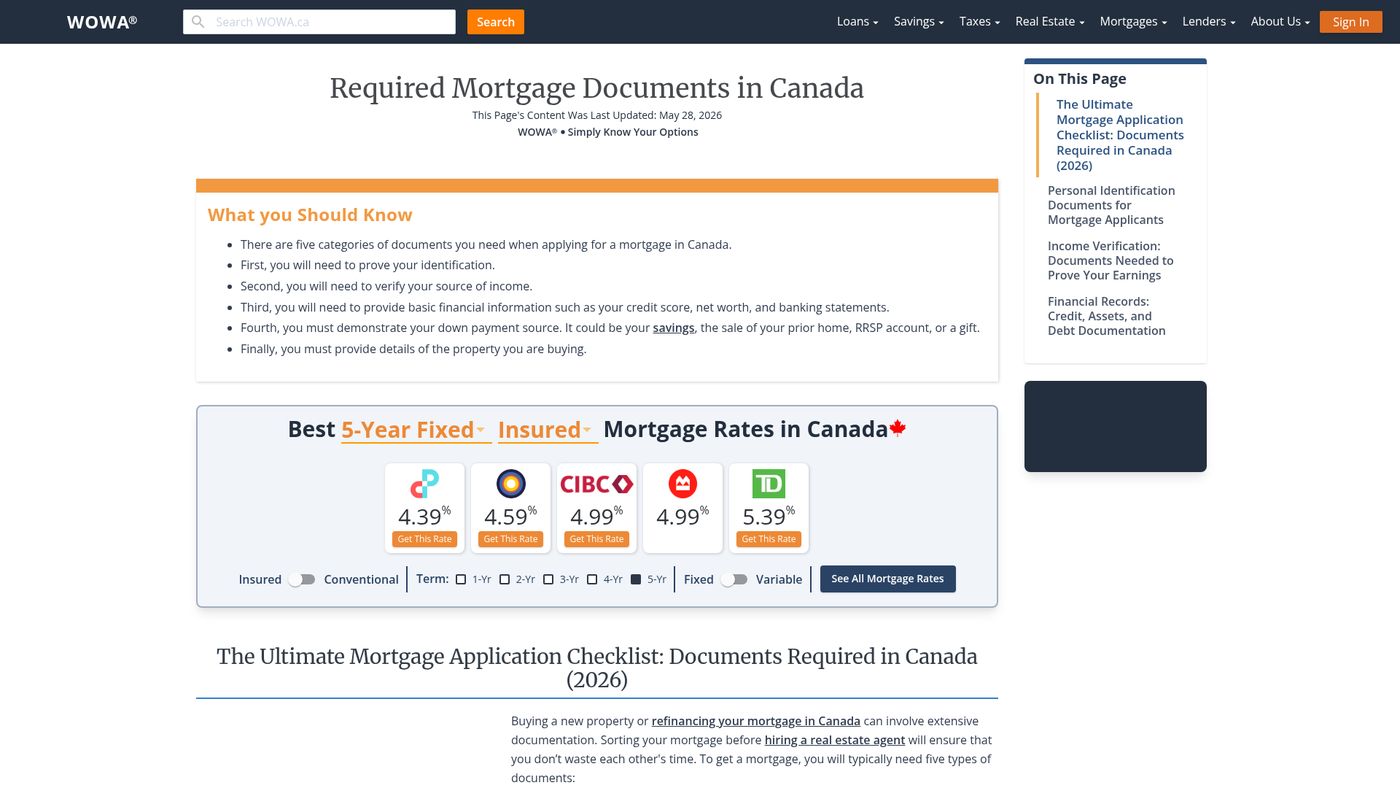
As of the most recent data, the average uninsured five-year fixed mortgage rate in Canada sits at 5.39%. For a three-year fixed term, the average is slightly lower at 5.23%. These averages are for conventional mortgages where the borrower has a down payment of 20% or more, meaning the loan does not require default insurance from the Canada Mortgage and Housing Corporation (CMHC) or other insurers. For high-ratio mortgages with less than a 20% down payment, borrowers must purchase this insurance, and lenders often offer lower interest rates on these insured mortgages due to the reduced risk. Sample rates from major banks provide a snapshot of the market. For instance, RBC advertises a five-year fixed closed mortgage rate at 4.990% and a five-year variable closed rate at RBC Prime minus 0.300%, which equated to 4.150%. TD Bank lists a five-year fixed rate at 5.04% and a special five-year variable closed rate at 4.29%, which is based on the TD Mortgage Prime Rate of 4.60% minus a discount. Mortgage brokers, such as those through Ratehub.ca, may advertise exclusive rates that are lower, with some promotions starting from as low as 2.49%, though these are typically for specific, highly qualified scenarios.
RBC 5-Year Fixed Closed Mortgage Rate is 4.990% and their 5-Year Variable Closed Mortgage Rate is RBC Prime -0.300% (4.150%). TD Bank offers a 5-Year Fixed Mortgage Rate of 5.04% and a 5-Year Variable Closed Mortgage Special Rate of 4.29% which is based on the TD Mortgage Prime Rate of 4.60% minus 0.31%. Ratehub.ca lists an exclusive 5-Year Fixed Rate of 4.34% and an exclusive Variable Rate of 3.43%. True North Mortgage advertises rates starting from 2.49%. CIBC also publishes its own Prime Rate which serves as the baseline for its variable mortgage products. These sample rates demonstrate that the actual rates available to consumers can vary significantly from the published averages. The lowest rates often come with specific conditions, such as being available only for high-ratio insured mortgages or through a broker channel. The CIBC Prime rate, like the TD Mortgage Prime Rate, serves as a baseline for their variable rate products, which are expressed as the prime rate plus or minus a discount or premium.
- RBC 5-Year Fixed Closed Mortgage Rate: 4.990%.
- RBC 5-Year Variable Closed Mortgage Rate: RBC Prime -0.300% (4.150%).
- TD Bank 5-Year Fixed Mortgage Rate: 5.04%.
- TD Bank 5-Year Variable Closed Mortgage Special Rate: 4.29% (TD Mortgage Prime Rate 4.60% -0.31%).
- Ratehub.ca Exclusive 5-Year Fixed Rate: 4.34%.
- Ratehub.ca Exclusive Variable Rate: 3.43%.
- True North Mortgage Advertised Rates: Starting from 2.49%.
- CIBC Prime Rate: The current CIBC Prime rate is published on their website.
Fixed Versus Variable Mortgage Rates
Canadian borrowers choose primarily between fixed and variable rate mortgages, each with distinct characteristics. A fixed rate mortgage locks in an interest rate for the entire term of the loan, which can range from six months up to ten years, with five years being the most common. This offers payment stability and protection against rising interest rates, as the principal and interest portions of each payment remain constant. For example, a TD fixed rate mortgage guarantees the interest rate will not increase over the selected term. A variable rate mortgage has an interest rate that fluctuates with the lender's prime rate, which itself moves in relation to the Bank of Canada's policy rate. With a standard variable rate mortgage, the payment amount usually stays the same, but the proportion of the payment applied to interest versus the principal changes when rates move. If the prime rate decreases, more of the payment goes toward paying down the principal. If it increases, more goes toward interest. Some products, like CIBC's Variable Flex Mortgage, allow for annual prepayments of up to 20% of the principal without a prepayment charge. The choice between fixed and variable involves weighing the security of a fixed payment against the potential savings of a variable rate, which has historically been lower on average but carries the risk of increase.
Financial institutions offer several variations within these two main categories. The notes detail specific product types and their features available from major lenders. CIBC offers a Fixed-Rate Closed Mortgage where the interest rate and payments stay the same for the term, and a Fixed-Rate Open Mortgage which provides the security of a fixed rate with the flexibility to pay off the principal at any time. They also have a Convertible Mortgage, which is a short-term mortgage that can be converted to a long-term mortgage without a prepayment charge. Their Variable Flex Mortgage comes with a variable rate and allows annual prepayments of up to 20% without penalty, while their Variable Rate Open Mortgage has a set monthly payment with the allocation between principal and interest changing with the prime rate. TD offers Fixed Rate Mortgage terms for 6 month, 1, 2, 3, 4, 5, 6, 7, or 10 years, and also provides a Home Equity FlexLine (HELOC) which is a secured line of credit alternative to a mortgage. Understanding these product distinctions is crucial. An open mortgage, whether fixed or variable, typically has a higher interest rate but allows for unlimited repayment without penalty, which can be useful for those expecting a large lump sum. A convertible mortgage provides a short-term hedge against falling rates. A Home Equity Line of Credit (HELOC) like TD's product is secured by real estate and offers revolving credit, which differs from a traditional amortizing mortgage loan.
- CIBC Fixed-Rate Closed Mortgage: Interest rate and payments stay the same for the term.
- CIBC Fixed-Rate Open Mortgage: Offers security of a fixed rate with flexibility to pay off principal anytime.
- CIBC Convertible Mortgage: A short-term mortgage that can be converted to a long-term mortgage without a prepayment charge.
- CIBC Variable Flex Mortgage: Variable rate with annual prepayments of up to 20% without penalty.
- CIBC Variable Rate Open Mortgage: Set monthly payment, with principal/interest allocation changing with prime.
- TD Fixed Rate Mortgage Terms: Available for 6 month, 1, 2, 3, 4, 5, 6, 7, or 10 years.
- TD Home Equity FlexLine (HELOC): A secured line of credit alternative to a mortgage.
Key Factors That Influence Your Mortgage Rate
Several specific factors determine the mortgage rate offered to an individual borrower, which may be higher or lower than the published averages. The size of your down payment is a primary factor. A down payment of less than 20% of the purchase price requires mandatory mortgage default insurance, which typically results in the lender offering a lower interest rate. The loan-to-value ratio, which compares the mortgage amount to the home's value, directly impacts the lender's risk assessment. Your credit score and credit history are critically important, as they demonstrate your reliability as a borrower. Lenders will also scrutinize your debt service ratios, specifically the Gross Debt Service (GDS) and Total Debt Service (TDS) ratios, to ensure your total housing costs and other debts are manageable relative to your income. The source of your mortgage matters, as rates from monolines, credit unions, and mortgage brokers can differ from those at the big six banks. The property type and its intended use, whether as a primary residence, rental property, or for commercial purposes, also affect the offered rate. Finally, your ability to negotiate or secure a promotional offer can lead to a rate significantly below the posted average.
The notes highlight several programs and conditions that can specifically affect eligibility and pricing. For instance, CIBC offers mortgage programs designed for newcomers to Canada who may not have any Canadian credit history. Special offers with cash back, like the one from TD that expires on December 29, 2026, can also influence the effective cost of a mortgage, though they are separate from the interest rate itself. Furthermore, the requirement for default insurance on high-ratio mortgages is a key determinant. A high-ratio mortgage has a principal greater than 80% of the property value and is considered a high-risk loan requiring this insurance. If the borrower defaults, the insurance pays the lender for certain losses, which directly reduces the lender's risk and often results in a lower offered rate. Lenders also consider the Annual Percentage Rate (APR), which includes interest and applicable fees like property valuation fees, though this is not the rate used to calculate regular payments.
The Mortgage Process: From Pre-Approval to Renewal
Obtaining a mortgage in Canada follows a series of defined steps, beginning with financial preparation and rate shopping. The first practical step is to get a pre-approval, which involves a lender reviewing your income, credit, and debts to determine how much they are willing to lend you. A key benefit of a pre-approval is the rate hold. Most major banks, including TD and RBC, will lock in a fixed interest rate for you for up to 120 days, protecting you if rates rise while you search for a home. This rate hold only applies to fixed rate mortgages, as variable rates can fluctuate. Once you have a purchase agreement, you submit a full mortgage application with supporting documentation for final approval. After closing, you will make regular payments according to your mortgage agreement. As your term nears its end, typically within four months of the maturity date, you enter the renewal phase. At this point, you can negotiate a new rate and term with your current lender or shop around to switch your mortgage to a different institution. It is crucial to start this process early to compare offers and avoid automatically rolling into a potentially higher rate. Throughout the term, many mortgages offer prepayment privileges, such as TD's option to pay up to 15% of the original principal annually on a closed mortgage without penalty.
The process involves specific timelines and options as outlined by lenders. Lenders like TD offer a 120-day rate hold on a pre-approved fixed rate. Most lenders allow you to start the renewal process within four months of your mortgage maturity date. TD provides prepayment privileges allowing you to pay up to 15% of the principal annually on a closed mortgage, or 100% on an open mortgage, without prepayment charges. TD also offers a payment skip option where you can request to skip the equivalent of one monthly payment if needed. Many lenders, like TD, offer an immediate response to online applications. Promotional offers, such as Scotiabank's rate offer available until October 31, 2026, have expiration dates. Optional insurance like TD Mortgage Protection can cover the outstanding balance in case of death or critical illness. Managing these steps efficiently can save money and reduce stress. Using online tools to calculate payments and affordability, as suggested by RBC and Ratehub.ca, is a recommended preliminary step. Furthermore, understanding the prepayment options available can significantly impact how quickly you pay down your mortgage and the total interest paid over the life of the loan.
- Pre-Approval and Rate Hold: Lenders like TD offer a 120-day rate hold on a pre-approved fixed rate.
- Early Renewal Start: Most lenders allow you to start the renewal process within four months of your mortgage maturity date.
- Prepayment Privileges (TD): Pay up to 15% of the principal annually on a closed mortgage, or 100% on an open mortgage, without prepayment charges.
- Payment Skip Option (TD): Request to skip the equivalent of one monthly payment if needed.
- Online Application: Many lenders, like TD, offer an immediate response to online applications.
- Special Offer Deadlines: Promotional offers, such as Scotiabank's rate offer available until October 31, 2026, have expiration dates.
- Mortgage Protection: Optional insurance like TD Mortgage Protection can cover the outstanding balance in case of death or critical illness.

Common Mistakes to Avoid
When dealing with mortgages, several common errors can lead to higher costs or financial stress. One major mistake is focusing solely on the interest rate without considering the mortgage's other features and restrictions, such as prepayment penalties, portability, or collateral charge registration. Another error is not shopping around extensively. Rates and terms can vary significantly between banks, credit unions, and mortgage brokers, so relying on a single quote is rarely optimal. Borrowers often underestimate the total cost of homeownership by not fully accounting for property taxes, insurance, maintenance, and utilities in their budget. Failing to use the rate hold provided by a pre-approval can be costly if interest rates increase during a home search. At renewal time, a common oversight is passively accepting the renewal offer from your current lender without negotiating or checking competitor rates, potentially missing out on better terms. Finally, not understanding the difference between posted rates and actual negotiable rates can lead borrowers to believe they are getting a discount when they are merely being offered the market rate. Being informed and proactive at each stage of the mortgage lifecycle is essential for securing the most favourable financial outcome.
The notes provide specific warnings and insights that highlight these pitfalls. For example, the Annual Percentage Rate (APR) includes interest and applicable fees like property valuation fees, and it is not the rate used to calculate regular payments, so confusing the two can be misleading. Another mistake is not reviewing the conditions attached to special offers, which often have expiry dates and specific eligibility criteria. Borrowers should also be cautious of assuming all online quotes are final. Many lenders require a full application and verification to lock in a rate. Furthermore, when considering using home equity via a product like a HELOC, the notes advise asking specific questions about the need and terms before applying. Resources like the Mortgage Learning Centre offered by banks are designed to help avoid these mistakes by educating borrowers on how rates work, what affects payments, and how to compare options. Ratehub.ca notes that their brokerage has been named Canada's Brokerage of the Year for four years straight from 2018 to 2021, indicating a resource for professional guidance.
Provincial Considerations and Additional Resources
While mortgage rates are largely determined by national economic conditions and lender policies, some provincial nuances exist. Provincial governments may offer special programs for first-time homebuyers, such as land transfer tax rebates or equity sharing programs, which can affect the overall affordability of a mortgage. The calculation for land transfer tax, which is a closing cost, varies significantly by province. Some provinces, like Alberta and Saskatchewan, have a single provincial land transfer tax, while others, like Ontario, have both a provincial and municipal component. It is important for buyers to use a calculator to determine this cost based on their location. For newcomers to Canada, major banks like CIBC have specific mortgage programs designed to help those without a Canadian credit history qualify. Indigenous housing loan programs are also available through certain financial institutions. Resources for understanding mortgages are widely available. The Bank of Canada provides explanations on how its interest rate decisions affect the housing market. Individual banks and brokerages offer extensive learning centres, payment calculators, and affordability tools to help borrowers estimate payments, understand different mortgage types, and plan their finances.
CIBC offers Newcomer Mortgage Programs designed for those new to Canada without Canadian credit history. Ratehub.ca offers a Land Transfer Tax Calculator to determine this cost based on location, as well as a CMHC Insurance Calculator to determine the premium based on down payment percentage. The Bank of Canada provides educational content on how overnight rate changes affect housing markets and mortgages. TD has a Mortgage Learning Centre with articles on mortgage rates, comparing options, and understanding payments. RBC provides easy-to-use Mortgage Tools to estimate payments and affordability. Ratehub.ca Mortgage Brokerage is an award-winning service named Canada's Brokerage of the Year from 2018 to 2021. Leveraging these resources can provide significant advantages. The Ratehub.ca brokerage notes it is Canada's highest-reviewed mortgage company with over 13,000 online reviews and guides borrowers from online search through to closing. Using calculators for land transfer tax and CMHC insurance helps borrowers budget for all upfront costs, not just the down payment and mortgage payments. Educational content from the central bank and lenders demystifies the relationship between monetary policy and personal finance.
- CIBC Newcomer Mortgage Programs: Designed for those new to Canada without Canadian credit history.
- Indigenous Housing Loans: CIBC provides contact information ([email protected]) for inquiries.
- Land Transfer Tax Calculator: Ratehub.ca offers a tool to calculate this cost based on location.
- CMHC Insurance Calculator: A tool to determine the premium based on down payment percentage.
- Bank of Canada Education: Explanations on how overnight rate changes affect housing markets and mortgages.
- TD Mortgage Learning Centre: Articles on mortgage rates, comparing options, and understanding payments.
- RBC Mortgage Tools: Easy-to-use calculators to estimate payments and affordability.
- Ratehub.ca Mortgage Brokerage: Award-winning service named Canada's Brokerage of the Year from 2018 to 2021.
Frequently asked questions
What is the average 5-year fixed mortgage rate in Canada?
The average uninsured five-year fixed mortgage rate in Canada is approximately 5.39% as of recent data. This average is calculated from the posted rates of the six major chartered banks. It is important to note that this is an average for conventional mortgages with a down payment of 20% or more. Borrowers with insured mortgages or those who secure promotional rates through brokers may obtain rates both above and below this average figure.
How does a variable mortgage rate work?
A variable mortgage rate is tied to your lender's prime rate, which changes in response to the Bank of Canada's policy decisions. Your payment amount typically remains constant, but the portion of each payment that goes toward interest versus the principal loan amount adjusts when the prime rate moves. For example, if the prime rate drops, more of your payment reduces the principal. Lenders like TD offer variable rates expressed as the prime rate minus a discount, such as TD Mortgage Prime Rate minus 0.31%.
What is a mortgage rate hold and how long does it last?
A mortgage rate hold is a guarantee from a lender that locks in a specified fixed interest rate for a set period, protecting you from rate increases while you shop for a home. This is a standard feature of a mortgage pre-approval. Most major Canadian banks, including TD and RBC, offer rate holds for up to 120 days. It is crucial to understand that this hold applies only to fixed rate mortgages, as variable rates can fluctuate during the hold period.
Why are rates different for insured and uninsured mortgages?
Mortgages with a down payment of less than 20% are considered high-ratio and require mandatory default insurance from CMHC or other insurers. This insurance protects the lender if the borrower defaults. Because this insurance reduces the lender's risk, they often offer lower interest rates on these insured mortgages. Conversely, conventional or uninsured mortgages, with a down payment of 20% or more, do not have this insurer backing, so the rates offered may be slightly higher on average.
Where can I find the most current mortgage rates?
The most current mortgage rates can be found through several sources. Statistics Canada publishes the weekly posted rates from the six major banks. Individual bank websites, such as RBC, TD, Scotiabank, and CIBC, list their current posted and special offer rates. Mortgage brokerage websites and comparison platforms like Ratehub.ca aggregate and compare rates from multiple lenders, often showing exclusive broker offers that can be lower than bank-posted rates.
What should I do when my mortgage is up for renewal?
You should begin the renewal process up to four months before your mortgage term expires. Contact your current lender to discuss their renewal offer, but also shop around with other banks, credit unions, and mortgage brokers to compare rates and terms. Do not automatically accept the first renewal notice, as it may not be the best available rate. Use this opportunity to reassess your financial goals and choose a mortgage product and term that aligns with your current situation.
Sources and further reading
- Current Mortgage Rates | RBC Royal Bank of Canada rbcroyalbank.com
- Compare best mortgage rates in Canada today ratehub.ca
- Mortgages Rates, TD Canada Trust td.com
- Interest rates posted for selected products by the major ... bankofcanada.ca
- Mortgage rates across Canada 1 cibc.com
This article explains how things work and is not financial, tax or legal advice. Rules, limits and rates change, so check the current figures with the Canada Revenue Agency, your province or your financial institution before you act.