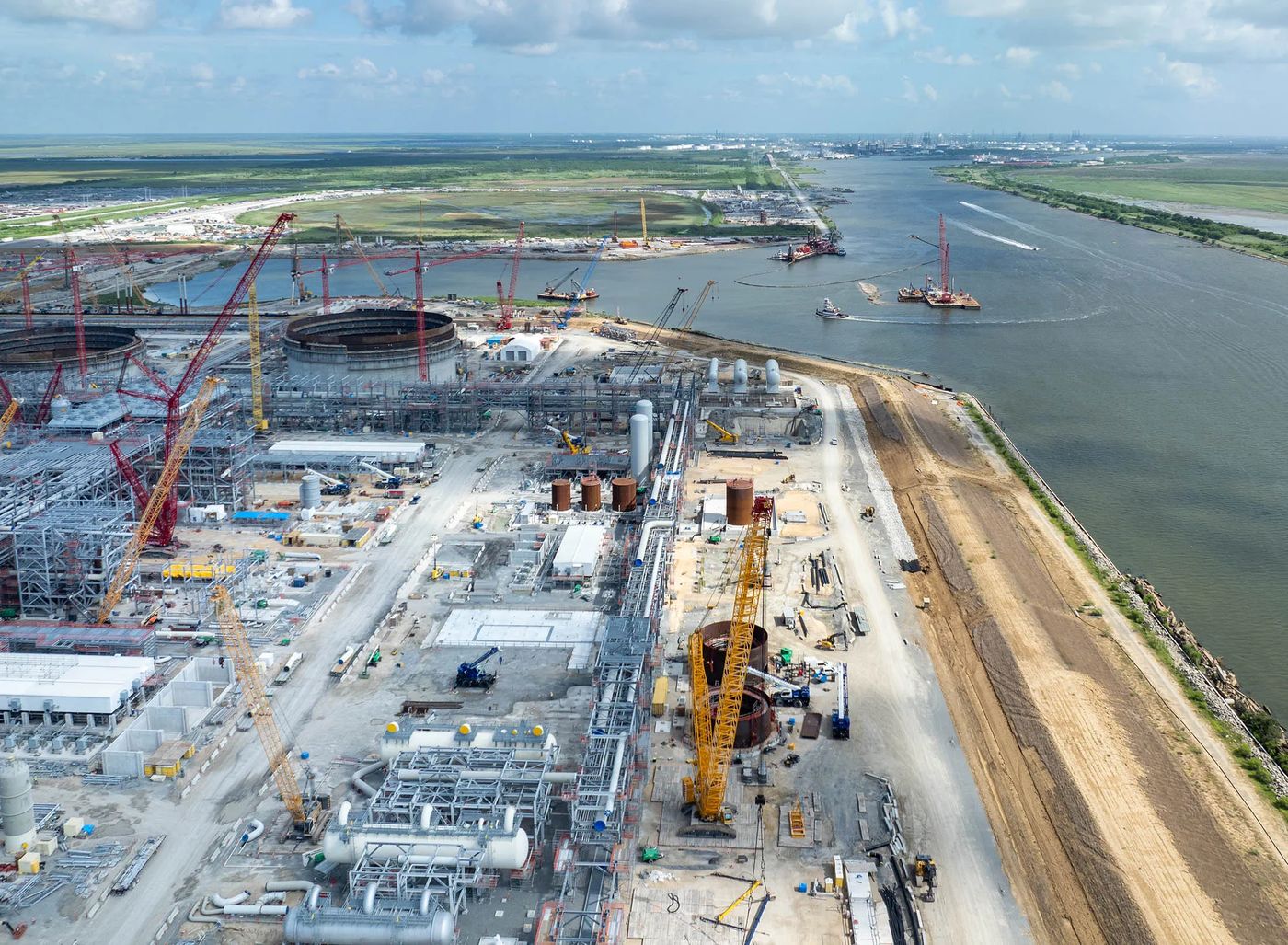
Meeting Canada's liquefied natural gas export targets could stimulate nearly $1 trillion of investment across the fuel's value chain and contribute $888 billion to GDP through 2050, according to a new report.
The study by S&P Global Energy, released Thursday, says the government's ambition for scaling up the sector would make it the world's third-largest exporter while also contributing significant reductions to global carbon emissions.
Prime Minister Mark Carney has said that Canada's total LNG exports could reach up to 100 million tonnes annually by 2040.
"But the opportunity is real if Canada wants to chase it," said Kevin Birn, S&P's chief Canadian energy analyst. "Governments will set the table, but industry will have to step into the void as well."
However, the report notes that time is a pressing factor to meet this target, with various regulatory and competitive hurdles still standing in Canada's path, and a dearth of projects awaiting final investment decisions.
Addressing issues like cost uncertainty, lengthy permitting times, policy instability and infrastructure constraints quickly could present a trillion-dollar investment boon and support nearly a quarter million jobs annually across the entire LNG value chain over the next 25 years, the study concluded.
The world is going to need more LNG, Birn said, and given recent market crises, Canada has a lot to offer, though the country has to now focus on execution.
Daniel Yergin, vice-chairman of S&P Global, said Canada has "been in a tough spot economically," falling far short of where it could be in the world market given its competitive strengths.
The study found that Canada holds some of the most prolific and low-cost gas plays in North America, with coastal access points that provide secure routes to key demand centres free of geopolitical chokepoints.
The liquids-rich nature of Canadian gas wells provides a particularly powerful economic advantage, the report notes, with natural gas liquids representing 24 per cent of a typical gas well's production but accounting for up to half of its economic value.
Yergin called these liquids a "hidden bounty" in Canada's resource endowment, often overlooked even though they're used in home heating, chemicals production and enabling heavy oil sands crude to move through pipelines.
A separate market snapshot released by the Canadian Energy Regulator outlines opportunities for LNG exports from Western Canada alongside notable institutional and logistical challenges.
It notes that constructing new LNG facilities and supporting pipelines in the region can be costly and time-consuming, with challenges from operating in remote areas with difficult terrain and coastline conditions.
Two LNG projects are under construction in British Columbia: LNG Canada phase 1 and Woodfibre LNG.
Cedar LNG has received its final investment decision and plans to proceed with construction.
Other projects, including Ksi Lisims LNG, Tilbury LNG phase 2, and LNG Canada phase 2, are in regulatory processes and have not yet secured final investment decisions.
The regulator's snapshot frames Western Canada as a potential long-term supplier to global LNG markets, contingent on regulatory resolutions and financing.
A 2027 global oil and gas outlook from ratings agency Morningstar DBRS, released Wednesday, said Western Canadian natural gas supply and demand fundamentals remain weaker than those in the U.S.
The forecast expects that the benchmark price for Western Canadian gas "will likely remain volatile and periodically fall well below our full-year assumption."
Over the medium term, it said, additional export capacity, including Cedar LNG and the planned expansion of LNG Canada, should progressively improve Western Canadian Pacific market access and support regional pricing.
e2gold.ca reported this week that a law firm has warned six major pension funds against investing in Canadian LNG projects, citing climate-related risks.
This story was written by the e2gold.ca newsroom from reporting by The Globe and Mail and Rich Picks Daily. Quotes are checked word for word against that reporting.