Scotiabank mortgage rates are the interest rates offered by one of Canada's largest banks on its home loan products. These rates are available in both fixed and variable formats, with terms ranging from three to ten years for closed mortgages. Understanding Scotiabank's rates is important for Canadian homebuyers and homeowners because they form a significant part of the mortgage market. The rates are influenced by Scotiabank's prime rate, which itself moves in response to Bank of Canada policy decisions.
Understanding Scotiabank's Prime Rate
Scotiabank's prime rate is a foundational benchmark for its variable-rate lending products, including mortgages, lines of credit, and home equity lines of credit. The current Scotiabank prime rate is 4.45 percent, which is consistent with the prime rates posted by most other major Canadian financial institutions. This rate is crucial because it directly determines the interest rate on a variable-rate mortgage, which is expressed as the prime rate plus or minus a certain percentage. For example, a variable mortgage might be offered at the prime rate minus 0.50 percent, which would result in a mortgage rate of 3.95 percent when the prime is 4.45 percent. Scotiabank typically adjusts its prime rate in direct response to changes made by the Bank of Canada to its target for the overnight rate.
When the Bank of Canada raises or lowers its key policy rate, Scotiabank will usually adjust its prime rate by the same amount, measured in basis points where one basis point equals 0.01 percent. There have been historical exceptions where the bank did not fully pass on a Bank of Canada rate cut. While it is unusual for Scotiabank to change its prime rate independently of a Bank of Canada announcement, such changes can technically happen at any time. For borrowers with a variable-rate mortgage, any change to Scotiabank's prime rate automatically changes their mortgage interest rate by the identical amount. This direct link means that variable-rate mortgage payments can fluctuate throughout the term, affecting the portion of each payment that goes toward interest versus the principal.

Types of Scotiabank Mortgage Rates
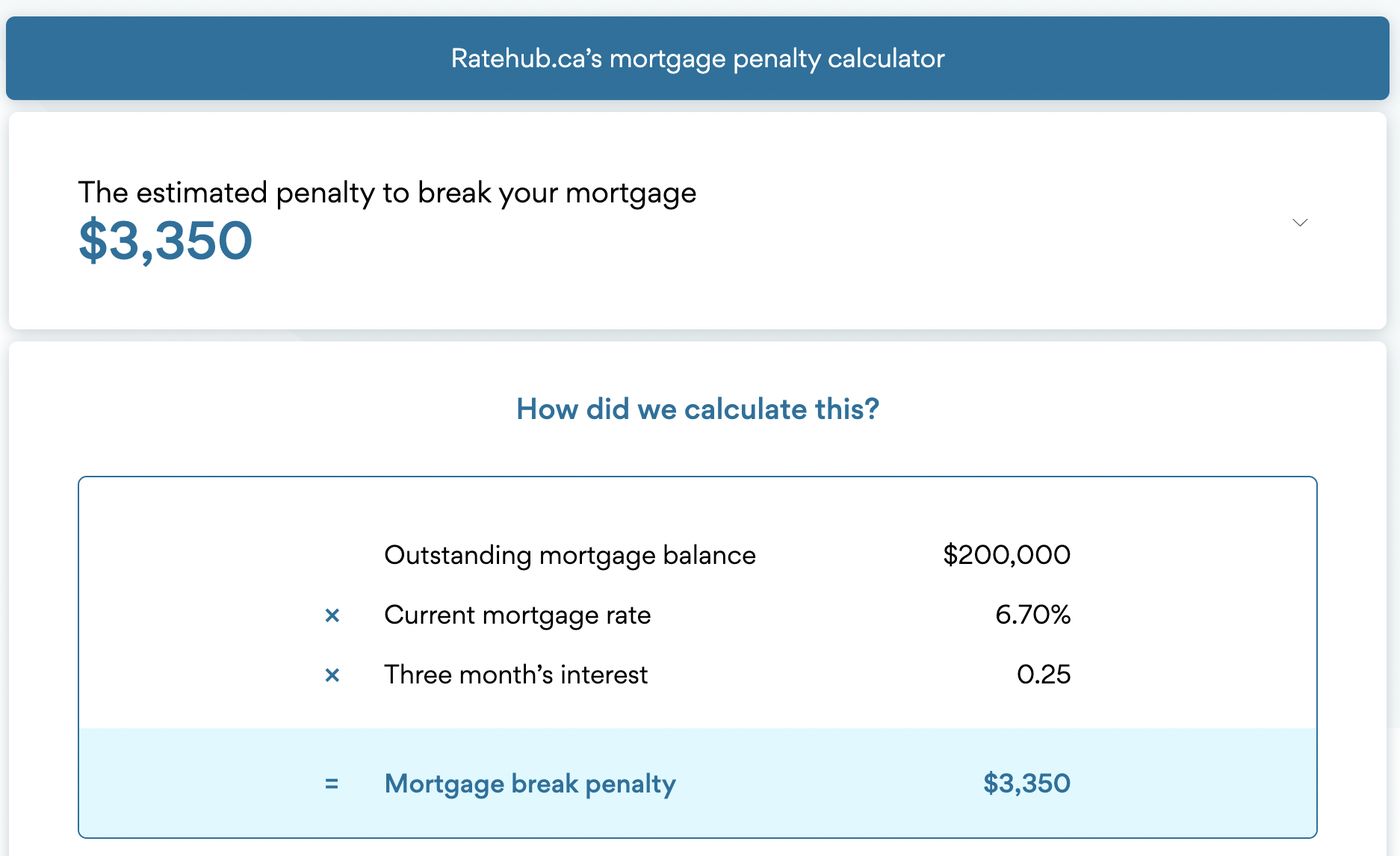
Scotiabank offers two primary categories of mortgage interest rates: fixed and variable. A fixed-rate mortgage guarantees that the interest rate will remain unchanged for the entire term of the mortgage, which provides payment stability and protection against rising rates. Scotiabank offers fixed-rate mortgages with closed terms of three, four, five, seven, and ten years. If a borrower secures a five-year fixed mortgage at a specific rate, that rate is locked in until renewal five years later, regardless of market movements. The trade-off for this stability is that if market rates fall during the term, the borrower cannot benefit without breaking the mortgage contract, which can trigger significant prepayment penalties.
A variable-rate mortgage at Scotiabank has an interest rate that can change throughout the term because it is tied to the bank's prime rate. The rate is expressed as prime plus or minus a spread, and it will move up or down whenever Scotiabank changes its prime rate. Historically, variable mortgage rates have often been lower than fixed rates, but they carry the risk of increase during the term. Borrowers must also decide between an open or closed mortgage structure, where open mortgages allow full prepayment anytime but come with higher interest rates, while closed mortgages have prepayment limits but lower rates.
- Fixed-Rate Mortgage: Interest rate is locked for the full term.
- Variable-Rate Mortgage: Interest rate fluctuates with Scotiabank's prime rate.
- Open Mortgage: Allows unlimited prepayment but with a higher interest rate.
- Closed Mortgage: Has annual prepayment limits but offers a lower interest rate.
- Convertible Mortgage: A six-month closed term that can be converted to a longer term without penalty.
Posted Rates Versus Special Discounted Rates
Scotiabank, like other large lenders, operates with two tiers of mortgage rates: posted rates and special discounted rates. The posted rates are the pre-discounted mortgage rates that the bank makes publicly available on its website and marketing materials. These rates are typically much higher than the rates most borrowers actually pay, with the expectation that customers will negotiate them downward. There are various theories for this practice, including creating a sense of satisfaction for the borrower who secures a better deal or establishing a higher baseline for calculating penalties if a mortgage contract is broken early. If a prospective borrower is initially offered a posted rate by a Scotiabank advisor, it should be considered the starting point for negotiation.
Special rates are discounted rates that are more aligned with the competitive rates available in the broader market. Scotiabank is unique among Canada's Big Six banks in that it does not publicly share its special discounted rates. Instead, these rates are often accessed through Scotiabank's extensive network of mortgage broker partners. A borrower applying directly at a Scotiabank branch should ask the advisor what rate would be available if they worked through a mortgage broker. It is a noted fact that mortgage brokers may offer rates that are lower than a bank's own posted or discounted rates.

Specific Mortgage Products and Features
Beyond standard fixed and variable mortgages, Scotiabank offers several specialized mortgage products to meet different borrower needs. The Scotia Total Equity Plan, often called STEP, is a comprehensive home equity plan that allows homeowners to tap into their built-up equity. Within STEP, Scotiabank offers a combination mortgage option that splits the loan amount between a variable rate, reset monthly with the prime rate, and a fixed rate, locked for the full term. This product aims to let borrowers take advantage of low short-term rates while protecting against long-term rate increases. Scotiabank also provides mortgage solutions for financing second homes and investment properties, acknowledging that different rules and rates may apply to these non-primary residence loans.
The bank offers a convertible mortgage, which is a six-month closed term product that can be converted to a longer fixed or variable term at any time without incurring a prepayment penalty. This can be a useful option for borrowers who expect mortgage rates to fall in the near future and want the flexibility to lock in a lower rate later. All Scotiabank mortgage applications are subject to meeting the bank's standard credit criteria, residential mortgage standards, and maximum permitted loan amounts. The bank provides online tools like a mortgage payment calculator to help determine monthly payments and a pre-approval process through its eHOME online application platform.
How Mortgage Rates Are Calculated and Compared
When Scotiabank presents mortgage rates, they are typically shown as an annual percentage rate, or APR. The APR is designed to reflect the true annual cost of borrowing because it incorporates the interest rate plus certain fees, such as an appraisal fee, into a single percentage. At Scotiabank, the APR for its special offers is calculated based on a mortgage of $100,000 with a 25-year amortization and a $300 appraisal fee, though the actual appraisal fee may vary. It is crucial to note that all rates at Scotiabank are calculated semi-annually, not in advance, which is a standard Canadian mortgage interest calculation method. Rates shown in bold on the bank's materials are discounted annual percentage rates that include additional fees.
For accurate comparison shopping, borrowers should compare mortgage products based on both the term length and the type. For example, when looking at fixed-rate mortgages, one should compare the five-year fixed rates from multiple lenders, then the three-year fixed rates, and so on. Comparing a three-year fixed rate from one bank to a five-year variable rate from another does not provide a useful assessment. The interest rates are provided for information purposes only and are subject to change at any time without notice. The mortgage must be advanced within 120 days from the date of application for any special offers to remain valid.
| Term | Example Posted Fixed Rate |
|---|---|
| 1-year (closed) | 5.49% |
| 2-year (closed) | 4.99% |
| 3-year (closed) | 6.05% |
| 4-year (closed) | 6.09% |
| 5-year (closed) | Example rate shown |
The Application and Pre-approval Process
Prospective borrowers can begin the Scotiabank mortgage process through several channels. They can make an appointment to talk to a Home Financing Advisor either on the phone or at a branch location. Alternatively, they can use the bank's online mortgage application process called eHOME, which allows users to get pre-approved, search for a home, and finalize a mortgage all in one digital platform. Getting pre-approved is a recommended first step as it involves a credit check and provides an estimate of the loan amount and rate you may qualify for, helping to set a realistic budget. The pre-approval typically locks in a rate for a specified period, often 120 days, protecting the borrower from rate increases during the home search.
All mortgage applications are subject to Scotiabank's standard credit criteria, which assess factors like income, credit score, debt load, and the property's value. The bank also adheres to residential mortgage standards and maximum permitted loan amounts, which are influenced by federal mortgage stress test rules and loan-to-value limits. During the application, borrowers will need to provide documentation such as proof of income, employment verification, and details about their down payment source. Using the online mortgage payment calculator beforehand can help applicants determine what their monthly payment might be and ensure the mortgage fits their budget before formally applying.
Historical Context and Rate Trends
Scotiabank's mortgage rates have followed broader economic trends and Bank of Canada policy over the years. During the peak of the COVID-19 pandemic, the Bank of Canada lowered interest rates to historically low levels to stimulate the economy, which led to a noticeable drop in Scotiabank's fixed and variable mortgage rates. Following the reopening of the economy and efforts to combat rapid inflation, there was a significant surge in rates. The five-year mortgage rate is the most popular choice in Canada, with borrowers often switching between fixed and variable options based on their outlook on market trends. Analyzing the Bank of Canada's historical overnight rate changes can provide insight into how Scotiabank's prime rate, and consequently its variable mortgage rates, have moved over time.
The prime rate has experienced considerable fluctuation. These movements directly impacted the cost of variable-rate mortgages and home equity lines of credit. Fixed mortgage rates are not immediately affected by prime rate changes, as they are based on longer-term bond yields and market expectations for future interest rates. Understanding this historical volatility is important for borrowers deciding between the certainty of a fixed rate and the potential savings, but also risk, of a variable rate.
Frequently asked questions
What is Scotiabank's current prime rate?
Scotiabank's prime rate as of October 2026 is 4.45 percent. This prime rate is the basis for the bank's variable rate lending products, including mortgages. Scotiabank usually changes its prime rate in response to adjustments by the Bank of Canada to its target for the overnight rate. There have been rare exceptions where the bank did not fully pass on a Bank of Canada rate cut.
What is the difference between Scotiabank's posted and special mortgage rates?
Scotiabank's posted rates are the publicly advertised, pre-discounted rates that are often higher than the rates most borrowers actually pay. Special rates are discounted rates that are more competitive and in line with market offerings. Scotiabank does not publish its special rates publicly. They are often accessed through mortgage brokers. Borrowers are encouraged to negotiate from the posted rate or inquire about broker-accessible discounts.
Can I get a mortgage for a second property from Scotiabank?
Yes, Scotiabank offers mortgages for second homes and investment properties. These are among the traditional mortgage products provided by the bank. Applicants must meet Scotiabank's standard credit criteria and residential mortgage standards. It is recommended to discuss specific needs with a Scotiabank Home Financing Advisor.
What is a Scotia Total Equity Plan (STEP) mortgage?
The Scotia Total Equity Plan allows homeowners to tap into their home equity. It is a home equity plan offered by Scotiabank. Using STEP can provide access to funds needed for various financial goals. The plan is designed to help homeowners save with potentially lower rates.
How does a variable-rate mortgage at Scotiabank work?
A Scotiabank variable-rate mortgage has an interest rate expressed as the bank's prime rate plus or minus a set percentage. For example, your rate might be prime minus 0.50 percent. Your mortgage payment amount may stay the same, but the portion going to interest versus principal will change whenever Scotiabank's prime rate changes. This rate fluctuates directly with changes to the Bank of Canada's policy rate.
What are the prepayment rules for a Scotiabank mortgage?
Prepayment rules depend on whether you have an open or closed mortgage. An open mortgage allows you to increase payments or pay off the mortgage in full at any time without penalty, but it comes with a higher interest rate. A closed mortgage has annual limits on how much you can prepay without triggering a penalty. Scotiabank also offers a six-month convertible closed mortgage that can be extended to a longer term without a prepayment charge.
Sources and further reading
- Mortgages Rates | Scotiabank Canada scotiabank.com
- Scotiabank Mortgage Rates nerdwallet.com
- Scotiabank Prime Rate ratehub.ca
- Compare Scotiabank Mortgage Rates in Canada nesto.ca
This article explains how things work and is not financial, tax or legal advice. Rules, limits and rates change, so check the current figures with the Canada Revenue Agency, your province or your financial institution before you act.