Mortgage rates in Winnipeg are the interest rates lenders charge on home loans, which directly impact monthly payments and affordability. As of late 2026, rates for a 5-year fixed mortgage can be found from 4.25% to 4.59%, while variable rates start lower. These rates are influenced by the Bank of Canada's policy and vary between major banks, credit unions, and mortgage brokers. Understanding the local lending landscape, including the strong presence of credit unions, is crucial for Winnipeg residents seeking financing.
Current Mortgage Rate Landscape in Winnipeg
As of October 2026, mortgage rates in Winnipeg present a range of options for borrowers. For a conventional mortgage with a down payment of 20% or more, the best available 5-year fixed rates are around 4.59%, while 3-year fixed rates are approximately 4.54%. High-ratio insured mortgages for those with less than 20% down can sometimes offer slightly lower rates. Variable rate mortgages are also available, with some lenders advertising rates as low as 3.60% for a 3-year term. These rates are not static and are subject to change based on lender promotions, the borrower's financial profile, and broader economic conditions. The rates advertised by major banks like RBC and TD are just a starting point, as credit unions and mortgage brokers often provide competitive alternatives.
The Bank of Canada's monetary policy is a primary driver of mortgage rates across the country, including in Winnipeg. In September 2026, the Bank of Canada held its policy rate at 2.25% for a seventh consecutive time. This policy rate influences the prime rate set by commercial lenders, which directly affects variable and adjustable-rate mortgages. Fixed mortgage rates are more closely tied to the bond market. The Bank has indicated a commitment to returning inflation to its 2% target, and market expectations in late 2026 suggested a high probability of a future rate increase. For homeowners with a variable-rate mortgage, any change to the Bank's policy rate will quickly affect their payments or the interest-principal split.
Winnipeg's housing market context is important for understanding mortgage affordability. The average selling price of a home in Winnipeg increased by 3% year-over-year to $397,000, which is below the national average. However, high interest rates have made qualifying for a mortgage more challenging for many residents. All borrowers must pass a federal stress test to prove they can afford payments at a qualifying rate higher than their contracted rate. Economic indicators such as GDP growth and employment data also influence the lending environment, with the national unemployment rate edging up to 6.5% in September 2026.
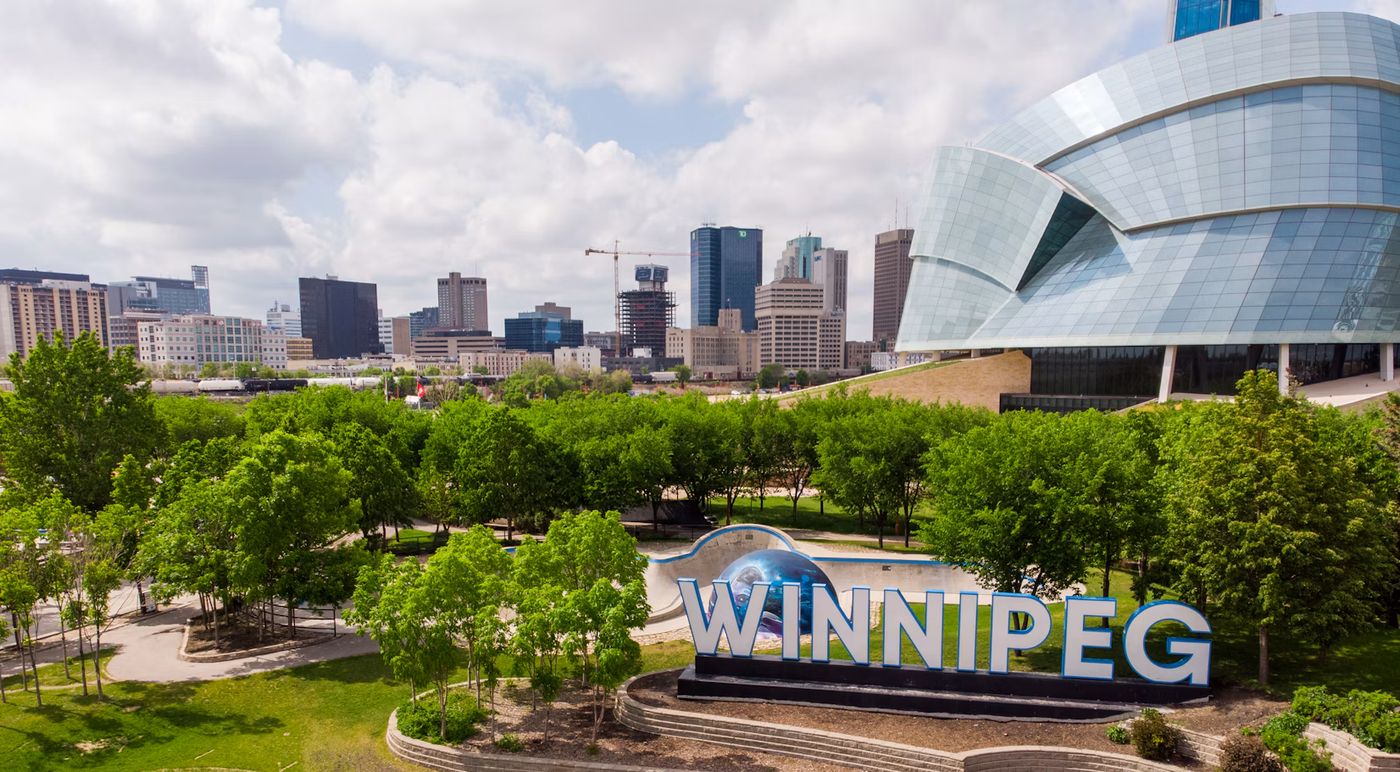
Major Lenders and Credit Unions in Manitoba
The mortgage market in Winnipeg is served by a mix of national banks, robust credit unions, and independent mortgage brokers. The Big Six Banks, RBC, TD, Scotiabank, BMO, CIBC, and National Bank, all operate in Manitoba and offer a full suite of mortgage products. These institutions provide both posted rates and special discounted rates, which are often promoted for a limited time. For example, RBC advertised a special offer available until October 31, 2026, and TD offers rate lock-ins for up to 120 days. The rates from these banks serve as a benchmark, but they are frequently undercut by other types of lenders in the province.
Credit unions are a dominant force in Manitoba's financial landscape, often offering competitive rates and member benefits. Access Credit Union is the largest in the province and the sixth largest in Canada, with 177,000 members and 54 locations. It was formed through a merger in 2021 and operates an online-only division called Hubert Financial. A key benefit for members is the Member Rewards program, which paid out a 2.05% patronage rebate in 2023 based on interest paid or earned. This rebate effectively reduces the net cost of a mortgage from Access Credit Union. Membership is restricted to Manitoba residents.
Assiniboine Credit Union is the second largest credit union in Manitoba, with 125,000 members and $5 billion in assets. It has 19 branches in Winnipeg, Thompson, and Gillam. Assiniboine offers unique community programs like the Savings Circle and the Inner City Homebuyer Plan, which provide matched savings for down payments. Members can also invest in Preference Shares, which paid a 5% dividend in 2022. Cambrian Credit Union, with 11 branches in Winnipeg, offers a Green for Green program that gives a $1 monthly bonus for paperless statements and runs an Unfee program that refunded $6.7 million in service fees to members in 2022. Steinbach Credit Union is another major player with close to 100,000 members and over $7 billion in assets.
- Big Six Banks: RBC, TD, Scotiabank, BMO, CIBC, National Bank.
- Largest Credit Union: Access Credit Union (177,000 members, 54 locations).
- Second Largest: Assiniboine Credit Union (125,000 members, $5B assets).
- Other Major Credit Unions: Cambrian Credit Union, Steinbach Credit Union, Caisse Financial Group.
- Online-Only Option: Hubert Financial (division of Access Credit Union).
- Regulator for Brokers: Manitoba Securities Commission.
Understanding Mortgage Types and Key Terms
When shopping for a mortgage in Winnipeg, borrowers will encounter several key product types and financial terms. A fixed-rate mortgage locks in the interest rate for the entire term, providing payment certainty. Terms commonly range from one to five years, with 5-year terms being the most popular. A variable-rate mortgage has an interest rate that fluctuates with the lender's prime rate, which moves in response to the Bank of Canada's policy decisions. With a variable-rate mortgage, your monthly payment may stay the same, but the portion going toward interest versus principal will change. An open mortgage allows for prepayment or payout at any time without penalty but typically comes with a higher interest rate.
The Annual Percentage Rate (APR) is a critical figure that represents the total cost of borrowing, including interest and certain fees, expressed as a yearly percentage. It is designed to help borrowers compare different mortgage offers. For instance, a lender may advertise a low interest rate but charge high fees, resulting in a higher APR. Lenders calculate the APR based on a standard scenario, such as a $300,000 mortgage with a 25-year amortization. It is important to note that the APR is not the rate used to calculate your regular monthly payments. It is a comparative tool. Always ask for the APR when comparing mortgage quotes from different institutions.
Other essential costs and terms include the stress test, default insurance, and amortization. Default insurance is mandatory for high-ratio mortgages where the down payment is less than 20% of the purchase price. This insurance protects the lender, not the borrower, and its premium is added to the mortgage amount. Amortization is the total length of time it would take to pay off the mortgage entirely, with 25 years being a common maximum for insured mortgages. Understanding these components is vital for evaluating the true cost and commitment of a mortgage.

Steps to Securing a Mortgage in Winnipeg
Securing a mortgage in Winnipeg involves a series of financial and administrative steps. The first step is to assess your financial health, including your credit score, income stability, existing debts, and available savings for a down payment. A strong credit profile and a down payment of at least 5% are typically required to enter the market. You should then get pre-approved by a lender or mortgage broker, which involves a credit check and a preliminary assessment of how much you can borrow. A pre-approval often comes with a rate hold, such as TD's 120-day lock-in, which protects you from rate increases while you house hunt. This step provides a clear budget and shows sellers you are a serious buyer.
Once pre-approved, you can begin shopping for a home within your budget. After having an offer accepted, you will work with your lender to finalize the mortgage application. This process includes providing documentation like pay stubs, tax notices, and details about the property. The lender will order an appraisal to confirm the home's value, a cost that is sometimes covered by the lender as an incentive, such as Cambrian Credit Union covering appraisal fees for transfers. You will also need to secure default insurance if your down payment is less than 20%. Finally, a lawyer or notary will handle the legal transfer of title, mortgage registration, and the disbursement of funds on closing day.
- Assess your finances: Check credit, savings, and debt-to-income ratio.
- Get pre-approved: Obtain a mortgage commitment and rate hold from a lender.
- House hunt: Search for properties within your pre-approved budget.
- Finalize application: Submit full documentation after an offer is accepted.
- Property appraisal: The lender assesses the home's value.
- Secure insurance: Obtain default insurance if down payment is under 20%.
- Legal closing: A lawyer handles title transfer and finalizes the mortgage.
Comparing Lender Offers and Potential Savings
To find the best mortgage rate in Winnipeg, it is essential to compare offers from multiple types of lenders. The table below illustrates a snapshot of rates available from various Winnipeg lenders, showing that credit unions often compete aggressively with the major banks. Beyond the advertised rate, borrowers should compare the Annual Percentage Rate (APR), which includes fees, and inquire about prepayment privileges, penalty calculations for breaking the mortgage, and any cash-back or incentive offers. Some lenders, like Cambrian Credit Union, offer to cover transfer fees such as appraisal and discharge costs, which can save hundreds of dollars.
| Lender | Sample 5-Year Fixed Rate |
|---|---|
| Access Credit Union | 4.29% |
| Cambrian Credit Union | 4.19% |
| Centum Financial (Broker) | 3.86% (Variable) |
| RBC (Posted Rate) | Prime + 0.000% (Variable) |
Potential savings can also come from lender-specific member benefits. Credit unions like Access and Assiniboine distribute annual patronage dividends based on the interest you pay. For example, a 2.05% rebate on $5,000 of interest paid results in a $102.50 return, effectively lowering your net interest cost. Assiniboine's Surplus Shares paid a 2.5% dividend in 2022. These profit-sharing models are a distinctive feature of the credit union system and can provide meaningful long-term savings that are not available at banks. Always calculate the net cost after such rebates when comparing rates.
Mortgage brokers, regulated by the Manitoba Securities Commission, can provide access to a wide network of lenders, including monoline lenders that do not deal directly with the public. Brokers such as Dominion Lending Centres, Centum, and Invis can often secure rates that are lower than the posted rates of the big banks. They shop on your behalf and may have access to exclusive deals. However, it is still prudent to check directly with a few credit unions and banks to ensure you are seeing the full market. The best rate is not always the best overall mortgage. Flexibility, service, and the fine print of the contract are equally important.

Common Considerations and Mistakes to Avoid
One common mistake Winnipeg homebuyers make is focusing solely on the lowest advertised interest rate without considering other contract terms. A mortgage with a slightly higher rate but generous prepayment privileges could allow you to pay down the principal faster and save more on total interest. For instance, Cambrian Credit Union allows prepayments of up to 20% of the original mortgage balance annually without penalty. Conversely, a mortgage with a low rate but restrictive terms and high penalties for breaking the contract could become costly if your circumstances change. Always read the commitment letter and mortgage agreement carefully before signing.
Another frequent oversight is underestimating the total closing costs associated with buying a home. Beyond the down payment and mortgage payments, buyers must budget for an appraisal fee, home inspection, legal fees, title insurance, and land transfer tax. In Manitoba, there is a provincial land transfer tax and a mortgage registration fee. Some lenders may cover certain fees as an incentive. Cambrian, for example, covers standard transfer-in appraisal fees and up to $300 of discharge fees from your previous lender. Failing to budget for these costs can lead to financial strain at closing.
Borrowers sometimes neglect to plan for future interest rate changes, especially with variable-rate mortgages. If interest rates rise significantly, those with variable-rate mortgages may see their payments increase or a larger portion of their payment going toward interest. Lenders like TD note that if your interest rate increases so that your regular payment does not cover the interest, you may be required to increase your payments or make a prepayment. It is wise to stress-test your own budget against potential rate hikes beyond the mandatory federal qualification test. Finally, not shopping around is a critical error. Rates and terms can vary widely, so comparing offers from banks, credit unions, and brokers is essential to secure the best overall deal.
Frequently asked questions
What is the current mortgage rate in Winnipeg?
As of October 2026, mortgage rates in Winnipeg vary by lender and product. For a 5-year fixed mortgage, rates can be found from 4.25% to 4.59%. Three-year fixed rates are around 4.54%, and variable rates can start as low as 3.60%. These are sample rates and your actual rate will depend on your down payment, creditworthiness, and whether you choose a conventional or high-ratio insured mortgage.
How do credit unions in Winnipeg compare to big banks for mortgages?
Credit unions like Access, Assiniboine, and Cambrian are major players in Winnipeg and often offer competitive rates compared to the Big Six Banks. A key difference is that credit unions are member-owned and many offer annual patronage dividends or profit-sharing, which can effectively reduce your net mortgage cost. For example, Access Credit Union paid a 2.05% member reward in 2023. Membership is typically restricted to Manitoba residents, whereas banks serve a national clientele.
What additional costs should I expect when getting a mortgage in Winnipeg?
Beyond your down payment and mortgage payments, you should budget for closing costs. These typically include a property appraisal fee, home inspection fee, legal fees, title insurance, and provincial land transfer tax. There is also a mortgage registration fee in Manitoba. Some lenders may cover certain costs as an incentive. For example, Cambrian Credit Union covers appraisal and discharge fees for mortgage transfers. Always ask your lender for a full breakdown of estimated closing costs.
Can I get a mortgage in Winnipeg with less than 20% down payment?
Yes, you can get a mortgage in Winnipeg with a down payment as low as 5% of the purchase price. However, if your down payment is less than 20%, you are required to purchase mortgage default insurance from CMHC, Sagen, or Canada Guaranty. This insurance protects the lender and its premium is added to your mortgage loan amount. High-ratio insured mortgages sometimes qualify for slightly lower interest rates than conventional mortgages.
What is the difference between a fixed and variable mortgage rate?
A fixed mortgage rate remains constant for the entire term of your mortgage, providing payment certainty. A variable mortgage rate fluctuates with your lender's prime rate, which changes in response to the Bank of Canada's policy rate decisions. With a variable rate, your monthly payment may stay the same, but the amount applied to interest versus principal will adjust. Variable rates often start lower than fixed rates but carry the risk of increasing over the term.
What is the stress test for a mortgage in Winnipeg?
All mortgage borrowers in Winnipeg are subject to a qualifying criteria known as a stress test. This test determines if a borrower can afford their payments should interest rates increase. Specifically, borrowers must qualify at a rate higher than their contract rate. The stress test applies to mortgages from federally regulated lenders. It is a national rule designed to ensure financial resilience.
Sources and further reading
- Current Mortgage Rates | RBC Royal Bank of Canada rbcroyalbank.com
- Mortgage Rates | Cambrian cambrian.mb.ca
- Manitoba Mortgage Rates (Compare 30+ Lenders) wowa.ca
- Mortgage Rates Winnipeg | Best Rates from 3.41% nesto.ca
- Current Mortgage Rates in Winnipeg | TD Canada Trust td.com
This article explains how things work and is not financial, tax or legal advice. Rules, limits and rates change, so check the current figures with the Canada Revenue Agency, your province or your financial institution before you act.