A Tax-Free Savings Account (TFSA) is a registered investment account that allows Canadians to earn investment income tax-free. The best TFSA accounts in 2026 offer competitive interest rates, low or no fees, and flexible access to funds, making them powerful tools for saving for goals like a car, vacation, or retirement. Understanding the rules, contribution limits, and how to choose an account is essential for maximizing this benefit. This guide explains how TFSAs work in Canada, the current limits, and what to consider when selecting an account.
What is a Tax-Free Savings Account
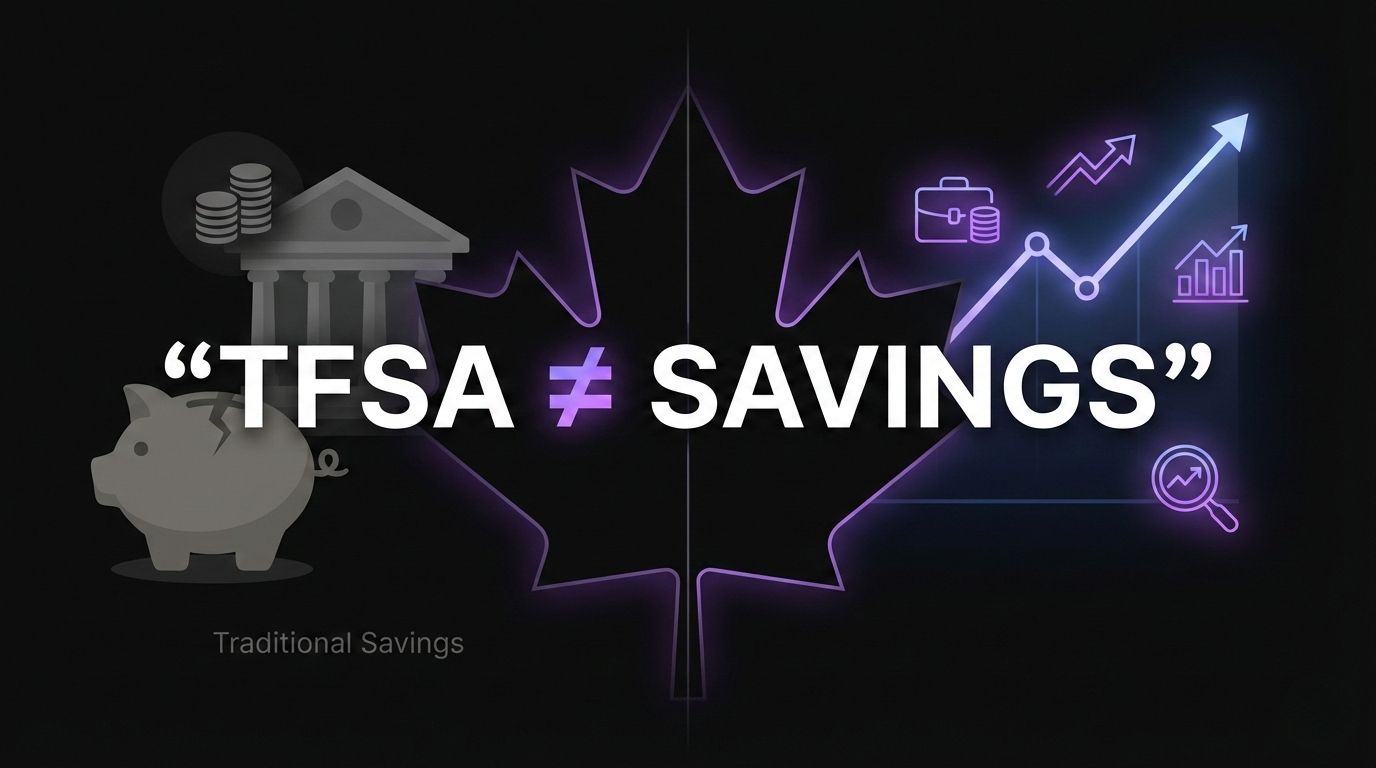
A Tax-Free Savings Account (TFSA) is a registered investment account sanctioned by the Government of Canada. Unlike a regular savings account, a TFSA can hold a variety of income-generating investments, not just cash. The defining feature is that all investment income earned within the account, including interest, dividends, and capital gains, is completely tax-free. This tax shelter allows savings to compound and grow faster than in a non-registered account. Canadians can use a TFSA to save for any financial goal, from short-term purchases to long-term retirement plans. The flexibility to withdraw funds at any time without tax penalties makes it a versatile savings vehicle.
It is crucial to understand that a TFSA is an account structure, not a specific investment product itself. The investments held inside the account, such as Guaranteed Investment Certificates (GICs), mutual funds, or stocks, determine the growth potential and risk. Financial institutions across Canada, including banks, credit unions, and online-only banks, offer TFSA accounts. The specific investments available depend on where you open the account, with some providers focusing on high-interest savings and others offering full brokerage services for self-directed investing.
TFSA Rules and Contribution Limits
The Canada Revenue Agency (CRA) sets strict rules governing TFSA contributions. The primary rule is the annual contribution limit, which is indexed to inflation and announced late in the preceding year. For 2026, the annual contribution limit is $7,000. This limit applies to the total combined contributions you make to all your TFSAs across all financial institutions in a given year. Contribution room accumulates for every year you are at least 18 years old and a resident of Canada, even if you do not open an account. Unused contribution room from previous years carries forward indefinitely.
As of January 1, 2026, the total cumulative contribution room for an individual who has been eligible since the program began in 2009 is $109,000. This total includes all unused room carried forward from previous years. It is the individual's responsibility to track their contribution room, which can be found on the CRA's My Account portal. Over-contributing to a TFSA results in a penalty tax of 1% per month on the excess amount until it is withdrawn. Withdrawals from a TFSA are tax-free and do not count as income, meaning they do not affect eligibility for federal benefits like Old Age Security.
The rules for recovering contribution room after a withdrawal are specific. The amount you withdraw is added back to your contribution room, but not until the following calendar year. For example, if you withdraw $1,000 in 2026, that $1,000 of room will be available for you to re-contribute on January 1, 2027. This rule makes timing of withdrawals an important consideration, especially near the end of the year.
Eligibility and How to Open a TFSA
To open a TFSA, you must be a Canadian resident with a valid Social Insurance Number (SIN) and have reached the age of majority in your province or territory. The age of majority is 18 in Alberta, Manitoba, Ontario, Prince Edward Island, Quebec, and Saskatchewan. It is 19 in British Columbia, New Brunswick, Newfoundland and Labrador, Nova Scotia, the Northwest Territories, Nunavut, and Yukon. Importantly, TFSA contribution room begins to accumulate at age 18 for all Canadians, regardless of the provincial age of majority. This means a resident of British Columbia, where the account opening age is 19, will still accrue contribution room for the year they turn 18.
You do not need to have earned income to contribute to a TFSA, which distinguishes it from a Registered Retirement Savings Plan (RRSP). Newcomers to Canada begin accumulating TFSA contribution room in the year they become residents. The process to open an account typically involves providing your SIN and proof of identity to a financial institution. Accounts can often be opened digitally through mobile banking apps, online, or in person at a branch. Once the account is open, you can begin contributing up to your available room and selecting the investments to hold within it.
Types of Investments Held in a TFSA
The range of investments permitted inside a TFSA is broad, allowing account holders to tailor the account to their risk tolerance and goals. Common holdings include cash savings deposits, Guaranteed Investment Certificates (GICs), mutual funds, exchange-traded funds (ETFs), stocks, and bonds. Cash savings in a TFSA often earn interest at rates comparable to high-interest savings accounts, but the interest earned is tax-free. GICs provide a guaranteed rate of return for a set term, with the interest sheltered from tax. Mutual funds and ETFs offer exposure to diversified portfolios of stocks and bonds, managed by professionals or tracking an index.
More experienced investors may use a self-directed TFSA to buy and sell individual stocks and bonds. The key principle is that any growth or income generated by these assets is not taxed while inside the TFSA. The choice of investments depends heavily on where you hold your TFSA. A traditional bank may offer TFSAs that primarily hold cash, GICs, and the bank's own mutual funds. An online brokerage or direct investing platform allows for a self-directed approach with access to a full range of securities. Your investment decisions should align with your savings timeline and comfort with market fluctuations.
Comparing TFSA Providers and Rates
When selecting a financial institution for a TFSA, Canadians can consider several factors including interest rates, fees, investment options, and access to advice. Many online banks and credit unions promote competitive interest rates on TFSA savings accounts. For example, as of 2026, providers like Tangerine and EQ Bank have been recognized for offering some of the highest standard interest rates for TFSA savings. These accounts often feature no monthly fees and no minimum balance requirements, providing complete access to funds. Traditional banks like RBC, Scotiabank, and TD Canada Trust offer TFSA accounts that integrate with broader banking services and provide access to in-person or virtual financial advisors.
These institutions may offer a wide array of investment products like proprietary mutual funds and GICs within the TFSA. It is important to review the fee structures, as some institutions charge fees for specific services, such as transferring a TFSA to another company. Many providers also offer promotional interest rates for new clients or for limited periods, which can be an attractive way to boost initial savings. However, it is essential to note what the standard ongoing rate will be after any promotional period ends.
| Provider Type | Common Features | Considerations |
|---|---|---|
| Online Banks | High interest rates, no fees, digital access | Limited in-person service, may have promotional rates |
| Traditional Banks | Branch access, advisor support, integrated banking | Potentially lower rates, possible account fees |
| Credit Unions | Competitive rates, member-owned | Regional availability, membership requirements |
| Brokerages | Self-directed investing, wide product selection | Requires investment knowledge, trading commissions may apply |
Ultimately, the best TFSA account depends on an individual's preference for digital versus in-person service. For example, Tangerine offers a completely digital signup process via its mobile app, while RBC provides access to advisors in person, by phone, or over video. The choice also involves a person's desired investment mix, as some providers like RBC Direct Investing offer stocks and ETFs, while others focus on savings deposits and GICs. Furthermore, sensitivity to fees and interest rates is important, as some accounts have no unfair fees and offer promotional rates, while others provide standard high interest. Finally, considering the specific investment products and automated savings tools available through each provider is key to meeting savings goals effectively.
Common TFSA Mistakes to Avoid
One of the most frequent errors Canadians make with their TFSA is over-contribution. This occurs when the total deposits across all TFSAs in a year exceed the available contribution room, including carried-forward amounts. The CRA charges a penalty tax of 1% per month on the excess amount until it is withdrawn. Another common mistake is misunderstanding the withdrawal rules. While withdrawals are tax-free, the contribution room is not reinstated until the following January. Withdrawing money in December to re-contribute in January requires careful planning to avoid an over-contribution in the new year.
Failing to track contribution room across multiple institutions can lead to accidental over-contributions. Canadians should regularly check their notice of assessment or the CRA's My Account service for their official contribution limit. Assuming all TFSAs are simple savings accounts is another pitfall. The account can hold various investments, and not leveraging this can limit growth potential. Finally, some Canadians may not realize that non-residents of Canada can maintain a TFSA but cannot contribute while non-resident, and any investment income earned may be subject to a non-resident withholding tax.
- Over-contributing beyond your available room.
- Misunderstanding withdrawal and re-contribution timing.
- Not tracking contribution room across multiple accounts.
- Using a TFSA only for cash instead of other investments.
- Contributing while a non-resident of Canada.
- Assuming financial institutions track limits for you.
TFSA vs. RRSP and Other Accounts
The choice between a TFSA and a Registered Retirement Savings Plan (RRSP) is a common consideration for Canadians. The key difference lies in the tax treatment. RRSP contributions are tax-deductible, reducing your taxable income in the contribution year, but withdrawals in retirement are taxed as income. TFSA contributions are made with after-tax dollars, so they are not deductible, but withdrawals are completely tax-free. This makes TFSAs particularly advantageous for individuals who expect to be in a higher tax bracket in retirement or who value flexible, penalty-free access to their savings. TFSAs are also useful for saving for medium-term goals like a down payment or a vehicle, whereas RRSPs are specifically designed for retirement.
Canadians can contribute to both accounts simultaneously, provided they stay within the respective limits. Compared to a non-registered High-Interest Savings Account (HISA), a TFSA offers the clear benefit of tax-free growth, as interest earned in a regular HISA is taxable. For short-term savings where the highest possible interest rate is the primary goal, a non-registered HISA might sometimes offer a higher nominal rate, but the after-tax return must be calculated to make a fair comparison. The decision on which account to prioritize should be based on your current income, expected future income, and the specific purpose of your savings.
Frequently asked questions
What is the TFSA contribution limit for 2026?
The TFSA contribution limit for 2026 is $7,000. This is the annual maximum amount set by the Canada Revenue Agency for the 2026 calendar year. The limit has remained the same as it was in 2025. If you have never contributed and have been eligible since the TFSA's introduction in 2009, your total cumulative contribution room as of January 1, 2026, is $109,000. This total includes all unused contribution room carried forward from previous years.
Can I withdraw money from my TFSA at any time?
Yes, you can withdraw money from your TFSA at any time for any reason, and the withdrawal is completely tax free. This flexibility is a key feature of the account. However, the amount you withdraw is not added back to your contribution room until the first day of the following calendar year. For example, a withdrawal made in 2026 would create new contribution space on January 1, 2027. It is important to note that while the account allows access, some specific investments held within it, like non redeemable GICs, must be held until their maturity date.
What happens if I over contribute to my TFSA?
If you contribute more than your available TFSA contribution room, you will face a penalty from the Canada Revenue Agency. The penalty is a tax of 1% per month on the highest excess amount in the account during that month. To stop the penalty from accruing, you must withdraw the excess contributions. It is the account holder's responsibility to monitor contributions across all TFSAs at all institutions to ensure they do not exceed their personal limit.
Do I need income to contribute to a TFSA?
No, you do not need to have earned income to contribute to a TFSA. This is a fundamental difference from a Registered Retirement Savings Plan, where contribution room is based on earned income. TFSA contribution room is granted automatically each year to any Canadian resident who is at least the age of majority, which is 18 or 19 depending on the province. Your contribution room accumulates each year regardless of your employment status or income level.
What investments can I hold in a TFSA?
You can hold a wide range of investments within a TFSA, making it a versatile registered account. Eligible investments include cash savings deposits, Guaranteed Investment Certificates (GICs), mutual funds, exchange traded funds (ETFs), stocks, and bonds. The specific investment products available to you depend on the financial institution where you open your TFSA. For example, some banks offer mutual funds and GICs, while their direct investing arms may offer stocks, ETFs, and bonds.
How do I open a TFSA account?
To open a TFSA, you must be a Canadian resident with a valid Social Insurance Number and be at least the age of majority in your province of residence. The age of majority is 18 in most provinces and 19 in others. You can open an account at most banks, credit unions, or investment firms. The process can often be completed entirely online or through a mobile banking app, though you can also visit a branch in person. You will need to provide identification and your SIN to establish the account.
Sources and further reading
- TFSA Savings Account, Interest Rate of 5.00% for 5 ... tangerine.ca
- The best tax free saving accounts (TFSAs) in Canada ratehub.ca
- Tax-Free Savings Account (TFSA) - Investments rbcroyalbank.com
- Tax-Free Savings Account (TFSA) scotiabank.com
- Best TFSA Interest Rates in Canada for 2026 nerdwallet.com
This article explains how things work and is not financial, tax or legal advice. Rules, limits and rates change, so check the current figures with the Canada Revenue Agency, your province or your financial institution before you act.