As of 2026, rates from major financial institutions and alternative lenders generally range from prime plus 0.25% to prime plus 1.00% or more. These rates are important for Canadians because a HELOC provides a flexible, lower-cost way to access the equity built up in a home, which can be used for renovations, debt consolidation, or other major expenses. Understanding current rates and how they are determined helps homeowners make informed financial decisions.
How HELOC Rates Are Determined in Canada
HELOC interest rates in Canada are almost always variable, meaning they fluctuate with changes to the lender's prime rate. A lender's prime rate is directly influenced by the Bank of Canada's policy interest rate decisions. For example, if a lender advertises a HELOC at prime plus 0.50% and their prime rate is 4.45%, the effective rate would be 4.95%. This structure means your payments can increase or decrease over time based on broader economic conditions. On September 2, 2026, the Bank of Canada held its policy rate at 2.25%, extending a period of rate stability after eight previous cuts and three holds. Some lenders may offer short-term fixed rate options on portions of a HELOC, with examples available below 4%, but the revolving portion typically remains variable. The variable rate on a HELOC is lower than rates on personal loans or credit cards but is usually slightly higher than a primary mortgage rate.
Understanding HELOC Borrowing Limits and Equity
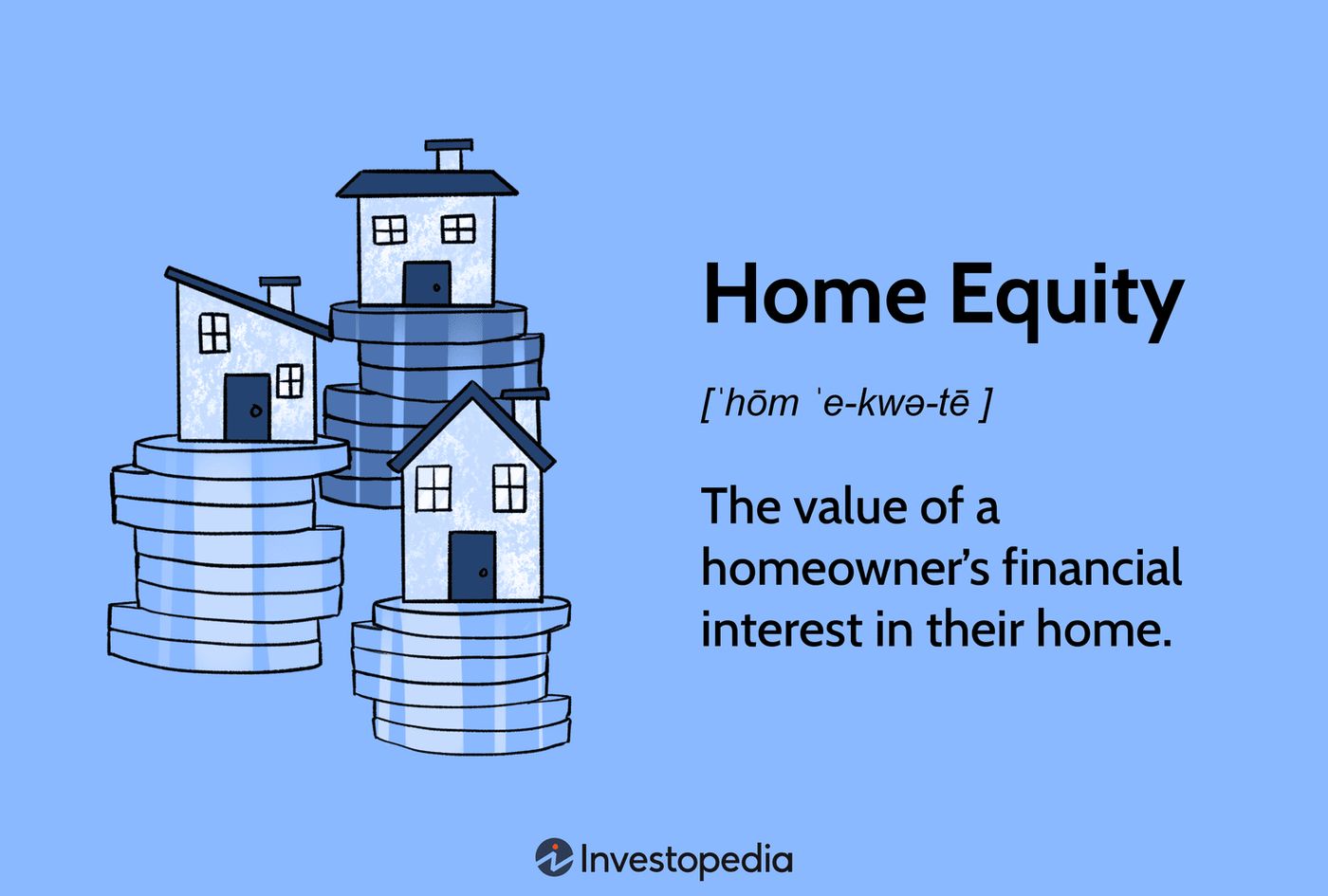
The amount you can borrow through a HELOC is strictly governed by federal regulations and is based on the equity in your home. Equity is calculated as the current market value of your home minus any outstanding debts secured against it, such as a mortgage. The Office of the Superintendent of Financial Institutions sets the rule that a standalone HELOC cannot exceed 65% of your home's appraised value. Furthermore, when combined with an existing mortgage, the total secured borrowing cannot surpass 80% of the home's value. To find your maximum available HELOC amount, you would calculate 80% of your home's value and subtract your current mortgage balance. You must then ensure this result does not exceed the 65% standalone limit. Your home equity can also increase if the property's value rises due to market conditions or home improvements, thereby potentially increasing your available credit.
Types of HELOCs Available to Canadians
Canadian lenders primarily offer two structures for home equity lines of credit, each with distinct features. A combined HELOC, also known as a readvanceable mortgage or collateral mortgage, integrates a traditional mortgage with a revolving line of credit under a single overall limit. As you pay down the mortgage principal, the amount of available credit in the HELOC portion increases correspondingly, allowing you to re-borrow the paid-down amount. This product is commonly offered by most major financial institutions. A standalone HELOC is not linked to your mortgage and can be obtained even if your mortgage is with a different financial institution. It operates as a separate revolving credit account secured against your home's equity with a fixed credit limit that does not automatically increase as you pay down your mortgage. Both types use your home as collateral, which allows for lower interest rates compared to unsecured borrowing options like credit cards. With a combined product, your total borrowing is capped at 80% of your home's value, while a standalone HELOC is limited to 65%.
Qualifying for a HELOC and the Stress Test
To qualify for a HELOC in Canada, you must meet specific lender criteria and pass a federally mandated stress test. Lenders will assess your application based on factors including your credit score, proof of stable income, and the amount of equity you have in your home. A formal appraisal of your property is required to determine its current market value for calculating borrowing limits. The stress test, enforced by OSFI, requires lenders to ensure you can afford payments at a higher qualifying rate. You will be tested at either the benchmark rate of 5.25% or your contract HELOC rate plus 2%, whichever is higher. This test is designed to ensure you can manage payments even if interest rates rise. First-time home buyers or those with a down payment of less than 20% may not have sufficient equity to qualify for a HELOC immediately after purchasing a home. You only need to qualify and be approved for a HELOC once, after which you can access funds as needed, provided you stay within your credit limit.
Comparing HELOC Rates and Lender Features
When shopping for a HELOC, the interest rate is a critical factor, but other features and costs can vary significantly between lenders. Some institutions offer promotional rates to attract new customers, while others may have lower standard margins above prime. It is essential to compare the full package, including any setup, appraisal, or legal fees that may apply. The table below provides a snapshot of example HELOC rates from various Canadian lenders, illustrating how they relate to a lender's prime rate. These rates are subject to change and depend on individual borrower qualifications.
| Lender | Example Rate | Structure |
|---|---|---|
| TD Home Equity FlexLine | 4.29% | TD Prime Rate (4.45%) - 0.16 |
| Laurentian | 4.95% | Prime + 0.50% |
| Meridian | 4.95% | Prime + 0.50% |
| National Bank | 5.45% | Prime + 1.00% |
| HomeEquity Bank (Promotion) | 4.20% | Prime + 0.25% |
| EQ Bank HELOC | Varies | Low interest rate, interest-only payments |
| True North Mortgage | From 3.49% (5yr Variable) | Various fixed and variable options |
Beyond the rate, consider if the lender allows you to convert a portion of the balance to a fixed rate, the methods for accessing funds, and whether the HELOC can be registered in second position behind an existing mortgage. Some lenders offer bundled products with cashback incentives, like TD's offer of up to $5,100 cashback on a new Home Equity FlexLine with a Term Portion, which expires on December 29, 2026. Access methods can include using a bank access card, writing cheques, using online banking, or using an app. Big 5 banks often do not publish specific HELOC rates, and a rate of prime plus 1% is a common assumption for their products. Minimum monthly payments are typically estimated as interest-only based on the drawn amount and do not include principal repayment or various fees.
Common Uses and Advantages of a HELOC
A Home Equity Line of Credit is a versatile financial tool that Canadians use for a variety of purposes due to its flexibility and relatively low cost. Common uses include funding major home renovations or repairs, which can in turn increase the property's value. Many homeowners use a HELOC to consolidate higher-interest debt from credit cards or personal loans into a single payment with a lower interest rate. Other frequent uses include financing large purchases like a vehicle, covering educational expenses, or supplementing retirement income. The primary advantage of a HELOC is its revolving nature. You can borrow, repay, and borrow again up to your limit without reapplying. During the draw period, which often lasts several years, you are typically only required to make interest-only payments on the amount you have used, which can help with cash flow. Because the loan is secured by your home, the interest rates are substantially lower than those for unsecured credit products. You can use the funds at your discretion for big-ticket needs that improve your investments or debt position, such as finishing a basement or paying tuition.
Key Risks and Disadvantages to Consider
While a HELOC offers benefits, it also carries specific risks that borrowers must carefully evaluate. The most significant risk is that your home serves as collateral, meaning you could potentially lose it if you default on the repayments. Since HELOC rates are variable, your monthly interest payments can increase unexpectedly if the Bank of Canada raises its policy rate, leading to higher costs. The convenience of interest-only payments during the draw period can lead to a temptation to only pay the minimum, which does not reduce the principal debt. After the draw period ends, the HELOC enters a repayment phase where you must start paying back both principal and interest, which can result in a significant jump in monthly payments. There is also a risk of over-borrowing against your home's equity, which can reduce your financial cushion and make it harder to sell your home without clearing the debt. It is crucial to have a disciplined repayment plan and to consider your ability to handle potential rate increases before taking out a HELOC. If you sell your home while you have an outstanding HELOC balance, the debt will be repaid from the sale proceeds at that time.
HELOC Versus Alternative Ways to Access Equity
Canadians have several options for accessing home equity, and understanding the differences is key to choosing the right product. A mortgage refinance involves renegotiating your existing mortgage to borrow a lump sum up to 80% of your home's value, minus the current balance. You receive all the cash immediately and pay interest on the full amount from the start, often at a fixed or variable mortgage rate that may be lower than a HELOC rate. A home equity loan is similar, providing a one-time lump sum with regular repayments over a set term, but it is a separate loan registered as a mortgage on your property. A personal loan is an unsecured alternative with no risk to your home, but it comes with higher interest rates and lower borrowing limits, often capped around $50,000 depending on credit. A reverse mortgage allows older homeowners to access equity without making regular payments, with the balance repaid when the home is sold. The following list outlines the core differences between a HELOC and a personal loan.
- Credit Type: HELOC is revolving credit. A personal loan is a fixed lump sum.
- Interest Rate: HELOC has a variable rate tied to prime. Personal loans usually have a fixed rate.
- Repayment: HELOC requires interest-only payments initially, then principal plus interest. Personal loans have fixed payments of principal plus interest from the start.
- Security: HELOC is secured by your home. A personal loan is typically unsecured.
- Maximum Amount: HELOC limit is up to 65% of home value. Personal loans are often capped around $50,000.
- Flexibility: HELOC allows you to borrow over time as needed. A personal loan is a one-time transaction.
A HELOC is generally ideal if you need flexible access to funds over time and you have at least 20% home equity. A lump sum product like a mortgage refinance may be better for a single, defined expense. A refinance can offer a potentially lower fixed rate. To decide, ask yourself if you want flexibility and plan to borrow over time. Alternatively, consider if you need a fixed lump sum and do not want to use your home as collateral.
Steps to Apply for a HELOC in Canada
Applying for a Home Equity Line of Credit involves several specific steps that require preparation and documentation. First, you should assess your financial situation, including calculating your home equity and determining how much you need to borrow. You can use online HELOC calculators to estimate your potential credit limit based on your home value and existing mortgage. Next, you should research and compare offers from different lenders, including banks, credit unions, and alternative lenders, focusing on interest rates, fees, and product features. Once you select a lender, you will need to complete a formal application, providing documents such as proof of income, identification, and details of your existing mortgage. The lender will then order a professional appraisal of your home to confirm its current market value, which is a standard requirement. Your application will undergo a credit check and the federal stress test, where your ability to repay is assessed at the higher of 5.25% or your contract rate plus 2%. If approved, you will review and sign the loan agreement, and the HELOC will be registered as a charge against your property title, often in first or second position. Finally, once the registration is complete, you will gain access to the funds through the methods provided by your lender, such as cheques, a debit card, or online banking.
Frequently asked questions
What is the current HELOC interest rate in Canada?
HELOC rates are variable and based on a lender's prime rate plus a margin. The specific rate you receive depends on the lender, your creditworthiness, and whether any promotional offers apply. Lender prime rates can change when the Bank of Canada adjusts its policy interest rate. Some lenders offer fixed rate options for specific terms, with examples of two-year fixed rates remaining below 4%.
How much can I borrow with a HELOC?
You can borrow up to 65% of your home's appraised value with a standalone HELOC. If you have an existing mortgage, the combined total of your mortgage and HELOC cannot exceed 80% of your home's value. To calculate your available amount, determine 80% of your home's value, subtract your current mortgage balance, and ensure the result does not exceed 65% of the home's total value. For example, on a $500,000 home with no mortgage, your maximum standalone HELOC limit would be $325,000.
What is the difference between a HELOC and a home equity loan?
A HELOC is a revolving line of credit that allows you to borrow, repay, and borrow again up to a limit. It typically has a variable interest rate tied to the lender's prime rate. During the draw period, you usually make interest only payments. A home equity loan provides a one time lump sum of cash. It is repaid in fixed installments over a set term and can have a fixed or variable rate. Both are secured by your home.
Do I have to make monthly payments on a HELOC?
Yes, you have to make monthly payments on a HELOC. During the draw period, you are required to make at least a minimum monthly payment. This minimum payment is often interest only on the amount you have borrowed. After the draw period ends, the HELOC enters a repayment phase. Your monthly payments must then cover both principal and interest to pay down the balance.
Can I get a HELOC if I still have a mortgage?
Yes, you can have both a mortgage and a HELOC. Many lenders offer combined products where the HELOC and mortgage share a total limit of up to 80% of your home's value. You can also obtain a standalone HELOC from a different lender than your mortgage holder, as long as the total secured debt does not exceed regulatory limits. For instance, TD Bank states you can have both a TD Mortgage and a TD Home Equity FlexLine.
What is the stress test for a HELOC?
The stress test for a HELOC requires you to qualify at a higher interest rate. You will be stress tested at either the qualifying rate of 5.25% set by OSFI or your contract rate plus 2%. The lender will use whichever of these two rates is higher. This is a standard requirement for federally regulated lenders in Canada. It is similar to the stress test for obtaining a mortgage.
Sources and further reading
- HELOC rates Canada, Best Home Equity Line of Credit rates ratehub.ca
- TD Home Equity FlexLine (HELOC), TD Canada Trust td.com
- Best Canada HELOC Rates - 4.45% wowa.ca
- Home Equity Line of Credit (HELOC) truenorthmortgage.ca
- How to choose between a home equity loan or ... scotiabank.com
This article explains how things work and is not financial, tax or legal advice. Rules, limits and rates change, so check the current figures with the Canada Revenue Agency, your province or your financial institution before you act.